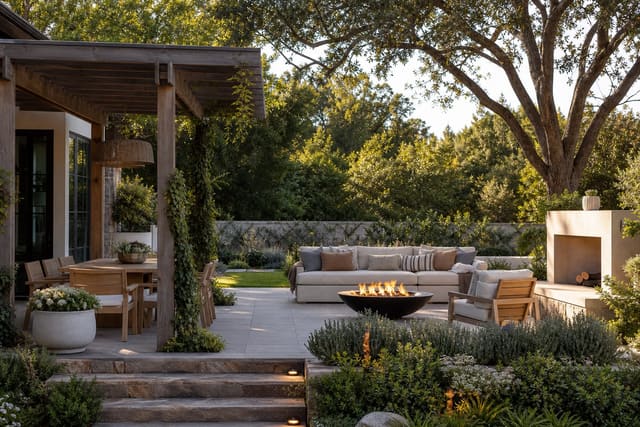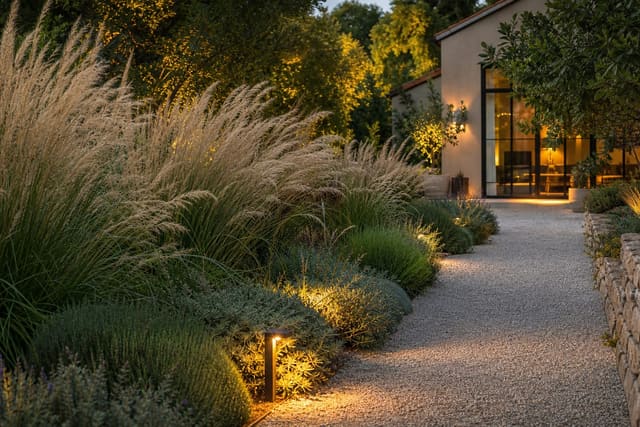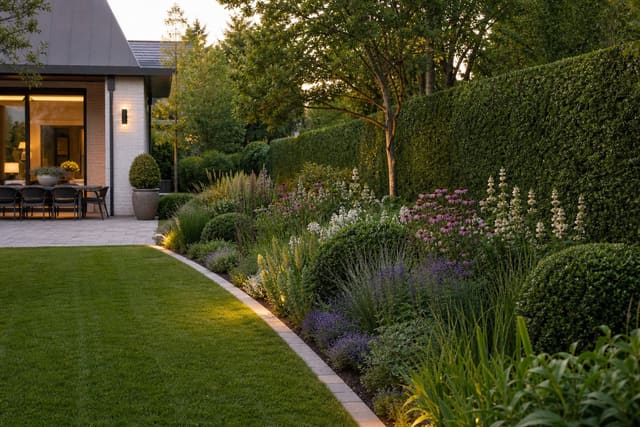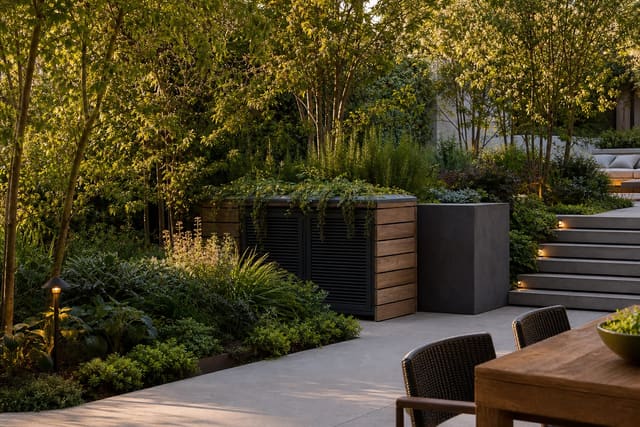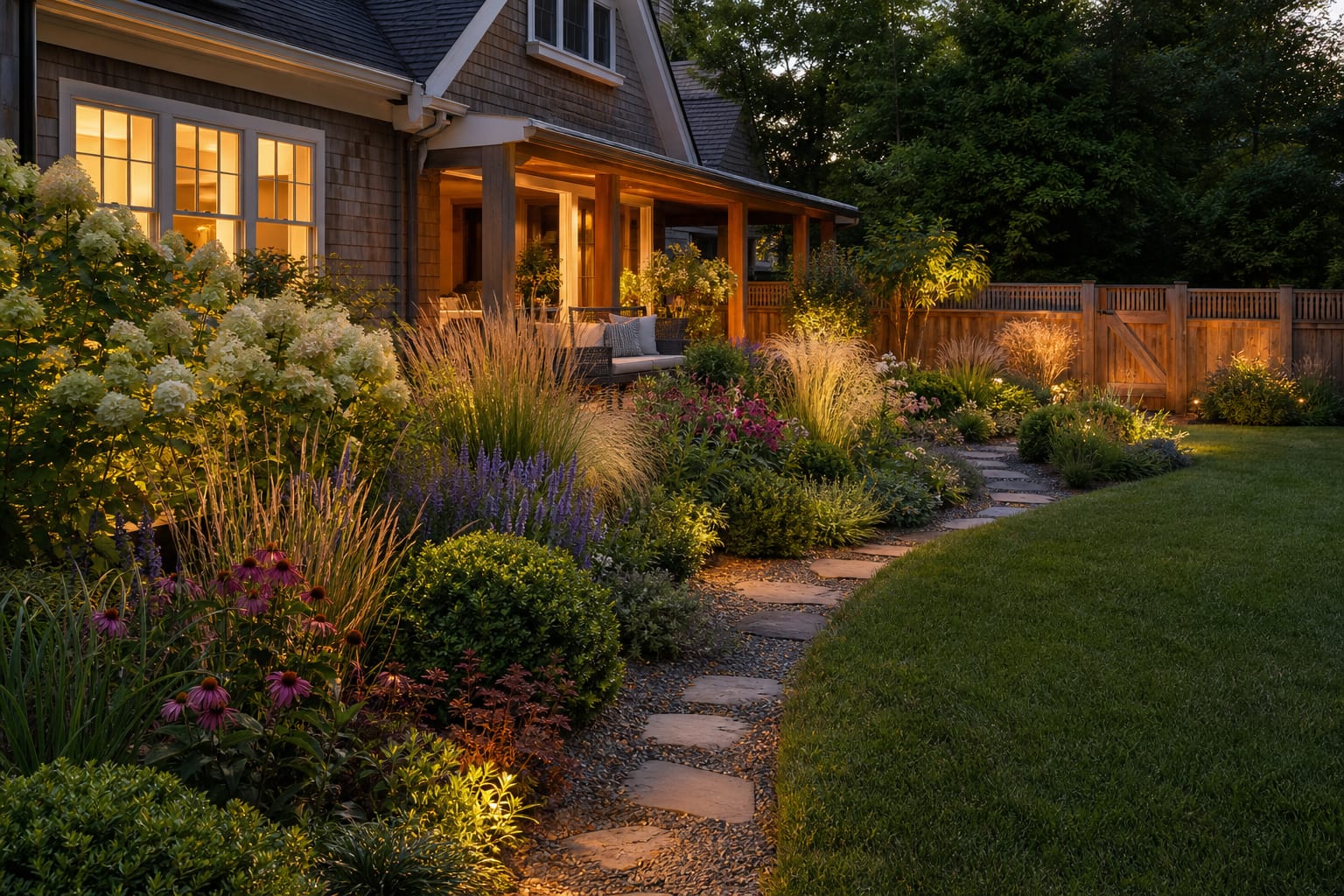
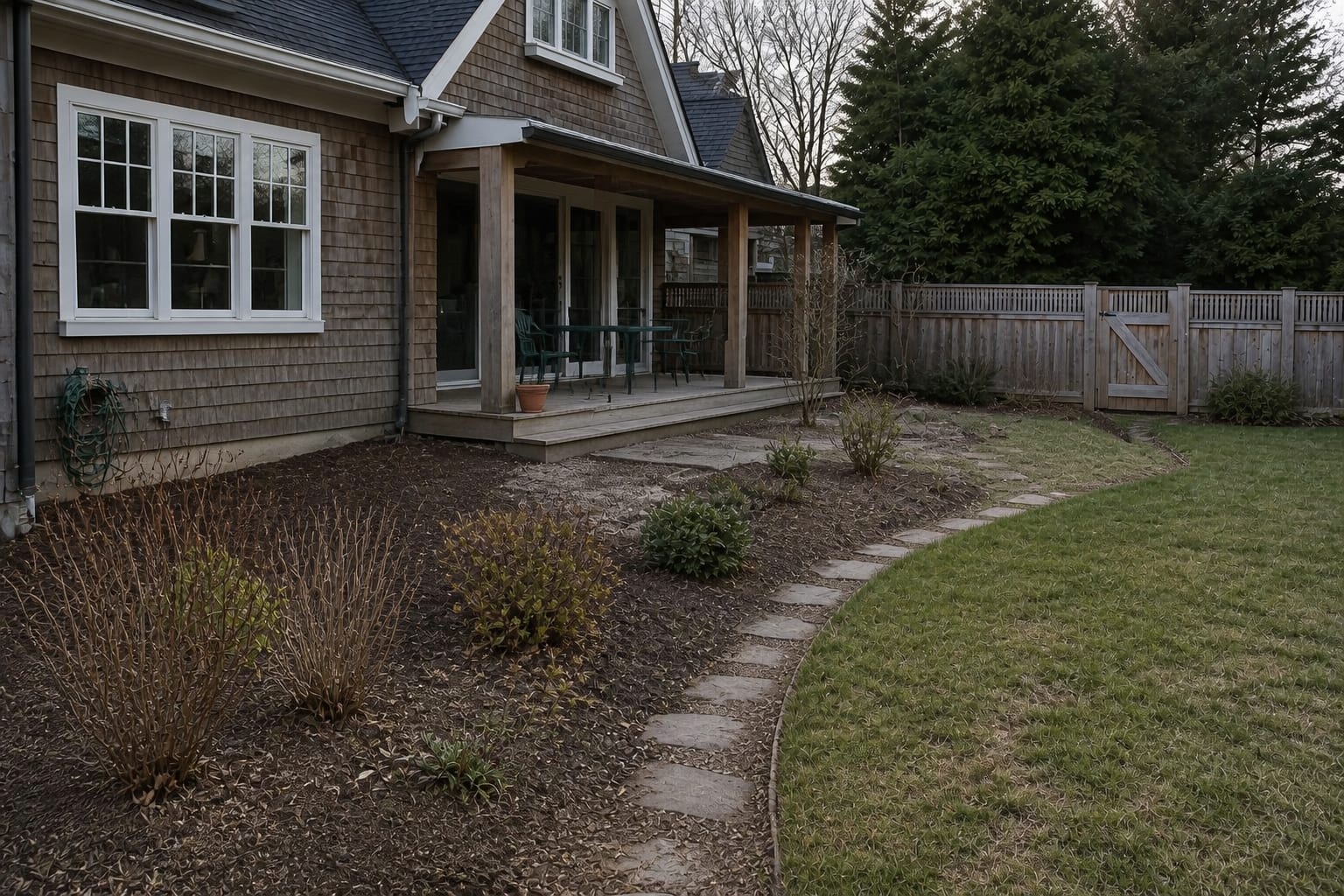
Naturalistic planting design arranges perennials and grasses in repeating drifts of 5-7 species, layered by height and season, so a garden looks self-sown but stays structured through winter. Beds run 8-12ft deep, ornamental grasses thread through the mix like a matrix, and seed heads carry interest after bloom. A convincing meadow garden is never just a wildflower packet scattered on bare soil — structure before flowers is the rule that keeps it from turning into a weedy blur by August.
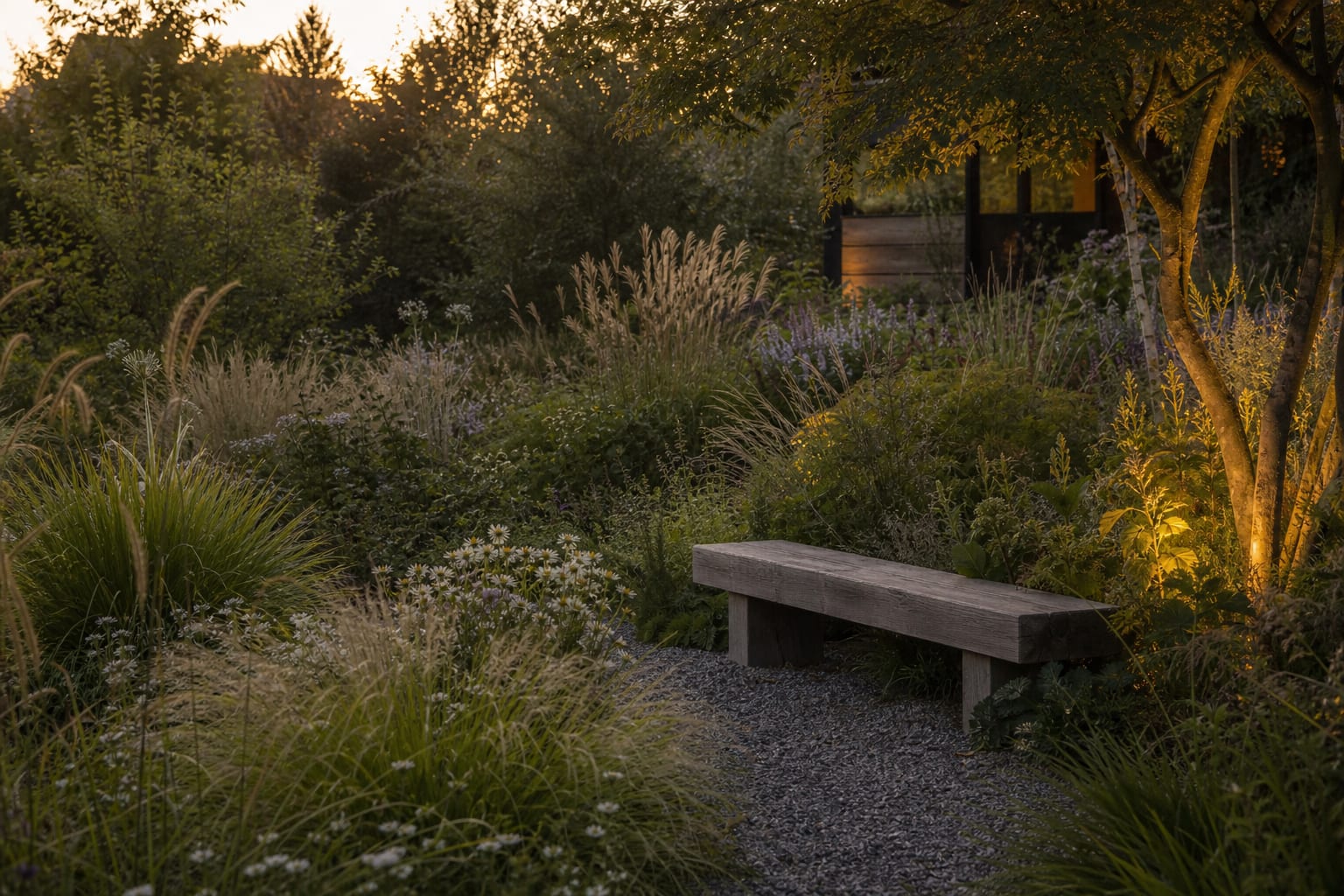
What is naturalistic planting design?
Naturalistic planting design arranges plants to feel self-sown and ecologically alive while relying on deliberate structure, repetition, and maintenance planning. It borrows from meadows, prairies, woodland edges, and the Piet Oudolf planting style, but it is not a copy of wilderness — plants are chosen for shape, seed head, texture, and winter silhouette as much as for bloom.
Naturalistic does not mean random. A manicured border depends on clipped shrubs, symmetry, and one heavy bloom moment. A naturalistic border depends on repeated plant communities, visible grasses, long-lasting perennials, and a strong edge that keeps the looseness readable.
| Garden look | What controls it | Spec to copy |
|---|---|---|
| Manicured border | Shearing, symmetry, seasonal color blocks | Keep shrubs clipped and beds sharply separated |
| Naturalistic border | Repetition, plant density, seasonal succession | Repeat key plants in drifts of 3, 5, or 7 |
| Prairie planting style | Grasses, matrix planting, seed heads | Use a 4–6 foot deep bed so layers can overlap |
Every naturalistic garden needs a frame — a mown lawn edge, gravel path, corten steel strip, low hedge, or fence. Without it, the planting looks abandoned rather than intentional.
Which planting layers create the look?
The new naturalism landscape is built in layers: a structural layer, a seasonal flowering layer, and a matrix layer that knits everything together.
- Build the backbone with plants that still look good after flowering — grasses, compact shrubs, sturdy perennials, small multi-stem trees — spaced every 6-10 feet in a larger bed.
- Repeat flowering perennials in drifts of 3, 5, or 7 instead of singles. One coneflower, one salvia, and one yarrow read as a plant sale; groups create the pulse associated with the Piet Oudolf planting style.
- Use a matrix plant to hide bare soil — low sedges, prairie dropseed, or creeping thyme in dry sun — spaced 12-18 inches apart so soil closes over as the garden matures.
- Keep the front edge lower and tougher. Choose varieties under about 18 inches tall near paths and save 3-5 foot grasses for the middle or back.
Dense planting needs soil that can support it. Loosen compacted clay in planting zones, add compost, and plan irrigation for establishment; compost-rich garden ideas are useful for filling beds without constant fertilizer.
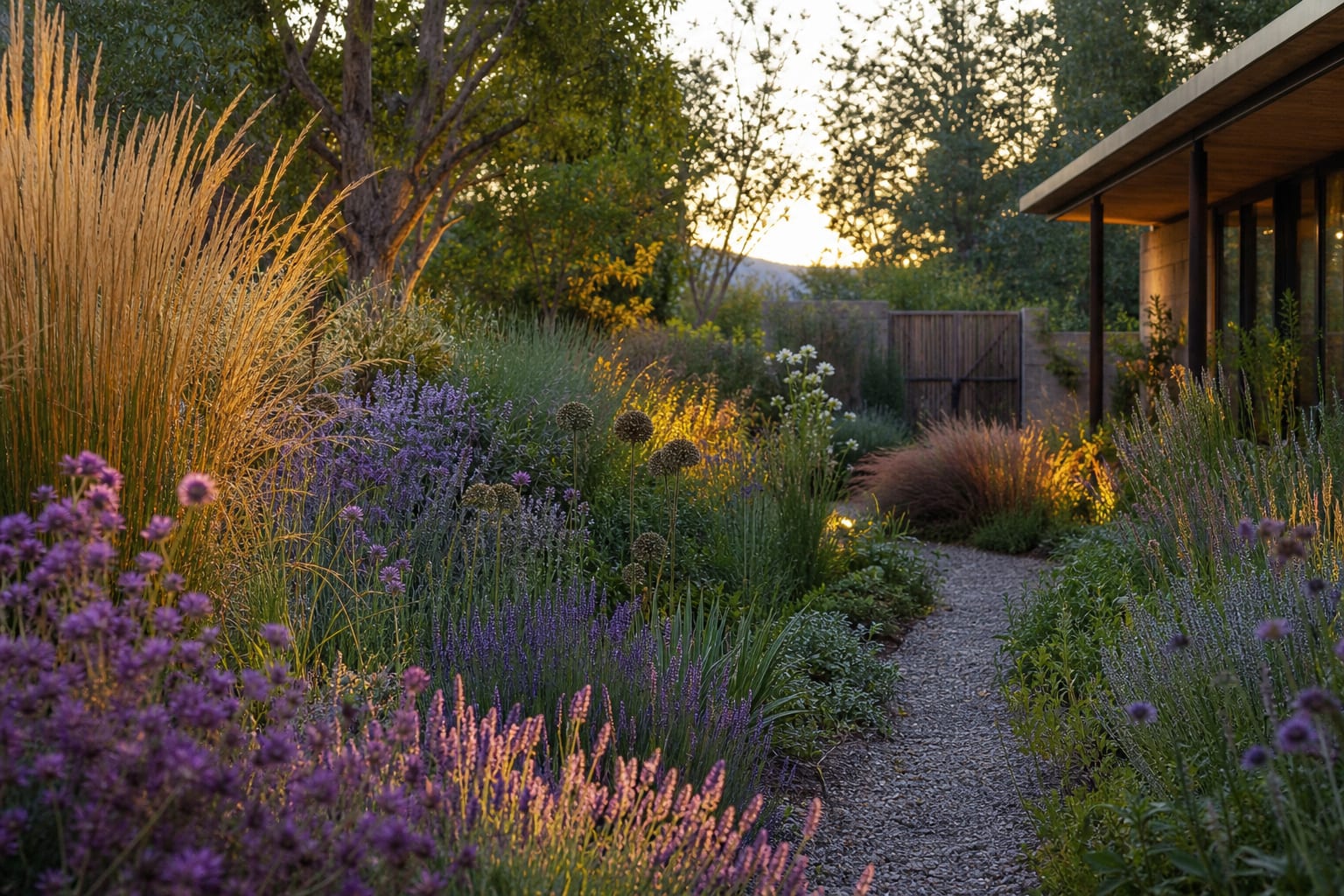
Test this on your own photo with ReDesign before you choose a final direction — keep the house edge, horizon line, hardscape, planting beds, and main path visible so the preview matches the space you actually have.
How do you keep a prairie planting style from looking messy?
Three rules keep wildness readable. Density first: plugs and small perennials are usually spaced 12-18 inches on center, while larger grasses and shrubs need room for mature width; gaps invite weeds and look unfinished. Repetition second: repeat one grass, one vertical flower, one round-headed flower, and one low filler through the bed instead of twenty unrelated favorites.
Contrast third: pair fine-textured grasses with bold leaves, and airy seed heads with solid shrub forms, so the border neither disappears in bright sun nor loses its meadow feel.
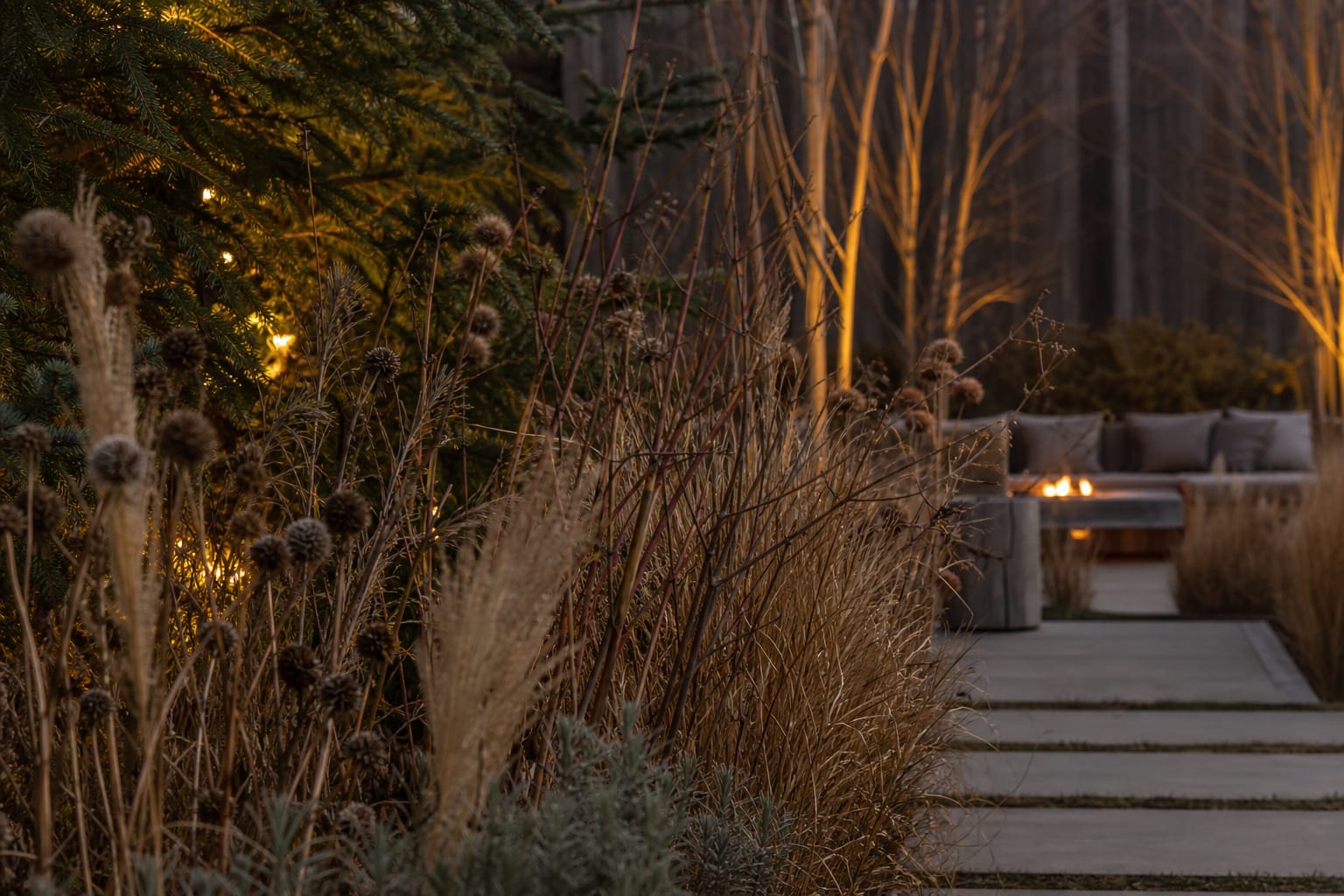
Lighting matters too. Naturalistic beds look best at the edges of the day, when grasses and seed heads catch low sun. Plan warm fixtures around 2700K, keep path lights low and shielded, and borrow placement ideas from garden lighting design ideas for evening use.
One calm sculptural piece — a stone basin, rusted steel obelisk, or carved timber form — usually reads stronger than a cluster of ornaments; see garden sculpture ideas for objects heavy enough to hold their own against grasses moving in the wind.
Common naturalistic planting design mistakes
The most common mistake is confusing naturalistic with neglect. A meadow-inspired garden still needs editing, especially in the first two growing seasons.
- Planting only for peak bloom makes the garden collapse after midsummer. Choose at least half the mix for structure, foliage, or winter shape.
- Using too many varieties in a small bed creates noise. In a 10x12ft garden, five to seven repeated species usually beats fifteen one-off perennials.
- Skipping the edge makes planting look accidental. A crisp 4-6 inch mown strip, steel edge, brick soldier course, or gravel path lets loose planting read as design.
- Ignoring mature height blocks paths and windows. Keep plants over 4 feet tall away from narrow walks.
- Cutting everything down too early removes the point of the style. Leave strong seed heads and grass plumes through winter, then cut back in late winter before fresh growth pushes through.
Expect hand weeding, occasional division, and some replacement as plants settle into the site. The payoff is a garden that changes every week instead of peaking for ten days and sulking the rest of the year.
Should you preview naturalistic planting with AI design?
AI design helps with the hardest decision in this style: visual massing — where the grasses go, how dense the border should feel, and whether the path still reads once planting fills in. Upload a straight-on photo from the patio or sidewalk and test versions with deeper beds, repeated grasses, a gravel path, and one or two sculptural focal points.
Use the preview to judge proportion, not to replace local plant knowledge — climate, deer pressure, drainage, and invasive-species rules still decide the final species list. Renters and cautious homeowners can test the mood first with large planters, plug trays, and removable gravel edging before digging.
Frequently Asked Questions
What is naturalistic planting design?
It's a planting style associated with Piet Oudolf and the New Perennial movement — perennials and grasses arranged in repeating drifts, designed for year-round structure and seed-head winter interest rather than seasonal annual color.
How many plant species should a naturalistic bed include?
Use 5-7 perennial species and 1-3 grass species, repeated across the bed in irregular drifts of 5-9 plants each. Fewer species reads as a monoculture, while more species reads as a random collection rather than a design.
How deep should a naturalistic bed be?
Aim for 8-12ft front to back so the three tiers — front, mid, and back — can layer and read clearly. Narrower borders end up looking like traditional cottage planting instead of naturalistic drifts.
Which plants work in a naturalistic scheme?
Echinacea, rudbeckia, perovskia, sedum, eupatorium, agastache, and salvia work well as perennials, paired with calamagrostis, panicum, and molinia as grasses. All of these hold their structure through winter rather than collapsing after frost.
Does naturalistic planting need maintenance?
Yes, but less than a traditional border. Plan on one cut-back in late winter, mulching every 2-3 years, and weeding through the first two seasons until plants knit together — mature beds become largely self-suppressing after that.
> Try this: Ready to see this on your own outdoor space? Open ReDesign and run the preview before you buy materials, plant, drill, or move furniture.
Three transformations to try
1. Naturalistic perennial bed with grasses