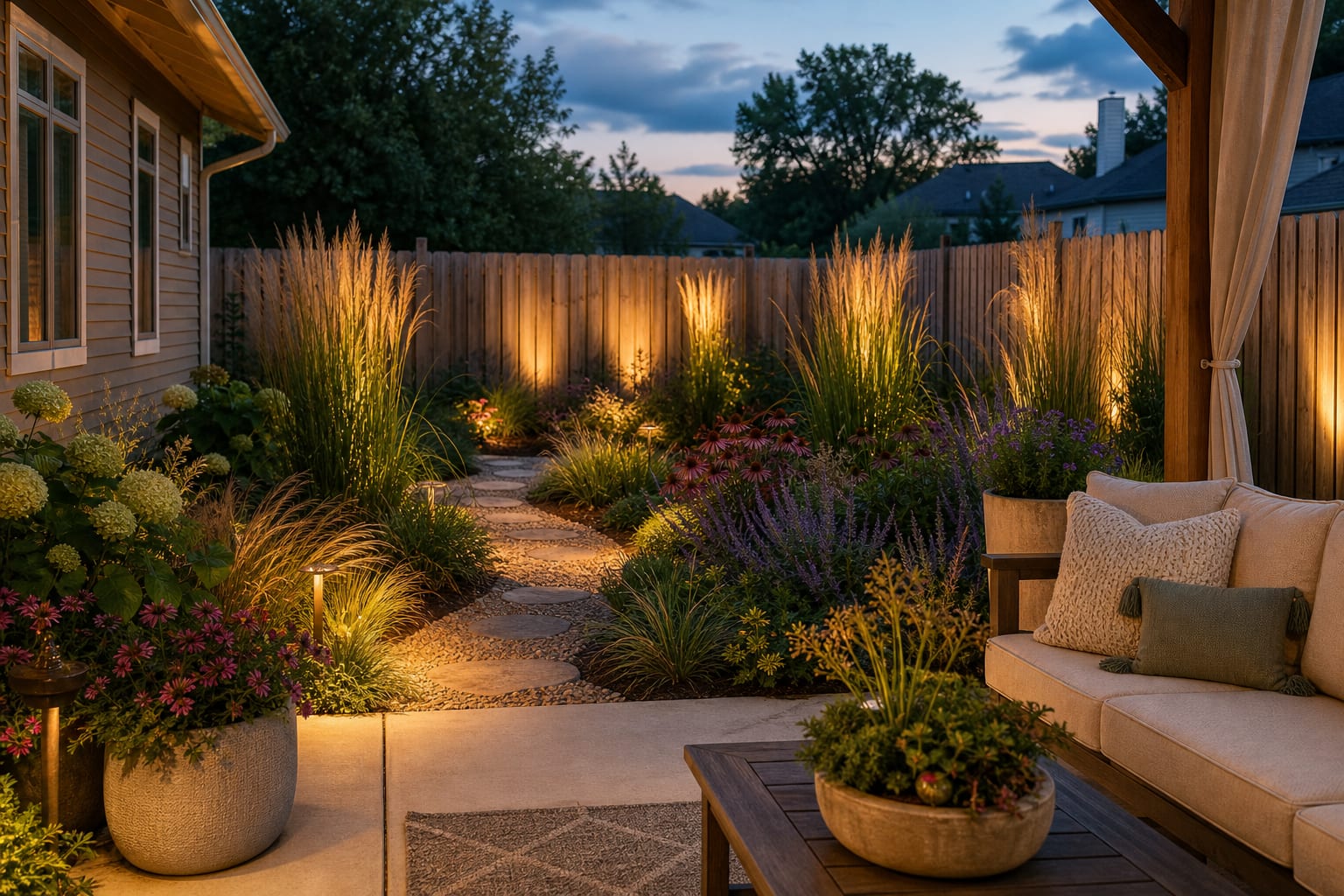
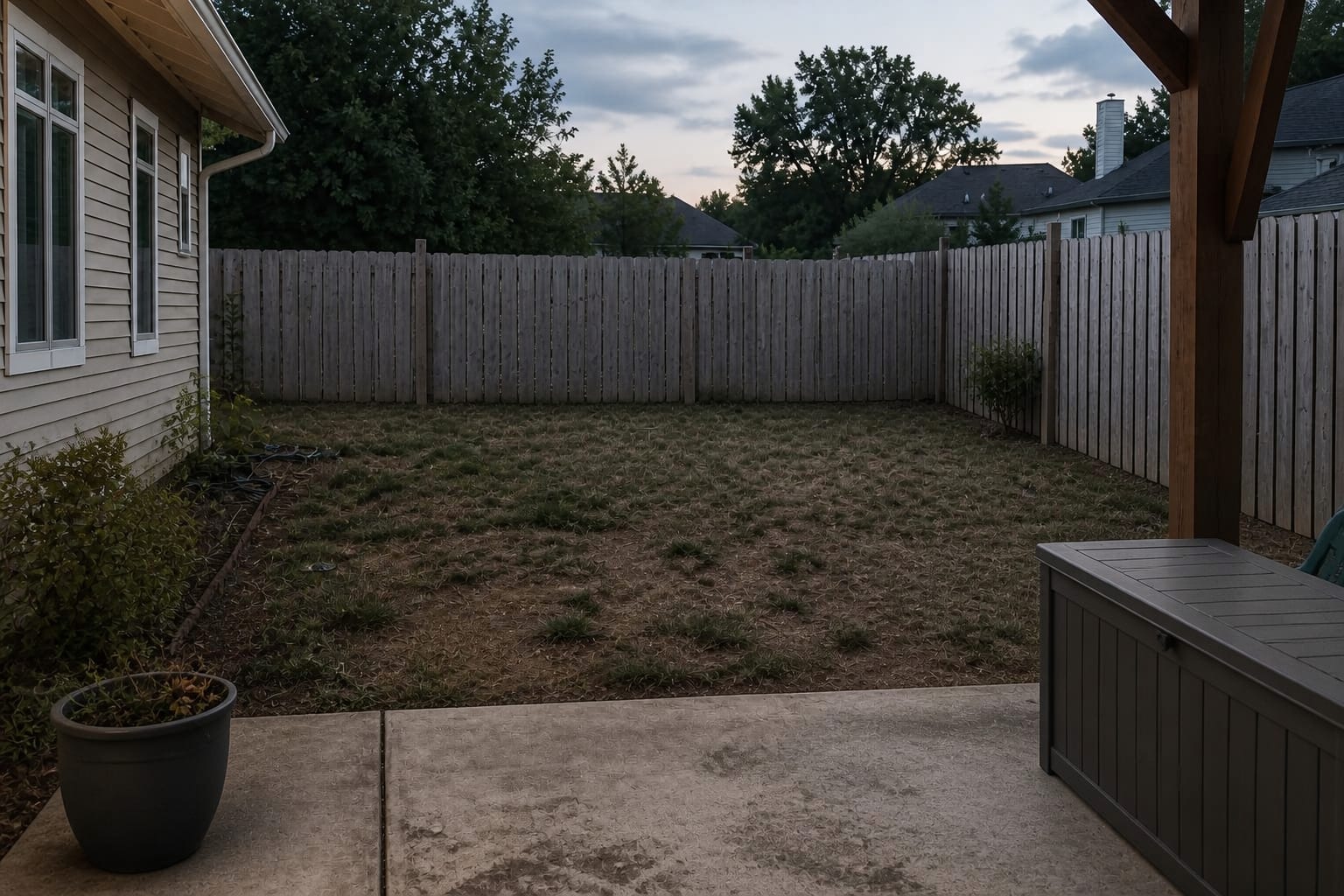
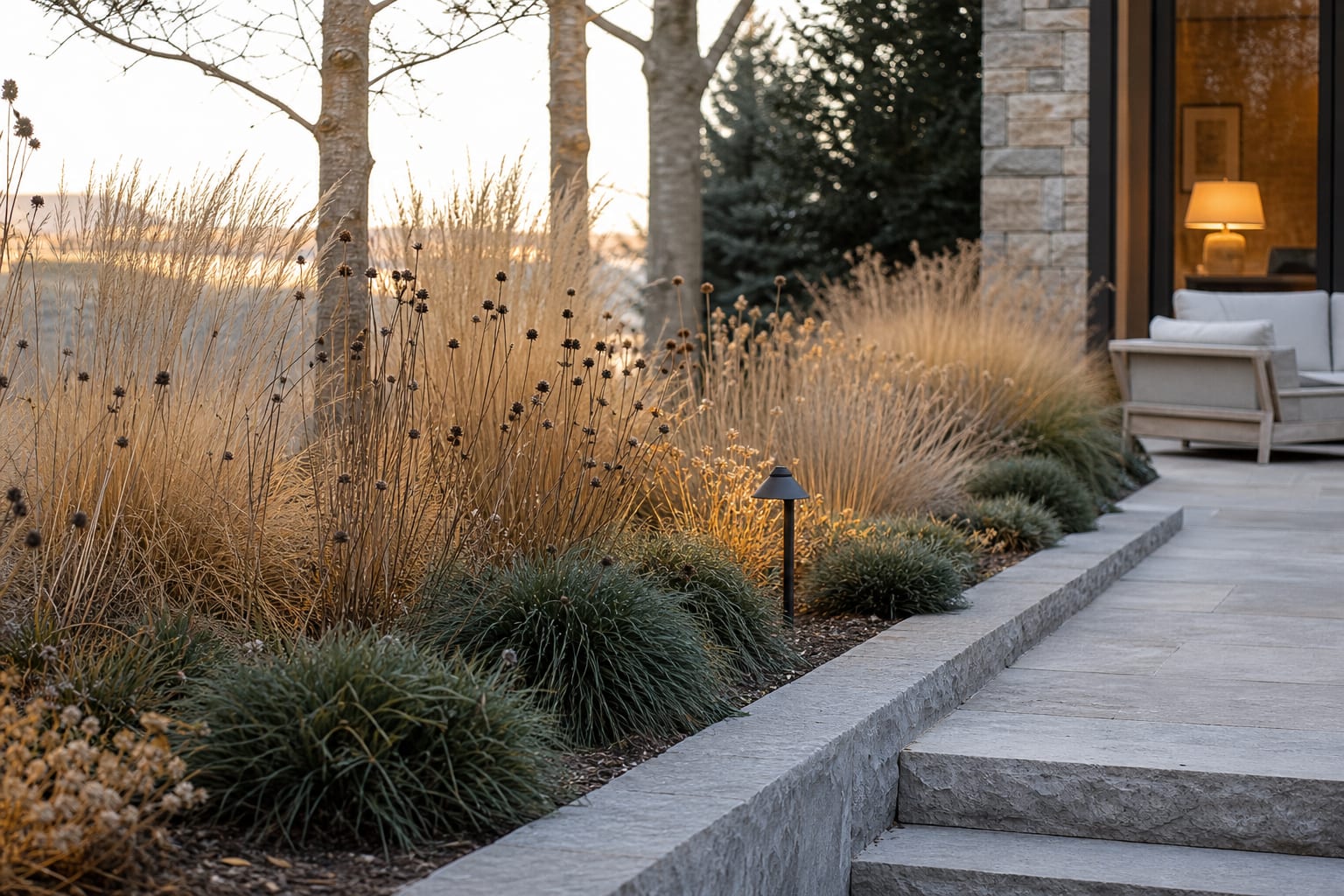
Ornamental grass ideas that work best pair one tall vertical (feather reed grass, switchgrass) with one mid-height clumping species and one low edger, grouped in odd-numbered clusters of 3, 5, or 7. Repetition creates movement instead of scattered filler, while height layering solves privacy, screening, and winter structure in a single planting plan.
Which ornamental grasses work best in landscaping?
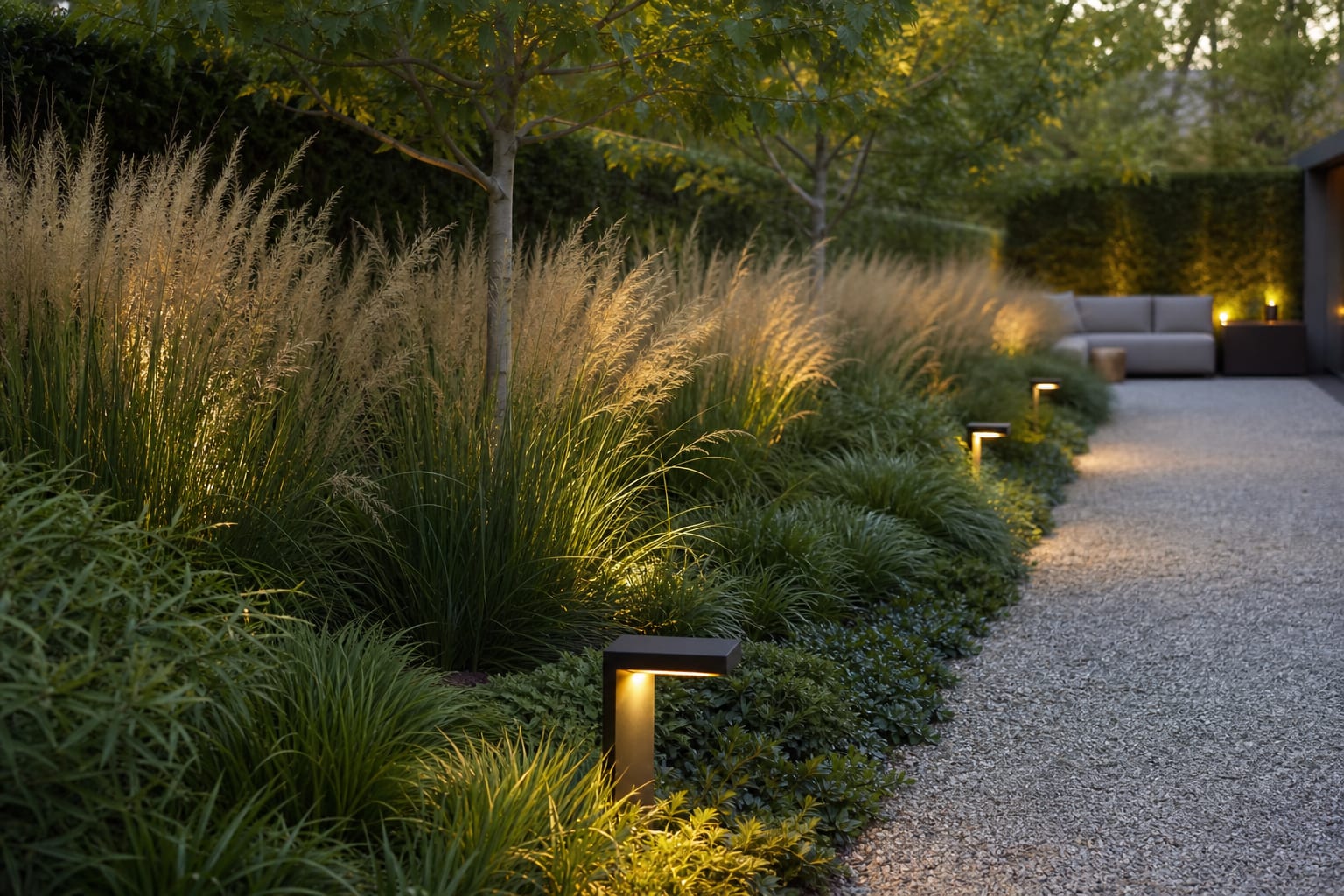
"Ornamental grass" covers tight 12-inch edging plants, 5-foot vertical plumes, and huge arching clumps, so the right choice depends on the job. Feather reed grass (similar to 'Karl Foerster') is the cleanest vertical: it grows in a narrow 3-5 foot column, so it can mark a gate or repeat along a fence without swallowing the bed. Switchgrass gives a softer, native meadow feel and wants more room, often 24-36 inches between clumps. Sedges and carex behave like textural groundcover, edging paving or knitting perennials together at 10-18 inches.
Maiden grass (Miscanthus) needs caution: some types self-seed aggressively and many mature at 5-8 feet tall and wide, which can block windows in a small front garden. Check local invasive guidance, choose sterile or regionally appropriate cultivars, and give large grasses room to show their fountain shape.
How should you arrange grasses so the garden moves instead of looking messy?
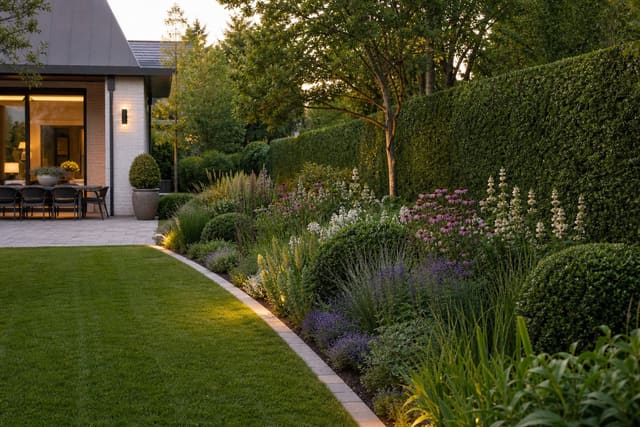
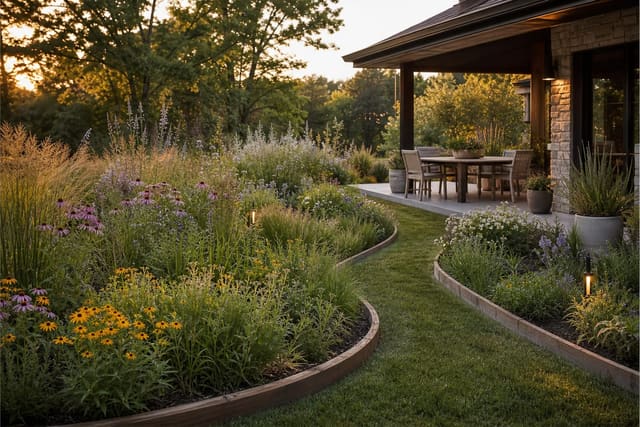
Start with the wind pattern and the main view from the house; a border seen from the kitchen window needs a stronger rhythm than a side yard glimpsed in passing. Place the tallest clumps at the back or corners, then step down through mid-height grasses and low sedges so the bed reads as layers.
Spacing separates real design from random planting. Narrow upright grasses can repeat every 18-24 inches for a formal rhythm; wider switchgrass or fountain-shaped cultivars need 30-42 inches. If the tag says 4 feet wide, don't plant it 18 inches from the path and hope pruning fixes it.
| Grass move | Best place to use it | Useful spec | Design risk |
|---|---|---|---|
| Upright repeat | Fence lines, entries, long borders | 18-24 inch spacing | Too many identical columns can feel rigid |
| Loose drift | Meadow beds, large backyards | 5-9 plants, staggered | Random spacing can look accidental |
| Low grass edge | Paths, patios, dry gardens | 10-18 inch mature height | Soft foliage can narrow the route |
| Single specimen | Courtyards or large pots | One clump, 24in clear around | Small specimens look lonely |
| Screen layer | Utilities, bins, neighboring views | 4-6 foot mature height | Wrong grass may flop in storms |
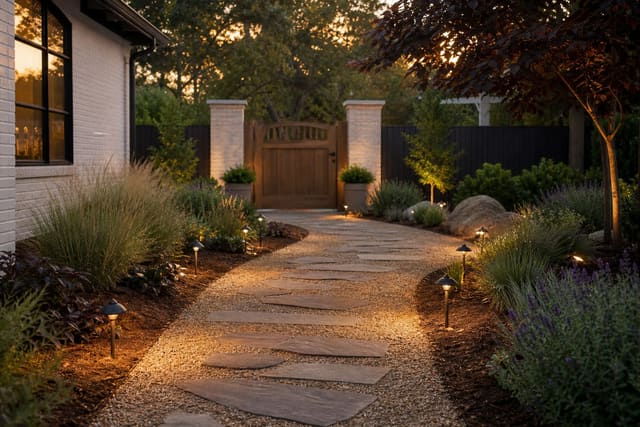
Lighting should support the rhythm, not compete with it. Along a walk, review low-glare path lighting ideas; staggered fixtures 8-12 feet apart usually feel calmer than a runway of stakes. One shielded uplight behind tall grasses can catch seed heads without flattening the planting.
Which grass ideas solve common garden problems?
Use ornamental grasses to fix a specific weakness rather than adding generic "texture."
- Bare fence: plant feather reed grass as a slim vertical screen, 3-5 repeated clumps set 24in off the fence so air moves behind the foliage.
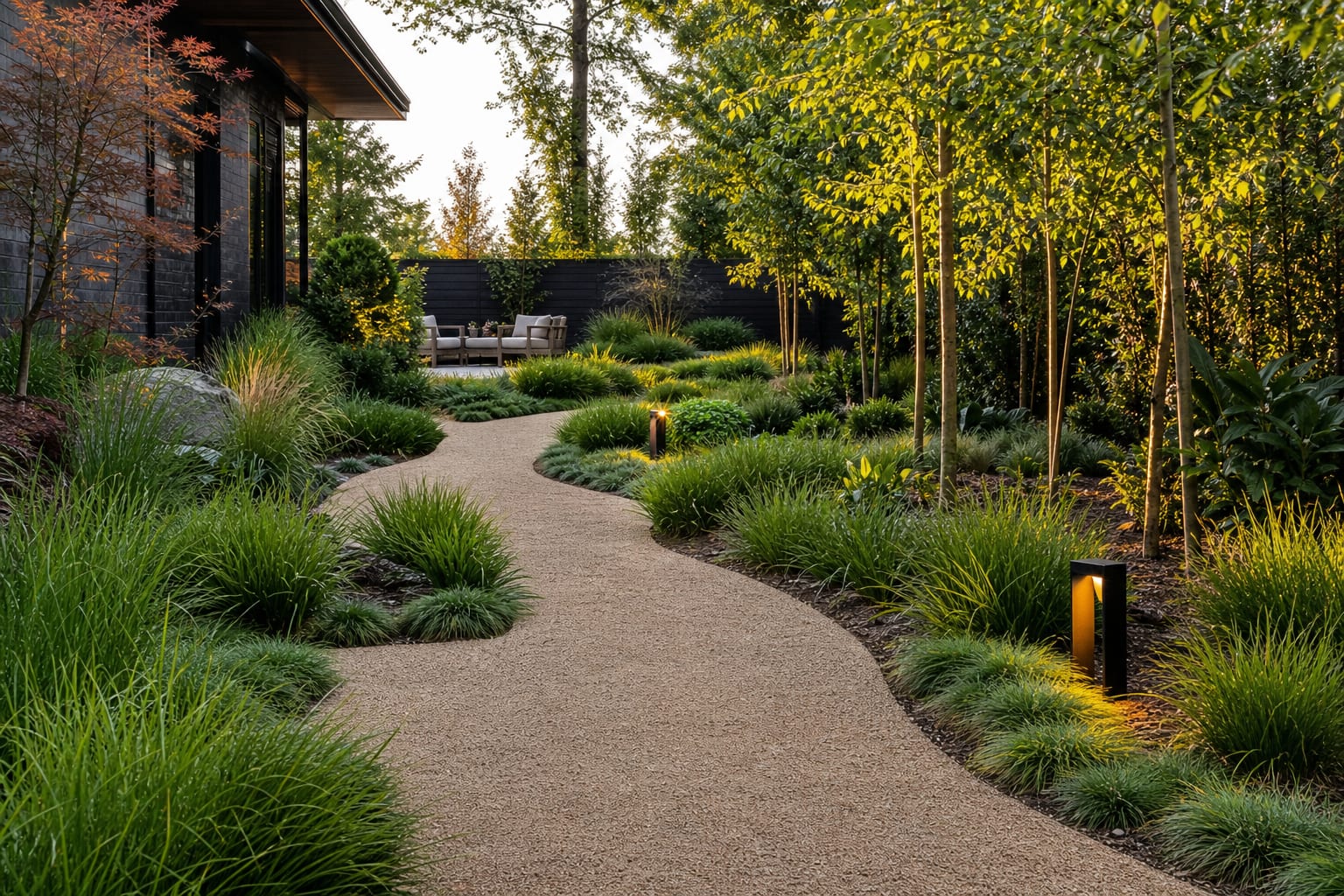
- Hard path edge: low sedges under 18in blur gravel or pavers without hiding the route; keep foliage 6in back from the walking surface.
- Flat backyard bed: combine one upright grass, one rounded grass, and two flowering perennials in repeating blocks 4-6 feet deep for depth from the patio.
- Winter silhouette: switchgrass panicles catch backlight better than dense shrubs; give each clump 30-36 inches of room, away from floppy perennials.
- Renters/decks: large containers (18-22in wide, drainage hole) deliver movement without digging up the yard, but need more consistent watering than in-ground plants.
- Dark garden at night: pair tall grasses with selective lighting so plumes glow without overlighting the yard; coordinate with subtle landscape uplighting ideas for foreground-to-background depth.
Common ornamental grass mistakes to avoid
Choosing by nursery height alone is the first mistake — a 4-foot-tall plant may also spread 4 feet wide, changing paths and views. Mark the mature spread on the ground with a bucket or hoop before planting.
Using one of everything is the second: nine different grasses reads as a collection, not a design. Pick one dominant repeater, one low edger, and one seasonal accent if the bed is large enough.
Cutting everything down in fall is the third mistake. Many grasses earn their place from November through February, when seed heads hold frost and low sun; leave sturdy stems standing where they won't block paths, then cut deciduous grasses to 4-6in before new shoots rise.
Planting too close to steps or gates is the fourth mistake — wet, floppy foliage brushes ankles and leans over walks. Keep grasses 12-18 inches back from active edges; where a border meets stairs, check outdoor step lighting for safer transitions.
Ignoring regional behavior is the fifth mistake. Some grasses are drought tolerant once established; others sulk without moisture, and some Miscanthus cultivars are restricted in certain areas. Match the palette to local climate, seeding risk, and how much spring cleanup you'll actually do.
Use AI design to preview your grass planting before you commit
AI previewing helps most with placement, since the hard part is imagining mature volume from small nursery pots. Upload a straight-on photo of the bed, fence, or path, then test a feather reed grass design, a low sedge border, and a looser switchgrass drift from the same angle.
Ask for specifics: 3-5 foot upright grasses, 18-inch low sedges at the edge, 30-inch spacing for larger clumps, warm 2700K-3000K lighting, and visible winter seed heads. If a preview looks crowded, reduce the number of grass types before reducing spacing — crowded variety fails faster than a simple repeat.
Test this on your own photo with ReDesign before choosing a final direction; keep the house edge, horizon line, hardscape, planting beds, and main path visible so the preview solves the space you actually have.
Frequently Asked Questions
When should I cut back ornamental grasses?
Cut back in late winter or very early spring before new growth begins, trimming to 4-6 inches. The dried straw provides winter structure and insulates the crown until then.
Which ornamental grasses stay short?
Hakonechloa (Japanese forest grass), blue fescue, sporobolus heterolepis, and dwarf pennisetum stay under 24 inches. Pick these for edges, low borders, and container plantings.
Do ornamental grasses come back every year?
Perennial grasses such as miscanthus, panicum, calamagrostis, and zone-rated pennisetum return reliably each year. Annual grasses like purple fountain grass die at the first frost in cold zones.
How do I keep ornamental grasses from looking wild?
Group at least three of the same species together, repeat that grouping every 10-15 feet along a border, and frame the planting with a clean edge. Solo specimens scattered through a bed read as weeds.
Are ornamental grasses invasive?
Some are: miscanthus sinensis and pampas grass self-seed aggressively in warm climates. Switch to native panicum or sporobolus if your region lists those species as invasive.
> Try this: Ready to see this on your own outdoor space? Open ReDesign and run the preview before you buy materials, plant, drill, or move furniture.
Three transformations to try
1. Border with three-grass massing