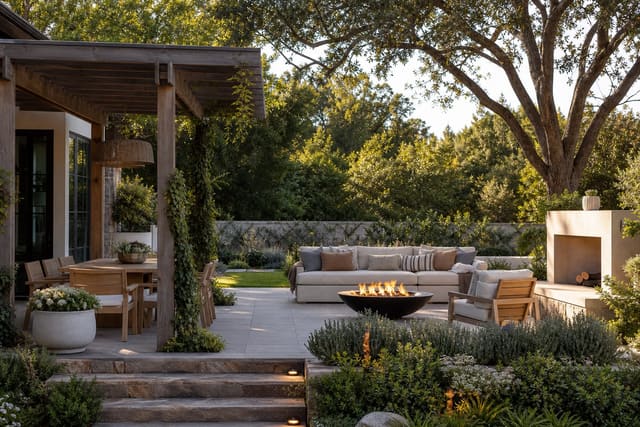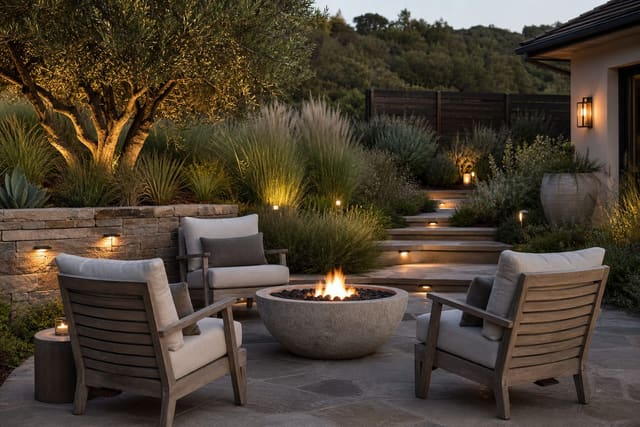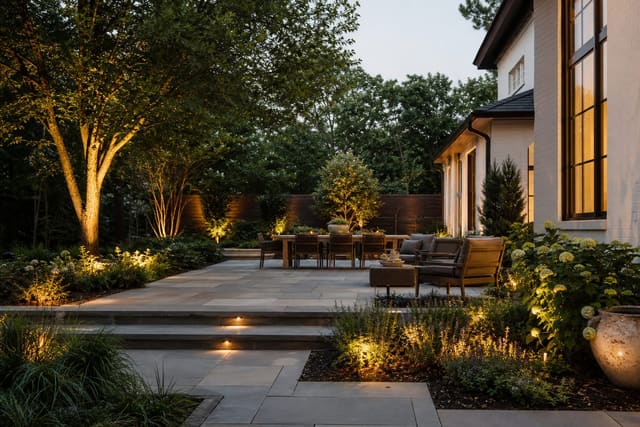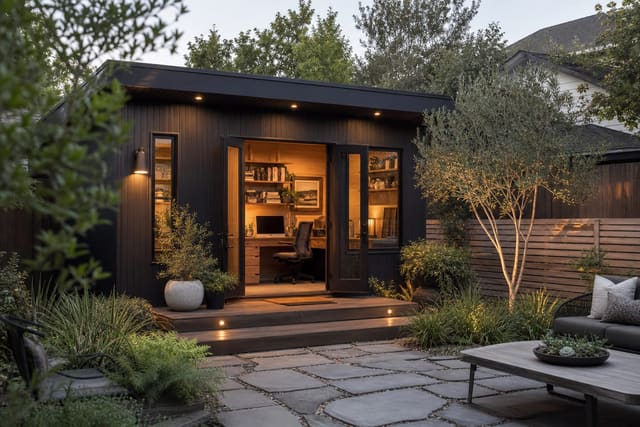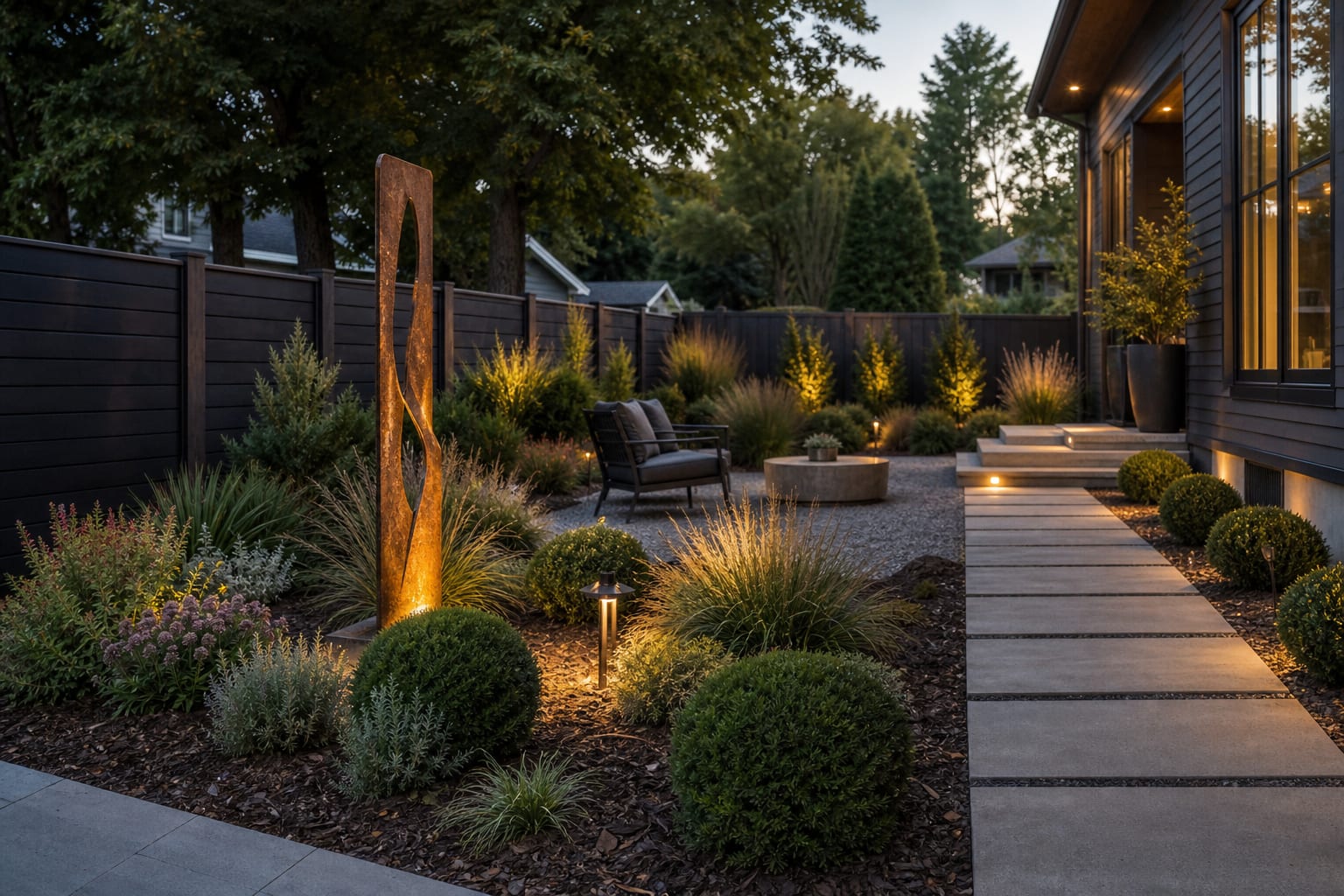
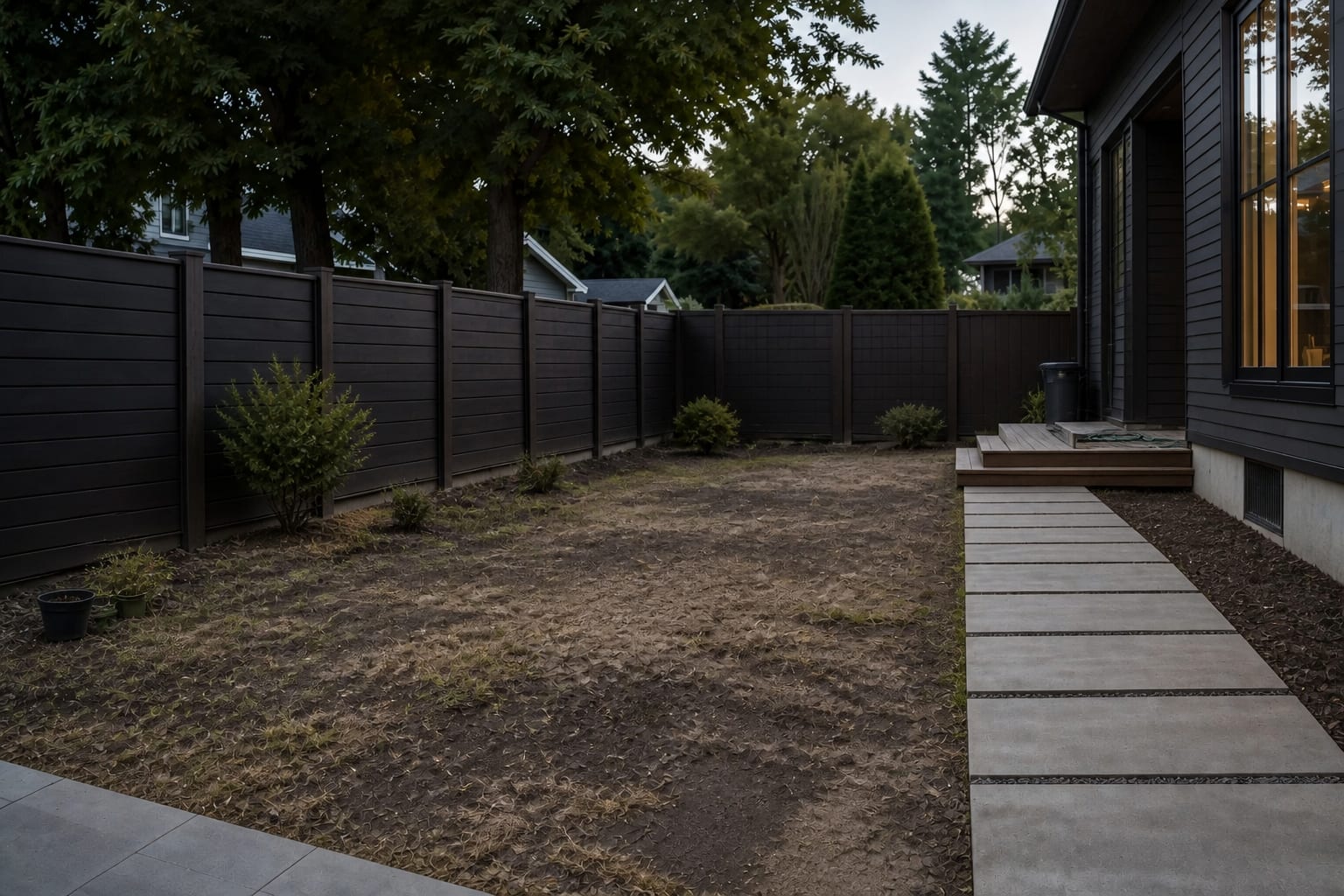
Garden sculpture ideas work best when one piece anchors a real sight line — the patio, main path, or kitchen window — sits on a gravel pad or stone plinth, is sized 3 to 7 feet tall against its planting backdrop, and gets a single shielded uplight at night. One well-placed sculpture beats seven scattered objects.
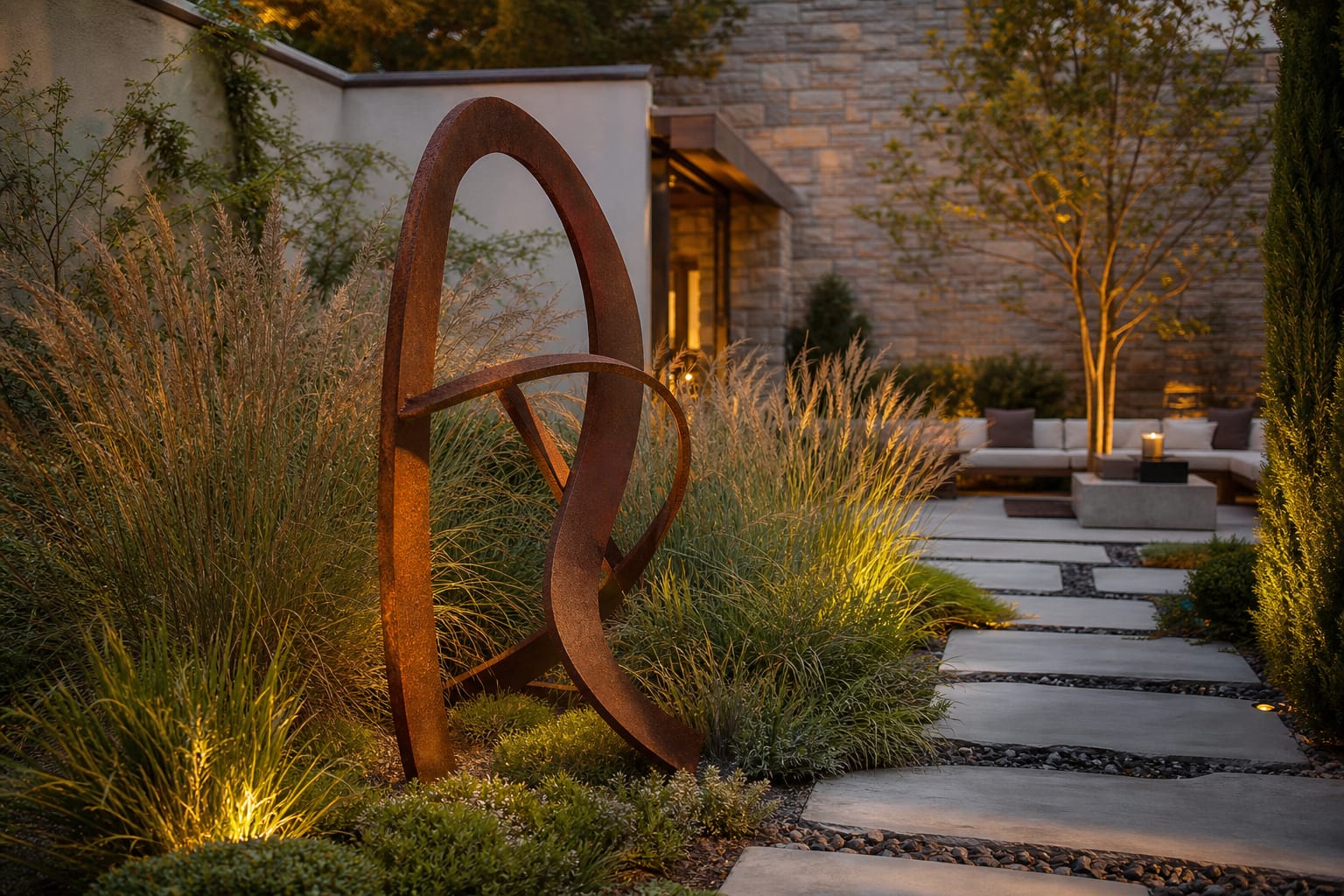
What makes garden sculpture feel collected rather than dropped in?
Good placement gives a sculpture a reason to be exactly there: it terminates a path, marks a turn, holds a gravel court, or creates a view from a window you actually use. If it could move 8 feet in any direction and nothing would change, the placement isn't resolved. Start by checking the view from the kitchen sink, the patio door, the main gate, and your usual outdoor chair.
Scale separates art from clutter. In a small garden, one piece 30 to 48 inches tall can work at the end of a 3-foot path or against layered planting. In a deep border, the sculpture should rise 12 to 18 inches above surrounding plants at their fullest; a 10-inch ornament in a 6-foot-deep bed reads as a lost object unless it's meant to be discovered up close. For front yards, favor quiet forms visible from the street — stone spheres, steel panels, carved timber, a single ceramic vessel — over anything that spins or shouts.
Test this on your own photo with ReDesign before you buy. Keep the house edge, horizon line, hardscape, planting beds, and main path visible so the preview solves the space you actually have.
Which garden sculpture ideas work in real gardens?
Match the form to the garden's mood and the maintenance you'll accept.
| sculpture idea | where it works best | spec to start with |
|---|---|---|
| Weathered steel panel | Modern borders, gravel gardens, prairie planting | 4-6 feet tall, set 18 inches behind the front planting edge |
| Stone sphere or carved boulder | Traditional beds, woodland edges, formal lawns | 18-30 inches across, set one third into gravel or soil visually |
| Ceramic vessel | Courtyards, patios, Mediterranean planting | 24-40 inches tall, on a level stone or concrete pad |
| Figurative sculpture | Enclosed gardens, hedged rooms, private paths | Keep it partly screened so the reveal happens within 6-10 feet |
| Kinetic piece | Open lawns, breezy side gardens | Leave a clear 3-foot radius so movement clears planting |
- Place a tall steel or timber piece at the end of a straight path and keep the last 2-3 feet of planting below knee height so the eye lands cleanly; this works best on gravel, brick, or stepping-stone paths rather than lawn.
- Use a stone sphere, 20-28 inches across, in a loose seasonal border for winter structure that still reads from the patio.
- Choose a ceramic vessel with real presence near seating; a 12-inch pot looks like leftover container gardening, but one closer to 30 inches tall holds its own beside furniture and shrubs.
- Center a wall-mounted panel around 54-60 inches above the finished patio, then plant beneath it with shrubs under 30 inches so the piece doesn't feel cropped.
- Only place sculpture near water if the material handles spray and mineral marks; compare the sightline logic in these backyard waterfall design ideas first.
- Treat a garden building as part of the gallery: a small sculpture beside a studio or shed can root the structure, using the same placement discipline covered in backyard office shed ideas.
Common garden art mistakes
- Buying too small. Distance eats detail outdoors — a piece viewed from 15-25 feet needs a stronger silhouette or taller plinth, not fine carving that disappears from the patio.
- Centering art in an empty lawn with no frame. Without a gravel pad, clipped planting, or path alignment, it looks like the mower has to orbit a random object.
- Choosing shiny finishes in small or overlooked gardens. Polished steel, mirrored spheres, and glossy resin reflect fences and cars instead of plants; patinated bronze, corten steel, stone, timber, or matte ceramic wear better.
- Letting plants swallow the piece. Fast grasses, hydrangeas, and roses can bury a sculpture by midsummer — leave a 12-inch maintenance ring and keep front planting under two-thirds of the object's height.
- Lighting it like a shop display. A tight white beam aimed at a face or panel feels theatrical; use one warm, shielded accent and check the glare from the house before trenching cable. For softer night atmosphere, see these outdoor lantern and candle ideas.
Use AI design to preview your garden sculpture before you commit
Upload a straight photo of the view you care about most, then test a stone sphere, a tall steel panel, a ceramic vessel, and a figurative piece from the same angle. Use specific prompts — "a 48-inch weathered steel sculpture at the end of the gravel path, framed by grasses under 30 inches, fence kept dark behind it" — and try the sculpture shifted left, centered, and tucked into planting. If it looks lost on screen, it will look lost outside once sun, shadow, and seasonal growth add noise.
Preview the view from inside the house too. Garden sculpture often gets judged from the patio, but it may be seen every morning through glass. If one version reads calm from the kitchen and another only works from the lawn, choose the kitchen view.
Frequently Asked Questions
Where should a garden sculpture be placed?
At the end of a real sight line — the terminus of a path, the focal point of a courtyard, or the view from a patio door — never scattered as decoration among other features.
How big should a garden sculpture be?
3-7 feet tall for pieces seen from 10-30 feet away. Smaller pieces vanish at distance, and larger pieces overpower residential planting unless the garden is over half an acre.
What materials weather best outdoors?
Weathered steel (Cor-Ten), bronze, cast stone, and ceramic survive freeze-thaw and UV exposure well. Painted wood and unglazed terracotta typically fade or crack within five years.
How many sculptures can a garden hold?
One primary focal piece plus at most one secondary piece visible from a different vantage point. A third sculpture turns the garden into an exhibit and dilutes the design.
Should a sculpture be lit?
Yes. A single shielded 2700-3000K uplight at the base, angled to skim the surface, brings out texture without flooding the piece. Front-lighting flattens the form and looks artificial.
> Try this: Ready to see this on your own outdoor space? Open ReDesign and run the preview before you buy materials, plant, drill, or move furniture.
Three transformations to try
1. Weathered steel sculpture with grasses