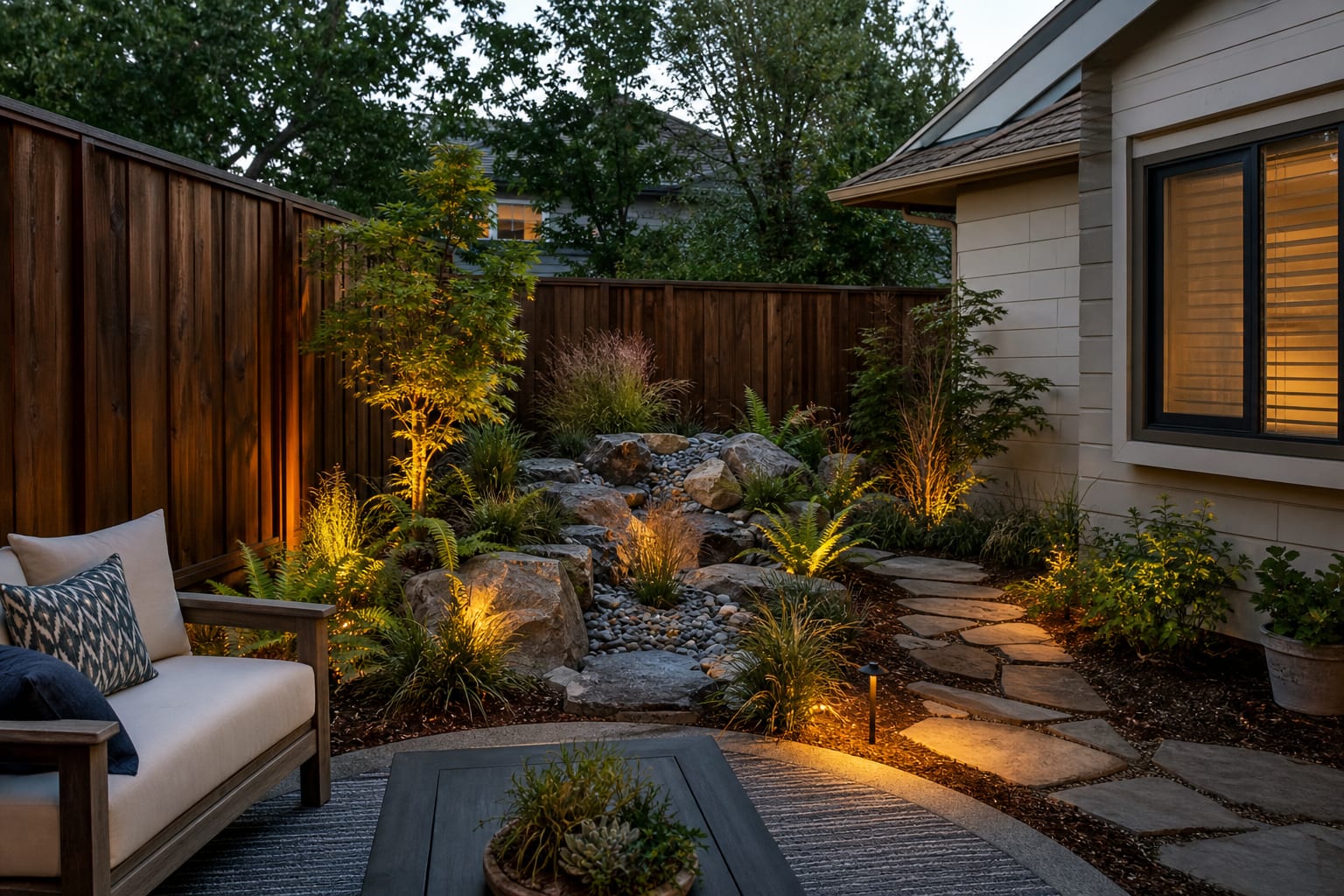
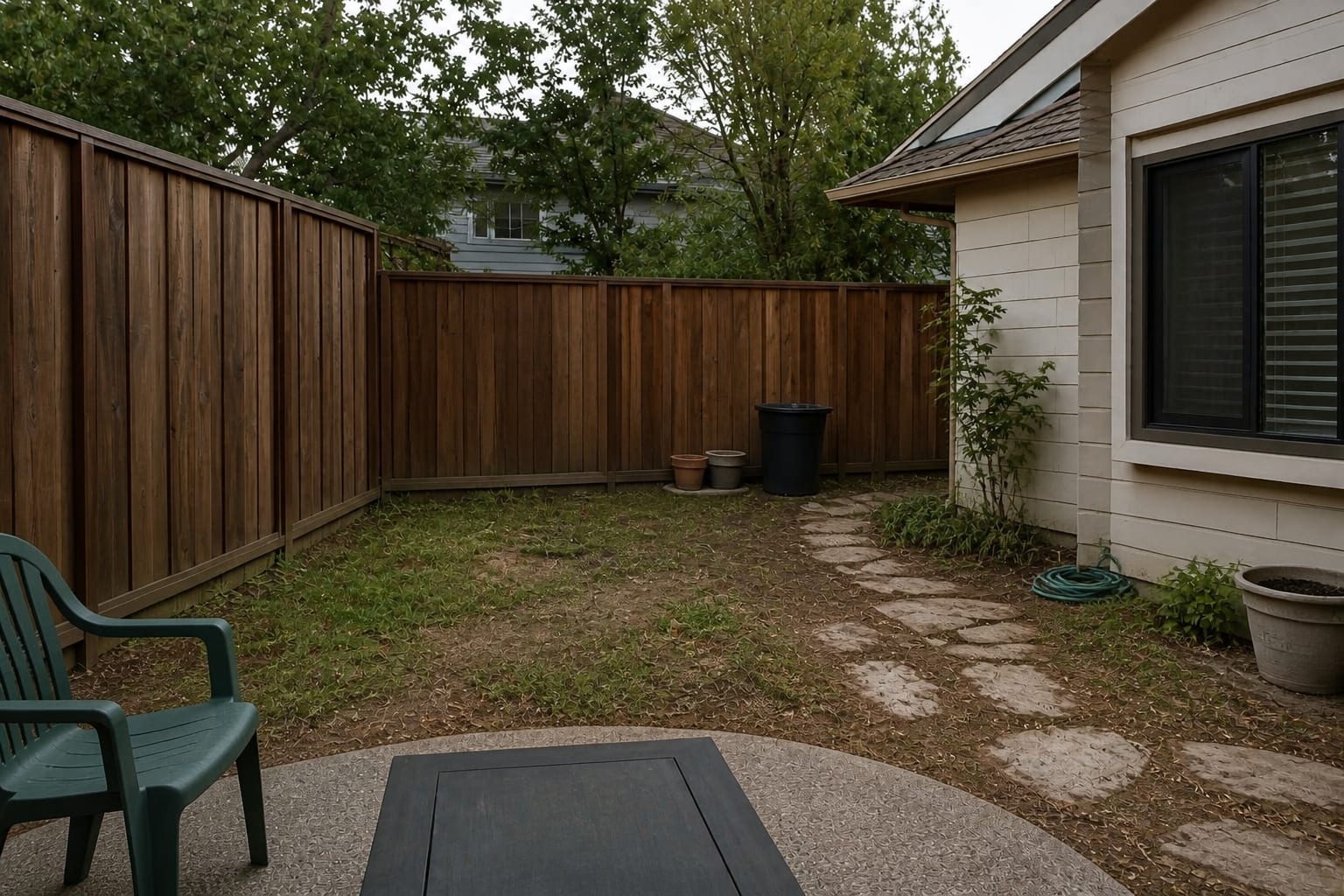
The best backyard waterfall ideas use a small grade change, a hidden pondless reservoir, and a 1,500-2,500 GPH pump to move water over an 18-36in drop across layered stone tiers. Plant the edges with grasses and ferns so the feature reads as a natural creek, not a kit with a hose hidden inside it.
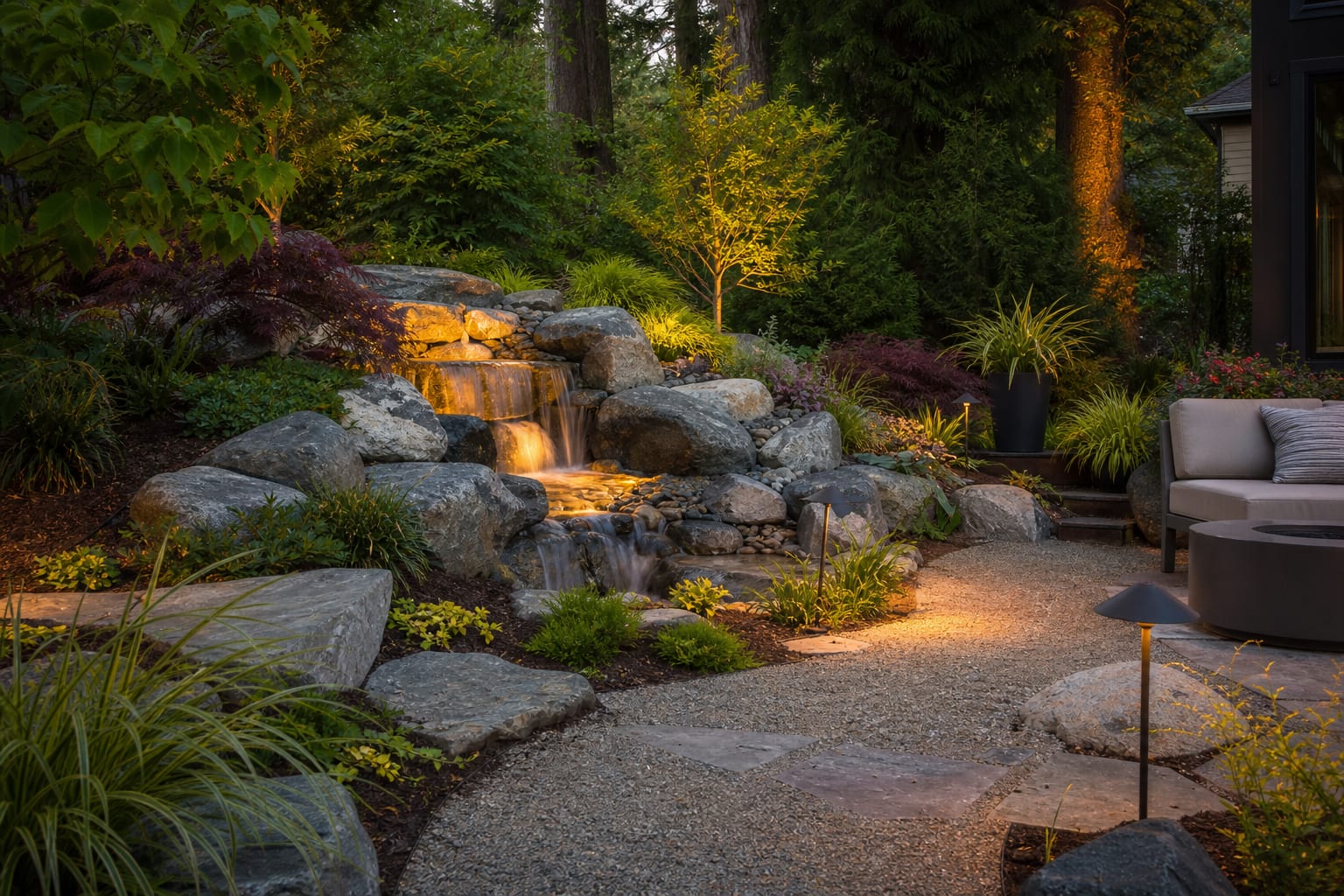
What makes a garden waterfall feel calm instead of fake?
A calming waterfall looks like water moving through the landscape, not performing on top of it. It needs a believable source, a visible path, and planted edges that blur the construction. Exposed liner and one ring of matching rocks against a fence almost always reads as a kit.
Start with the sound you want. For background noise near a patio, use a low spillway 12-18in wide broken over rough stone. For sound that masks traffic, use two or three small drops spaced 18-30in apart rather than one tall splashy drop. The best rock waterfall layouts borrow from dry creek beds: wider at the bottom, narrower near the source, slightly irregular.
Grade matters more than drama. On flat ground, build a shallow berm 18-24in high and feather the soil out 5-7 feet so it doesn't look dumped from a wheelbarrow. On sloped ground, tuck the waterfall into the existing fall line and let nearby steps or gravel explain why the water is there.
Which backyard waterfall ideas work without a full pond?
Pondless designs deliver moving water without an exposed pool to manage. The basin sits underground, covered with grating, gravel, and stone, while a pump recirculates water to the top.
- Low pondless waterfall in a perennial border: hidden reservoir at least 24-36in wide keeps splash inside the gravel zone; pairs well with hostas, ferns, sedges, and dwarf shrubs.
- Short rock stream to a patio: an 18-30in wide watercourse gives movement and sound while leaving a 36in walking path around seating.
- Stone wall spillway: a 12-16in spill opening into a gravel catch basin works when a retaining wall or terrace already exists, making the source feel architectural.
- Stacked basalt column or drilled boulder: best for compact beds under 6 feet deep; still needs a 3ft gravel apron to catch splash and hide the reservoir lid.
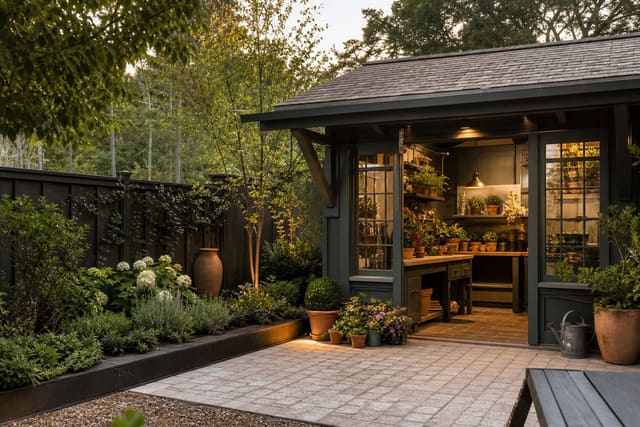
- Waterfall near a work zone: softens sound around a shed or potting bench; borrow the same clear-access thinking used in potting shed layouts.
- Dry creek bed continuing past the basin: helps drainage issues; grade gravel from small to large cobbles with 12-18in anchor stones at bends.
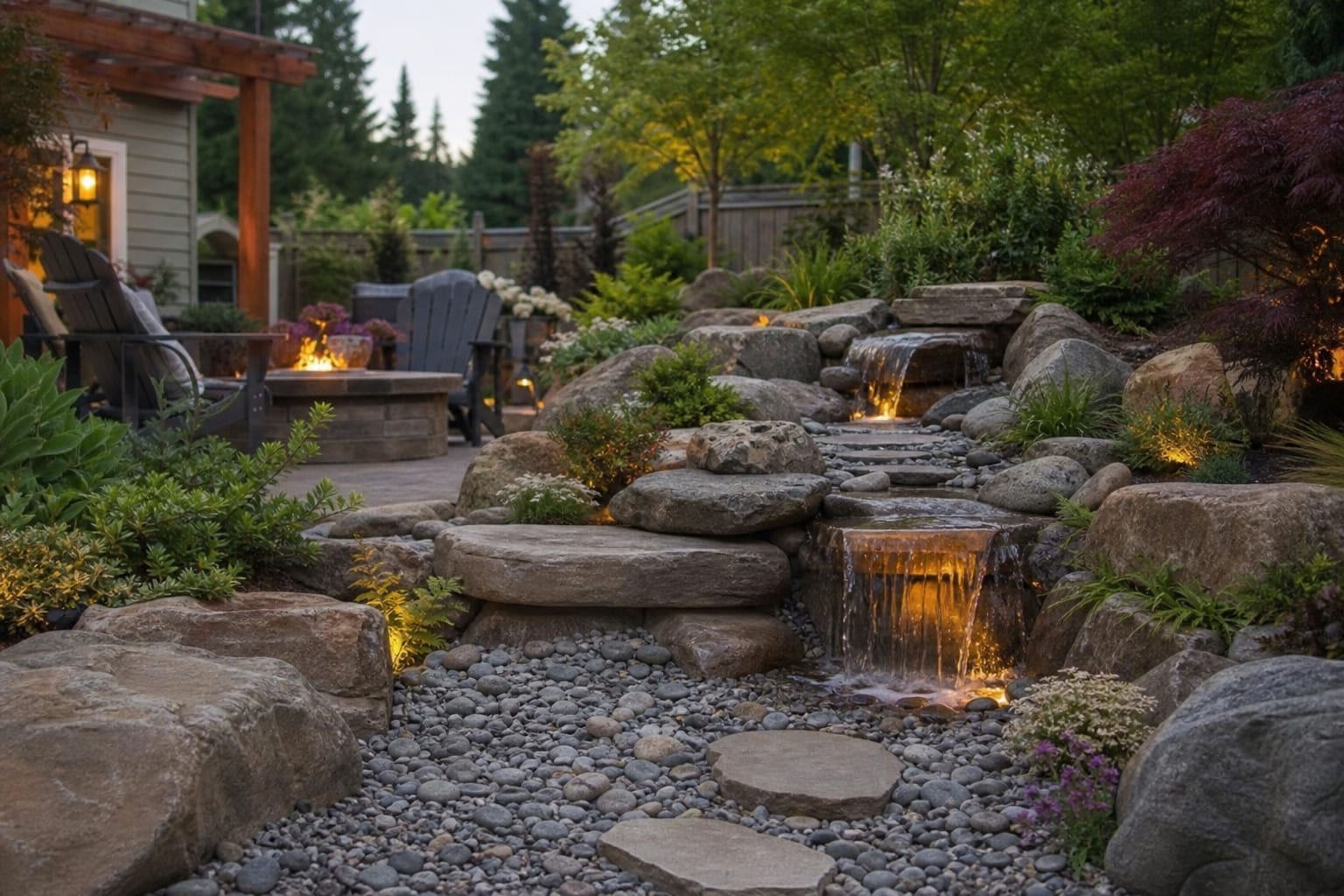
Test this on your own photo with ReDesign before choosing a direction. Keep the house edge, horizon line, hardscape, planting beds, and main path visible so the preview solves the space you actually have.
What are the most common backyard waterfall mistakes?
The biggest mistake is scale: a 4 foot cascade beside a 6 foot fence often looks like a theme-park entrance. Keep the fall low unless the yard already has strong grade or mature trees to support the height.
Exposed liner is the giveaway of a rushed build. Liner should disappear under overlapping stone, gravel, and plants; if you can see black plastic from the patio, add flatter cap stones and low planting first.
Using one size of stone everywhere is another problem. Real creek edges mix gravel, fist-sized cobbles, flat spill stones, and boulders set one-third into the soil; rocks perched on mulch look temporary.
Electrical planning is not cosmetic. Outdoor pumps need a GFCI-protected exterior outlet placed where cords won't cross paths or wet beds; plan this before the basin is dug.
Finally, don't plant fast-growing grasses or messy deciduous shrubs too close to the water. Leaves clog the intake. Keep low plants near the edge, taller plants behind the source, and one hidden stepping spot for pump access.
Should you preview a waterfall with AI design before building it?
Yes. Waterfall mistakes are expensive to undo once stone, gravel, liner, and electrical work are in place. Upload a straight photo of the garden corner and test a low pondless waterfall, a short stream, and a wall spillway, keeping the fence, patio edge, trees, and a doorway or window view in frame.
The preview should answer scale questions, not engineering ones: whether a 24in berm overwhelms a narrow bed, whether dark basalt feels too heavy against pale pavers, or whether the feature should shift 3 feet to align with a dining view. A landscape contractor still confirms excavation depth, reservoir size, pump flow, and wiring.
If the waterfall sits near evening seating, test lighting in the same preview. Low-voltage path lights should graze stone rather than blast the water from the front; warm 2700K lamps usually beat cool white outdoors. See outdoor lantern and candle placement for keeping flame, glare, and paths in balance.
Also preview the view from inside the house, since many waterfalls are seen more from a kitchen window than from the lawn. The same anchoring logic used for backyard office shed settings applies here: foreground planting makes both features feel intentional.
How do you finish a waterfall so it belongs to the garden?
Plant the shoulders, not the mouth, of the waterfall: evergreen structure behind the source, textured perennials along the sides, and groundcovers near the basin to soften edges without blocking access.
Repeat materials already in the yard. Bluestone patios pair with blue-gray spill stones; pea gravel paths should relate in color to basin gravel rather than introducing bright white river rock that draws the eye.
Plan for seasonal mess. Heavy leaf drop near the basin means more frequent cleaning, and in windy areas skip tiny lightweight gravel, which migrates into beds. Rounded stones 1-3in across stay put while still hiding the reservoir.
Keep furniture 6-10 feet from the water so spray doesn't reach cushions, and aim the spill sound toward seating while hiding the pump hum behind stone and planting.
Frequently Asked Questions
How tall should a backyard waterfall be?
18-36in is right for most residential yards. This height creates sound without splashing beyond the basin, and taller falls need wider stone tiers to contain the spray.
Pondless vs. pond waterfall: which is better?
Pondless installations hide the reservoir under gravel, eliminate drowning risk, and are safer around kids and pets. Full ponds support fish and broader planting but require monthly upkeep.
What pump size does a waterfall need?
Use 1,500-2,500 GPH for an 18-24in fall over a 24in spillway. Underpowered pumps produce a weak trickle that reads more like a leak than a feature.
Will a backyard waterfall be too noisy?
A 24in fall at 2,000 GPH produces a soft 55-60dB near the seating zone, enough to mask traffic without drowning out conversation. Taller falls get louder and need a deeper basin to control splash.
What plants belong around a waterfall?
Layer ferns and hostas for shade and humidity, ornamental grasses for movement, and one or two flowering perennials for color. Avoid leaf-heavy deciduous plants that overhang the spillway and clog the pump.
> Try this: Ready to see this on your own outdoor space? Open ReDesign and run the preview before you buy materials, plant, drill, or move furniture.
Three transformations to try
1. Pondless rock waterfall with grasses 2. Two-tier waterfall with planted basin 3. Modern sheet waterfall with stone wall