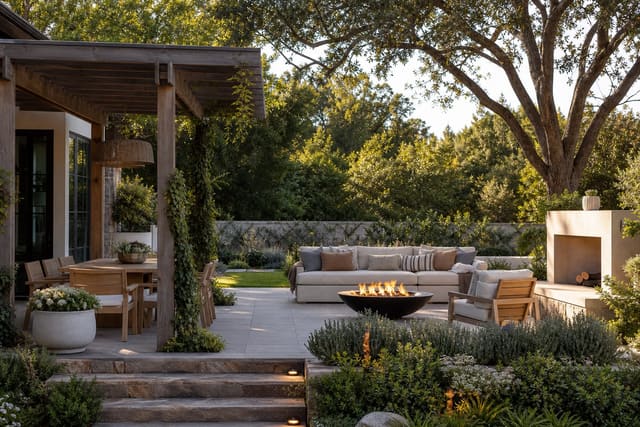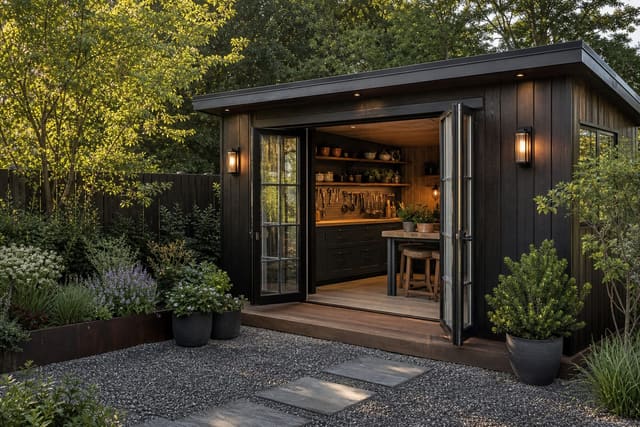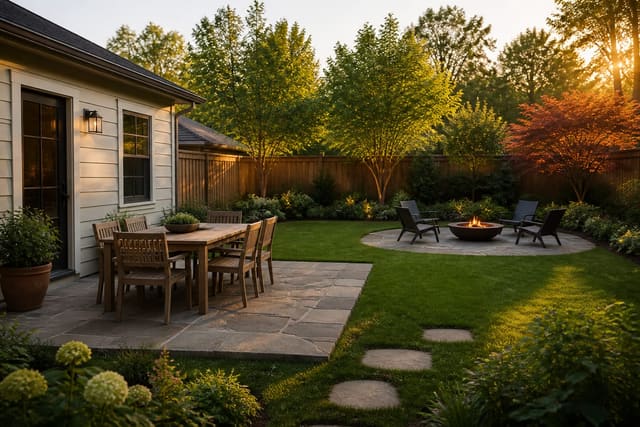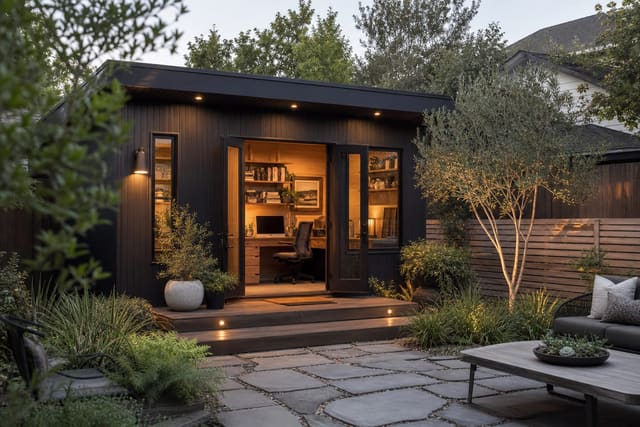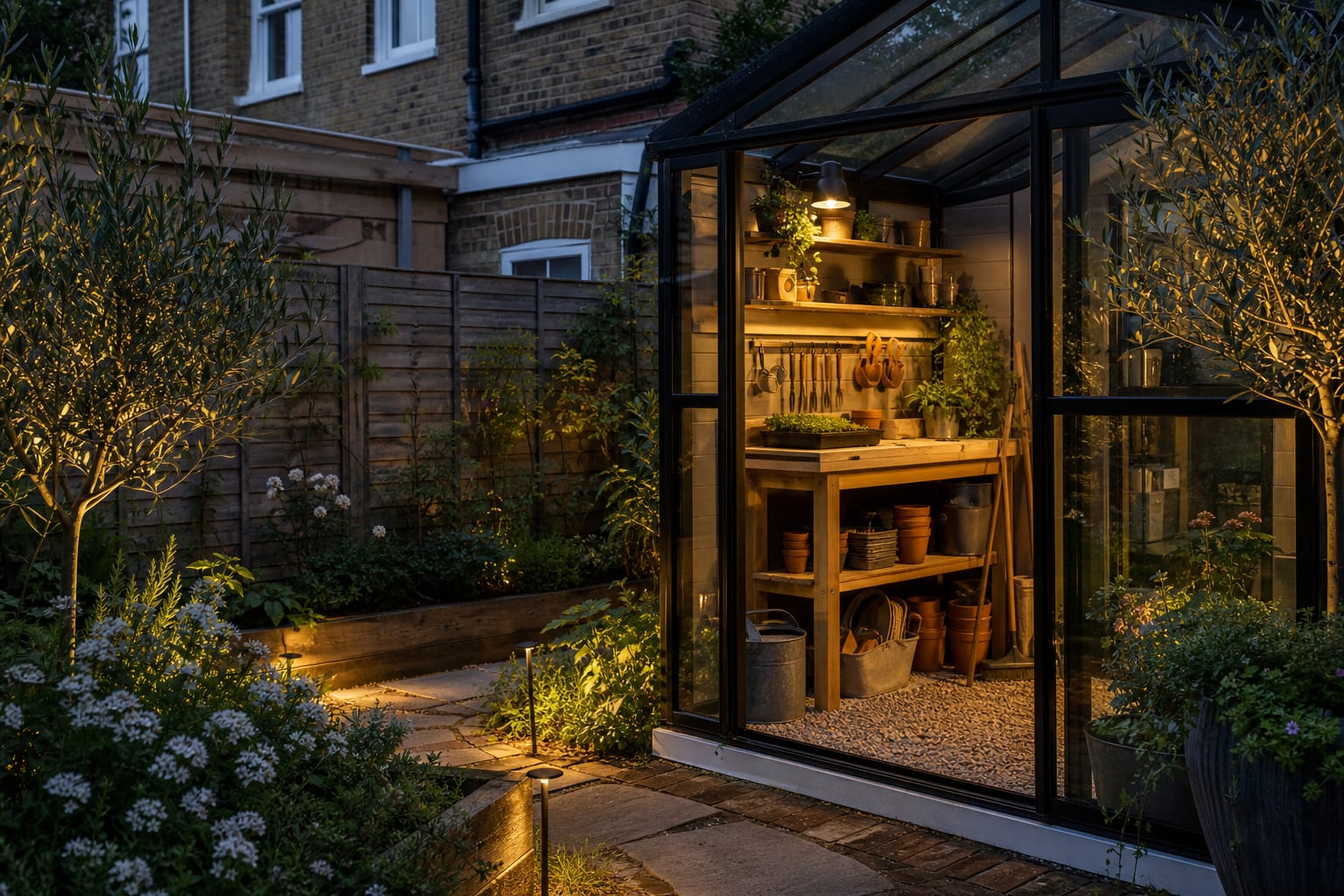
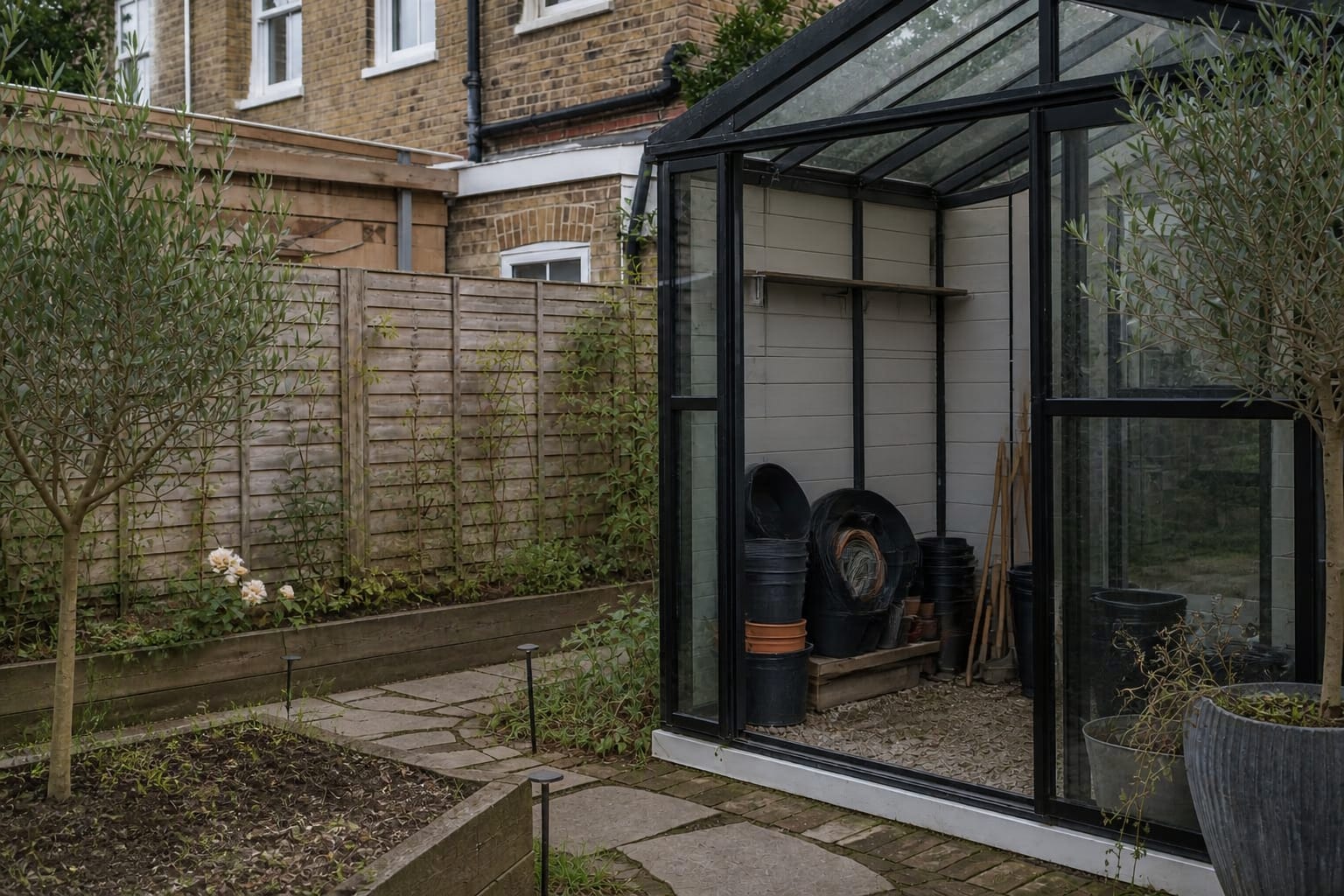
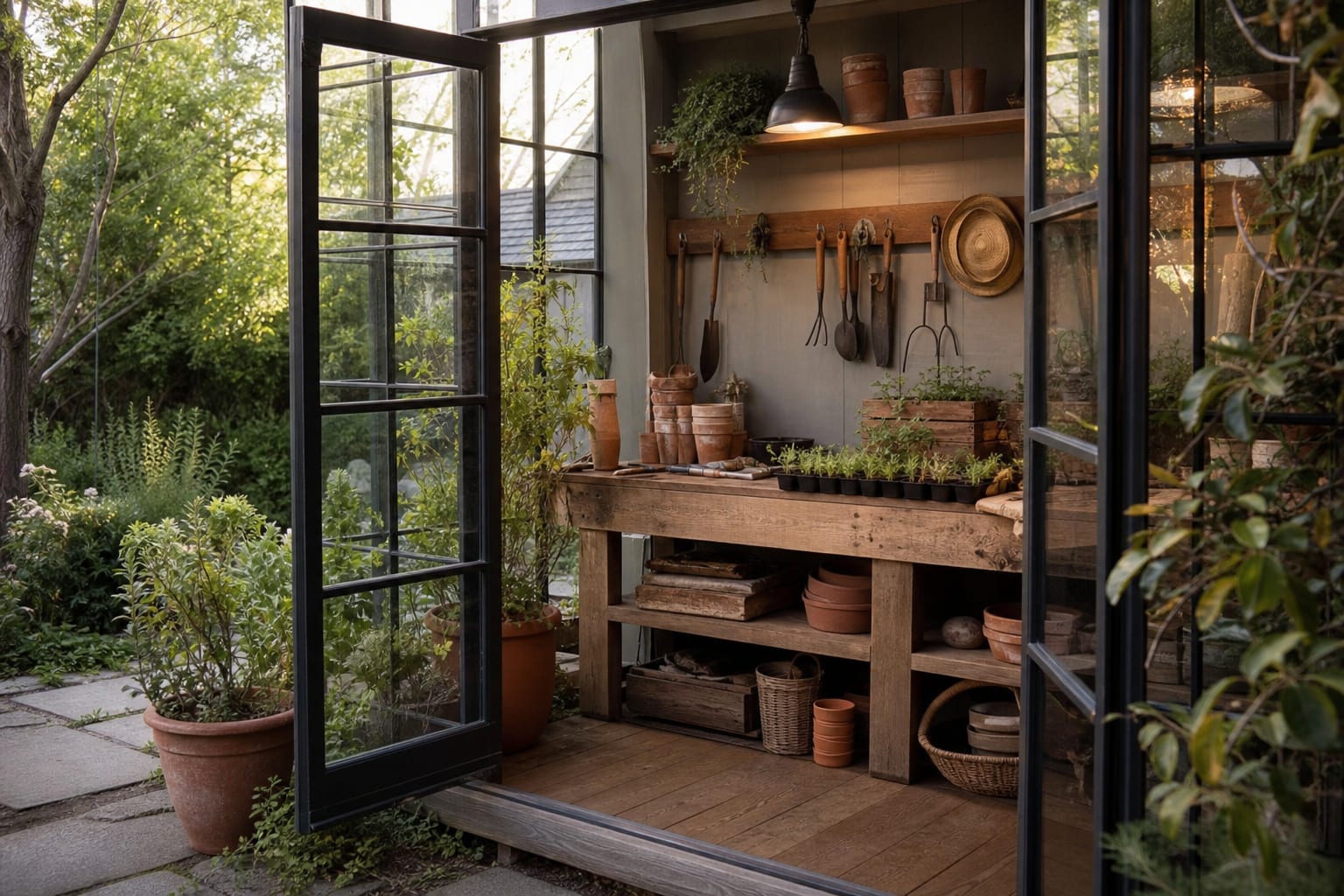
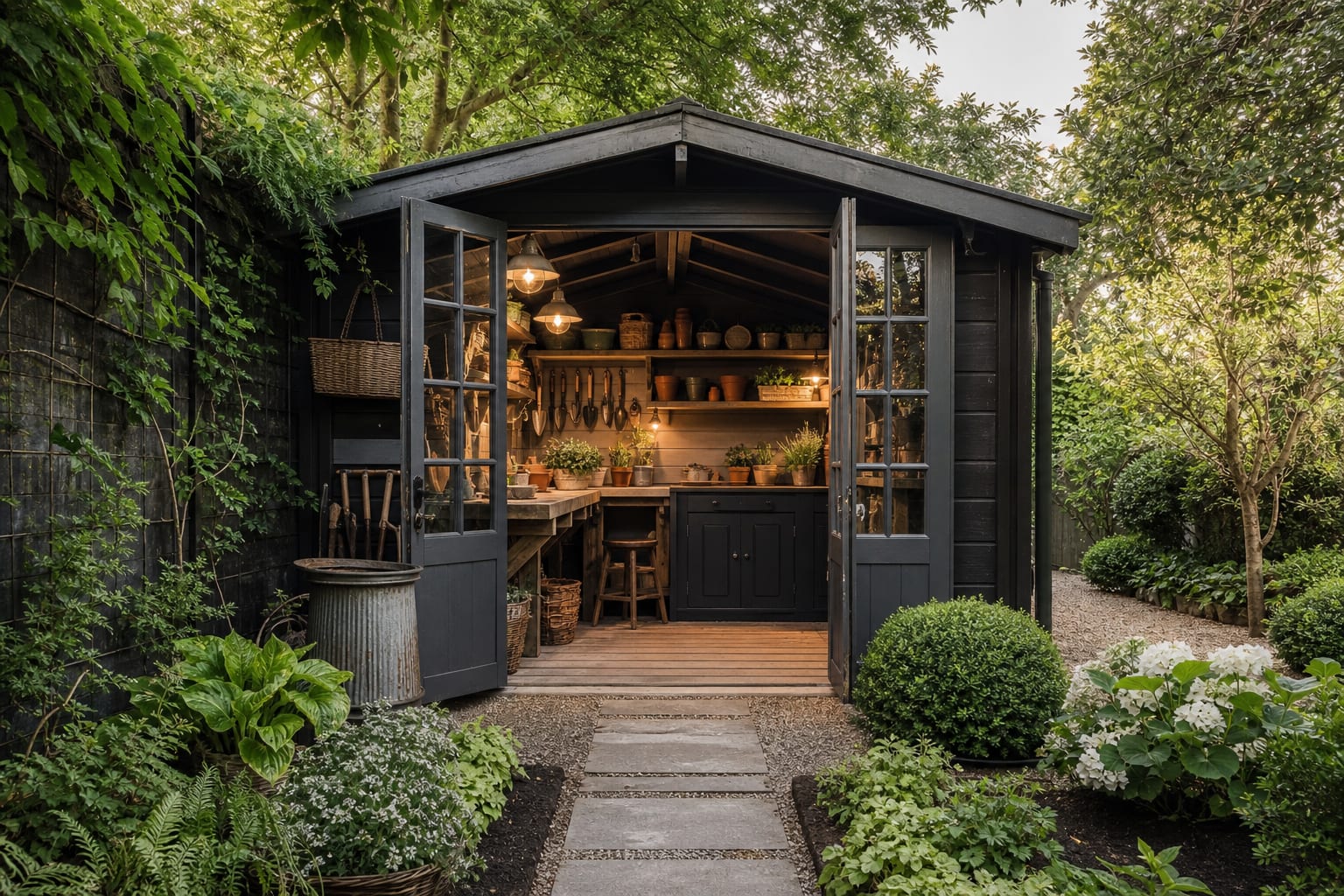
A working potting shed pairs a 24-36in deep bench along the longest wall under a window with peg rails, open shelving, tough flooring, water access, and a clear route from garden bed to bench. Even a 4x6 shed earns its footprint with this layout — the design has to survive wet soil, seed trays, pruners, and muddy boots, not just look good in photos.
What makes a potting shed work harder than a cute garden shed?
The bench is the anchor, not an afterthought squeezed between compost bags. Aim for a surface 34-36in high, 24-30in deep, and at least 48in wide if you start seedlings or pot containers over 10in across; two gardeners want 72in of length.
A greenhouse conversion needs shade and dry storage more than the glass-house fantasy suggests. Seedlings want bright light, but tools, labels, twine, and fertilizer need shelves away from condensation — put heavy bags 12-16in off the floor so you can sweep beneath them, and keep the top shelf under about 72in.
A plain garden shed has the opposite problem: enough enclosure but not enough light. Add a window, glazed door, rooflight, or at least a bright task fixture over the bench. Warm 2700-3000K light is pleasant for evening tidying, but the bench itself needs a clearer task beam for seed packets and small pests.
| Starting structure | Strongest potting-shed move | Spec to copy |
|---|---|---|
| Old greenhouse | Add shaded storage and a solid bench wall | Shade cloth on the hottest side; shelves no deeper than 12in above the bench |
| Timber shed | Add daylight and washable lining | Glazed door or window; line the bench wall with painted plywood, pegboard, or tile backer |
| Lean-to | Protect the working edge from rain | Keep the bench 18in inside the roofline; gravel or pavers at the entrance |
| Large storage shed | Split tools from potting work | Reserve a 30-36in clear aisle so storage doesn't swallow the bench |
If your shed sits near a work-from-home structure, the same sightline discipline applies — see backyard office shed layouts for how paths, foreground planting, and door placement keep a small structure feeling connected rather than abandoned at the fence line.
Test this on your own photo with ReDesign before you commit to a direction; keep the house edge, horizon line, hardscape, planting beds, and main path visible so the preview solves the space you actually have.
Which potting shed layout suits the way you garden?
A seed starter, a cut-flower gardener, and a vegetable grower need different storage rhythms. Match the layout to your habits, then keep it attractive through material discipline rather than extra clutter.
- Seed-starting wall: shallow 10-12in shelves so trays stay visible, with 16-18in between shelves for domes or grow lights.
- Tool rail instead of a cabinet: hooks or a peg rail mounted 36-66in up keeps trowels and secateurs visible without eating bench space.
- Compost and potting-mix bay: an 18-24in deep bin holds bags upright; a removable front board stops soil from spilling across the floor.
- Washing corner: only if drainage is realistic — a wall-mounted hose bib plus a 24in gravel splash zone often beats a full utility sink.
- Greenhouse propagation split: keep plants in the glazed end and move packets, canes, and gloves to the shaded storage end.
- Flower-cutting station: a 30in clear counter with a bucket shelf below and wall hooks for snips keeps pollen and dripping stems out of the kitchen.
- Mini mudroom at the door: a 30in boot tray, two hooks, and a narrow glove shelf stop clutter before it reaches the bench.
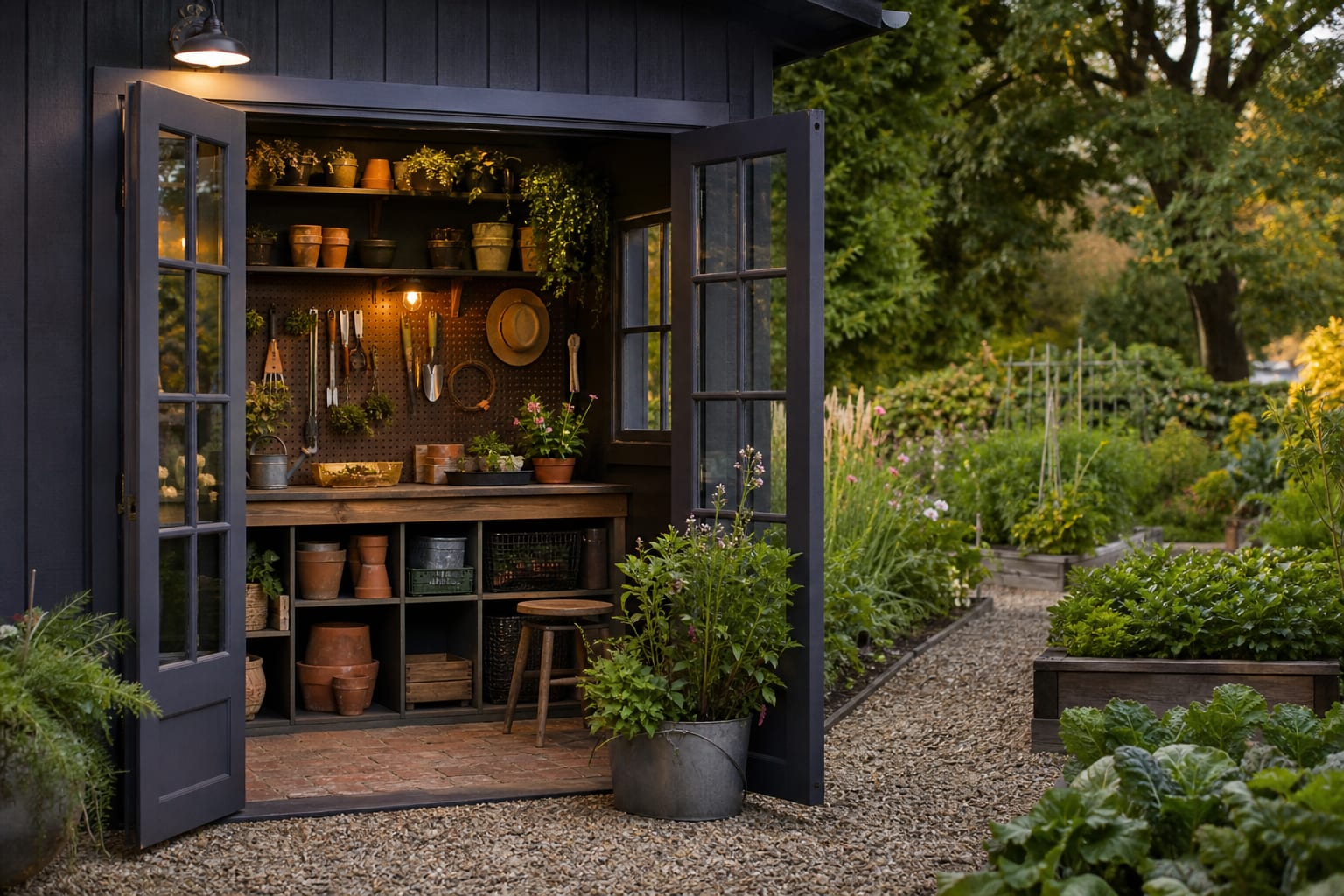
For evening gardeners, a hardwired sconce, shielded ceiling light, or path lanterns keep the shed usable after dark; the spacing logic in outdoor lantern and candle placement helps avoid glare and foot-traffic conflicts near the entrance.
If a water feature shares the garden corner, keep moisture zones separate. Borrow the service-access thinking from backyard waterfall design and leave a 24in dry route so wet stone and potting work don't compete for the same strip of ground.
What potting shed mistakes should you avoid?
- Burying the bench under storage. Keep a permanent 36-48in clear counter section; put bulky seasonal supplies under the bench or on one dedicated wall instead.
- Using indoor finishes. MDF, indoor wallpaper, untreated softwood, and household rugs fail against compost dust and damp. Use exterior paint, sealed plywood, galvanized trays, or washable panels.
- Ignoring temperature swings. Glass greenhouses overheat tools and chemicals; uninsulated sheds can freeze liquids. Store sensitive items in a lidded box on the coolest wall.
- Letting the doorway bottleneck. A door that swings into the bench, or a path under 24in, makes every tray trip annoying — rehang the door outward or move the bench.
- Prioritizing decoration over cleaning. Open terracotta stacks and baskets collect spiders and wet leaves. Keep photogenic items high and dry; use smooth bins for weekly-use supplies.
How can AI design help before you commit?
Upload a straight photo of the greenhouse, shed, or garden corner, then test a bench under the window, a full tool wall, a sink corner, and a storage-heavy version from the same angle. Ask for real constraints: a 36in workbench, a 30in walking route, open shelves for terracotta pots, closed bins for seed packets, and warm exterior lighting at the door. The preview won't verify plumbing or structure, but it shows whether the design still leaves room for muddy boots and daily garden work.
Frequently Asked Questions
How big should a potting shed be?
6x8ft fits a workbench, peg storage, and seed-tray shelves. A 4x6 shed still works with one wall of bench, while an 8x10 shed can carry a full potting bench plus a propagation table.
Does a potting shed need windows?
Yes. At least one operable window above the bench provides daylight and ventilation, and a south or east aspect gives seedlings morning light.
What workbench height is right?
34-36in for standing potting work — slightly higher than a kitchen counter, since most potting motions pull material toward the body rather than push down on it.
Should a potting shed have plumbing?
An outdoor spigot within 6ft is enough for most gardeners. Running interior plumbing only pays off for serious propagators or orchid keepers who need frequent indoor water access.
Can a greenhouse double as a potting shed?
Yes. Add a 24-36in deep workbench under one solid wall and reserve the glazed wall for seedlings and propagation. A greenhouse without a work surface becomes an inefficient potting space regardless of light.
> Try this: Ready to see this on your own outdoor space? Open ReDesign and run the preview before you buy materials, plant, drill, or move furniture.
Three transformations to try
1. Compact potting shed with workbench and peg rail 2. Greenhouse converted to potting shed 3. Potting shed with seed-tray shelving