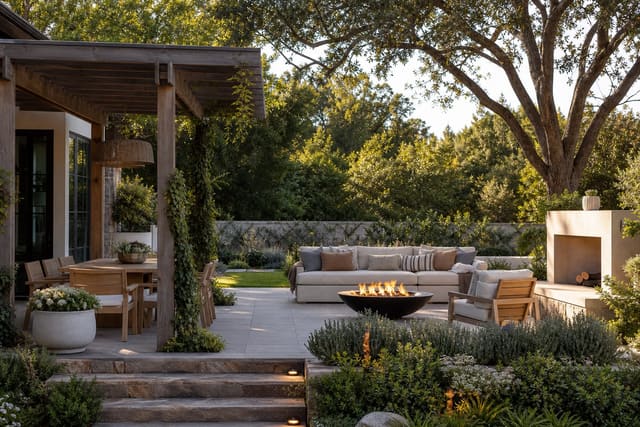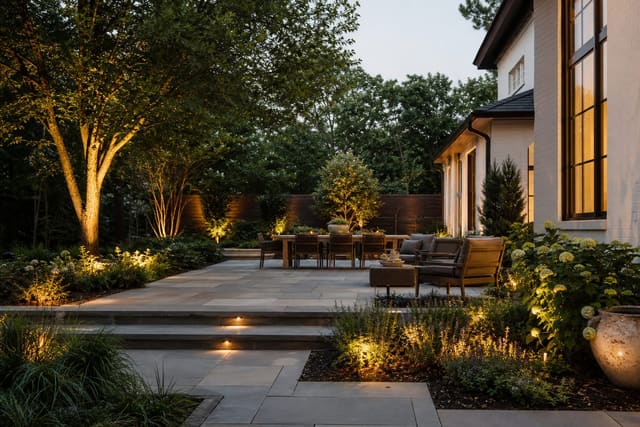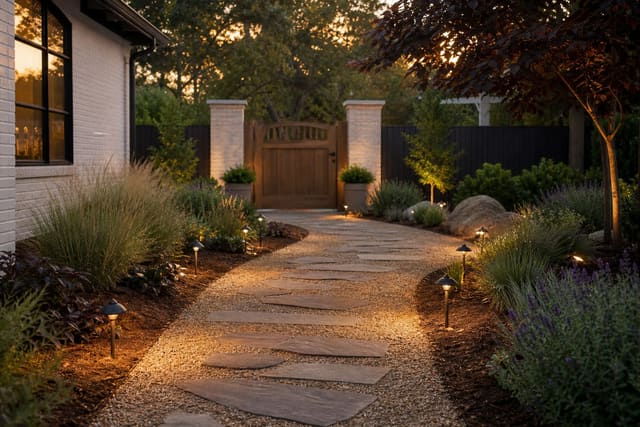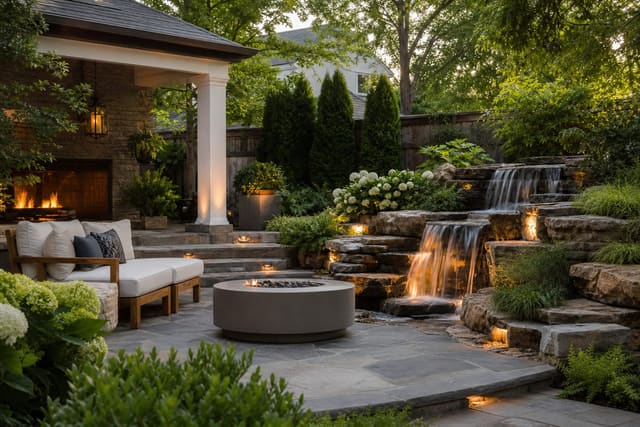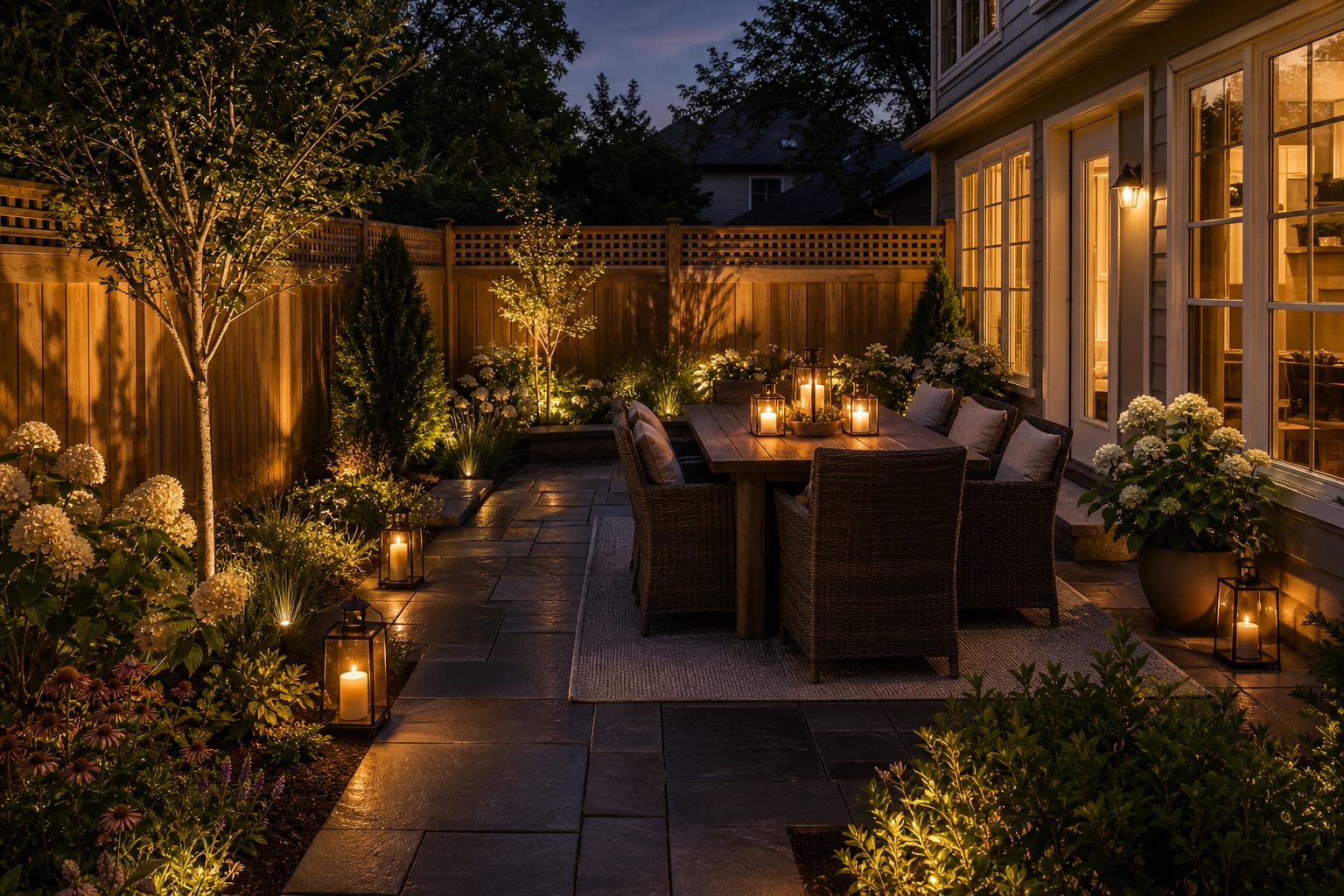
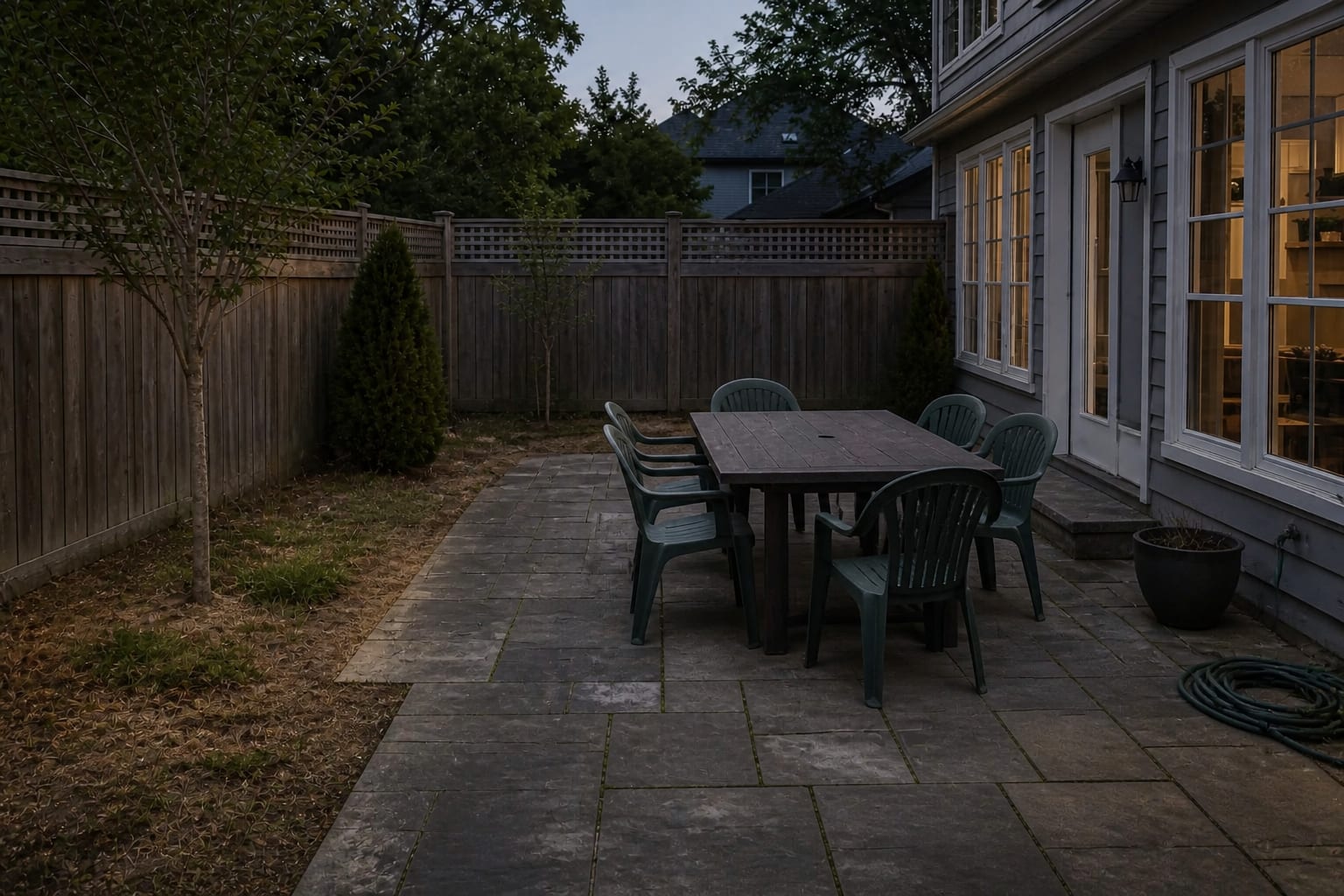
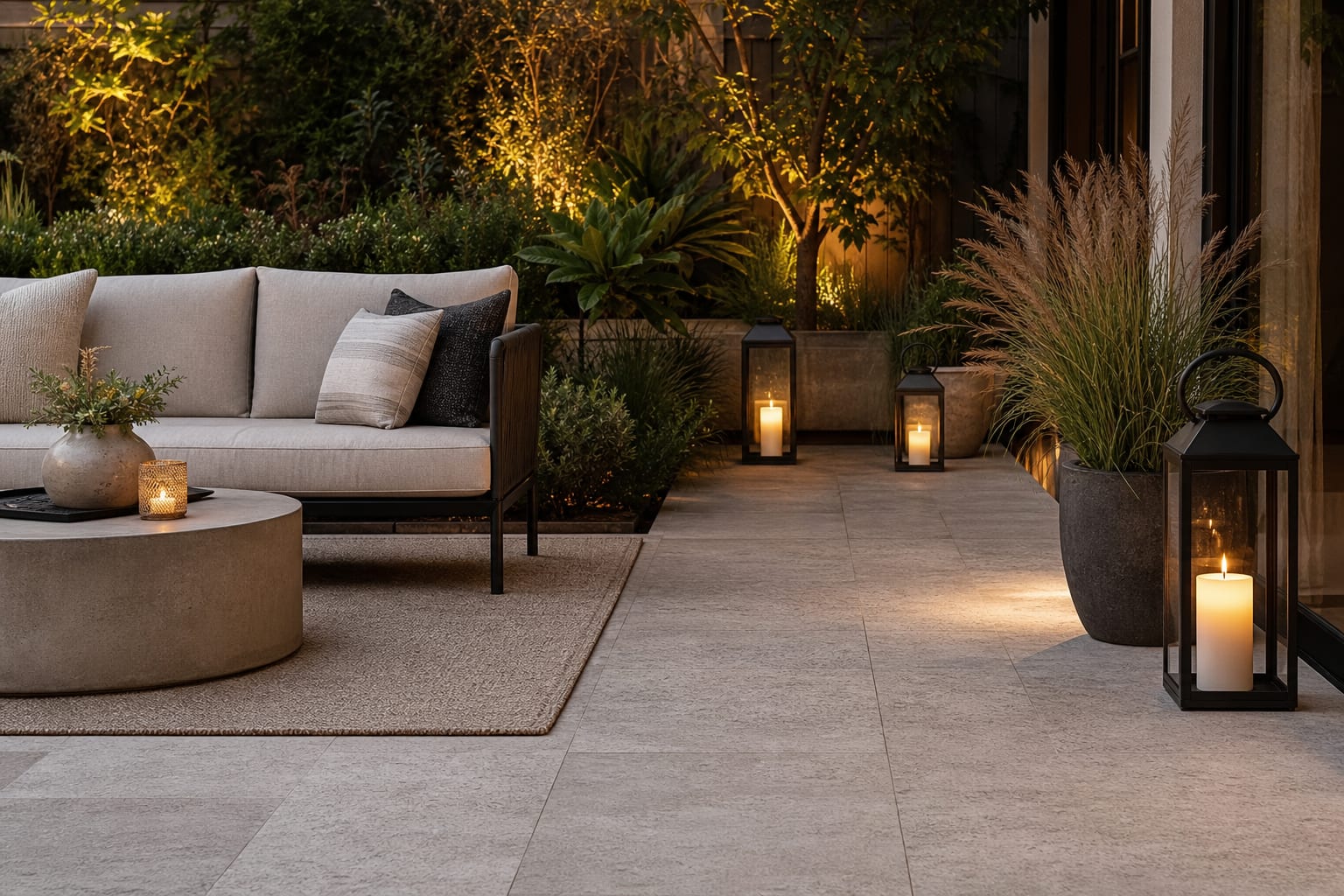
Create ambient lighting outdoors with lanterns by layering low, shielded light around the table edge, seating corners, steps, and planting so faces glow without glare — layered over your existing path and uplights, never replacing them. One lonely lantern in the middle of a table only lights the salad bowl. The goal is warm, safe pockets of glow, not an evenly bright yard.
What makes outdoor candlelight feel intentional after dark?
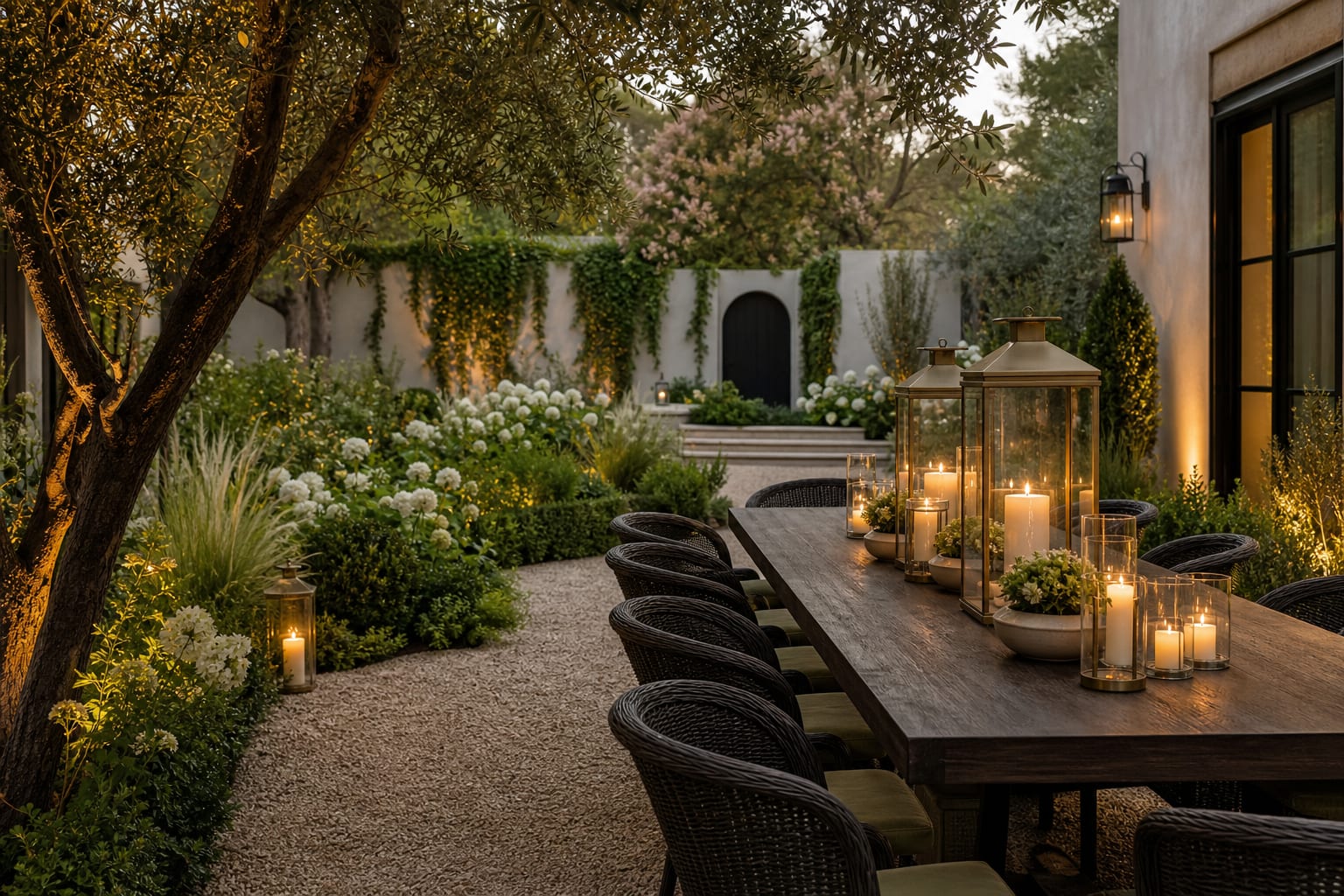
Good outdoor candlelight outlines the parts of the garden people actually use — the dining surface, the route to the door, the lounge chairs, the first step off the patio. Gardens don't need even light; they need pockets of glow with soft shadow between them.
For a six-person dining table, use either three medium lanterns along the centerline or two lanterns plus low votives in heavy glass cups. Keep the tallest tabletop lantern under 14 inches so conversation doesn't happen through a metal cage.
Floor lanterns belong just outside chair legs, not in the walking path. Leave 30–36 inches of clear space from the kitchen door to the table, and tuck lantern clusters 4–8 inches off the path edge so they read as guidance, not clutter.
Near a pond or water feature, stay quieter — reflections double the visual movement, so a few shielded lights beat a row of bright fixtures. The same restraint applies to backyard waterfall lighting around planting.
Which lantern and candle setups suit a garden dining zone?
The right setup depends on wind, table size, overhead cover, and whether you're hosting quiet drinks or full meals. A small bistro table needs one restrained lantern; a long family table needs repeated rhythm and safer flame control.
| Setup | Best garden use | Spec to copy | Watch out |
|---|---|---|---|
| Glass hurricane lanterns | Dining tables, calm patios | 10–14 in height, 3 in candle diameter | Thin glass cracks if dragged across stone |
| Metal floor lanterns | Path edges, sofa corners | 18–30 in height, weighted base | Black interiors can swallow too much light |
| Rechargeable LED candles | Rentals, windy decks, kids' parties | 2200K–2700K warm-white flame | Cheap flicker looks orange and frantic |
| Hanging lanterns | Pergolas, tree limbs, covered patios | Bottom at least 78 in above walking areas | Hooks and branches must handle movement |
| Citronella candles | Occasional bug-prone dinners | Place 6–10 ft from food, not on plates | Scent competes with dinner and flowers |
Glass hurricanes are the workhorse because they make candlelight behave — choose a vessel wide enough that the flame sits at least 1 inch from the glass wall. On a narrow table, a 4–5 inch diameter hurricane beats a giant lantern that steals platter space.
Rechargeable candles aren't a compromise if the flame color is convincing: look for matte wax or frosted resin, a remote or timer, and a warm setting. They're ideal for apartment patios, covered porches, and windy decks where relighting real candles turns dinner into maintenance.
Hanging lanterns need discipline — lower over a dining table since no one walks through the center, but at least 78 inches above a path. If hanging from a branch, use a wide strap or proper outdoor hook to protect the bark.
Test this on your own photo with ReDesign before committing — keep the house edge, horizon, hardscape, planting beds, and main path visible so the preview solves the space you actually have.
Five outdoor lantern candle ideas that layer well
- Frame the table with two floor lanterns instead of centering everything on the tabletop. Place one near each short end, 12–18 inches from the chair pull-out zone.
- Line a wall or step with low glass votives, spaced 18–24 inches apart in heavy cups, kept clear of dry grasses and cushions.
- Pair one statement lantern with smaller supporting candles. A 24 inch floor lantern anchors a patio corner while three 8 inch hurricanes echo the glow on the table.
- Connect a shed or workspace to the patio. A sconce-height lantern by the door and a low path marker keep an outbuilding from disappearing at night — the same idea used in backyard office shed ideas with planted paths.
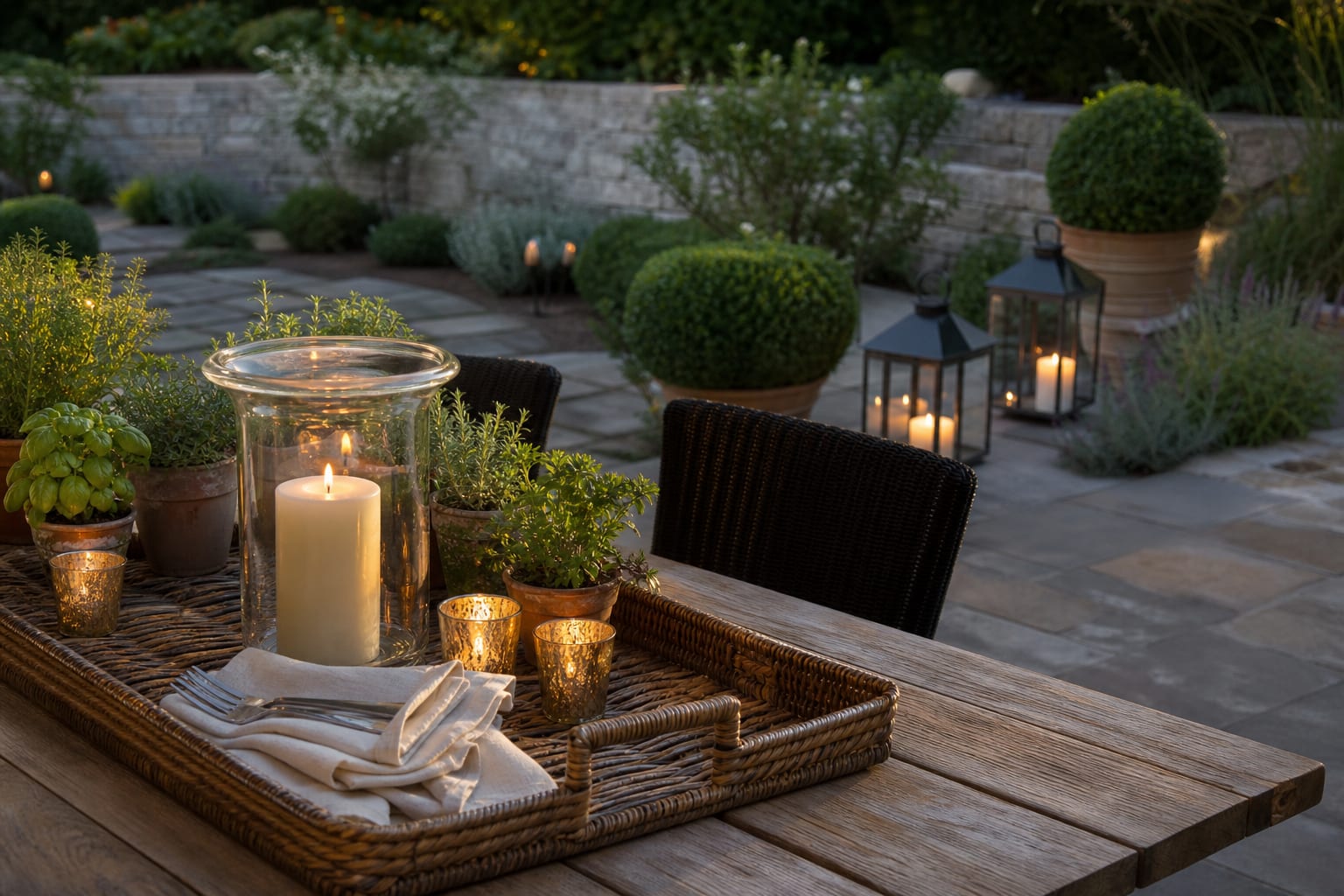
- Build a portable candle tray. A 16–20 inch metal or stone tray with one hurricane, two votives, and a small pot of rosemary or thyme moves from dining table to coffee table as the evening shifts.
Common outdoor lantern mistakes to avoid
- Buying lanterns too small for the space. A 6 inch decorative lantern vanishes on a 12 foot patio — use larger floor pieces at the perimeter and save small votives for the table.
- Choosing bright white LEDs over warm light. If a bulb or candle reads blue against skin, swap it for 2200K–2700K and let a real task fixture do the practical work.
- Ignoring wind. Open taper candles drip and blow out fast; use hurricanes, deep lanterns, or flameless candles anywhere the patio catches a cross-breeze.
- Blocking circulation. Lanterns shouldn't narrow a path below 30 inches or force guests to step around a glowing obstacle while carrying glassware.
- Lighting every surface. Choose the table, the entry route, and one background moment, then stop — restraint reads as intentional, excess reads as nervous.
How can AI help preview garden lighting before you buy?
AI design helps because the hard part is proportion, not taste. Upload a dusk or late-afternoon photo of the patio, table, or path, then preview black metal lanterns, clear hurricanes, rattan holders, and warmer LED points before ordering a matching set.
Tie the preview to real measurements — test three lanterns on a 72 inch table rather than a crowded line of seven, and don't approve big floor lanterns on both sides of a 36 inch path if people still need to walk through. Use the photo from the door or seat you actually use, not a flattering angle nobody sees.
If a shed or potting area sits in view, preview lanterns near it so the whole yard connects after dark; potting shed ideas with exterior lighting are easier to judge when path and door glow appear together. The preview won't replace outdoor-rated labels, fire safety, or checking a hook's weight limit — but it will show whether the table needs lower light or the garden needs one larger edge glow instead of more tiny candles.
Frequently Asked Questions
Are real candles safe outdoors?
Yes, inside glass hurricanes or pillar lanterns that shield the flame from wind and tipping. Open pillar candles on a dining table tip over in any 5+ mph gust, so always use a vessel at least 2–3 inches taller than the flame.
LED flameless or real flame?
Real flame gives warmer color and a gentle flicker with small radiant glow, while high-end LED flameless candles convincingly replicate that flicker and suit windy patios, kid-and-pet zones, and HOA-restricted areas. Choose based on wind exposure and maintenance tolerance.
How many lanterns does a table need?
A 6-person table needs about three: a center cluster of two plus one taller pillar anchor, or a single 18-inch-plus hurricane as a standalone centerpiece. One small lantern alone reads as an afterthought.
Where do floor hurricanes belong?
At the corners of a seating zone, at the start and end of a path, and flanking steps or doorways. They mark perimeter and transition points, not the middle of a walkway where they become a trip hazard.
Can lanterns replace hard-wired path lighting?
No. Lanterns and candles add atmosphere and accent on top of a hard-wired safety layer; relying on candles alone for path circulation creates trip hazards once they burn out or blow over.
> Try this: Ready to see this on your own outdoor space? Open ReDesign and run the preview before you buy materials, plant, drill, or move furniture.
Three transformations to try
1. Dining table lantern cluster with hurricanes