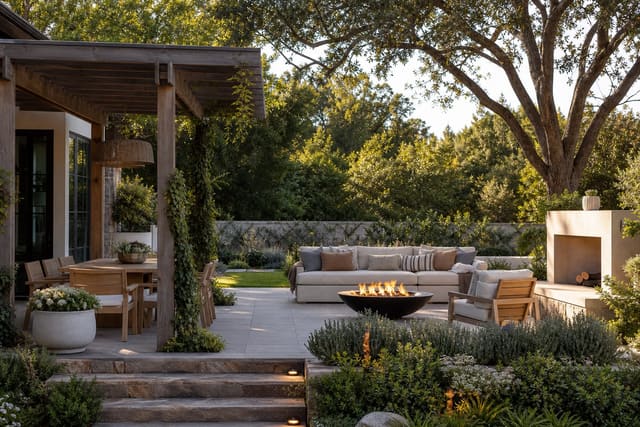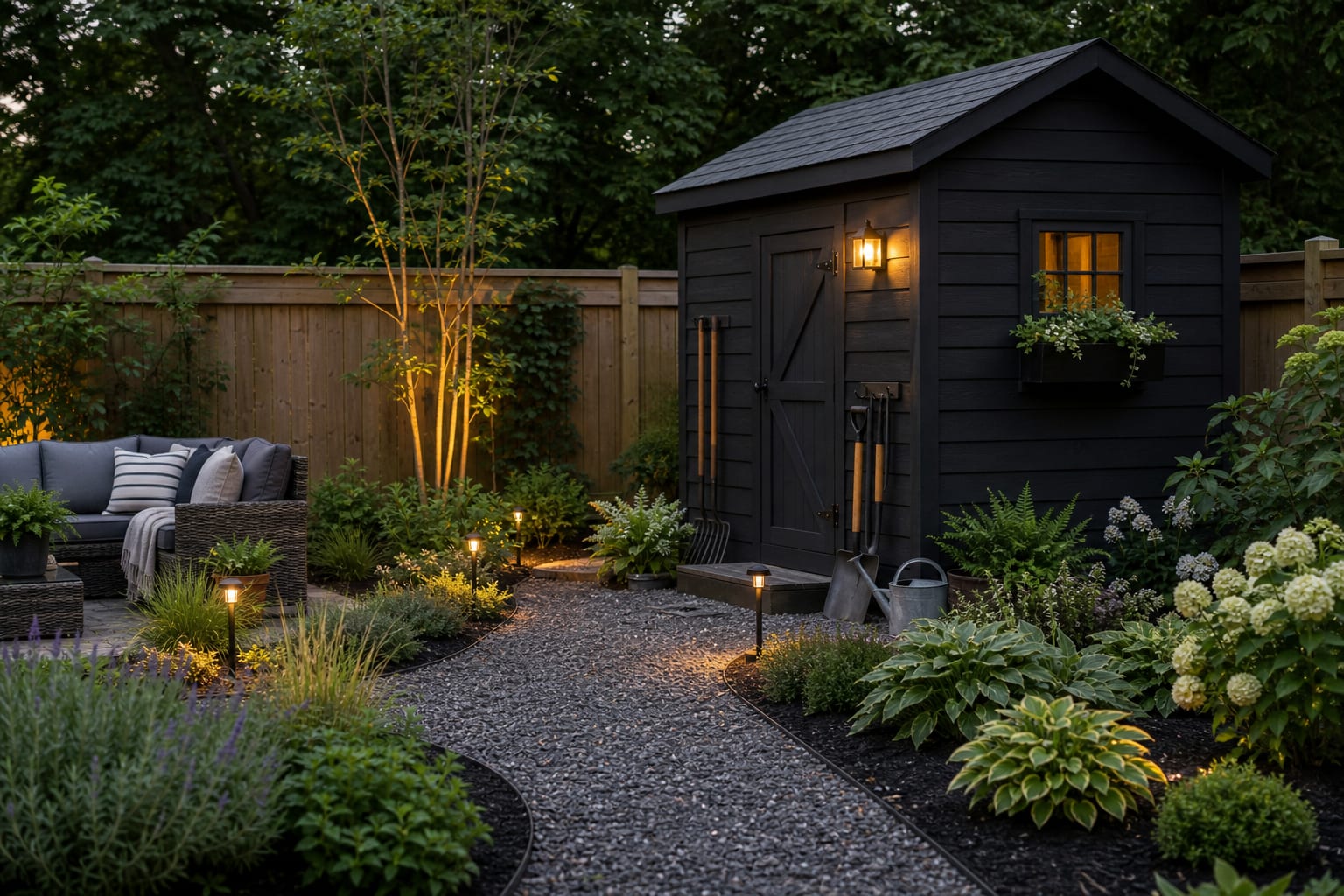
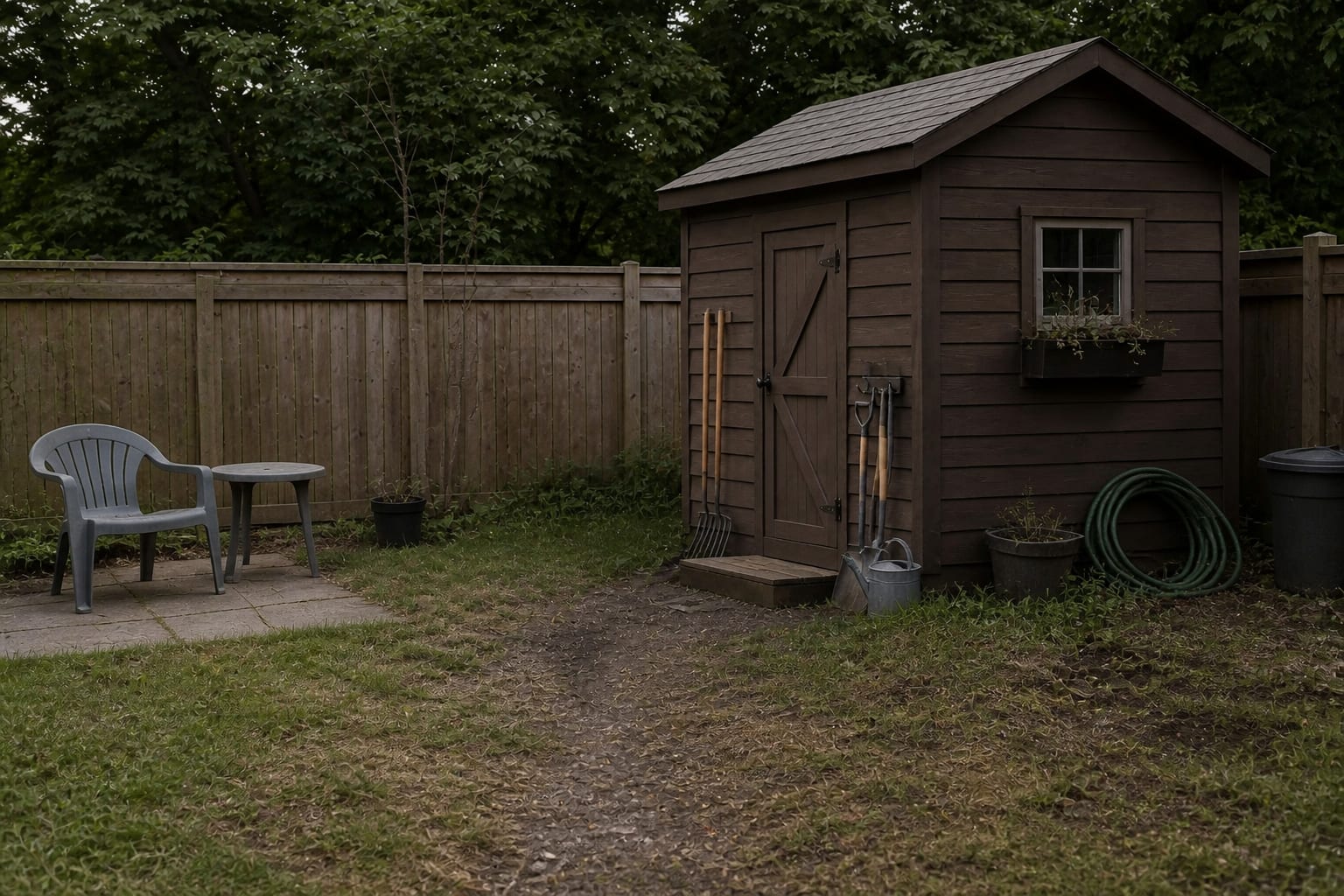
A garden shed works when you decide its job first, then size the footprint, doors, path, light, storage, and exterior materials around how you'll actually use it — an 8x10 or 10x12ft structure with a tool wall, a workbench under a window, a defined path, and exterior finishes that echo the house reads as part of the property instead of a delivery. The best shed is designed like a tiny outdoor room, not bought as a box.
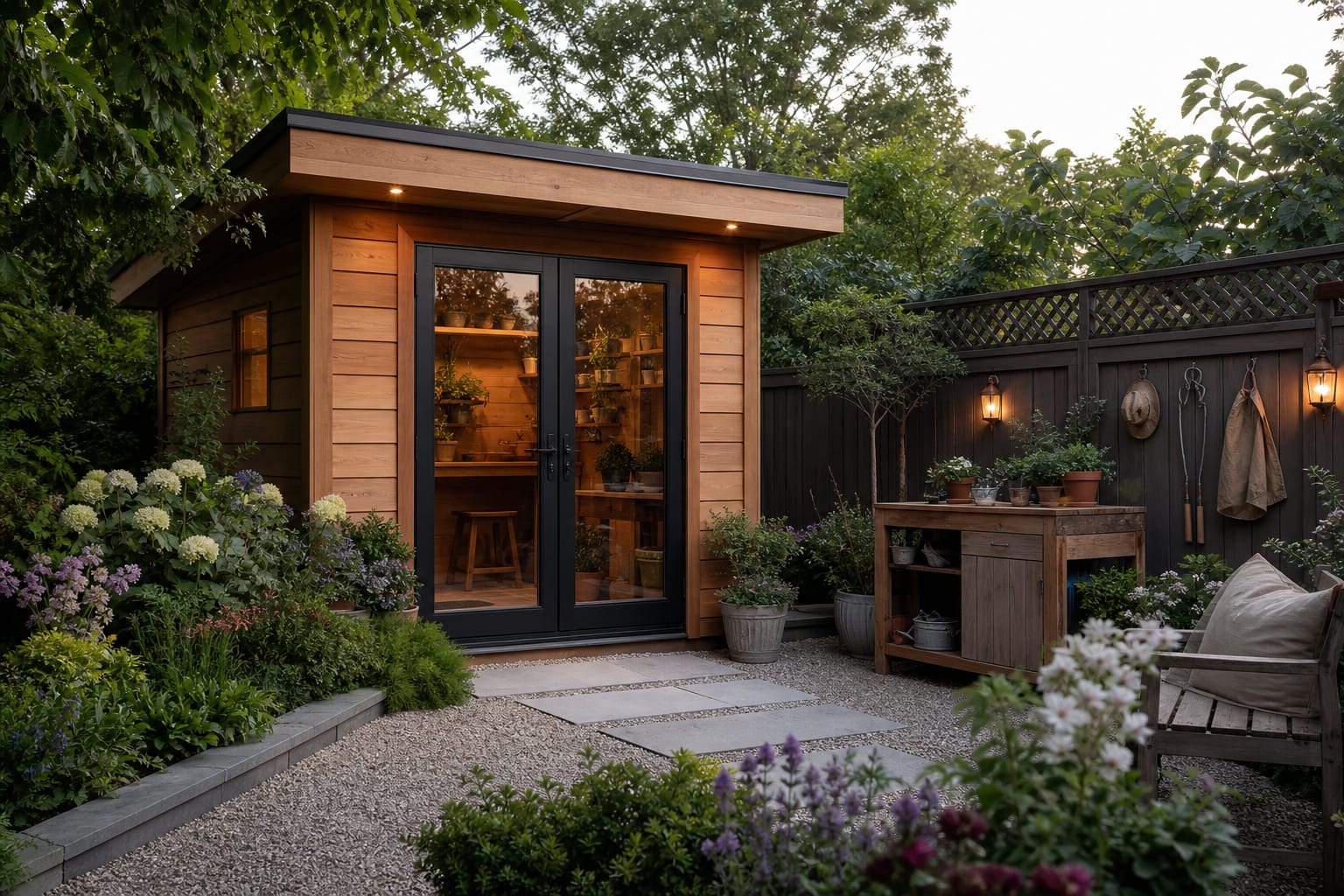
What makes a garden shed feel like it belongs in the yard?
A shed feels built-in when its footprint, path, roofline, planting, and door orientation all support one routine: storing tools, starting seedlings, hiding pool gear, holding bikes, housing a studio, or giving the garden a destination.
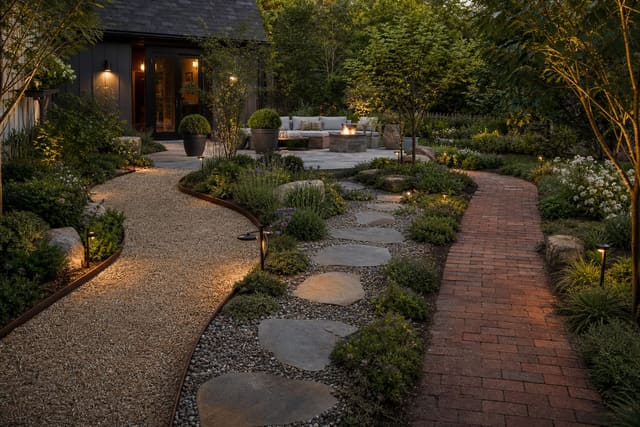
Start with the approach. A 36in path is the practical minimum for carrying tools, but 42in feels better where a wheelbarrow turns near the door. Coordinate the route with garden path ideas that shape movement so the shed feels reached, not stranded.
The base should look deliberate — gravel pad, concrete slab, deck platform, or pavers, set high enough to avoid splashback and rot. Leave 6-12in between cladding and dense shrubs for airflow and maintenance access. Use a trellis beside the shed for climbers rather than letting vines grip the boards.
Which shed use should lead the design?
Storage sheds, potting sheds, she sheds, and studio sheds need different doors, light, insulation, and clearance. Decide what has to fit inside on a wet Tuesday before picking the exterior.
| Shed type | Best garden use | Spec that keeps it honest |
|---|---|---|
| Tool storage shed | Mowers, hand tools, hoses, pots | Wall of hooks 16-24in deep; keep the center floor clear for rolling items. |
| Potting shed | Seed trays, soil, watering cans, cut flowers | Bench about 24in deep, 34-36in high for standing work. |
| Studio shed | Desk, craft table, reading chair, quiet work | Start around 8x10ft; plan windows and power before decorating. |
| Bike and sports shed | Bikes, scooters, helmets, outdoor toys | Double doors and vertical racks so the floor doesn't pile up. |
| Multi-purpose shed | Storage plus a small work or sitting zone | Separate dirty and clean zones with shelving, a curtain, or a half-height cabinet. |
A pure storage shed needs an excellent wall system more than decoration: full-height shelving on one wall, hooks on another, a narrow center aisle. Keep heavy items low and seasonal gear up high.
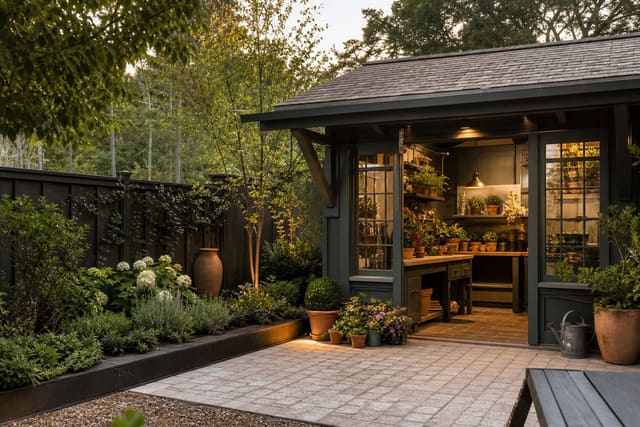
A potting shed needs daylight and mess tolerance — bench near a window, sweepable floor, lidded soil bin within reach. Pair it with compact herb garden ideas so the working zone and edible beds share one rhythm.
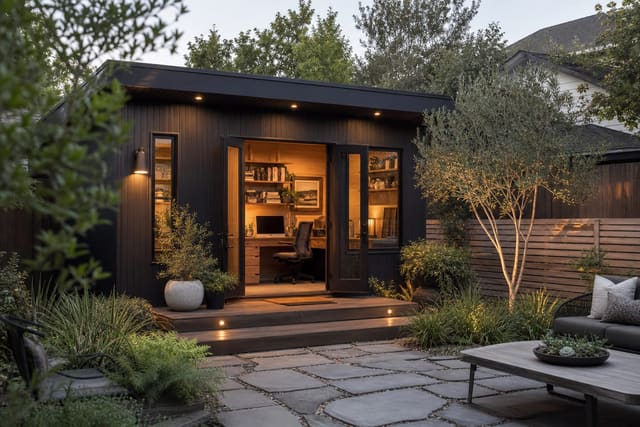
A studio shed asks for comfort before cuteness: heat, shade, ventilation, privacy, and glare control. A west-facing glass wall can turn a desk into a hot box without a tree canopy, awning, or exterior shade.
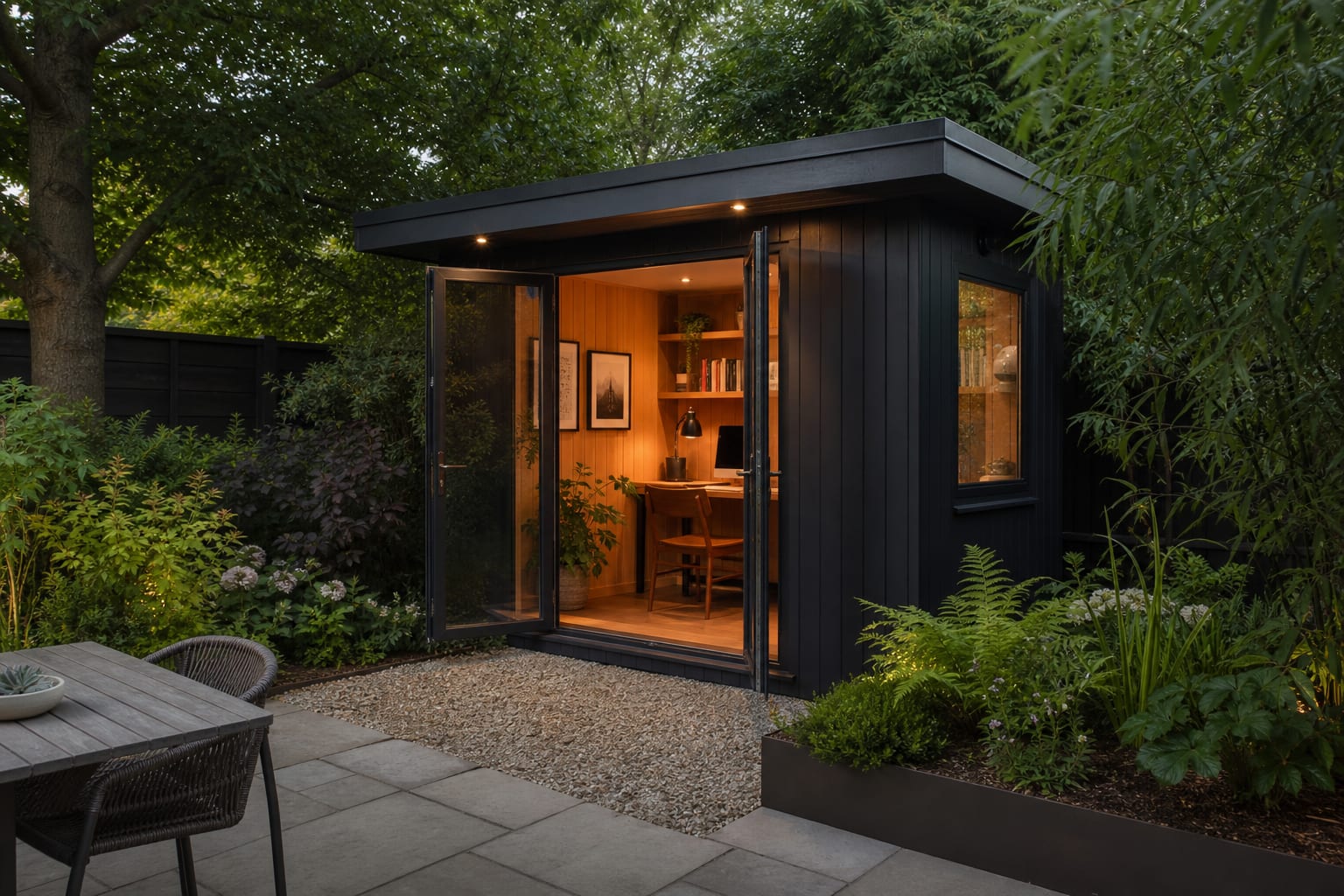
Test this on your own photo with ReDesign — keep the house edge, horizon line, hardscape, planting beds, and main path visible so the preview solves the space you actually have.
Five garden shed ideas worth testing
- Storage shed with a broad door and shallow tool wall. A 6x8ft shed works when the opening is 48in or wider and rakes hang on a 16in deep wall system instead of the floor.
- Potting room with one excellent bench. Keep the bench 24in deep, shelves 12-15in above it, and a washable floor of gravel, sealed concrete, or rubber tiles.
- She shed with a controlled entry view. A 3-4ft planting bed, one small step or gravel landing, and a window box that repeats garden colors beats random cottage trim.
- Studio shed with asymmetrical windows. Larger window toward the view, smaller high window toward neighbors, desk at least 30in deep for a monitor and lamp.
- Half storage, half relaxation. Dirty gear behind sliding doors or a curtain on one side, a chair and small table on the other; 10x12ft is where this starts to feel plausible.
Color is the cheapest way to make a shed belong. Dark green, black, charcoal, and deep brown recede into planting; pale sage, cream, and soft blue suit cottage gardens with lighter house trim. Bright white often looks crisp in photos and harsh beside mulch and wet soil.
If the shed sits near a fountain or pond, plan splash and sound together — a small basin 6-10ft from the door can make the corner a destination, but a noisy spillway beside a studio wall gets old fast. Pair the shed with backyard water feature ideas only when circulation and maintenance access still work.
Common garden shed mistakes to avoid
- Buying to match a catalog photo instead of your inventory. Measure the mower, bikes, bins, and largest pot before choosing a footprint.
- Ignoring door swing and threshold. A door that opens into a bed crushes planting; leave a firm landing at least 3ft deep outside the entrance.
- Under-lighting the shed corner. Use shielded path lights, a motion light at the door, or a 2700K sconce instead of one solar stake.
- Planting too close on day one. Young shrubs swallow cladding and block ventilation within a few seasons — leave real maintenance space.
- Assuming any shed can become a studio later. Plan insulation, power, windows, and moisture control up front; retrofitting comfort into a cheap box costs more than choosing right the first time.
Use AI to preview your garden shed before you commit
The risky choices are visual and spatial — footprint, path angle, roof shape, door color, window placement. Upload a straight photo of the garden corner and test a storage shed, a potting shed, and a small studio shed from the same angle before you build.
Frequently Asked Questions
How big should a garden shed be?
8x10ft handles typical tools, a mower, and a workbench; 10x12ft adds room for bikes and patio furniture. Structures over 120 sq ft typically trigger permit requirements, so check local rules before finalizing a footprint.
Where should a garden shed be located?
Place it near the most-used garden zone — vegetables, compost, or a service yard — reached by a 36-42in path, with the door facing away from the patio sight line. Far-corner placements feel disconnected and end up underused.
Should the shed match the house?
Yes. Siding direction, trim color, and roof pitch should reference the house even if exact materials differ. Mismatched sheds read as out-of-place additions and can pull down resale value.
Does a garden shed need power?
One 20A circuit for outlets and one lighting circuit covers tools, charging, and a task light. Full HVAC and plumbing belong in office sheds, not general garden sheds.
Multi-purpose shed or specialized?
A multi-purpose shed with a tool wall, workbench, and storage suits most homeowners. Specialized sheds like a greenhouse, woodshop, or bike shed usually need a second utility shed for general storage.
> Try this: Ready to see this on your own outdoor space? Open ReDesign and run the preview before you buy materials, plant, drill, or move furniture.
Three transformations to try
1. Dark-painted garden shed with cedar trim