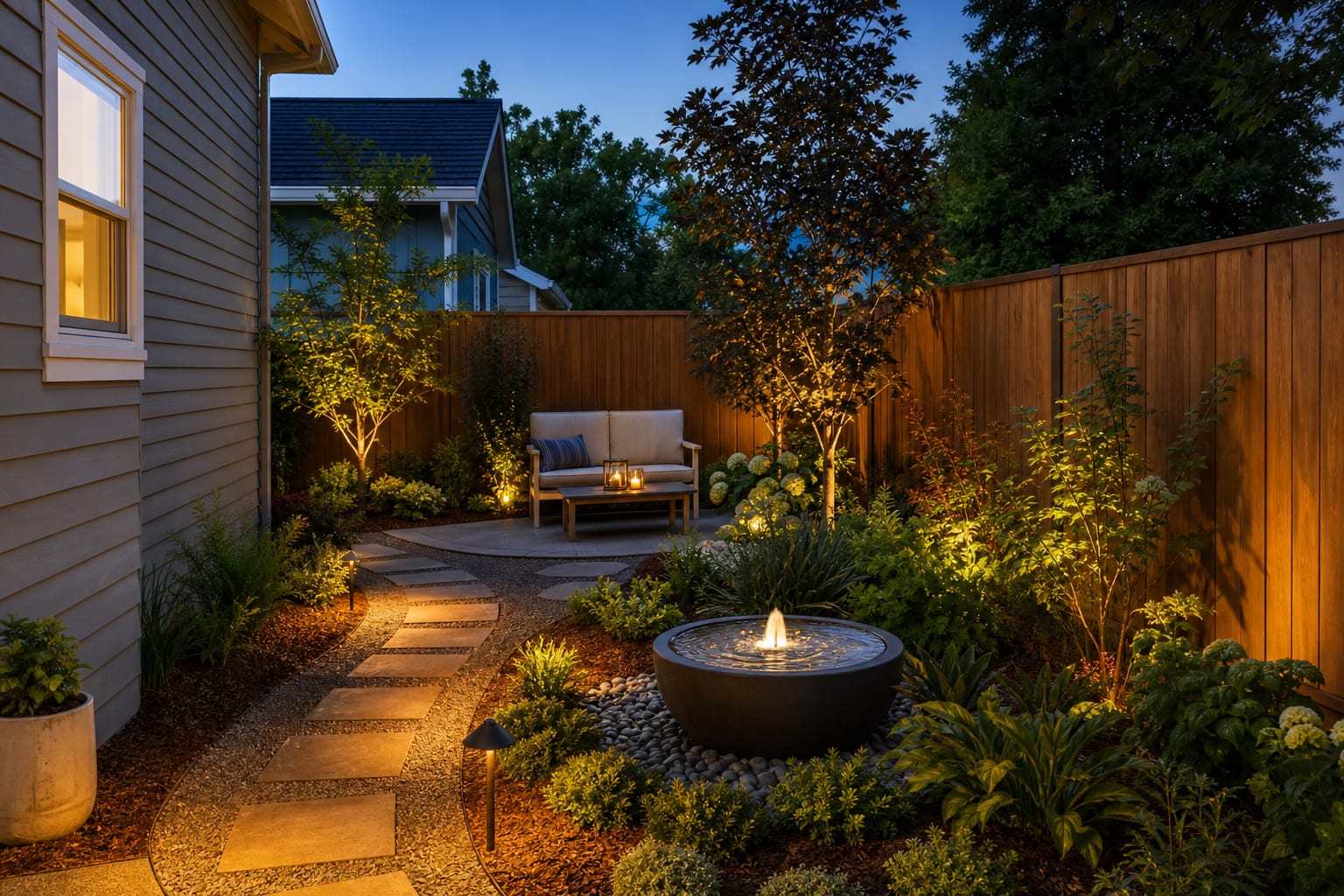
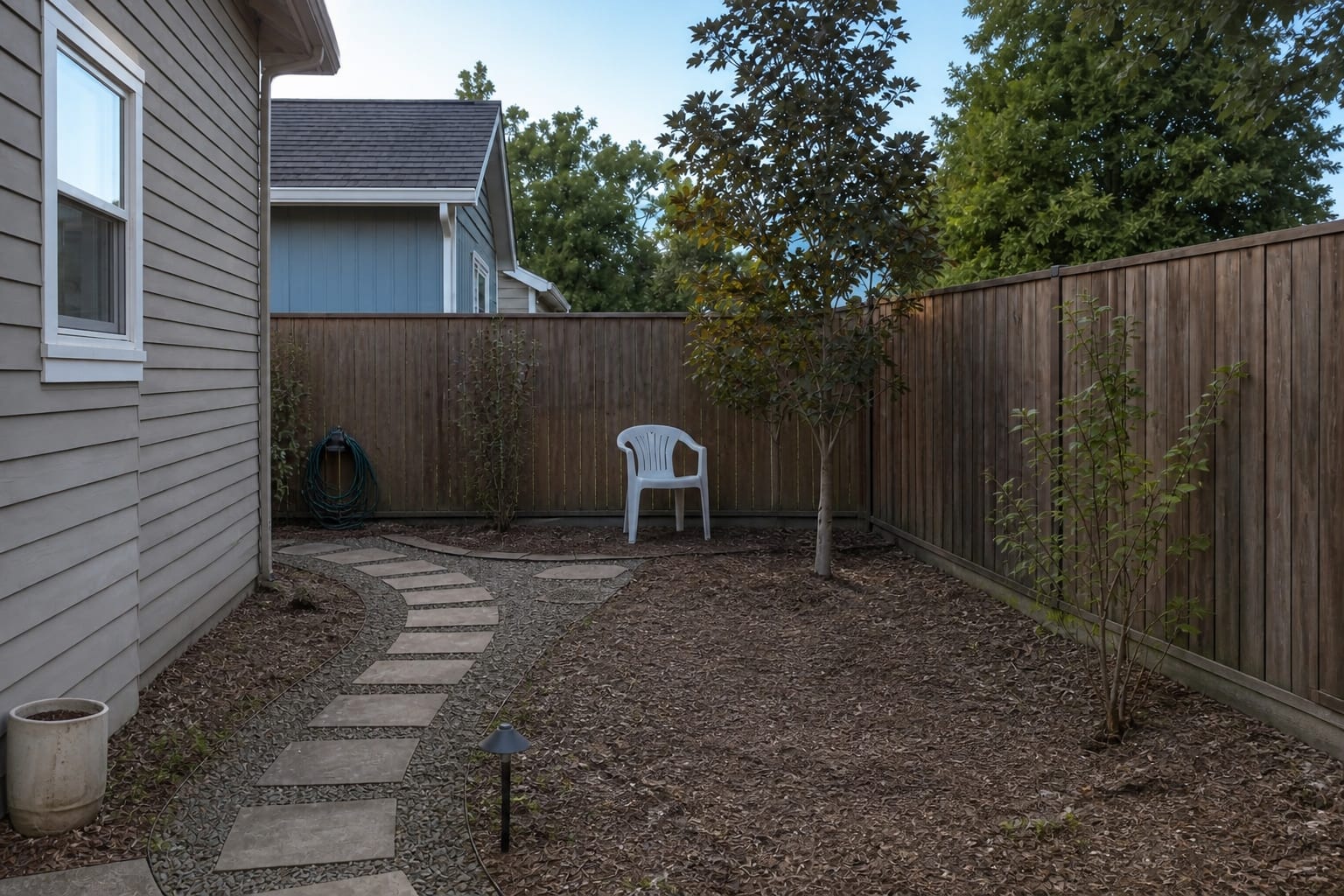
The best water feature for most backyards is a recirculating fountain, because it delivers sound, movement, and a focal point without pond-level construction or upkeep. Size it no larger than 10% of the visible patio area, use a submersible pump rated for 2x the basin volume per hour, and place it within earshot of the main seating zone. Start smaller than your fantasy sketch, then perfect placement and sound.
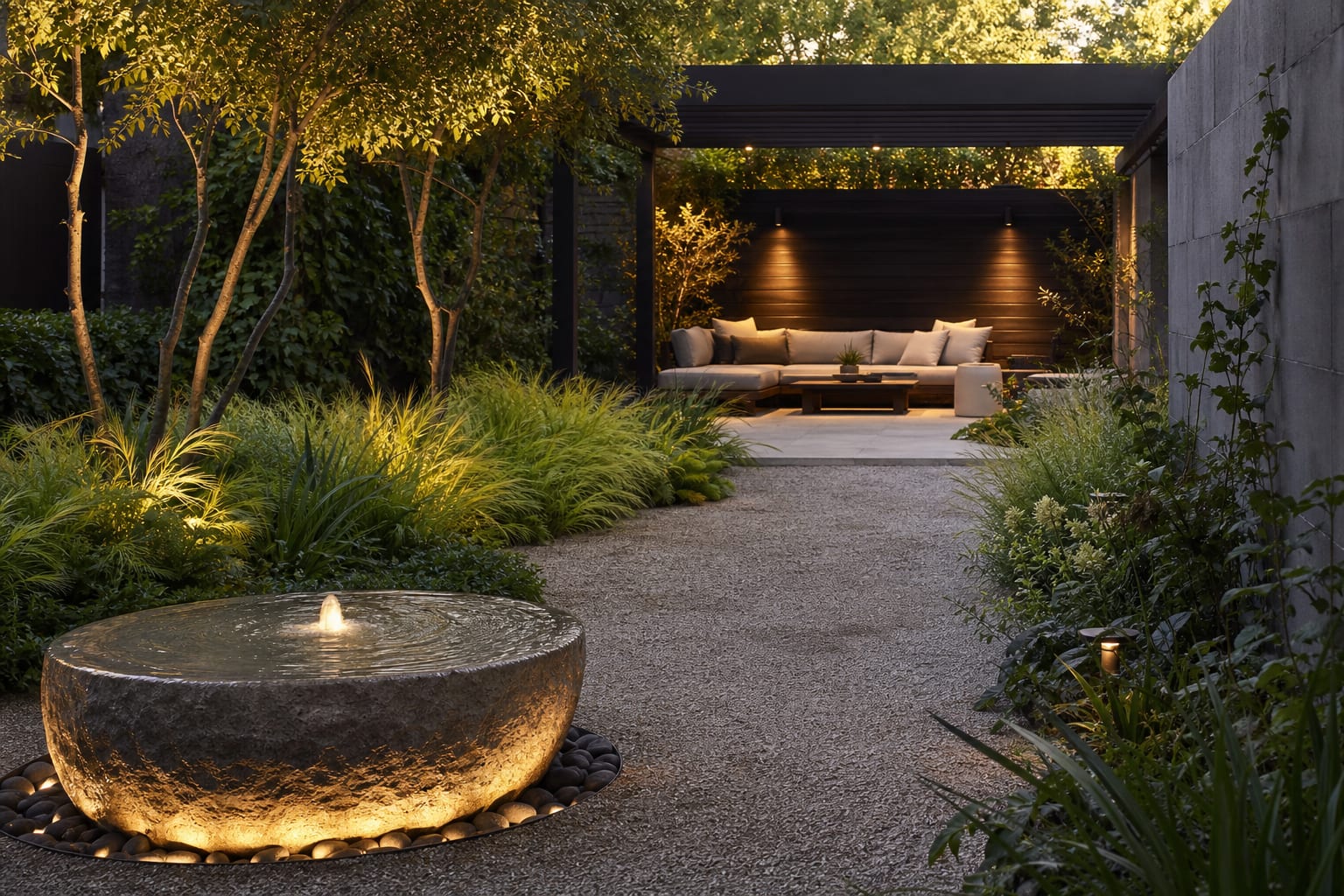
What makes a water feature feel calm instead of gimmicky?
Water is attention-seeking, so it needs visual anchors: stone, gravel, foliage, a bench, or a path working together as one composition. Start with the listening position. A tiny bubbling urn disappears 20 feet from a busy patio, while a strong sheet of water 6 feet away can feel like sitting beside a dishwasher.
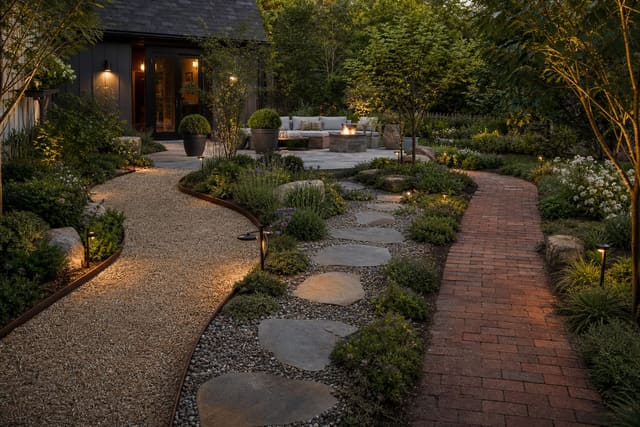
Surrounding surfaces matter as much as the vessel itself. Gravel handles stray splash better than mulch, which floats or washes into the pump; flat stone or concrete should slope subtly away from the house. If the feature sits along a route through the garden, coordinate it with garden path ideas that shape movement so no one brushes past wet stone carrying a plate.
Which water feature should lead the design?
Match the feature to your maintenance tolerance: fountains for sound with low commitment, ponds for habitat and reflection, streams for yards with existing grade change. Don't start with a pond if you just want dinner-table background noise, and don't install a narrow rill if leaf litter or pets will turn it into a chore.
| Water feature type | Best backyard use | Spec that keeps it realistic |
|---|---|---|
| Recirculating fountain | Patios, courtyards, small gardens | Basin at least 1.5x wider than the main spill reduces splash loss. |
| Wall fountain | Tight side yards, stucco walls | Spout 18-30 inches above the catch basin gives sound without splatter. |
| Backyard pond | Wildlife gardens, larger beds | Keep one reachable edge; don't ring every side with dense shrubs. |
| Pondless waterfall | Sloped yards where a pond feels unsafe | Water disappears into a gravel reservoir, no exposed standing water. |
| Narrow stream | Long gardens with existing slope | An 18-30 inch run reads more natural than a skinny rock-lined trench. |
Fountains suit renters and cautious owners since many plug into an exterior GFCI outlet and move with you. Streams and waterfalls need the strongest site logic; they should look like water had a reason to move through that spot.
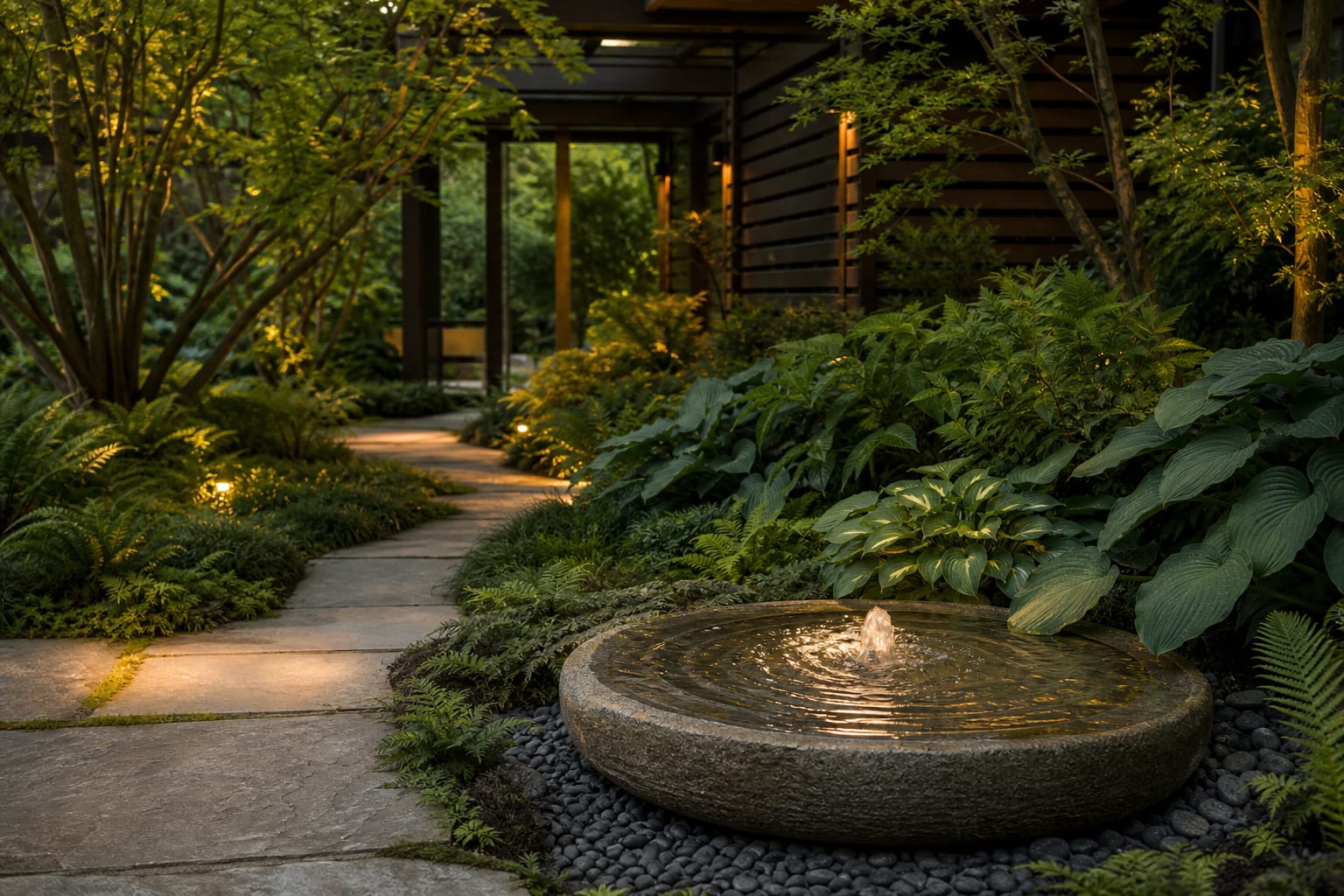
Test this on your own photo with ReDesign before choosing a direction; keep the house edge, horizon, hardscape, beds, and main path visible so the preview solves the space you actually have.
Five water feature ideas worth considering
- Low bowl fountain beside the main seating group: a 30 inch bowl on gravel adds sound at chair height while keeping views open.
- Wall fountain for a blank fence or masonry wall: keep the basin 12+ inches deep to catch splash, and add climbing greenery using these trellis and arbor ideas so the surface feels planted.
- Pondless waterfall where real slope exists: widen and narrow the streambed irregularly, with stones partly buried so it doesn't read as a rock necklace.
- Small wildlife pond, only if you'll maintain plant balance and edge safety: a shallow planting shelf plus one clear access side beats a perfect oval dropped in lawn.
- Bubbling urn near herbs for a kitchen-garden mood: keep it out of leaf overspray and pair it with herb garden ideas for compact yards.
The best fountain ideas share one trait: water appears simple. Plumbing is hidden, the cord route is discreet, and the reservoir is easy to reach. If you can see the pump, cord, or exposed liner ring, it isn't finished yet.
Common water feature mistakes to avoid
- Judging sound in a showroom. Wind, traffic, and fences change how water sounds outdoors; test outside or buy an adjustable pump.
- Ignoring splash radius. Wind can throw water 12 to 24 inches beyond the basin, so keep it off siding, steps, cushions, and untreated wood.
- Leaving the pond edge exposed. A bare liner rim or single boulder looks assembled; bury stones unevenly and let grasses overlap the edge.
- Blocking cleaning access. Leave one clear working side of 24 to 30 inches so you can reach the pump without stepping through plants.
- Overlighting the water. A shielded path light or soft 2700K downlight flatters stone and water better than a bright underwater spotlight.
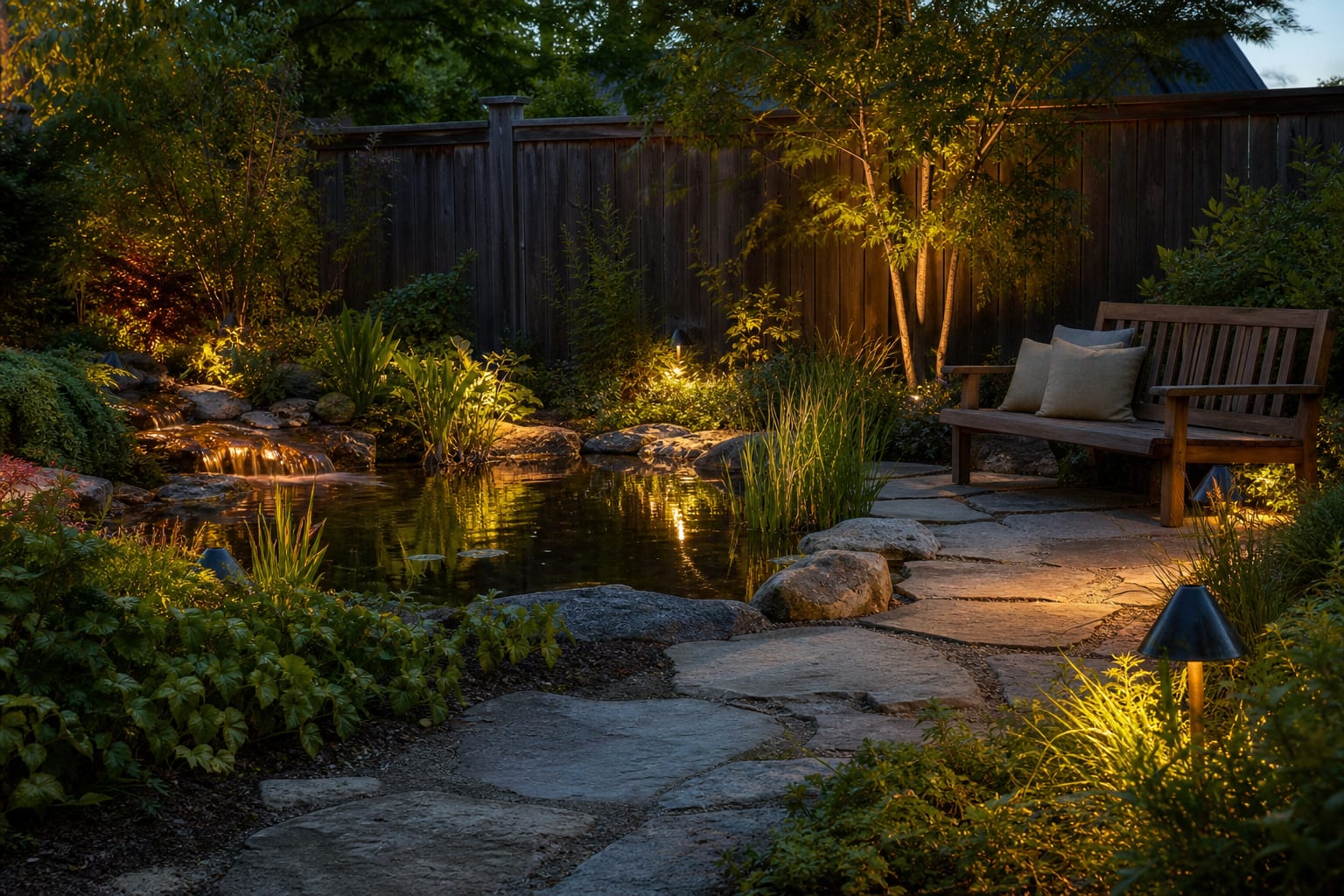
Should you preview a water feature with AI before committing?
Yes. Upload a photo of the exact patio or planting bed and test a low fountain, wall basin, pond, and pondless waterfall from the same angle to judge size, placement, and edge treatment before spending anything. Check whether a fountain blocks the path to the table, whether a pond leaves an awkward strip of unmowable lawn, or whether a wall fountain makes the space feel cramped.
A preview also enforces restraint. If a rendered pond needs three bridges and blue lighting to feel exciting, it's doing too much; a quieter feature with one good sound source usually ages better. Contractors, electricians, and pond specialists still handle power, excavation, and liners, but the preview helps you reject the wrong idea before you dig or run conduit.
Frequently Asked Questions
What is the easiest water feature to install in a backyard?
A pondless waterfall reservoir, a sealed underground basin with a submersible pump feeding a boulder spillway, is easiest to install and maintain because there's no open pond to manage for algae, debris, or liner leaks.
How much does a backyard water feature cost?
A self-contained fountain runs $200-600 installed, a pondless waterfall with a 50-gallon basin runs $1,500-3,500, and a formal stone reflecting pool with a recirculating pump runs $6,000-15,000.
Do backyard water features attract mosquitoes?
Moving water in fountains, waterfalls, and streams does not attract mosquitoes, since they breed only in standing water; a pump running 24 hours a day eliminates standing water in the basin.
How often does a backyard water feature need maintenance?
Top off evaporation weekly, clean the pump intake monthly, and drain the basin to remove sediment and inspect the impeller annually. Most recirculating features need no other routine maintenance.
Do I need a permit for a backyard water feature?
Self-contained fountains and pondless waterfalls under 150 gallons are permit-exempt in most jurisdictions, while ponds with a surface area over 150 square feet may require a grading or drainage permit.
> Try this: Ready to see this on your own outdoor space? Open ReDesign and run the preview before you buy materials, plant, drill, or move furniture.
Three transformations to try
1. Pondless waterfall with boulder spillway 2. Formal stone reflecting pool near patio 3. Self-contained wall fountain on fence