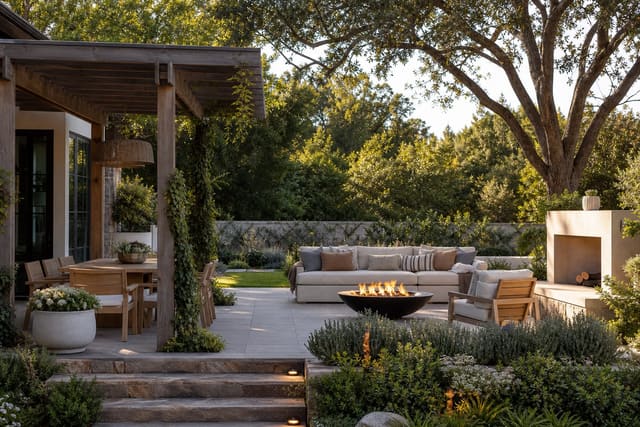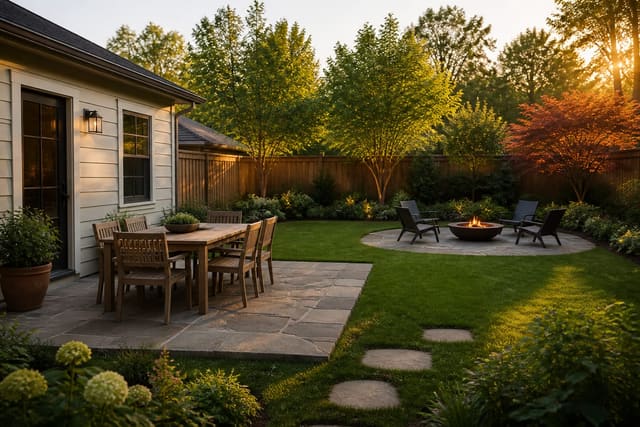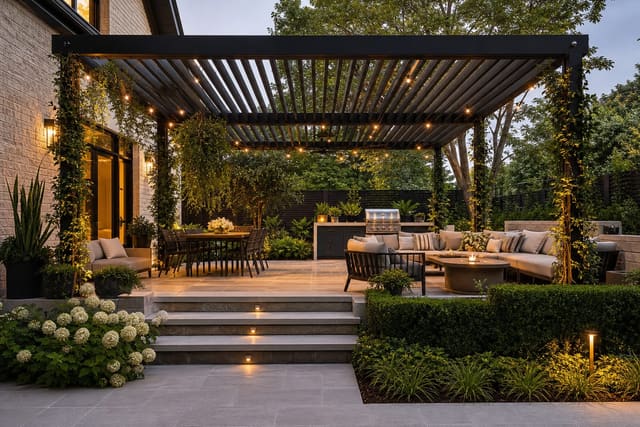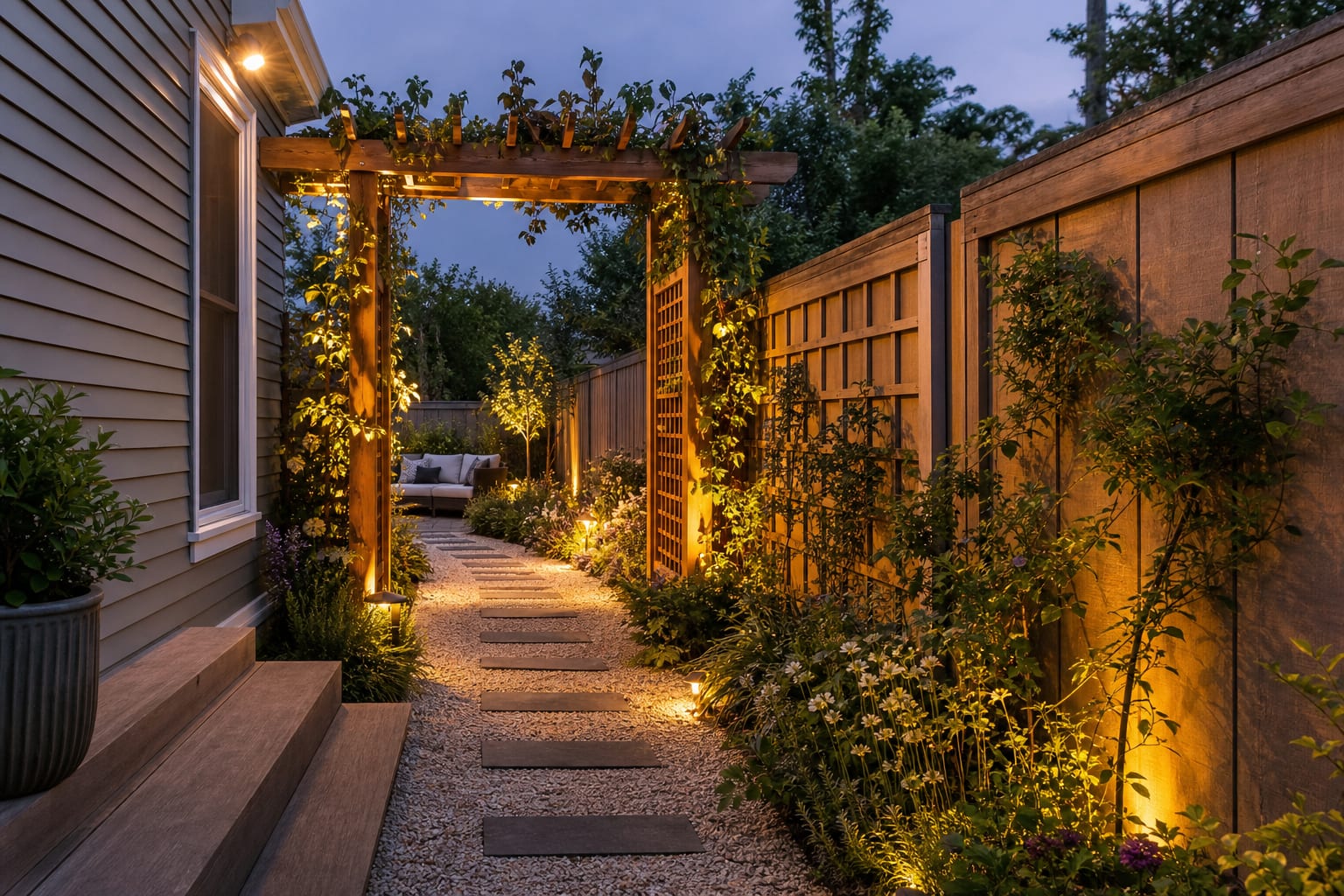
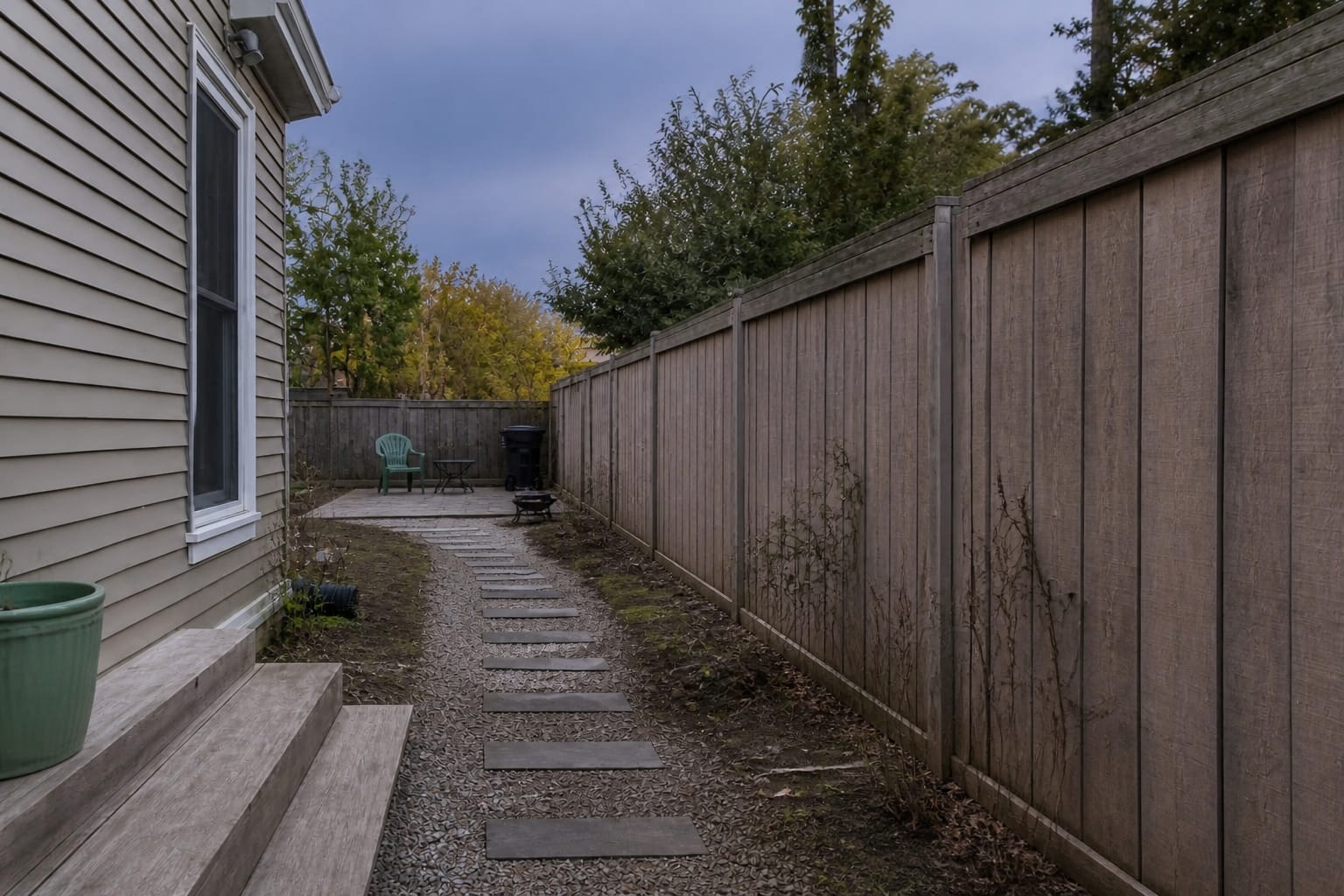
A trellis or arbor reads structural rather than decorative when it's set 18-24in from the wall or fence it backs, built from cedar, painted steel, or powder-coated aluminum rather than pressure-treated pine, and planted with one strong climber instead of three competing vines. Choose the right vertical move by garden problem, not catalog photo, before buying timber, metalwork, or a vigorous vine.
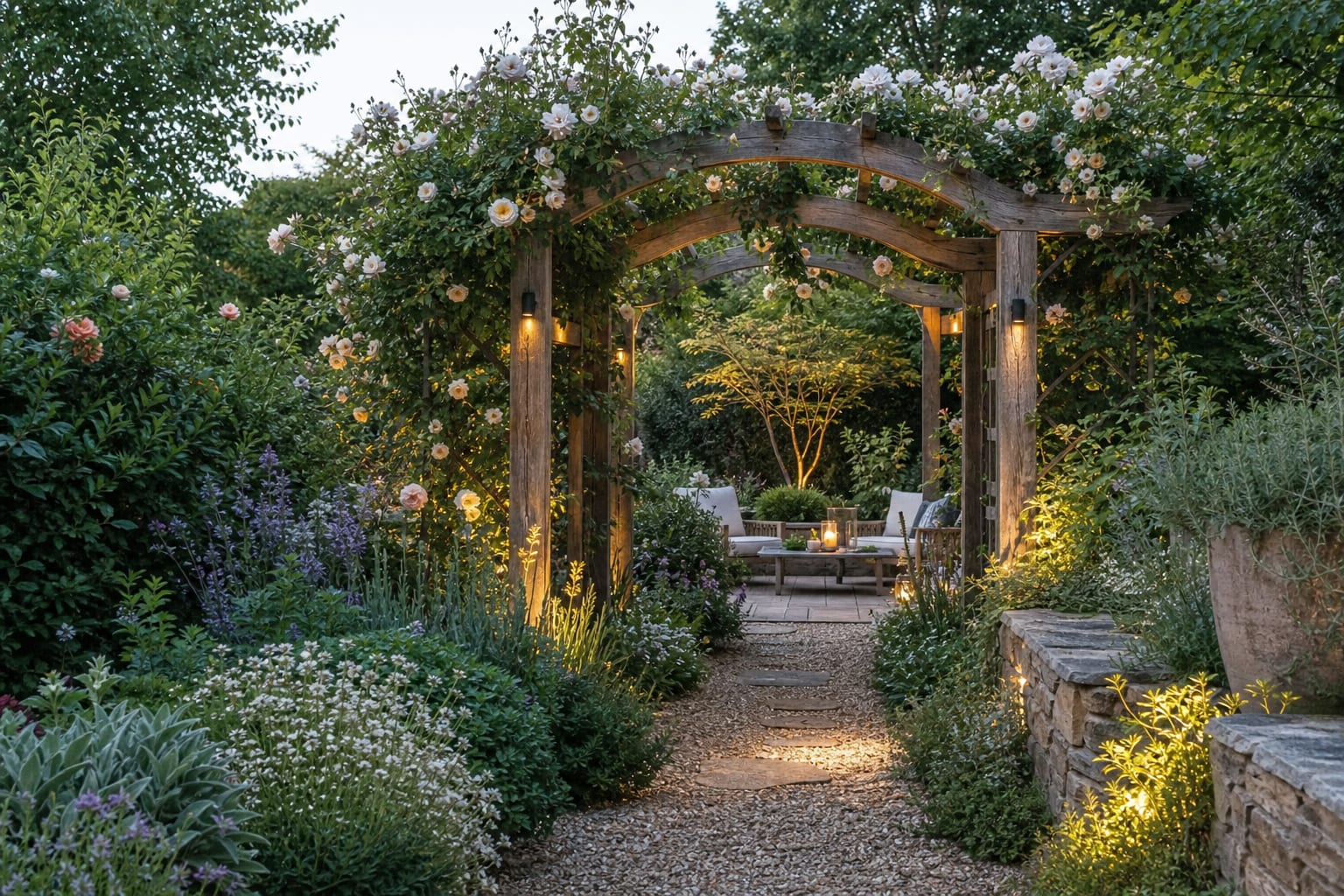
What makes a trellis or arbor feel built into the garden?
Use a trellis or arbor where it frames a path, marks an entrance, supports climbers, screens an awkward view, or gives a flat bed vertical structure. The structure should solve a problem before it satisfies a photo. A single well-placed arbor at the path entrance does more for a low, spread-out yard than five small obelisks scattered around the beds.
Scale is the first test. A main garden arbor needs a clear internal width of 36 to 48 inches and a height near 7 to 8 feet so the opening feels generous once vines hang down. A 30-inch arch suits a vegetable plot but feels stingy on the route from patio to lawn. A trellis panel along a fence should usually stop below the boundary top unless the goal is privacy, or the garden can feel barricaded.
Check what the structure touches. An arbor at a path's start should align with the route underfoot, especially alongside new garden path ideas that shape movement. A freestanding trellis behind a bench needs 18 to 30 inches of planting depth so the vine has soil and sitters aren't brushing leaves. A panel behind edibles can layer a small kitchen garden, but only if you can still reach the plants.
Which structure fits the job?
Choose by function: arbor for passage, trellis for screening, obelisk for a planting accent, wires for disciplined wall climbers. Do not start with the most ornate piece in the garden center; scrolls and bright paint become noise in an already busy garden.
| Structure type | Best garden use | Spec that keeps it practical |
|---|---|---|
| Arched arbor | Entrances, path thresholds, rose walks | Keep the clear opening at least 36 inches wide; set posts deep enough for local soil and wind. |
| Flat trellis panel | Fences, blank walls, privacy edges | Leave 2-4 inches behind the panel for air movement and maintenance. |
| Fan trellis | Single climbing rose, clematis, trained shrub | Give the plant room to spread without blocking a gate or window. |
| Obelisk / tuteur | Vegetable beds, herb gardens, compact borders | Use 5-7 foot height so peas, beans, or small clematis get a real climb. |
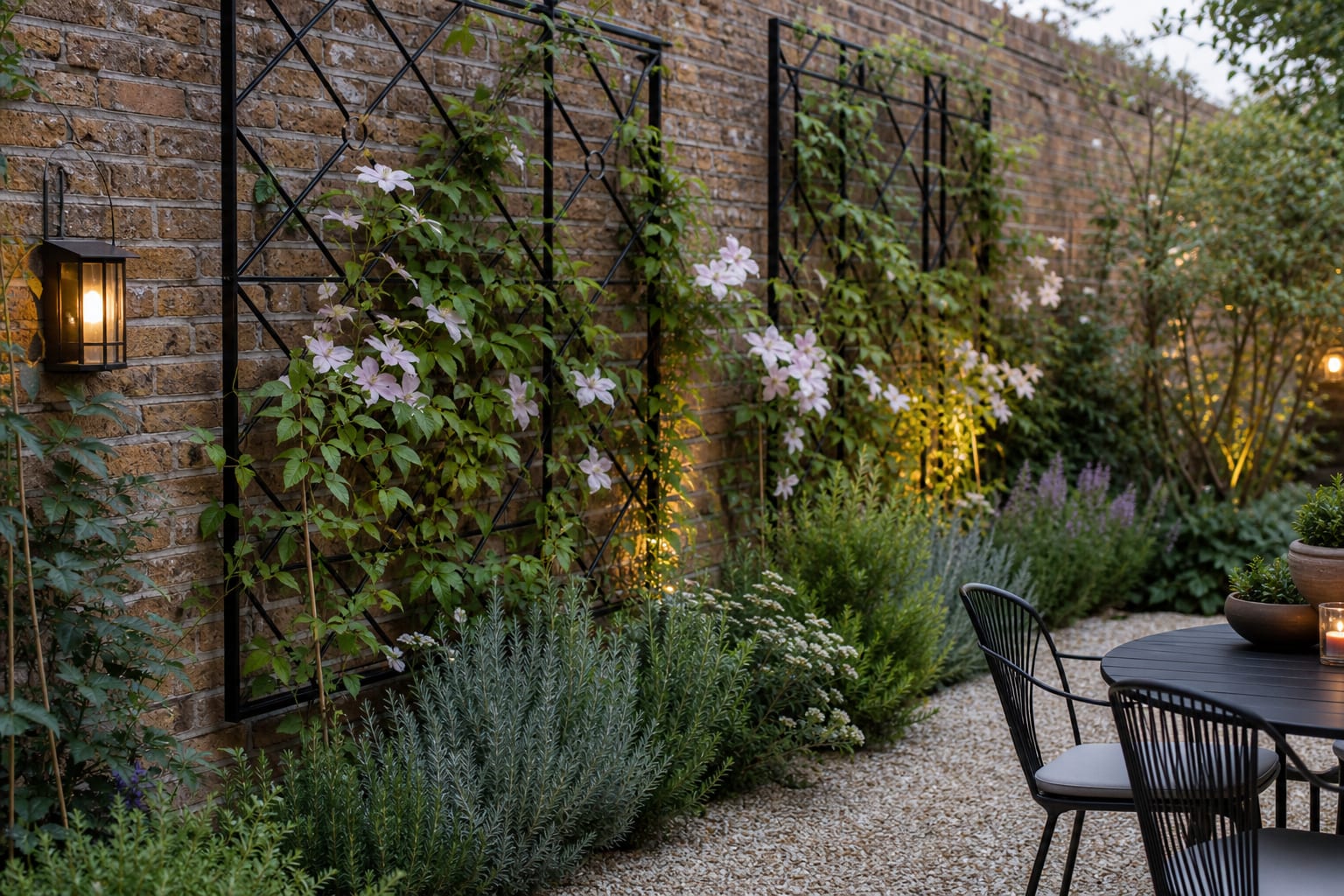
| Wire and eye system | Masonry walls, modern gardens, espalier fruit | Space horizontal wires 12-18 inches apart for tying and training. |
Materials set the mood: cedar, oak, and painted timber suit cottage and edible gardens, while powder-coated steel or blackened metal fits sharper modern beds. Vinyl lattice often looks cheap unless the fence language already supports it. Near a small edible corner, coordinate supports with compact herb garden ideas so structure, paths, and harvest zones read as one plan.
Plant choice matters as much as carpentry. Clematis and annual vines suit lighter trellis; climbing roses need ties, pruning access, and sturdy lateral support. Wisteria demands real strength and regular pruning once mature. Evergreen climbers give year-round privacy but add visual weight in winter.
Test this on your own photo with ReDesign before committing to a direction; keep the house edge, horizon line, hardscape, planting beds, and main path visible so the preview solves the space you actually have.
Five trellis and arbor ideas worth trying
- Frame the entrance with a timber arbor. Set it on the path line, keep the opening wide enough for a wheelbarrow, and plant one climber per side so growth fills evenly.
- Add a trellis panel behind a bench. A 5-6 foot panel gives shelter; a 24-inch planting strip can hold jasmine or a restrained climbing rose without crowding the seat.
- Use obelisks in vegetable or herb beds. A 6-foot timber or steel tuteur supports beans, peas, or nasturtiums, and looks best repeated in pairs or threes.
- Train climbers on wires along a blank wall. Start the first wire about 18 inches above soil to avoid splash, then space higher wires 12-18 inches apart for tidy tying.
- Place an arbor near a fountain or birdbath. The overhead frame gives people a reason to pause; pairing it with water feature ideas helps structure and sound work together.
Good vertical gardens repeat one idea. A black metal arch at the gate pairs well with slim black wire trellis elsewhere; chunky cedar arbors pair with matching timber-tone supports elsewhere. Repetition reads as design, not accumulation.
Common trellis and arbor mistakes to avoid
- Buying too narrow a structure. A sweet arch in a product photo can feel like a squeeze once roses or honeysuckle grow in; protect at least 36 inches of clear passage after planting.
- Choosing a vine before checking maintenance access. A thorny rose over a narrow side path punishes every bin run; put woody climbers where pruning and sweeping won't become a chore.
- Weak anchoring. Panels fixed only to thin fence boards pull loose once foliage catches wind; size posts, brackets, or footings to soil, exposure, and load, and get help for anything tall or near a boundary.
- Too much matching lattice. Covering every fence panel in the same pattern flattens the design; use one strong trellis moment and let shrubs and grasses soften the rest.
- Planting too close to the post. Leave 12-18 inches of breathing room for woody climbers so roots find better soil and repairs stay simple.
Should you preview vertical structure with AI before building?
Yes: AI previews are worth using because the risky choices in trellis and arbor planning are visual, height, placement, material color, and whether the garden feels layered or cluttered. Upload a straight photo of the path, fence, or wall, then test a timber arbor, a flat trellis, a metal arch, and a wire-trained wall from the same angle. Check whether the arbor frames the path or blocks a view you like, whether a dark trellis calms or overweights a shady fence, and whether the vine-covered panel still leaves room to prune and walk. A preview won't replace advice on footings, wind load, plant vigor, or boundary rules, but it can stop the wrong design before it's six posts and a rampant climber in the ground.
Frequently Asked Questions
What is the strongest material for a garden arbor?
Galvanized steel tube or powder-coated aluminum outlasts wood by 20+ years with no repainting. Cedar is the premium wood option because its natural oils resist rot without chemical treatment.
How deep should arbor posts be set?
Set posts at least 1/3 of their above-ground height; a 7-foot arbor needs about 2.5 feet below grade. A concrete collar footing in a 10-inch diameter hole prevents heaving in freeze-thaw zones.
Which climbing plants work best on a wooden trellis?
Clematis, climbing roses, and star jasmine perform best because they twine or hook without damaging the wood. Avoid Virginia creeper and wisteria on wood, since both hold moisture and accelerate rot.
How far from the house should a freestanding arbor be placed?
Keep it at least 3 feet from the eave line so the climber can't bridge to the fascia. An arbor over a gate or path can sit flush with the house wall if posts are set in paved footings rather than soil.
How wide should a garden arbor be?
A minimum 4-foot clear inside width lets two people pass. An arbor over a dining table needs 8-10 feet of clear width and 7.5 feet of headroom to feel proportional.
> Try this: Ready to see this on your own outdoor space? Open ReDesign and run the preview before you buy materials, plant, drill, or move furniture.
Three transformations to try
1. Cedar arbor with clematis at garden entry 2. Powder-coat steel trellis with climbing rose 3. Pergola-style arbor over garden path