AI entryway design ideas let you turn one photo of your front door into several realistic previews of layout, storage, lighting, and color before spending a dollar. Upload a straight-on shot of your foyer and generate options like a closed shoe cabinet, a warmer sconce, or a painted door, then compare them side by side to see which fixes actually work for your space.
Can AI redesign an entryway or foyer from a photo?
Yes. AI reads the fixed ingredients in the image — door, trim, ceiling height, floor, stair rail, and blank wall — then generates layout, color, lighting, storage, and styling options before you move any furniture.
Three previews worth running on your own photo:
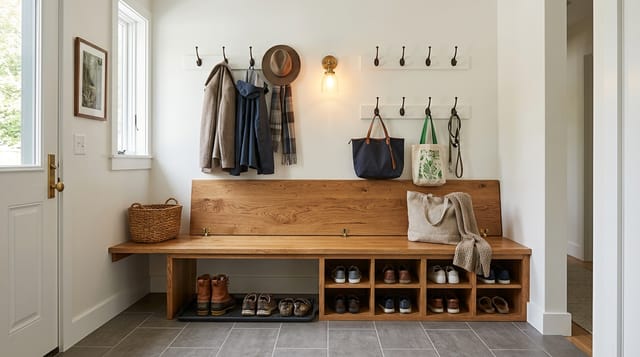
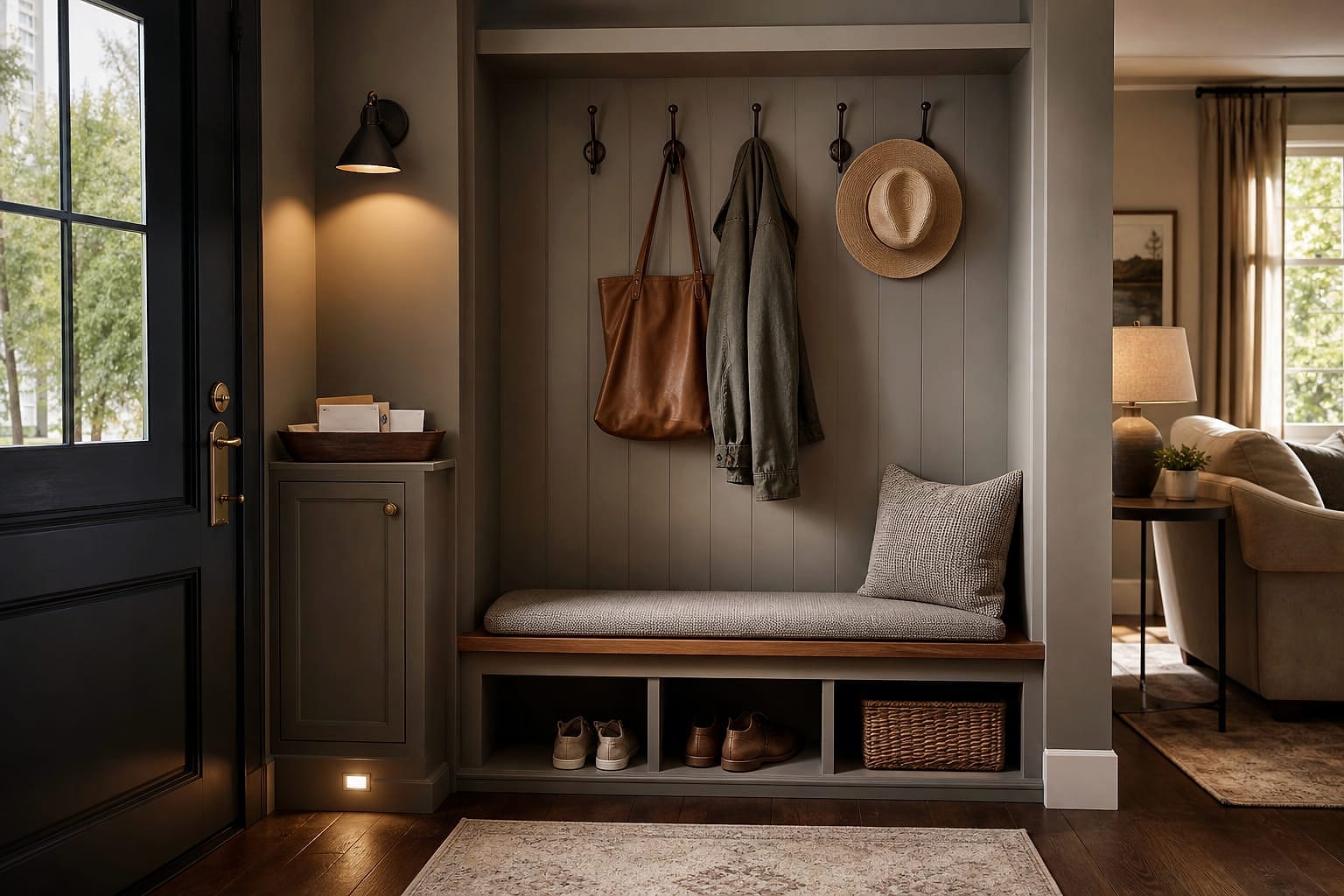
- Storage-first: closed shoe cabinet 12 to 15 inches deep, hooks at 60 inches for adults and 42 inches for kids, a runner.
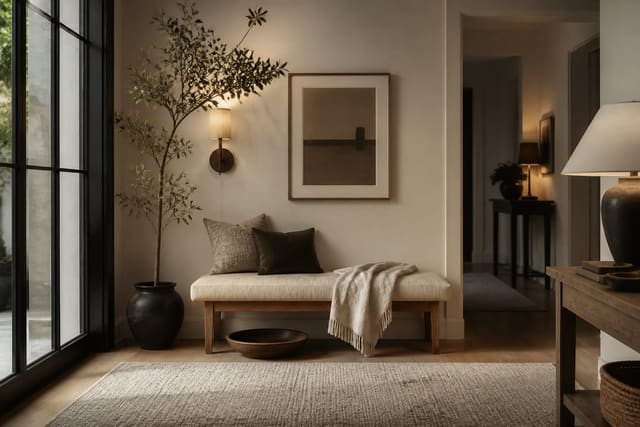
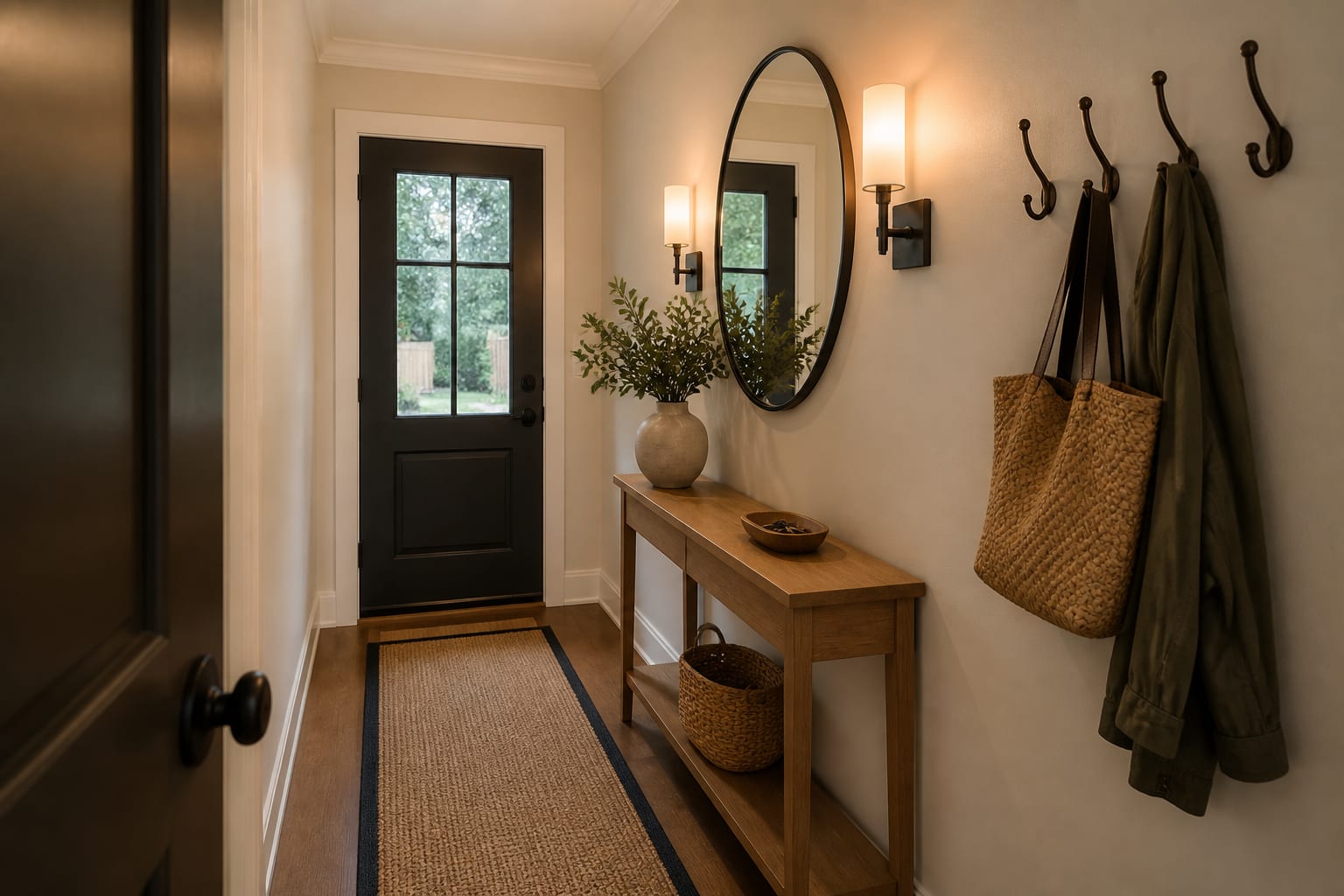
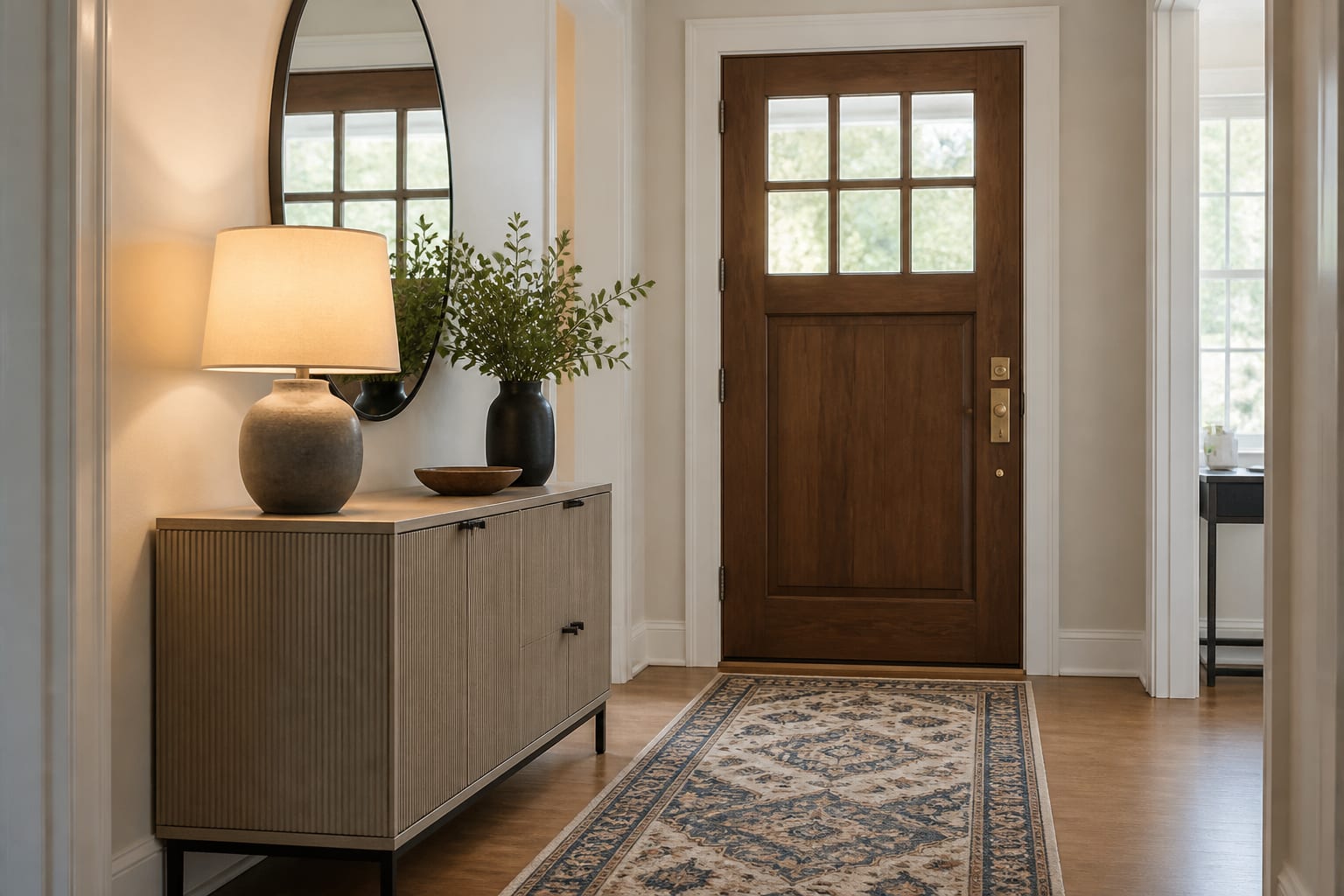
- Mood-first: painted front door, a 24- to 30-inch round mirror, a warm 2700K sconce, a small bench, a layered rug.
- Rental-friendly: peel-and-stick wallpaper, a plug-in sconce, a freestanding bench, removable hooks, no permanent electrical work.
What should change first when the entryway looks dull?
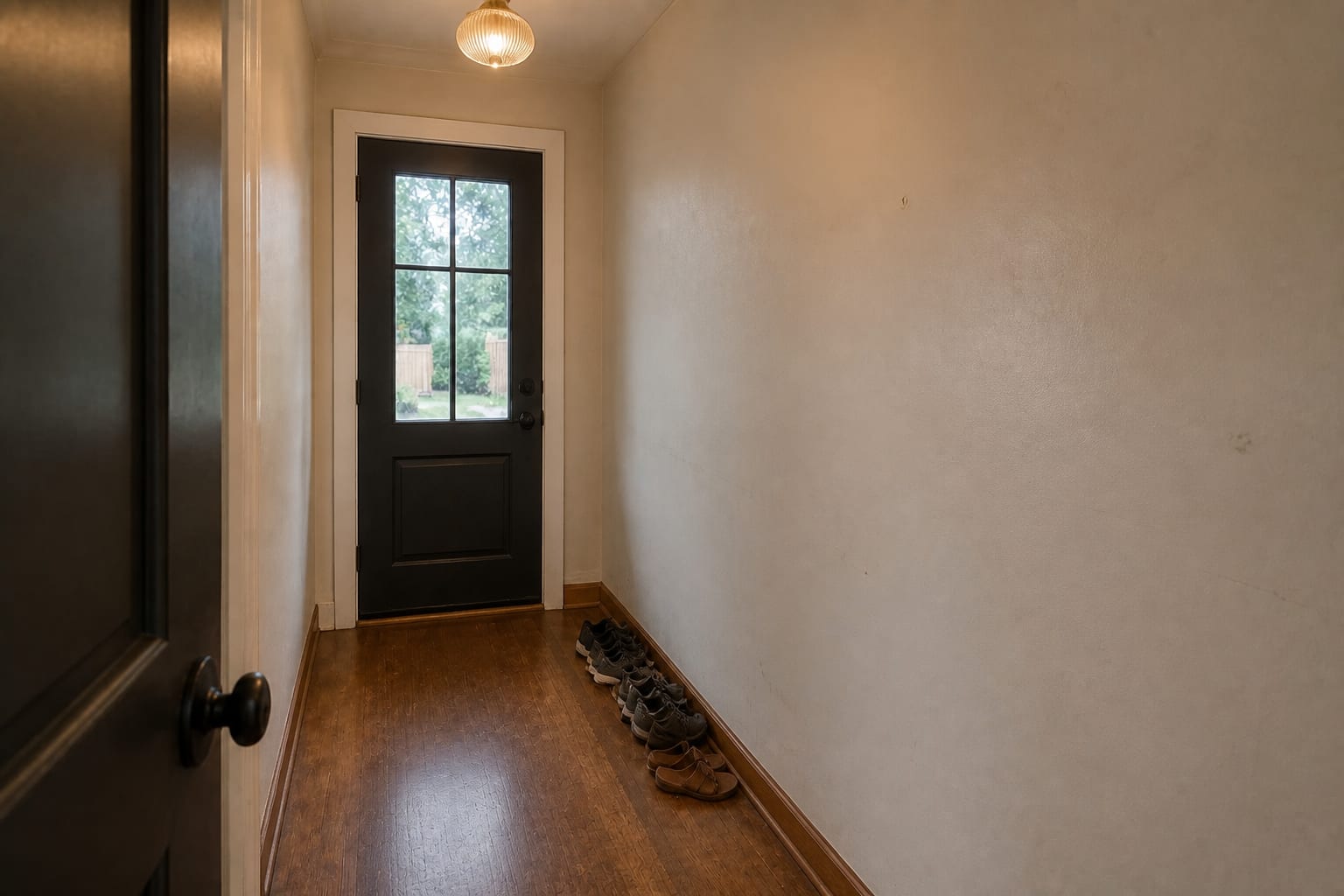
Start with the sightline from the door, since that's where the first impression forms. A blank wall, a pile of shoes, or a lonely mat makes the entry feel unfinished even when the rest of the home works. The fix is usually a tighter triangle: a vertical piece, a horizontal landing zone, and a floor layer.
For the vertical piece, choose one main anchor: a round mirror, tall art, a narrow sconce, or a clean row of hooks. Center it around 57 to 60 inches from the floor, near adult eye level. On a low ceiling, don't chase height — leave 6 to 10 inches between the frame and the trim so the wall can breathe.
For the landing zone, go shallow and useful. A 30- to 36-inch console with closed storage can feel generous in a small foyer; a 48-inch console suits a double-door entry with a wide wall. If your entry opens into a hallway, check AI hallway design ideas first, since hallway proportions punish bulky furniture fast.
For the floor layer, size the rug to the door. A 2-by-3-foot mat often looks stranded in a larger foyer; a 3-by-5-foot rug or washable runner makes the first step feel intentional. Keep under 0.25 inch of rug pile clearance near tight door swings.
The before-and-after decisions that change the front door wall
The fastest entryway before-and-after isn't a renovation — it's a sequence of visual decisions.
| Before problem | Better after move | Spec to test in the preview |
|---|---|---|
| A bare wall beside the door | Add one mirror or one large artwork | Keep frame width near two-thirds of the console width |
| Shoes scattered at the threshold | Add a closed shoe cabinet or bench basket | Choose 12- to 15-inch-deep storage for narrow foyers |
| Harsh ceiling light | Switch to a warmer fixture or shaded bulb | Test 2700K to 3000K light with your wall color |
| Tiny rug floating alone | Use a runner or larger washable rug | Leave 4 to 8 inches of floor visible at the sides |
| Hooks mounted randomly | Align hooks with trim, bench, or art | Mount adult hooks around 60 inches high, lower for kids |
A bench earns its space when the entry handles shoes or kids. Aim for 14 to 18 inches deep: deeper blocks circulation, shallower becomes decorative only. Comparing bench versus console, browse entryway bench ideas for small foyers and test both in your own photo.
Color carries weight here. A door painted charcoal, olive, oxblood, blue-gray, or warm black can make white trim look deliberate, but only if the nearby wall supports it. In a dim foyer, sample muddy greens carefully; they can turn brown under one overhead bulb.
How does AI design help you see the fix before you buy?
Use AI as a design rehearsal, not a magic wand. Upload one straight-on photo from just inside or outside the door, then generate versions that change one variable at a time: bench versus console, mirror versus art, painted door versus painted wall, open hooks versus closed storage.
A better photo means a more useful preview. Stand back far enough to capture the full door, adjacent wall, floor, and a ceiling edge. Turn on existing lights, open nearby blinds, and keep the camera level. Clear loose clutter but leave permanent constraints visible — radiator covers, alarm panels, outlets, vents, stair posts — since those decide whether a redesign preview is realistic or a fantasy image.
Ask for practical variations: "make this narrow entryway warmer with a 12-inch console, round mirror, runner, and closed shoe storage," or "show this foyer with a painted black door, brass hardware, 3000K lighting, and a kid-friendly bench." If the entry doubles as a coat-and-boot landing zone, compare results against AI mudroom design ideas — a pretty foyer that can't handle wet shoes isn't finished.
Look for the pattern across previews. If three versions all favor a darker door and a bigger rug, that's a real signal. If a version only looks good because the AI erased your thermostat or widened the hallway, reject it — the goal is a version that respects the house you have.
Common entryway makeover mistakes
- Buying furniture before measuring the path. A cabinet that leaves under 36 inches of clearance ruins the flow. Tape the depth on the floor first.
- Hanging things too high. Keep mirrors 6 to 8 inches above the console, and check the top clears crown molding or a low ceiling.
- Choosing a rug that fights the door. Thin runners, washable low-pile, and indoor-outdoor weaves survive tight swings better than thick wool.
- Treating hooks as decoration only. Space hooks 6 to 8 inches apart, anchor into studs, and add a kid hook around 42 to 48 inches high.
- Ignoring smell and sound. A lidded shoe cabinet, boot tray, and washable mat calm the threshold without adding visual clutter.
A 60-second plan for your own foyer photo
Shoot one photo from the natural arrival point, phone at chest height, verticals straightened, including the ceiling light, floor edge, and storage wall. Then generate three targeted versions instead of a vague style prompt.
Make one storage-first (shoe cabinet, hooks, bench, runner, tray), one atmosphere-first (painted door, warmer light, mirror, art, richer rug), and one rental-friendly (peel-and-stick wallpaper, plug-in sconce, freestanding bench, removable hooks). Comparing the three tells you whether the entry needs function, mood, or both.
Once you pick a favorite, turn it into a shopping list with real dimensions: console depth, rug size, mirror width, hook height, bulb temperature, storage type. That discipline keeps the project from becoming a cart of almost-right pieces.
Frequently Asked Questions
Can AI actually redesign my entryway from a phone photo?
Yes. A single straight-on photo of your door, wall, and floor is enough for AI to generate multiple layout, color, and storage previews. The tool works with what's already fixed in the image — door swing, trim, ceiling height — and proposes furniture, lighting, and rug options you can compare before buying anything.
How high should I hang a mirror over an entryway console?
Center the mirror 57 to 60 inches from the floor, which is close to average adult eye level, and keep the bottom edge 6 to 8 inches above the console top. On a low ceiling, leave 6 to 10 inches between the frame and the ceiling instead of pushing the mirror higher.
What size rug works best for a small entryway?
A 3-by-5-foot rug or a washable runner usually looks more intentional than a small 2-by-3-foot mat, which can look stranded in a larger foyer. Keep rug pile clearance under 0.25 inch near tight door swings so the door doesn't rub or catch.
What is the best light temperature for a front door area?
Warm bulbs in the 2700K to 3000K range read as welcoming, while cooler daylight bulbs make facades and tile feel commercial after dark. Test the bulb temperature against your wall color in an AI preview before buying a fixture.
How deep should entryway storage be in a narrow foyer?
A closed shoe cabinet 12 to 15 inches deep fits most narrow entries without blocking circulation. Pair it with hooks around 60 inches high for adults and 42 to 48 inches for kids, plus a small tray for keys and mail.