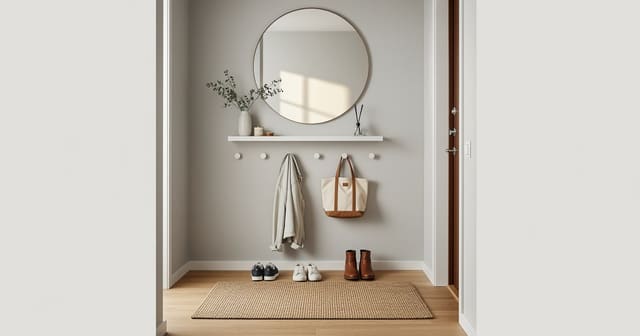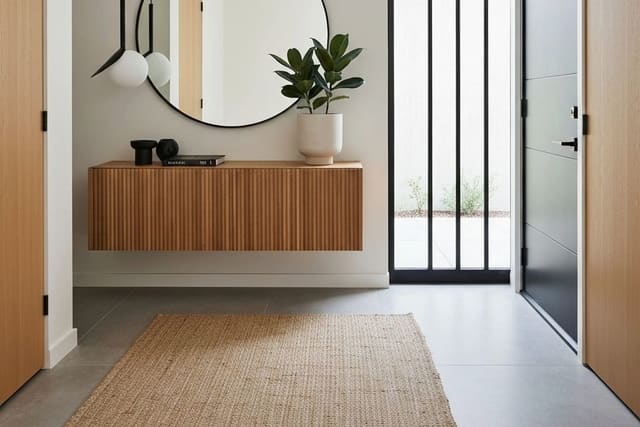
The right entryway bench has a seat height of 17 to 19 inches, a depth of at least 15 inches, and storage sized for actual shoes rather than open space that collects clutter. Get those dimensions right and the bench becomes a working drop zone instead of a shelf for mail you keep meaning to sort.
What seat dimensions make a bench actually usable?
A bench gets sat on, often while balancing on one foot to deal with a shoe, so the numbers matter. Keep seat height between 17 and 19 inches; below 16 inches it's a low perch that's hard to rise from with an armful of bags, and above 20 inches shorter family members dangle their feet.
Depth is the spec people underestimate. A 12-inch-deep bench is really a plant stand, not a seat. Give it at least 15 inches of depth, and push to 16 or 18 inches if you want room for a tote beside you. Plan roughly 20 inches of width per person, so a 40-inch bench seats two comfortably. In a tiny entryway, a narrow 14-inch-deep bench against the wall usually beats a deep one that blocks the walkway.
How should the storage be sized?
The bench is prime real estate for hiding clutter, but only if storage fits actual objects. Open cubbies that are too small just fill with random odds and ends. Size each shoe slot at about 12 inches wide and 7 to 8 inches tall to clear most footwear including low boots; pull-out baskets underneath handle hats, gloves, and leashes.
A lift-top bench with a hollow base swallows seasonal items or off-season shoes behind a clean seat. Use soft-close hinges and keep the cavity depth to about 14 inches so the bottom stays reachable. Coordinate the bench with the rest of your entryway design so storage, hooks, and lighting read as one system. Leave one open shelf at floor level for daily shoes, since nobody opens a lid for the sneakers they grab every morning.
What else does the bench zone need?
A bench alone solves sitting, not the everything-else problem. Mount a hook rail above it at 60 to 66 inches so coats clear seated heads, and add a lower row at about 40 inches if kids need it. Give keys and mail a small tray or wall ledge nearby, since bare surfaces collect chaos fast.
A 30-inch boot tray on the floor catches wet shoes and grit. Add a wall sconce or small lamp at a warm 2700K so the seat isn't left in shadow after dark. A runner extending a few inches past each end of the bench anchors the arrangement and protects the floor where shoes scuff most.
Which entryway bench style fits your space?
- A lift-top storage bench with soft-close hinges hides seasonal gear behind a tailored 18-inch-deep seat.
- A cubby bench with six 12-inch shoe slots gives each family member an assigned spot.
- A narrow 14-inch-deep upholstered bench under a window seats two without crowding a tight hallway.
- A bench with a tall hook rail and mirror above turns a bare wall into a grab-and-go station.
- A reclaimed-wood bench with two woven baskets underneath leans rustic while hiding hats and leashes.
- A built-in bench between two flanking cabinets creates a mudroom-locker look in a standard footprint.
- A leggy metal-and-wood bench reads light and airy since you can see the floor through it.
How can you test a bench before buying it?
An entry is usually small, so a bench that's a few inches too deep or too tall throws off the whole space, and that's hard to judge from a product page. Upload a photo of your entry into Re-Design and preview a storage bench, cubby unit, or slim upholstered seat in the real space before ordering. You can check whether a deep bench crowds the door swing, compare wood tones against your floor, and see how a hook rail and mirror balance the wall.
Frequently Asked Questions
What is the ideal height for an entryway bench?
Aim for 17 to 19 inches, the same range as a dining chair, so most adults can sit and stand without crouching. Below 16 inches the bench is a low perch that's hard to rise from; above 20 inches, shorter household members dangle their feet.
How deep should an entryway bench be?
Give the seat at least 15 inches of depth, and 16 to 18 inches if you want room to set a bag down beside you. A 12-inch-deep bench functions more like a display ledge than a seat. In tight entries, choose a narrower bench rather than one that blocks the walkway.
How much clearance does an entryway bench need?
Leave 30 to 36 inches of open floor in front of the bench so the door can swing and people can pass without squeezing. Crowd that gap and the bench becomes an obstacle nobody wants to use, so in small entries a shallower bench is the better trade.
Should an entryway bench have storage?
In most homes, yes, since the entry is where shoes, bags, and seasonal gear pile up. A lift-top bench hides bulkier items, while open cubbies about 12 inches wide and 7 to 8 inches tall keep shoes within reach. Keep one open shelf for daily footwear so a lid isn't needed every morning.