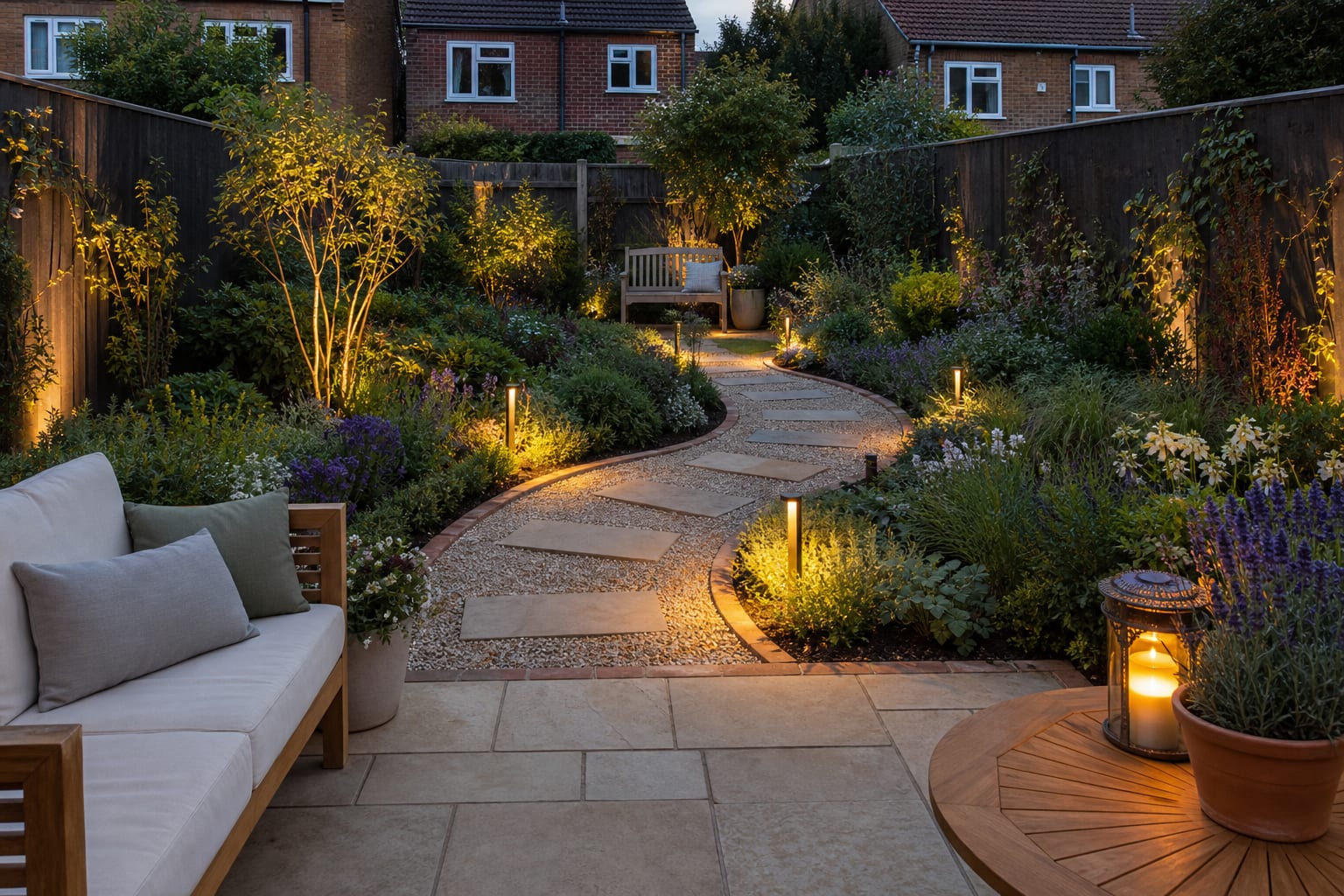
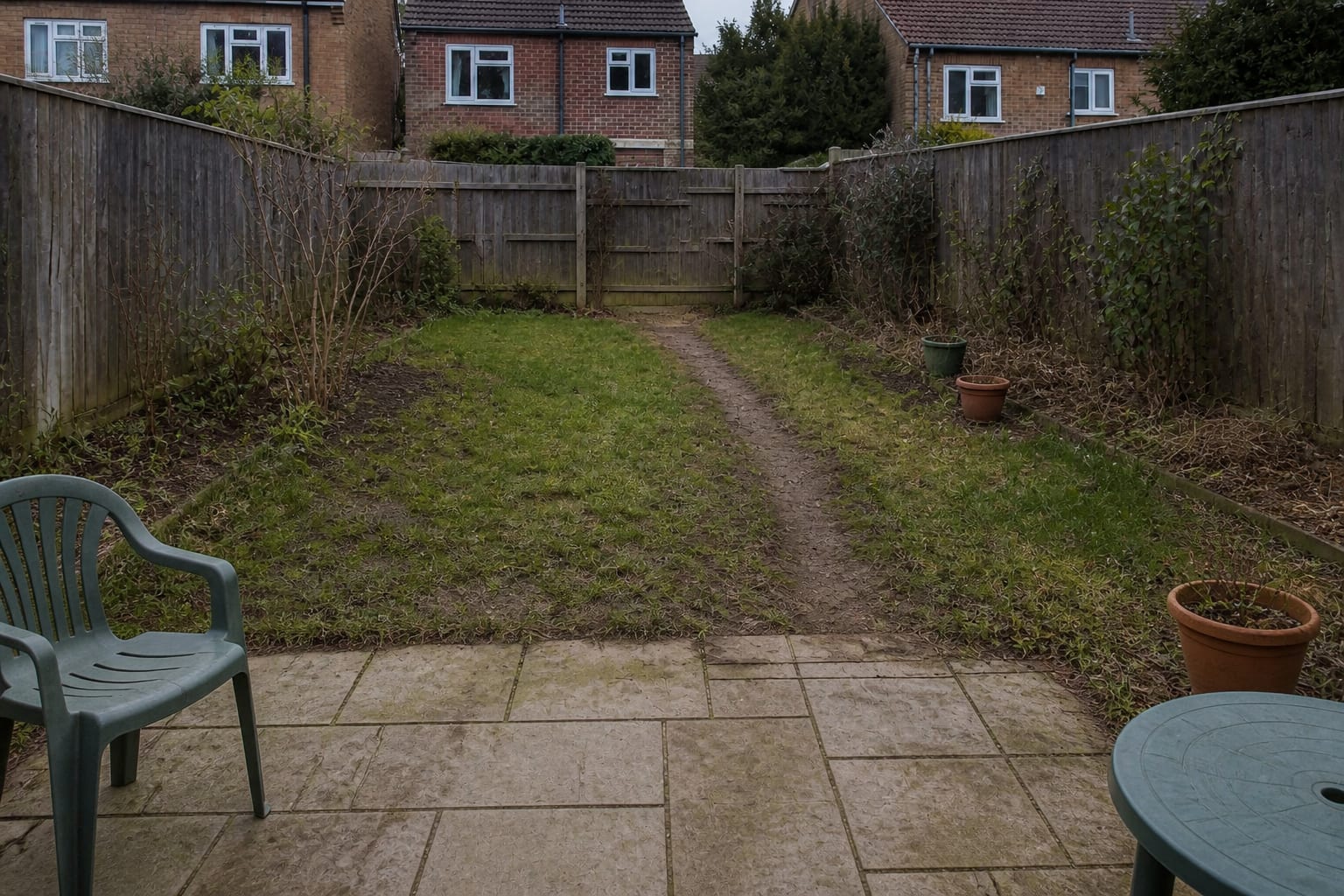
The best material for a garden path matches the job: gravel for flexible everyday routes, brick for firm structure near the house, and stepping stones for slower movement through planting. Choose circulation before decoration - a path in the wrong place just becomes a shortcut beside itself, no matter how attractive the material.
What makes a garden path feel intentional?
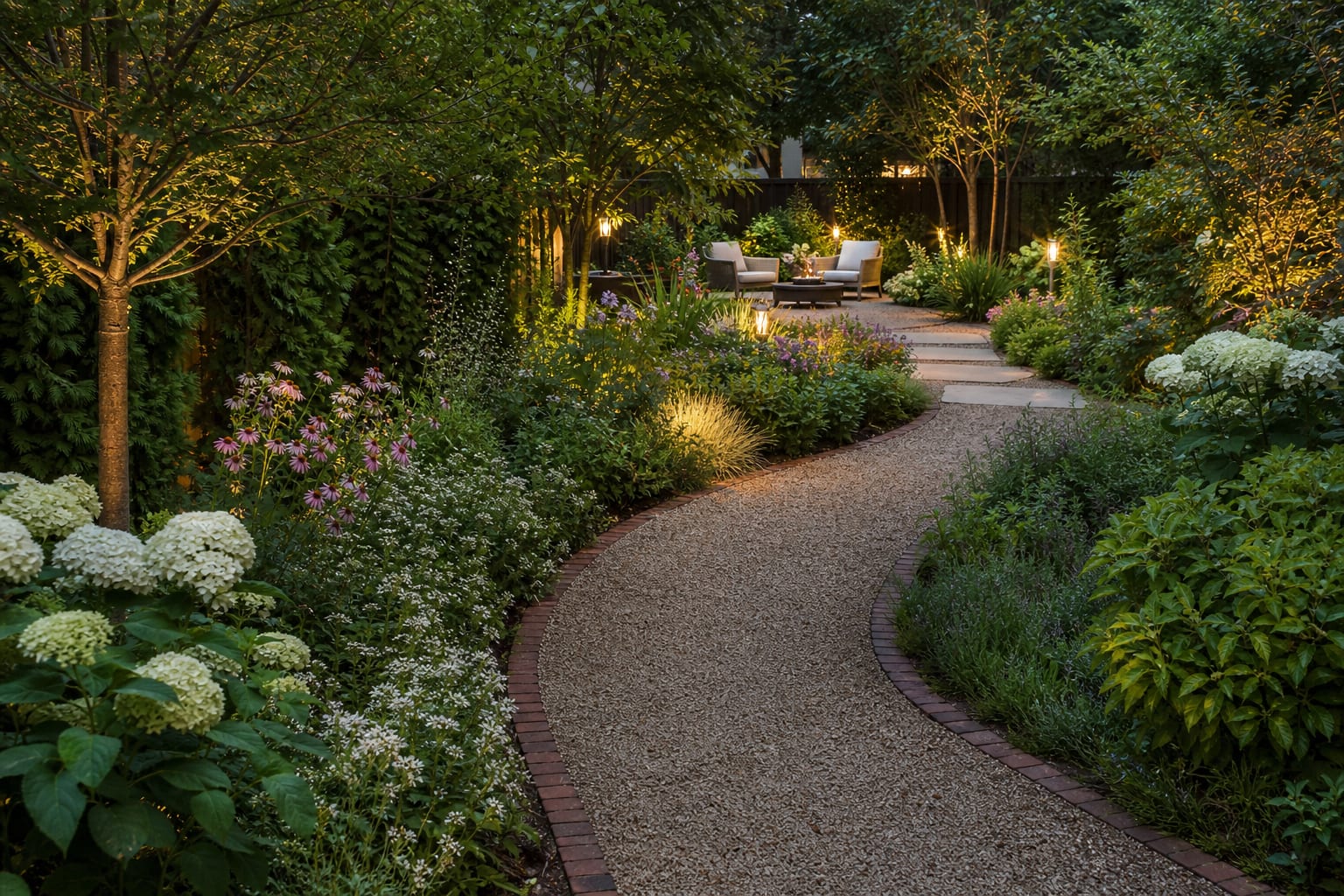
A path feels intentional when width, edge, material, and destination agree with how people actually move. It should start where a foot naturally lands - back door, gate, patio step, shed, or vegetable bed - not force a decorative curve that gets cut across.
Use hierarchy: the main route from house to garden feature should feel more generous than a side path to the compost bin. Aim for 36 inches minimum on primary routes, 42-48 inches where two people pass or a wheelbarrow turns. Secondary stepping-stone paths can shrink, but stones still need to land where a normal stride falls.
Edges determine whether a budget path looks designed or temporary. Gravel next to lawn needs metal, brick, stone, or timber edging firm enough to resist mower wheels; a 4-6 inch planted shoulder can soften it, but a physical boundary must sit underneath. If the path links a kitchen door to edible beds, these compact herb garden ideas help path and planting work as one zone.
Which material should lead the design?
Choose material by traffic and maintenance, not by a pretty close-up photo: gravel for adjustable routes, brick for firm architectural paths, stepping stones for planted passages, and concrete pavers for cleaner modern gardens.
| Path material | Best garden use | Spec that keeps it honest |
|---|---|---|
| Gravel | Curving, informal, budget-conscious paths | Compact the base; keep loose gravel 2-3 inches deep. |
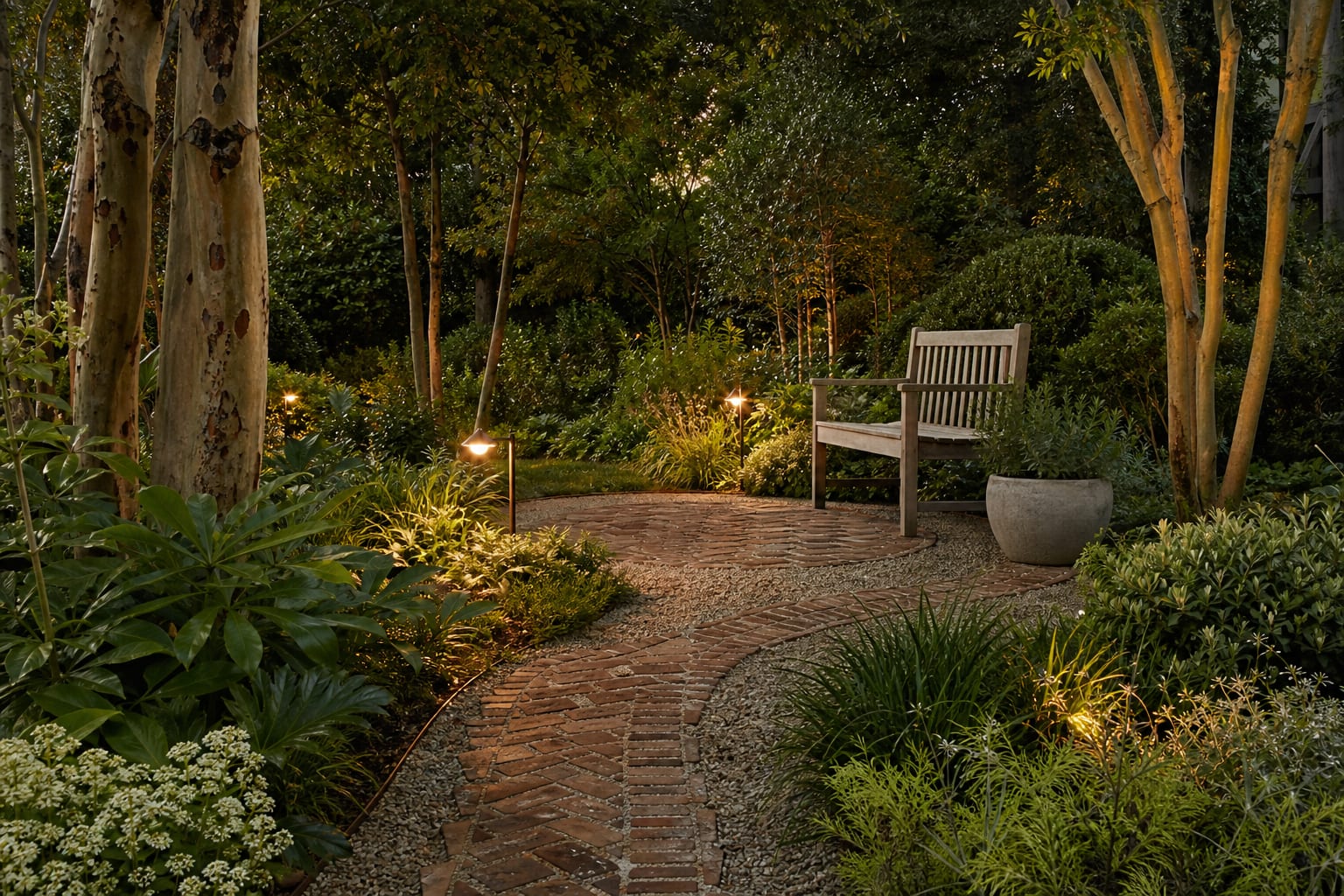
| Brick | Traditional gardens, entries, greenhouse routes | Add a soldier course edge to control cuts. |
| Stepping stones | Planted beds, slow routes, lawn crossings | Set 24 inches on center; pieces at least 16-18 inches wide. |
| Large concrete pavers | Modern gardens, straight side-yard paths | Keep joints consistent, often 2-4 inches when planted. |
| Mulch | Low-traffic woodland or vegetable routes | Refresh depth as it breaks down; avoid on runoff slopes. |
Gravel suits young gardens where shrubs will expand and adds pleasant sound underfoot, but it needs an edge or it spills into beds. Brick works best near the house, steps, or terrace - match undertone carefully, since orange brick beside cool gray siding can clash. Stepping stones let a path disappear into planting; keep tops level and settled against surrounding soil. Where a path meets a vertical feature, trellis and arbor ideas give the route a reason to pause.
Test this on your own photo with ReDesign before finalizing - keep the house edge, horizon line, hardscape, planting beds, and main path visible so the preview reflects your actual space.
Which garden path ideas are worth copying?
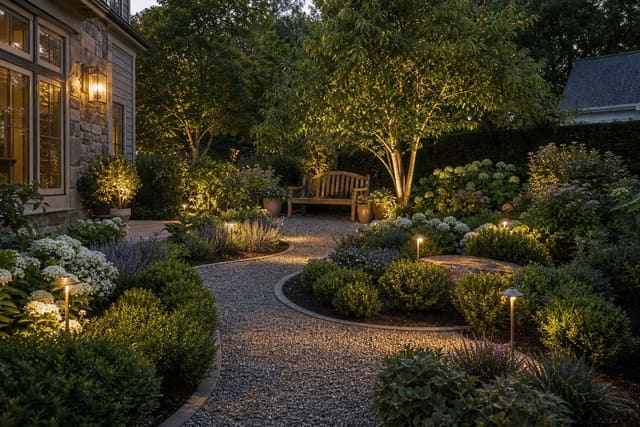
- Run gravel from the back door to the main destination at 36-42 inches wide, with metal or brick edging on both sides.
- Lay brick in running bond for a straight path beside a traditional house; aim long joints toward the destination and add a soldier course border.
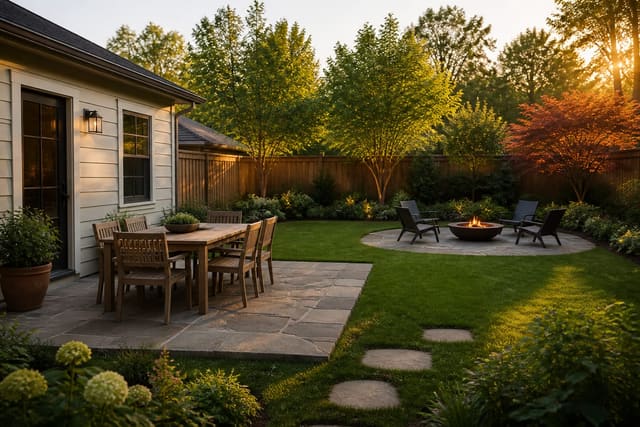
- Set oversized stepping stones through a lawn for occasional routes, flush with the grass so a mower clears the edge.
- Pair 24 by 24 inch concrete pavers with thyme or gravel for a modern layout with consistent joint widths.
- Widen the path by 18-24 inches near a bench, birdbath, or fountain to create a pause point, not just a corridor.
- Use brick or stone at the entry threshold, then shift to gravel deeper into the garden as traffic lightens.
Add compression and release: narrow slightly between lush beds, then widen where someone should stop. Place a water feature near a widened section rather than forcing admiration from the path edge - see these backyard water feature ideas for how a focal point can support circulation instead of blocking it.
Common garden path mistakes to avoid
- Making every path the same width. Service routes can stay narrow, but the main house-to-garden path needs more room, or the garden loses hierarchy.
- Ignoring drainage. A subtle cross-slope and free-draining base matter more than surface material, especially over clay soil.
- Using stepping stones that are too small. Tiny stones shorten stride and force feet-watching; choose fewer, larger pieces and test spacing with cardboard templates first.
- Letting plants swallow the path too soon. Leave shoulder room for wet foliage and future growth - a 12 inch nursery plant can become a 30 inch mound.
- Lighting only the destination. Add low, shielded light at turns and steps, spaced roughly 6-8 feet apart, using warm 2700K light for brick, gravel, and foliage.
Should you preview a garden path before building it?
Yes - AI previews solve the hardest spatial questions before you commit: curve, width, and whether a material contrast organizes the yard or chops it into leftovers. Upload a straight photo from the door or gate, then test gravel, brick, and stepping stones from the same angle.
Compare relationships, not construction detail: does the curve look natural from the house, does brick feel too formal, do stepping stones disappear into planting or read as random pads? If a path looks thin in the render, widen the main route by 6-12 inches before pricing material. Test contrast too - pale gravel can glare in full sun, and dark brick can feel heavy against dark mulch - then simplify anything that looks fussy at mature plant size.
A good path should survive ordinary life: a hose crossing it, kids running over it, wet leaves near a gate, a wheelbarrow taking the shortest route. Design for those moments and the garden will feel structured even when it is not freshly weeded.
Frequently Asked Questions
What is the best material for a garden path?
Irregular flagstone over compacted gravel looks most natural, brick on a sand bed reads most formal, and decomposed granite is the cheapest and easiest to install but needs a steel edge to hold its shape.
How wide should a garden path be?
36 inches is the minimum for one person with tools, 48 inches allows two people to pass comfortably, and primary entrance paths should run 48-60 inches to match the visual weight of the house entry.
Should garden paths be straight or curved?
Curved paths feel natural in planted beds but need a gradual radius of at least 5 feet to read as intentional; straight paths suit formal gardens and kitchen gardens laid out on a grid.
Do garden paths need a base?
Yes - 4 inches of compacted gravel base prevents settling and frost heave. Without one, flagstones rock loose within a single freeze-thaw season.
What can I plant between flagstone path stones?
Creeping thyme, Mazus reptans, and Corsican mint tolerate foot traffic and fill joints within two seasons. Avoid moss on sunny paths - it turns slippery and dies out in drought.
> Try this: Ready to see this on your own outdoor space? Open ReDesign and run the preview before you buy materials, plant, drill, or move furniture.
Three transformations to try
1. Flagstone path with creeping thyme joints 2. Brick path with formal border planting 3. DG path with steel edge through planted bed