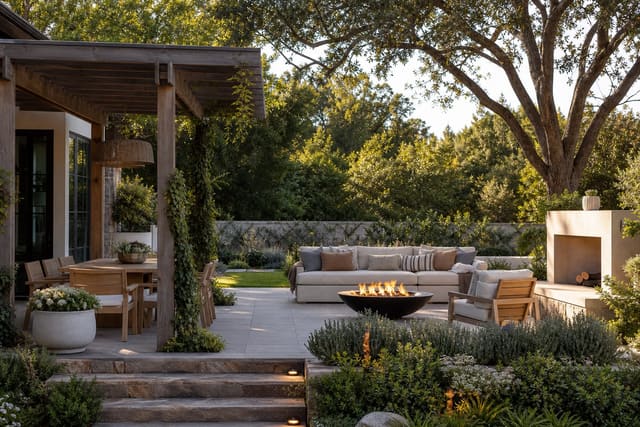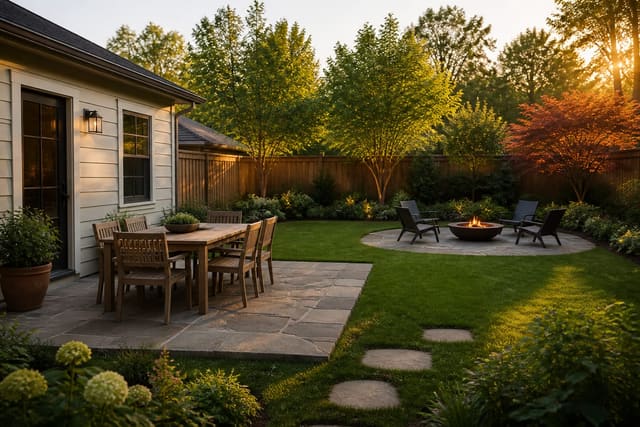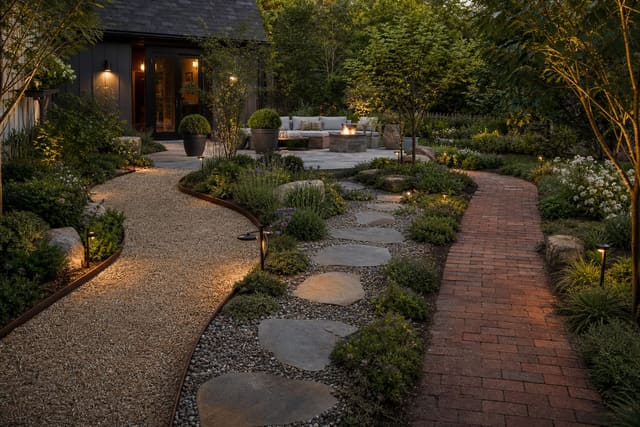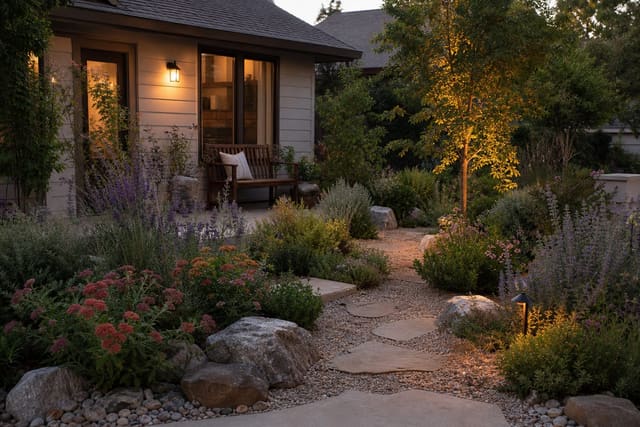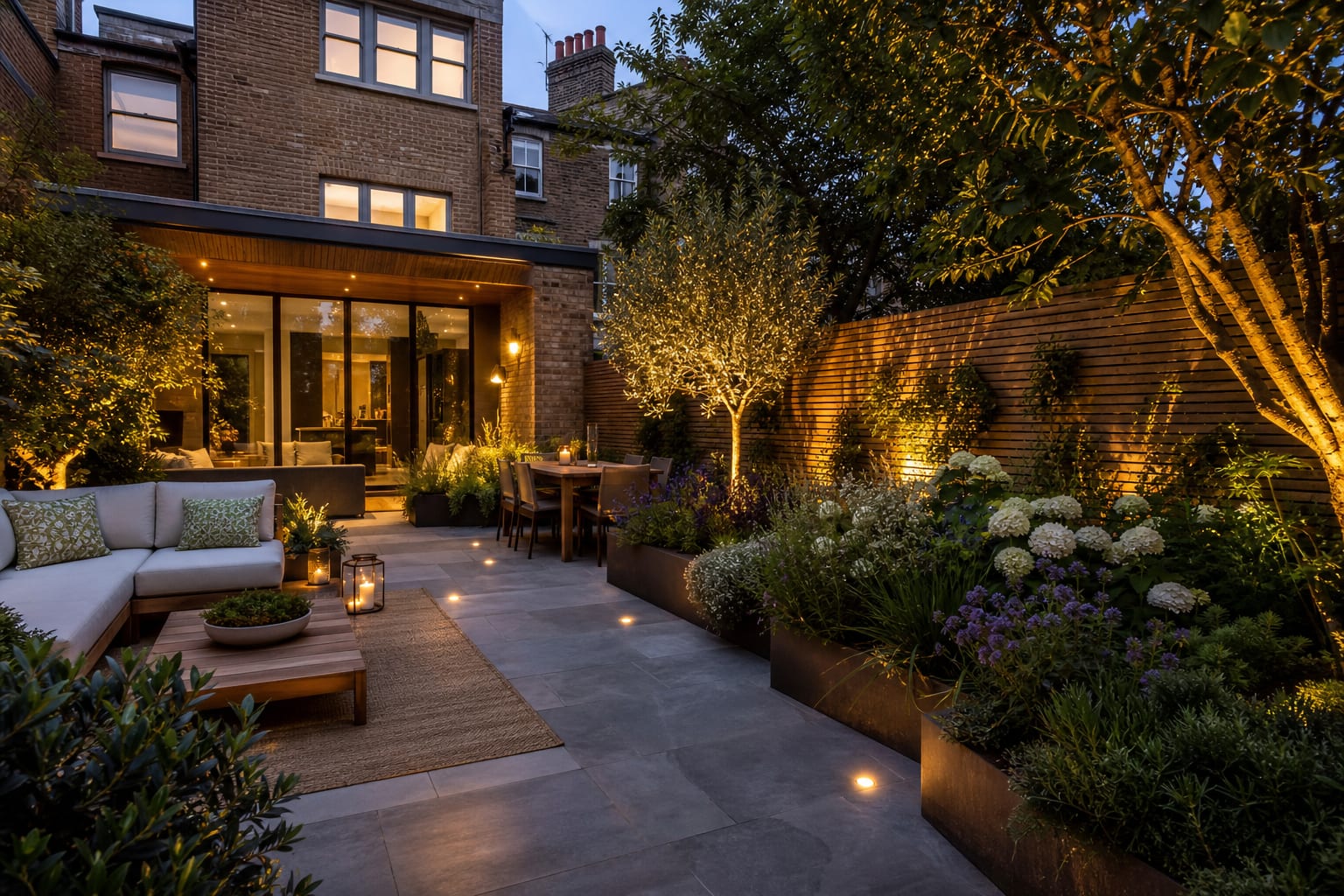
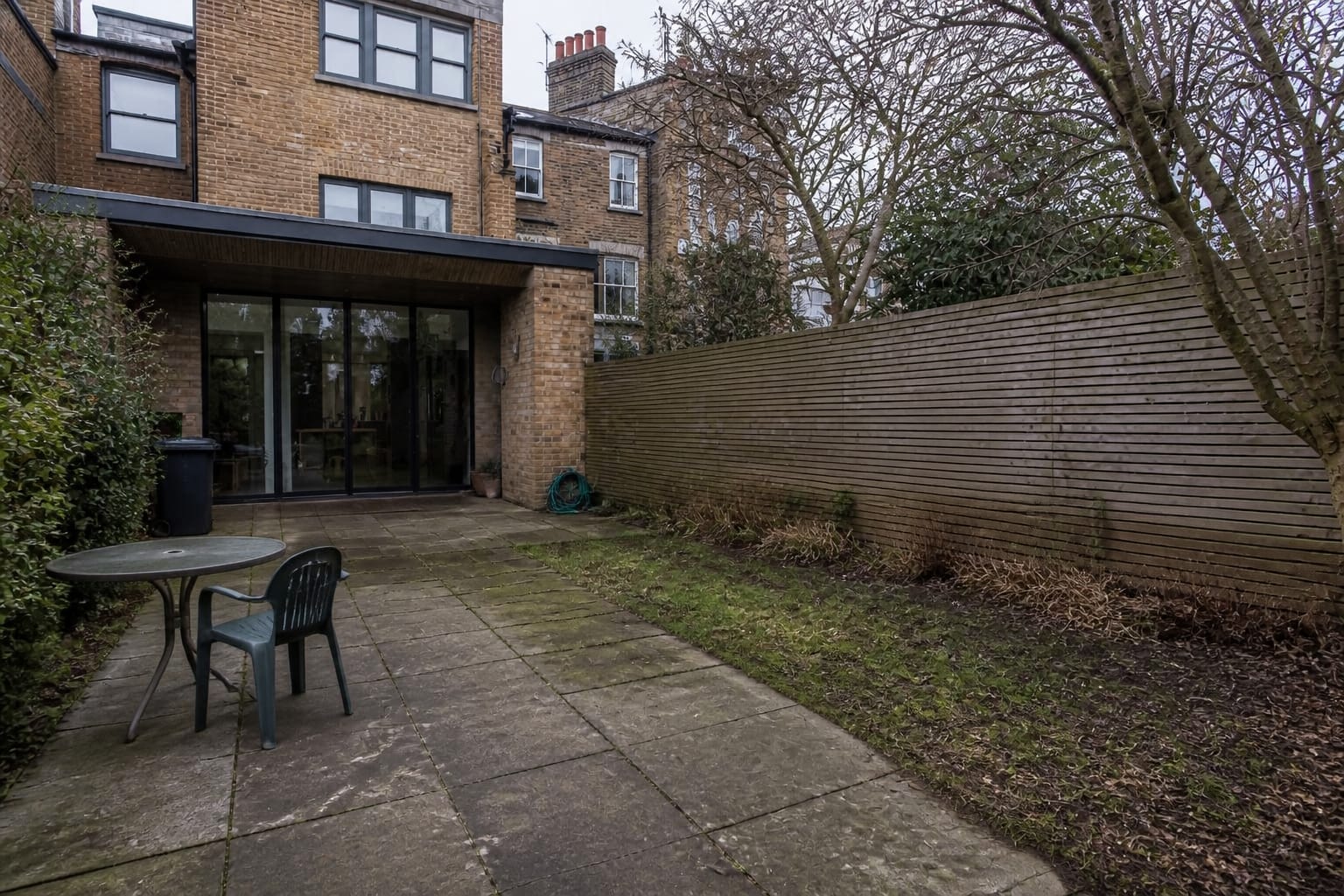
Garden design ideas work best when you treat beds, paths, and focal points as the plan and plants as the finishing layer. Define how you'll move through the space, shape deep beds around that circulation, pick one focal point per view, then layer planting by height and season for a garden that looks composed rather than randomly planted.
What makes a garden feel designed instead of merely planted?
A garden feels designed when the ground plane, edges, routes, and visual pauses are composed before the nursery cart gets involved. Random planting usually happens because plants get bought first and squeezed in later. Better planning works backward: decide where people walk, where the eye lands, and where maintenance access must stay open before choosing species.
Start with the view from the house. The kitchen window, back door, or main gate should look toward something deliberate, not the side of a compost bin. A 30 inch wide bench under a small tree does more for the garden than another tray of annuals. In a narrow garden, place the focal point slightly off center so the view feels longer.
Bed shape matters as much as the plant list. Broad curves look calm and are easy to mow around; fussy wiggles look nervous and are hard to edge. Straight lines should align with the house, fence, or patio so the geometry feels connected to the property.
| Garden element | Weak version | Stronger design move |
|---|---|---|
| Bed edge | Tiny scallops every few feet | One broad curve or a straight run tied to the house |
| Path | Stepping stones that disappear into lawn | 36 inch main route or 24 inch stone spacing for a secondary path |
| Focal point | Multiple small ornaments | One bench, pot, tree, or water feature on a view line |
| Planting | One of everything | Repeated groups stepping in height from back to front |
Which design moves give beds, paths, and focal points real structure?
Each move below fixes a specific problem: weak edges, awkward circulation, shallow beds, or too many small distractions.
- Draw one continuous bed around the garden edge. A single connected border frames the lawn or terrace like a rug. Give it at least 4 feet of depth for shrubs, expanding corners to 6-8 feet for a small tree or layered evergreens.
- Use a path to create anticipation. A garden that reveals everything at once feels flat. Run a 36-42 inch gravel, brick, or stone main path, with a narrower secondary path curving through herbs or a cutting border. For dry, exposed sites, borrow ideas from drought tolerant landscaping so path and palette suit the climate.
- Place a focal point where a path ends. The eye wants a destination. A glazed pot should be 20-28 inches wide to hold its own outdoors; a tiny pot at the end of a long view disappears.
- Step planting heights front to back. Flat planting makes even colorful borders look thin. Keep edging plants 8-15 inches tall, mid-height perennials and grasses 18-36 inches, and anchor the rear with shrubs, climbers, or small trees.
- Design a productive corner with the same discipline as an ornamental bed. Raised beds 3-4 feet wide are easy to reach from both sides. See vegetable garden design ideas before deciding bed size.
Test this on your own photo with ReDesign before choosing a final direction. Keep the house edge, horizon line, hardscape, beds, and main path visible so the preview solves the space you actually have.
Common garden planning mistakes to avoid
Buying isolated plant "crushes" is the most common mistake. One hydrangea, one salvia, one rose, and one mystery perennial may each be lovely, but together they look like a nursery holding area. Choose a smaller palette, repeat it, and vary leaf size, height, and bloom time for rhythm without chaos.
Making beds too shallow is next. A thin strip against a fence cannot hold layered planting. Pull the bed forward even 18-24 inches to fit lower front planting, bulbs, and groundcovers that hide bare stems.
Ignoring maintenance routes causes daily irritation. Leave access at least 18 inches wide to reach the hose bib, hedge, compost, or shed, and keep thorny plants away from gates and shortcuts.
Treating focal points as clutter weakens the whole garden. A birdbath, obelisk, lantern, statue, and bistro set together can look like a shop display. Pick the strongest view, support it with planting, and let the rest of the garden breathe.
Planning only for summer leaves the garden empty most of the year. Evergreens, deciduous shrubs, grasses, bulbs, and perennials should share the workload across winter structure, spring texture, summer shade, and autumn seedheads.
Should you use AI to preview a garden before you commit?
Yes: AI previews work best as a rehearsal for structural choices, not just plant color. Upload a straight, daylight photo from the patio, back door, or main garden view, including the fence, house edge, existing trees, lawn, and utilities. The preview reveals whether the garden feels calm, cramped, or overstuffed before you order stone, soil, or plants.
Test two or three versions that differ in structure. One might use a curved border and gravel path, another square beds with a central lawn panel, a third a small tree and bench as the focal point. Keep the camera angle identical for an honest comparison, and mark a proposed bed outside with a hose or landscape paint before committing.
This approach suits renters and budget projects especially well. Preview container borders, a freestanding trellis, gravel over a removable grid, solar path lighting, or a bench-and-planter focal point before changing anything permanent.
How should you phase a garden redesign without wasting money?
Phase from structure to softness, since the costliest mistakes happen when plants go in before paths, drainage, or seating are settled. Fix grading before mulching if water pools near the house, and place a path before planting the border it will eventually cross.
Start with layout: main path, bed edges, focal point, and open area. Keep dining chairs on a stable surface with 30-36 inches of pullout room behind them, and keep prickly plants away from daily foot traffic.
Next, install backbone plants: shrubs, small trees, climbers, and evergreen masses that hold shape in quiet months. Choose mature sizes honestly; a shrub that wants to be 5 feet wide should not sit 18 inches from a path unless constant clipping is part of the plan.
Last, add the seasonal layer of perennials, bulbs, annuals, and herbs, which is easier to change once the bones are right. Mulch beds 2-3 inches deep, keep mulch off trunks and crowns, and water new planting deeply while roots establish.
Frequently Asked Questions
What are the basic principles of garden design?
The core principles are structure, repetition, focal point, scale, and sequence. Structure holds the garden together in winter, repetition creates visual rhythm, a focal point gives the eye a destination, scale matches plant size to space, and sequence controls what you see while moving through the garden.
How do I design a garden with year-round interest?
Give each season one distinct moment: spring bulbs and blossom, summer perennial peak, autumn grasses and standing seedheads, and winter evergreen structure and bark. Four separate moments across the year keep a garden from going fully dormant at any point.
What is the first step in designing a garden from scratch?
Map existing sun, soil, drainage, and view conditions before choosing any plant or hard landscaping. Most garden problems come from planting the wrong species for existing site conditions, not from layout mistakes, so this survey step prevents the majority of future failures.
How do I make a small garden look bigger?
Use a single diagonal path that crosses the longest axis, mirror boundary planting on all sides so no wall reads as a dead end, and limit the palette to 5-7 species. Repetition reads as spacious; too much plant variety reads as cramped and busy.
How do I choose a garden style?
Match the garden style to the house architecture and your maintenance budget: formal houses suit formal gardens, contemporary houses suit contemporary gardens. Formal styles generally demand roughly twice the maintenance hours of informal, naturalistic planting, and mismatched house-and-garden styles are the most common design error.
> Try this: Ready to see this on your own outdoor space? Open ReDesign and run the preview before you buy materials, plant, drill, or move furniture.
Three transformations to try
1. Mixed border with structure and seasonal interest 2. Formal garden with hedged rooms and central path 3. Naturalistic garden with grass and wildflower layers