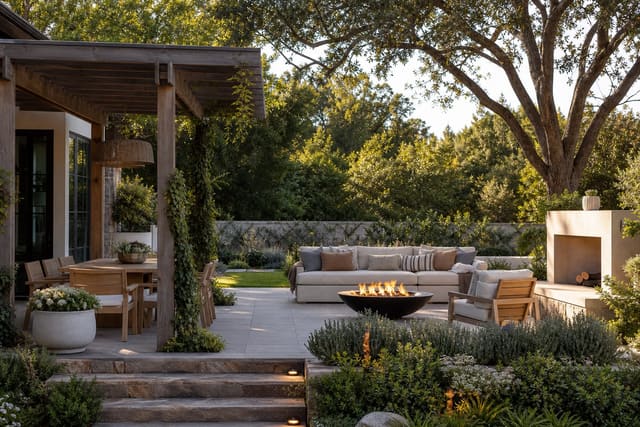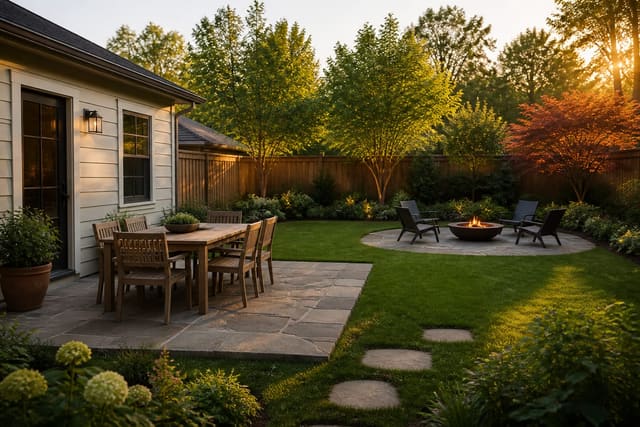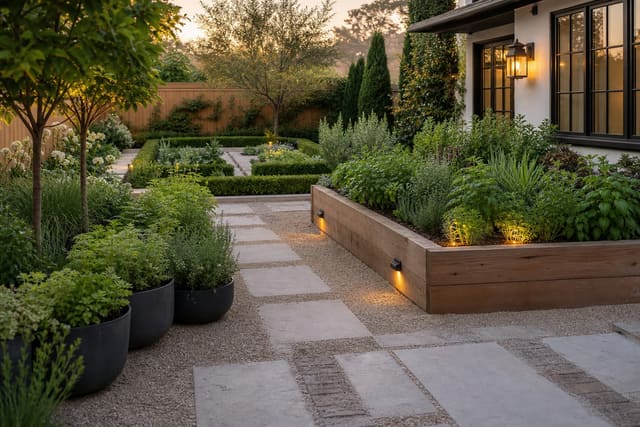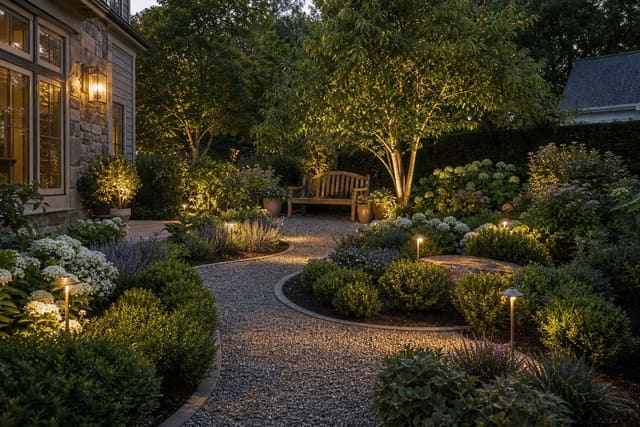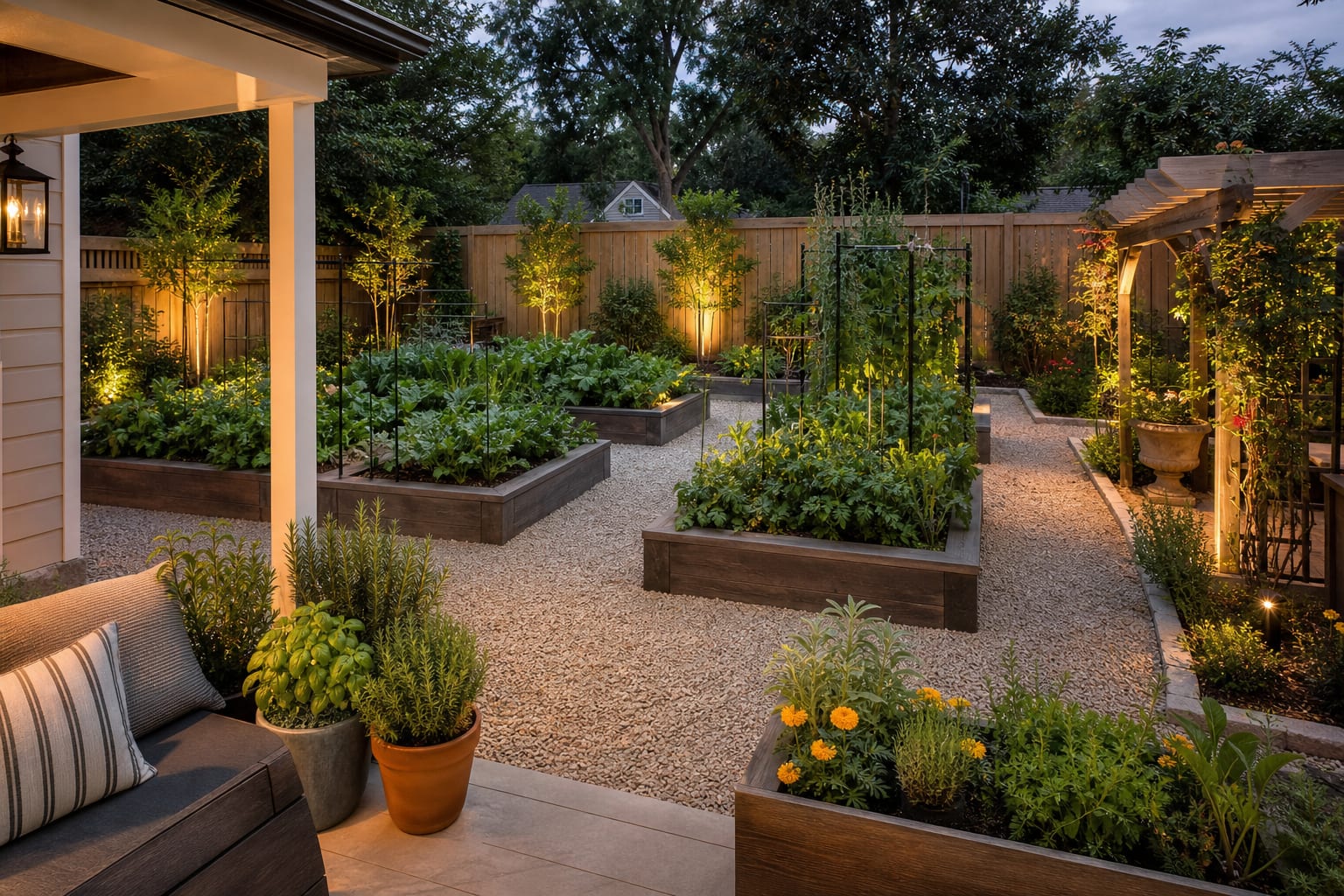
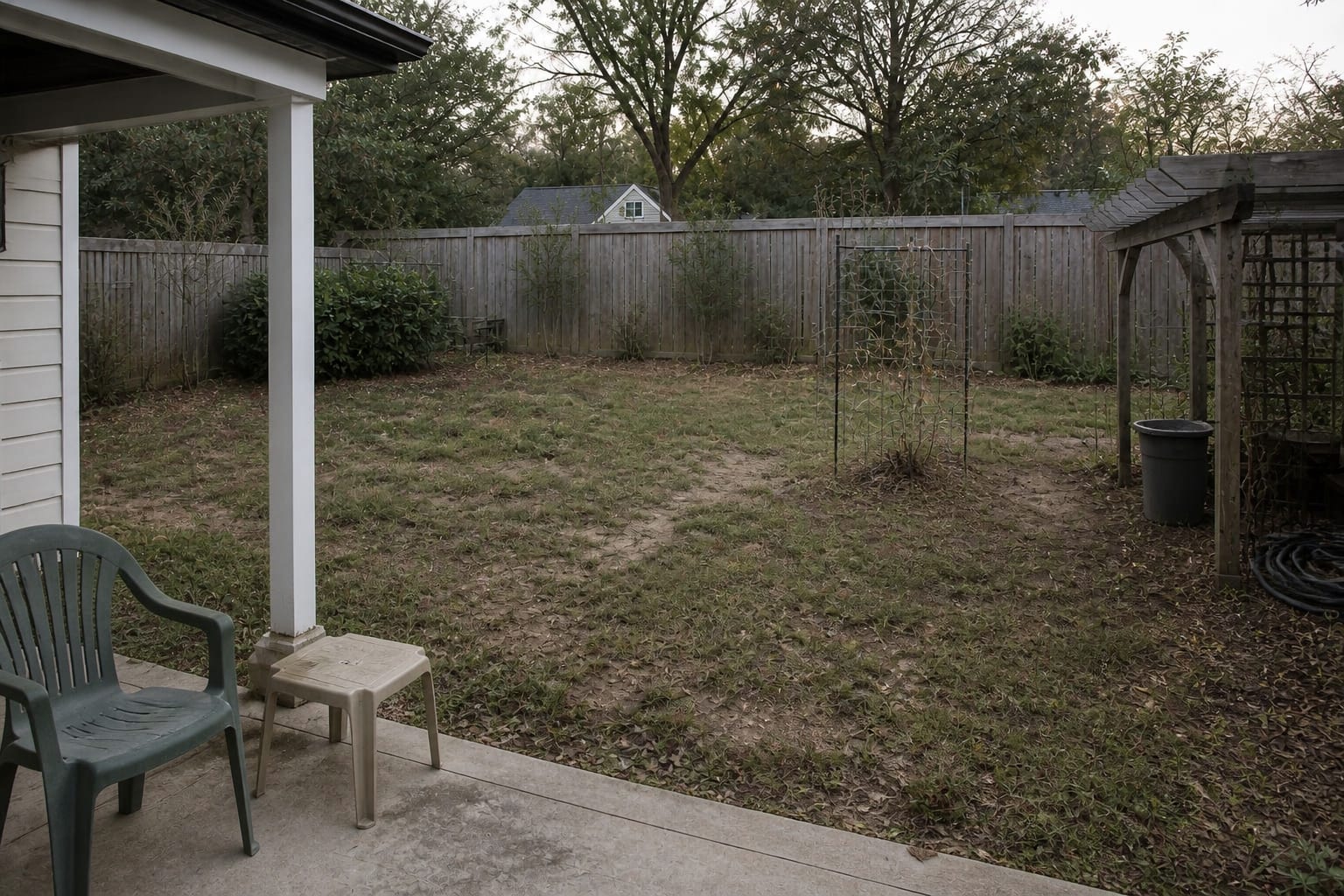
A working vegetable garden layout uses beds no wider than 4 feet (reachable from both sides), at least 12 inches deep with amended soil, 24-36 inch paths for wheelbarrow clearance, and a north-south long axis so rows get even morning and afternoon sun. Layout matters more than seed choice: a poorly planned kitchen garden turns into extra work before it turns into food.
How do I design a vegetable garden layout that stays orderly?
Start with the sunniest practical spot rather than the leftover strip behind the shed. A beautiful potager in deep shade is still a weak vegetable garden.
- Protect a 30-36 inch route through the garden before adding furniture, lighting, or planting.
- Repeat one visual cue three times — a metal finish, planter shape, or paving joint — to tie the layout together.
- Solve the core layout problem with your first permanent upgrade; accessories should support the plan, not cover for weak planning.
Beds should be narrow enough that you never step into the soil: 4 feet wide when accessible from both sides, or 24-30 inches deep against a fence. Paths need equal respect — 30 inches works for one person with a basket, 36 inches suits a wheelbarrow or kneeling pad. Hold gravel or stepping-stone edges with timber, steel, or pavers so the layout doesn't blur into the lawn by midsummer. For broader yard zoning around the edible area, borrow the logic from garden design ideas for real yards.
Place water within easy reach. If the hose has to drag across six beds, watering gets skipped. A spigot, hose reel, or drip line within about 25 feet keeps the garden manageable instead of heroic.
Which kitchen garden layout fits the way you cook?
The best layout follows your kitchen habits, not a diagram. Herbs you use nightly deserve the closest bed; a once-a-summer sauce tomato can live farther out with sturdier cages.
- Four-bed rotation: Four rectangular beds, roughly 4x8 feet, rotating fruiting crops, leafy crops, roots, and legumes each season for simple soil care.
- Central path, side beds: A 36-inch center path with 30-inch side beds suits narrow yards and prevents maze-like harvesting.
- Potager grid: 4-foot square or 4x6-foot beds with brick or gravel paths, repeating obelisks or low edging so the garden looks intentional between harvests.
- Vegetables plus flowers: Marigolds, calendula, nasturtiums, and alyssum in 8-12 inch borders aid pollination and soften bare soil.
- Quick-harvest bed near the door: Lettuces, scallions, parsley, and chives within a few steps of the kitchen; reserve farther beds for potatoes, squash, or garlic.
Repeat one bed height, path material, or trellis shape across the garden so it reads as calm even when plants are at different stages. On hot or exposed sites, borrow mulch, drip irrigation, and spacing ideas from drought-tolerant landscaping.
Test a layout on your own photo with ReDesign — keep the house edge, horizon, hardscape, beds, and main path visible so the preview solves the space you actually have.
What planting rules keep a raised bed vegetable garden manageable?
Place permanent structures first: trellises, cattle panels, tomato supports, compost access, and the hose route. Everything else gets easier once those are fixed.
Keep tall crops from shading short ones. In most northern-hemisphere gardens, put trellises, corn, and indeterminate tomatoes toward the north or back. Leave 18-24 inches between large tomato plants and give sprawling squash its own edge instead of letting it spread into the greens.
Use succession planting close to daily life — a 2x4-foot patch can carry spring lettuce, then basil, then fall greens if treated as a calendar rather than a one-time planting. Leafy greens, parsley, and mint tolerate partial shade, but tomatoes, peppers, and melons need strong light; for shaded plots, lean into herbs and greens and check shade garden ideas for the surrounding planting.
Common vegetable garden mistakes to avoid
- Beds too wide. Keep freestanding beds at 4 feet or less; cut depth to about 2 feet against a wall so every plant is reachable.
- Paths as leftover space. A 16-inch path fails once vines and tools arrive; widen main routes to 30-36 inches with a stable surface.
- Planting everything on one day. Stagger lettuce, radishes, beans, and herbs in 2-3 week intervals to avoid a harvest pileup.
- Storing tools too far away. A tool rail or compost bucket within 10-15 feet of the beds keeps twine, gloves, and scissors where the work happens.
- Ignoring the view from the house. Align bed edges with the patio or main window and repeat one path material so the garden looks disciplined before plants fill in.
Use AI design to preview your garden before you commit
AI design tools work best on layout questions, not seed choice. Upload a clear photo from the patio or garden gate, then test bed shapes, path widths, and trellis positions before buying lumber or moving soil. A preview quickly shows whether four 4x8-foot beds crowd the lawn or a center path feels too narrow.
Keep prompts practical: ask for a raised bed garden with 36-inch gravel paths, herbs near the kitchen, north-side trellises, and a tidy potager structure. Compare a rectangular-bed version against a central-axis version and a fewer-larger-beds version to see what reads calmly from the house. Clear hoses, pots, and stakes before shooting the photo, and stand back far enough to include the door, fence line, and sunny area.
Frequently Asked Questions
How wide should vegetable garden raised beds be?
Use a maximum of 4 feet if the bed is accessible from both sides, or 3 feet if it sits against a wall or fence. These widths let you reach the center without stepping into the bed and compacting the soil.
How deep should vegetable garden beds be?
Use 12 inches minimum for most annual vegetables and 18 inches for root crops like carrots, parsnips, and beets that need unrestricted depth. Fill with a 60/40 topsoil-to-compost mix rather than pure potting mix.
How do I prevent pests in a vegetable garden?
Rotate plant families (brassica, allium, nightshade, legume) between beds each year, interplant with basil and nasturtium to confuse pests, and add copper-edge guards for slugs. Avoid broad-spectrum pesticide applications, which also remove beneficial insects.
How much sun does a vegetable garden need?
Fruiting crops like tomatoes, peppers, cucumbers, and squash need 8 hours of direct sun. Leafy greens and root vegetables need 6 hours, and herbs or salad crops can manage on as little as 4 hours.
What is the best layout for a small vegetable garden?
Four 4-by-8-foot raised beds in a 2x2 grid with 3-foot paths gives 128 square feet of growing surface in about a 22x19-foot footprint — enough for a diverse seasonal harvest for two adults.
> Try this: Ready to see this on your own outdoor space? Open ReDesign and run the preview before you buy materials, plant, drill, or move furniture.
Three transformations to try
1. Raised bed grid with gravel paths 2. Formal kitchen garden with clipped box border 3. Container vegetable garden on patio