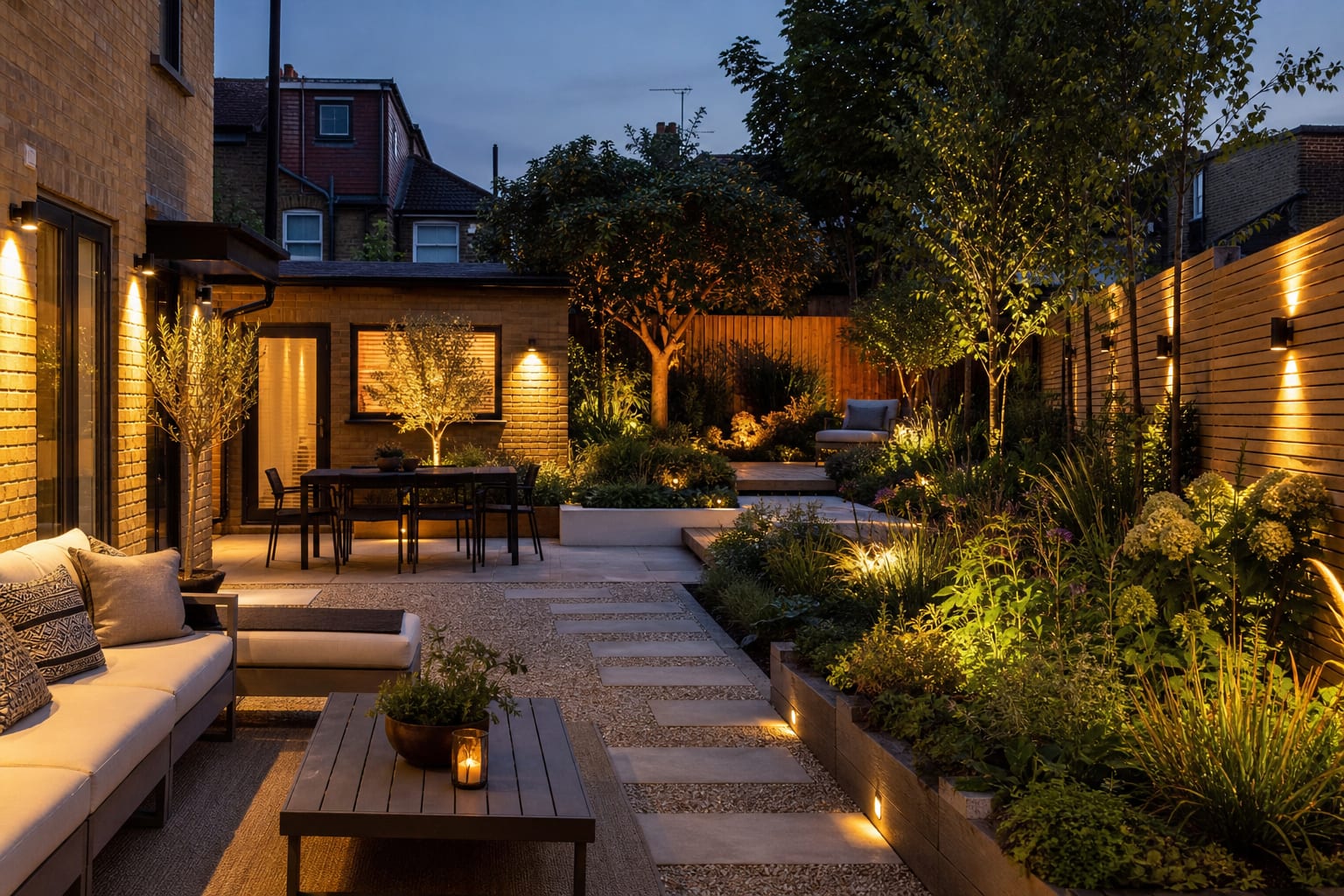
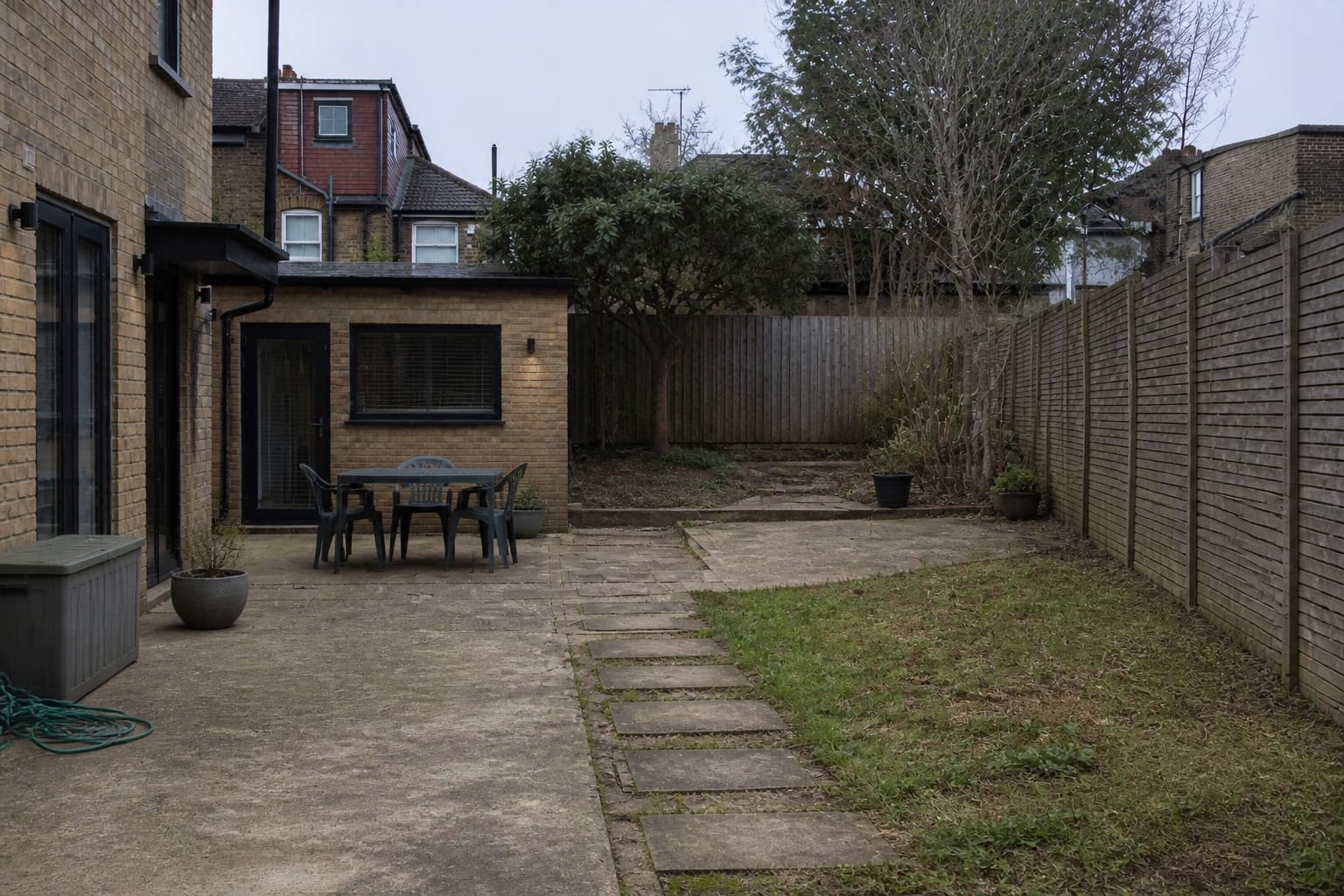
A productive herb garden groups plants by water need: Mediterranean herbs (thyme, rosemary, oregano, sage) in one full-sun, sharp-drained bed, and moisture-lovers (mint, chives, parsley) in a separate lower-drainage bed or container. Put the herbs you cook with most in the sunniest reachable spot, closer to the kitchen door than the decorative border, since herbs get used in pinches, not weekend harvests.
What makes a herb garden feel intentional instead of improvised?
A herb garden feels intentional when plants are grouped by water needs, edges are clean, and the harvest route is obvious from the house. Scattering one basil by the tomatoes, one mint under a tap, and one thyme near the bins reads as scrappy no matter how healthy each plant is. Herbs need the same design discipline as shrubs or paving.
- Protect a 30 to 36 inch route through the garden before choosing furniture, planting, or surface upgrades.
- Repeat one visual cue three times, such as a metal finish, planter shape, or paving joint, to tie the scene together.
- Solve the core layout problem with your first upgrade; accessories should support the plan, not cover for weak planning.
Start with light. Most culinary herbs want a bright position, and the classic woody herbs need more sun than a damp north-facing corner offers. On a balcony, use the brightest rail and containers deep enough that compost won't dry out by lunch: a 12 inch trough suits chives, parsley, and thyme, while rosemary wants a deeper individual pot.
Drainage is the second non-negotiable. Terracotta, timber planters, galvanized troughs with drilled holes, and raised beds all work if excess water can leave. A saucer permanently full of water is slow sabotage for thyme and sage. In heavy clay, lift herbs into a raised bed 10 to 18 inches high rather than fighting wet soil.
Use structure to make small leaves read as a designed garden: a gravel square, brick edge, clipped edging, timber frame, or repeated terracotta pots. If the herb area connects to a larger route, borrow spacing from garden path ideas for real circulation so the bed doesn't look squeezed beside a shortcut.
| Herb garden decision | Best for containers | Best for raised beds | Best for a potager |
|---|---|---|---|
| Small patio or balcony | Pots 8 to 16 inches wide | Usually too bulky | Too formal for tight rentals |
| Heavy or wet soil | Gritty compost in pots | 10 to 18 inch lifted bed | Works if paths drain well |
| Visible from dining area | Repeated pot shapes | Timber or steel edges | Strongest visual order |
| Frequent cooking | Pots by the door | Bed near the kitchen path | Central harvest bed near the gate |
Test this on your own photo with ReDesign before you commit; keep the house edge, horizon line, hardscape, planting beds, and main path visible so the preview solves the space you actually have.
Which herb garden ideas fit the way you cook?
- Container herb garden: best for patios, balconies, and renters since pots chase sun and travel with you. Use five to nine pots, mostly 10 to 14 inches wide, plus one 16 to 18 inch pot for rosemary or bay.
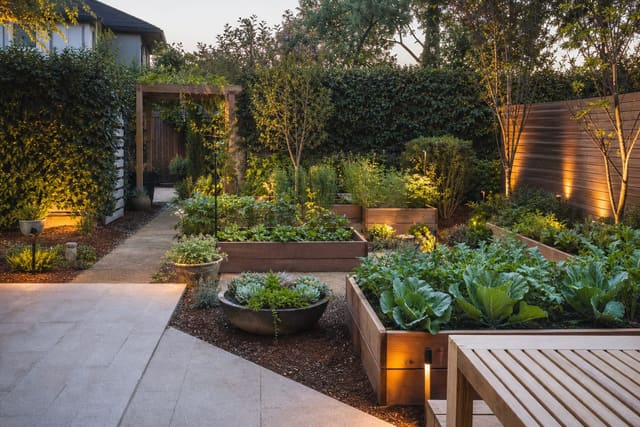
- Raised kitchen herb garden: good for small yards wanting order without a full plot. A 3 by 6 foot bed holds a generous selection if mint stays separate, taller rosemary or sage sits at the back, and thyme, chives, parsley, and oregano line the front.
- Formal potager layout: best when visible from windows or dining. Four square beds around a central pot or clipped standard give architecture, with 24 to 30 inch paths that stay readable once basil and parsley bulk up.
- Vertical support: add a slim obelisk or wall trellis, 5 to 6 feet tall, for climbing companions like peas or nasturtiums without shading basil; see trellis and arbor ideas for small gardens.
- Mediterranean herb strip: run an 18 to 24 inch deep strip along a hot wall for rosemary, thyme, oregano, sage, and lavender, mulched with gravel rather than bark.
- Windowside harvest station: three deep pots of basil, parsley, and chives by the most-used door outperform a distant border, especially in rentals.
- Herbs near water: keep herb pots raised and on paving if pairing with a fountain, since soggy roots ruin thyme; see water feature ideas for compact gardens.
Edit the garden around your cooking, not the nursery shelf: basil for tomatoes, parsley for almost everything, mint for drinks, thyme for roasting, rosemary for potatoes, chives for eggs, coriander if you'll use it before it bolts. Fewer plant types with adequate root room beats a crowded assortment.
Common herb garden mistakes to avoid
- One soil for everyone. Basil, parsley, coriander, and chives want steadier moisture than rosemary, thyme, oregano, and sage. Split into wet and dry zones, even if that's two pots 12 inches apart.
- No drainage holes. Every outdoor herb pot needs one, and large pots should sit on feet or gravel. Use a sealed cachepot only as an outer sleeve with a removable nursery pot inside.
- Mint in the main bed. It spreads by runners and weaves through neighbors fast. Keep it potted, refresh compost yearly, and cut it hard when stems go woody.
- Too precious a layout. Herbs need regular cutting to stay dense. Plant in generous clumps, repeat shapes, and keep snips by the door.
- Ignoring winter shape. Rosemary, bay, sage, lavender, evergreen thyme, gravel, and edging carry the design once basil and coriander are gone for the season.
Use AI design to preview your garden before you commit
Use AI design to test placement, container scale, and path shape before buying pots, soil, edging, or timber. Upload a straight photo from the kitchen door, patio corner, or garden gate, then request a container herb garden, a raised bed version, and a small potager using the same angle.
Be specific: ask for terracotta pots 10 to 18 inches wide, a separate mint container, a 30 inch gravel path, rosemary at the back, and basil near the door. Reject any version that puts herbs in deep shade or blocks the route to the table. The value is seeing the fit before committing to heavy planters or permanent bed edges.
An AI preview won't tell you when basil needs watering tomorrow, and it won't replace local advice on frost, soil, or plant toxicity around pets. It will show whether the herb garden connects to the patio, whether pot sizes look skimpy, and whether the path leaves room to harvest without stepping into the bed.
Frequently Asked Questions
What herbs grow best together in one bed?
Mediterranean herbs (rosemary, thyme, oregano, sage, lavender) share low-water, full-sun, well-drained conditions and pair well together. Keep mint isolated in its own container or bed section, since it spreads aggressively and overtakes neighbors within one season.
How deep should a raised herb garden bed be?
12 inches is the minimum for annual herbs like basil, cilantro, and parsley. 18 inches lets perennial herbs such as rosemary, thyme, and sage build root systems that survive summer heat without weekly watering.
How much sun do herb gardens need?
Mediterranean herbs need 6 to 8 hours of direct sun. Mint, chives, and parsley tolerate 4 to 6 hours and are the only common culinary herbs that succeed in part shade.
How do I keep a herb garden productive all season?
Cut-and-come-again harvesting, removing no more than one-third of a plant per week, plus deadheading flower stalks before they set seed, keeps basil, cilantro, and dill productive 8 to 12 weeks longer than letting them bolt.
What is the best container size for a herb garden?
A 12 inch diameter container holds one perennial herb, such as rosemary or thyme, or three annual herbs like basil, parsley, and chives. Planters 16 to 24 inches wide allow a mixed culinary collection in a single container.
> Try this: Ready to see this on your own outdoor space? Open ReDesign and run the preview before you buy materials, plant, drill, or move furniture.
Three transformations to try
1. Mediterranean herb raised bed in gravel surround 2. Terracotta container herb collection on patio 3. Divided raised bed with labeled herb sections