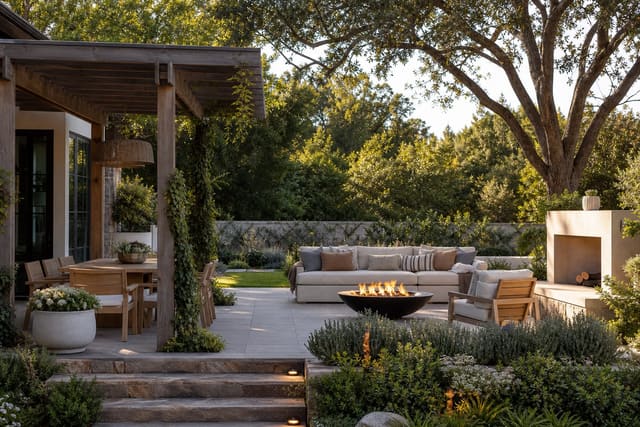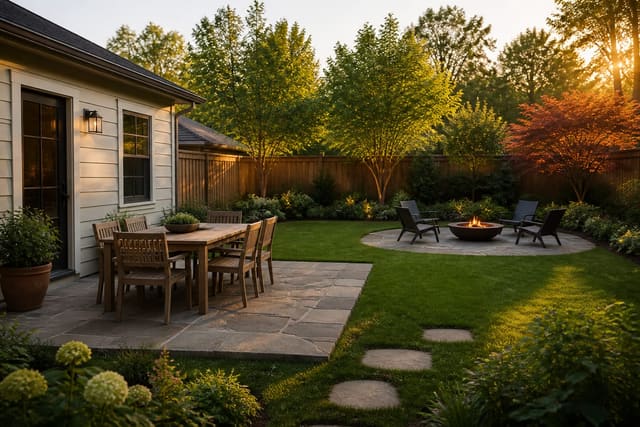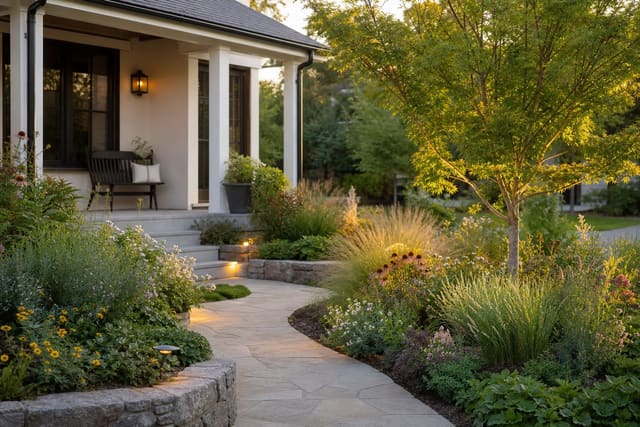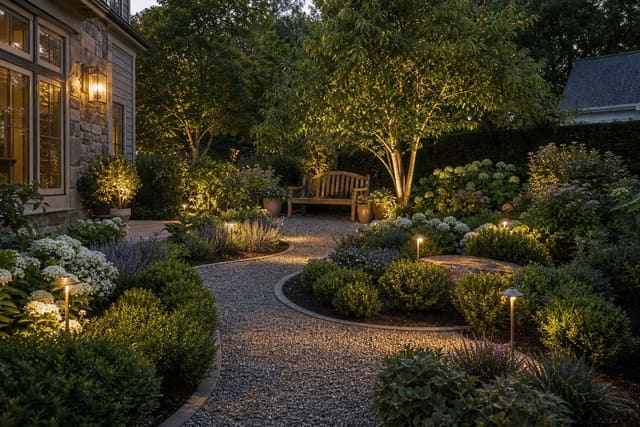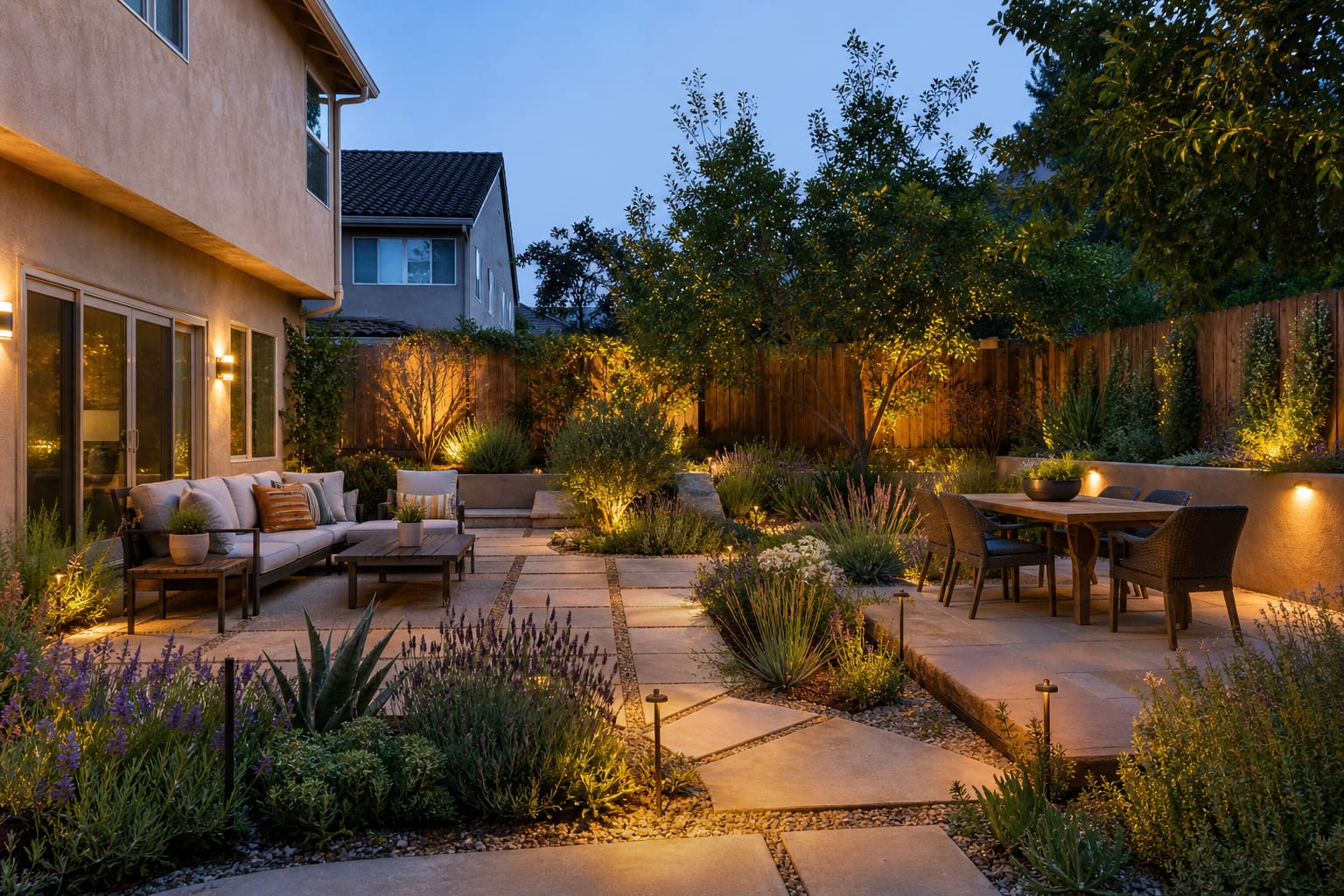
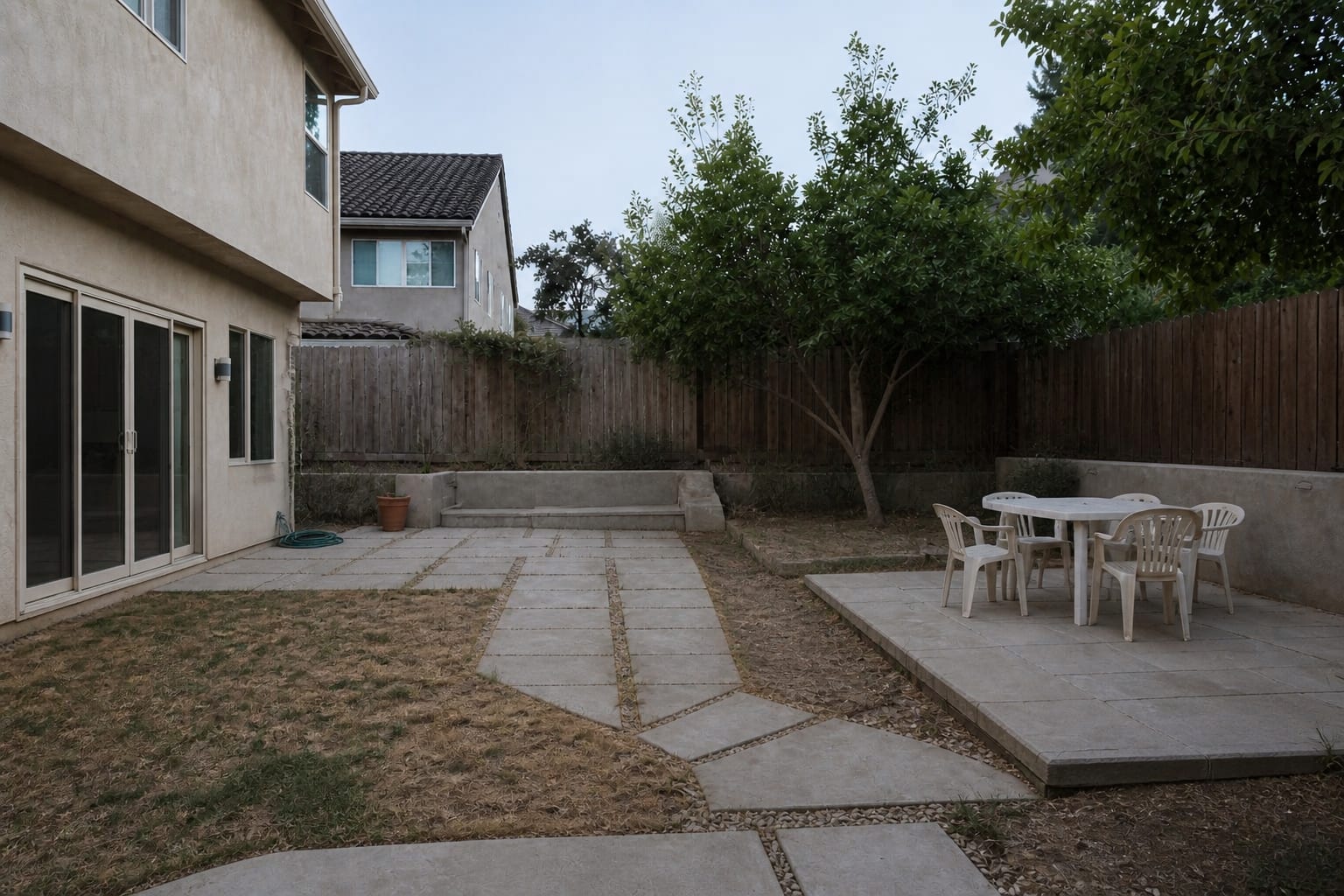
Drought tolerant landscaping works best when you layer plants by water need: zero-supplemental-water natives (grasses, salvia, agave) at the outer edge, low-water plants (lavender, rosemary, verbena) mid-yard, and moderate-water plants (echinacea, ornamental grasses) near the house, all under a 3-inch mulch blanket that cuts evaporation by roughly 70%. Soil, shade, spacing, and plant choice matter more than gravel alone.
Which ground plane makes a water-wise garden feel intentional?
The ground plane separates a designed dry garden from a yard that simply stopped getting watered. Choose mulch, gravel, pavers, decomposed granite, or reduced lawn before picking plants. Use a 36-42 inch main path, a 5-foot clear turning area near gates, and beds at least 4-6 feet deep so planting reads as intentional rather than a thin strip along a fence.
| Ground choice | Where it works best | Concrete spec |
|---|---|---|
| Wood mulch | Shrub borders, young trees, family yards | 2-3 inches deep, kept 3 inches from trunks and stems. |
| Decomposed granite | Paths, side yards, informal patios | Compacted 2-4 inch base, edged with steel, brick, or stone. |
| Pea gravel | Seating zones and low-traffic garden rooms | Furniture areas at least 8 by 10 feet. |
| Reduced lawn | Kids, pets, cooling near the house | One usable rectangle instead of thin strips that brown first. |
Low groundcovers and closely spaced shrubs shade the soil better than isolated specimens. For full-yard rewrites, borrow the circulation-first logic from garden design ideas for real homes.
Test this on your own photo with ReDesign — keep the house edge, horizon line, hardscape, planting beds, and main path visible so the preview solves the space you actually have.
Which drought tolerant landscaping ideas actually look good?
Good dry gardens use contrast: fine gravel against broad leaves, silvery foliage against dark mulch, airy grasses beside clipped evergreens. Depth, scent, and a place to sit still matter.
- Replace weak lawn with planted gravel. Remove narrow strips under 6 feet wide, edge them, and plant lavender, salvia, yarrow, thyme, and low grasses in drifts at least 3 plants wide.
- Build a dry border in three heights. Use 3-5 foot shrubs (manzanita, dwarf olive, Texas sage, ceanothus) at the back, 18-30 inch perennials mid-bed, and 4-10 inch groundcovers at the edge.
- Add one shade tree first. Keep the trunk 5 feet from narrow paths and leave canopy room away from the roofline.
- Use Mediterranean herbs as structure. Rosemary, lavender, sage, oregano, and thyme need 24-36 inches of width and reward brushing past on a path.
- Mix succulents with softer plants. Pair agave, aloe, sedum, or yucca with feathery grasses or trailing rosemary so the bed reads sculptural, not hostile.
- Keep one irrigated oasis near the door. A 6 by 8 foot entry bed with drip irrigation and seasonal flowers is easier to maintain than watering every fence line.
- Contain edibles. Peppers, tomatoes, and herbs belong in raised beds or pots within hose reach; use the layout logic from vegetable garden design ideas rather than scattering them through dry beds.
Silver, blue-green, olive, straw, and dusty purple read calmer under harsh sun than bright annuals. In afternoon shade, widen the palette with heuchera, ferns, or carex using ideas from shade garden design that still feels layered.
What mistakes ruin drought tolerant landscaping?
Drought-tolerant is not no-water: new plants still need deep watering at installation and through the first hot month before roots establish. Avoid mixing white stone, lava rock, pea gravel, and decomposed granite in one yard — pick one aggregate and one edging material and let foliage carry the variation. Plant in repeated groups of three, five, or seven so mature widths touch lightly instead of leaving bare soil between lonely specimens.
Reshape thirsty lawn shapes that only exist out of habit into a smaller, intentional rectangle or oval; thin strips along driveways and fence corners convert easily to mulch or low planting. For night use, keep fixtures around 2700K, path lights 12-18 inches high, and wash light across grasses or stone instead of aiming beams into the yard.
How can AI design help before I commit?
The expensive decisions here are spatial: how much lawn to remove, where gravel stops, whether a path feels too narrow, whether planting masses look lush or thin. Upload a straight daylight photo from the door, walk, or patio you use most, and test a gravel garden, reduced lawn, native shrub border, or herb layout before ordering plants.
Keep the fence line and house edge in frame and clear hoses, toys, and bins. Ask for deep mulched beds, drought resistant plants, a 36-inch path, one shaded seating area, and a reduced lawn or gravel ground plane, then judge the result on believability — it should look easier to care for, not emptier.
Frequently Asked Questions
What plants are truly drought tolerant in a garden?
Agave, yucca, Salvia greggii, Callistemon (bottlebrush), Cistus, Pennisetum setaceum, and native bunch grasses survive on natural rainfall in USDA zones 7-10 after year-two establishment, needing zero supplemental irrigation once roots are in.
How do I transition a lawn to a drought-tolerant garden?
Sheet-mulch the lawn with cardboard (no herbicide), layer 4 inches of wood chips over it, plant through the cardboard in fall, and water weekly for the first year only. By year two, supplemental irrigation can stop.
Do drought-tolerant gardens need irrigation?
Yes, during the first two growing seasons to establish roots. After that, a passive olla or quarterly drip run tops off moisture in the dry season; overhead spray causes fungal issues and undercuts the drought-adapted growth habit.
What mulch is best for a drought-tolerant garden?
A 3-inch layer of decomposed granite or coarse crushed rock suits Mediterranean and desert plants, draining instantly and keeping crowns dry. Wood chip mulch suits woodland drought plants like native grasses and echinacea that prefer cooler soil.
Can I have a colorful drought-tolerant garden?
Yes. Salvia, agastache, echinacea, callistemon, kniphofia (red hot poker), and lavender provide months of bloom in a drought-tolerant palette. Combine them with grasses like stipa, miscanthus, or nassella for textural contrast between bloom cycles.
> Try this: Ready to see this on your own outdoor space? Open ReDesign and run the preview before you buy materials, plant, drill, or move furniture.
Three transformations to try
1. Gravel garden with Agave and Salvia layers 2. Native grass and wildflower replacement lawn 3. Drought border with Lavender and Echinacea