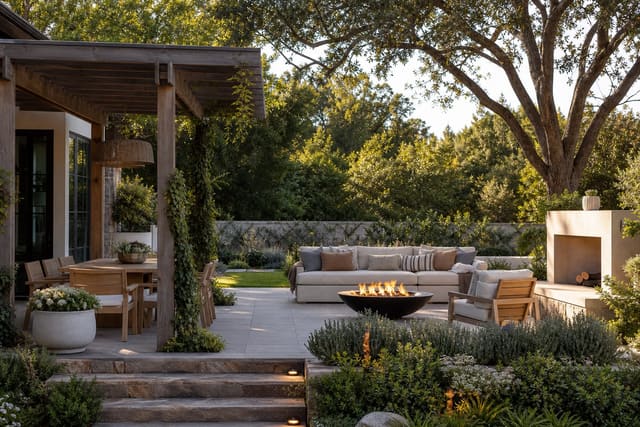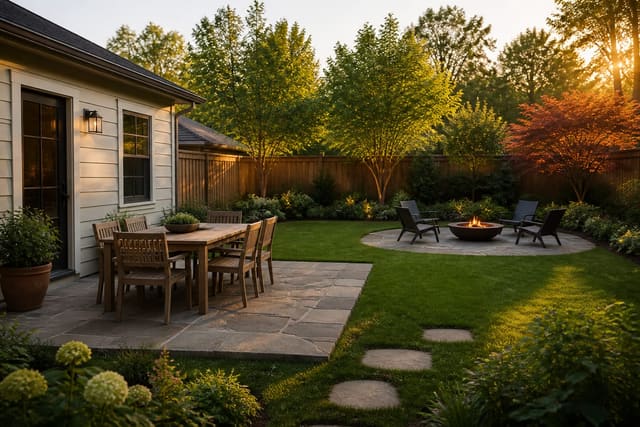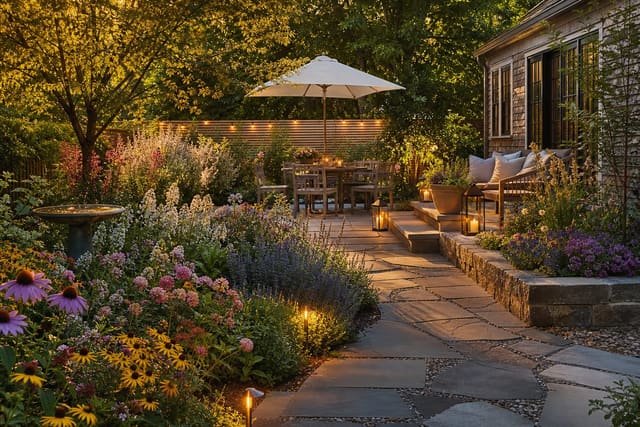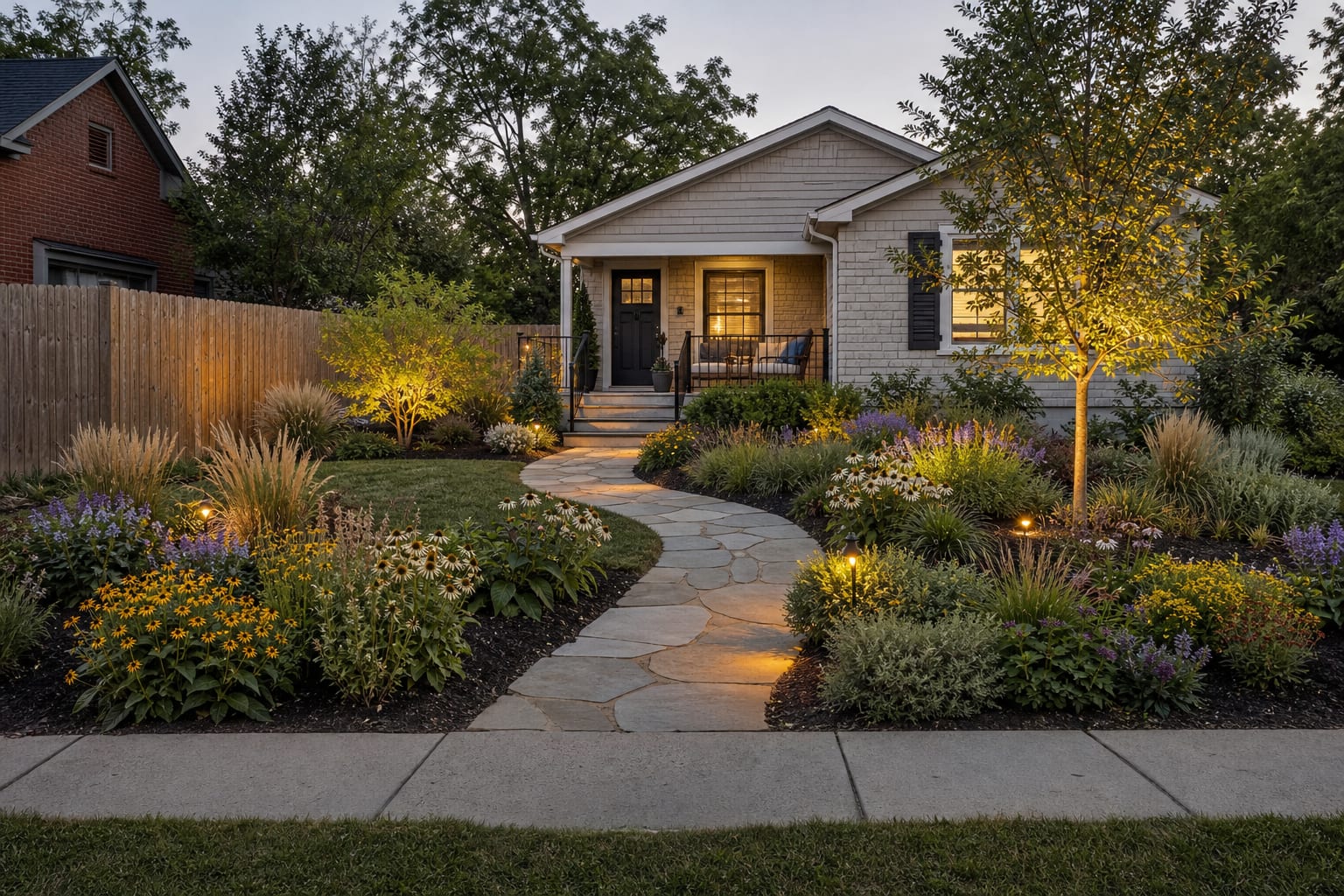
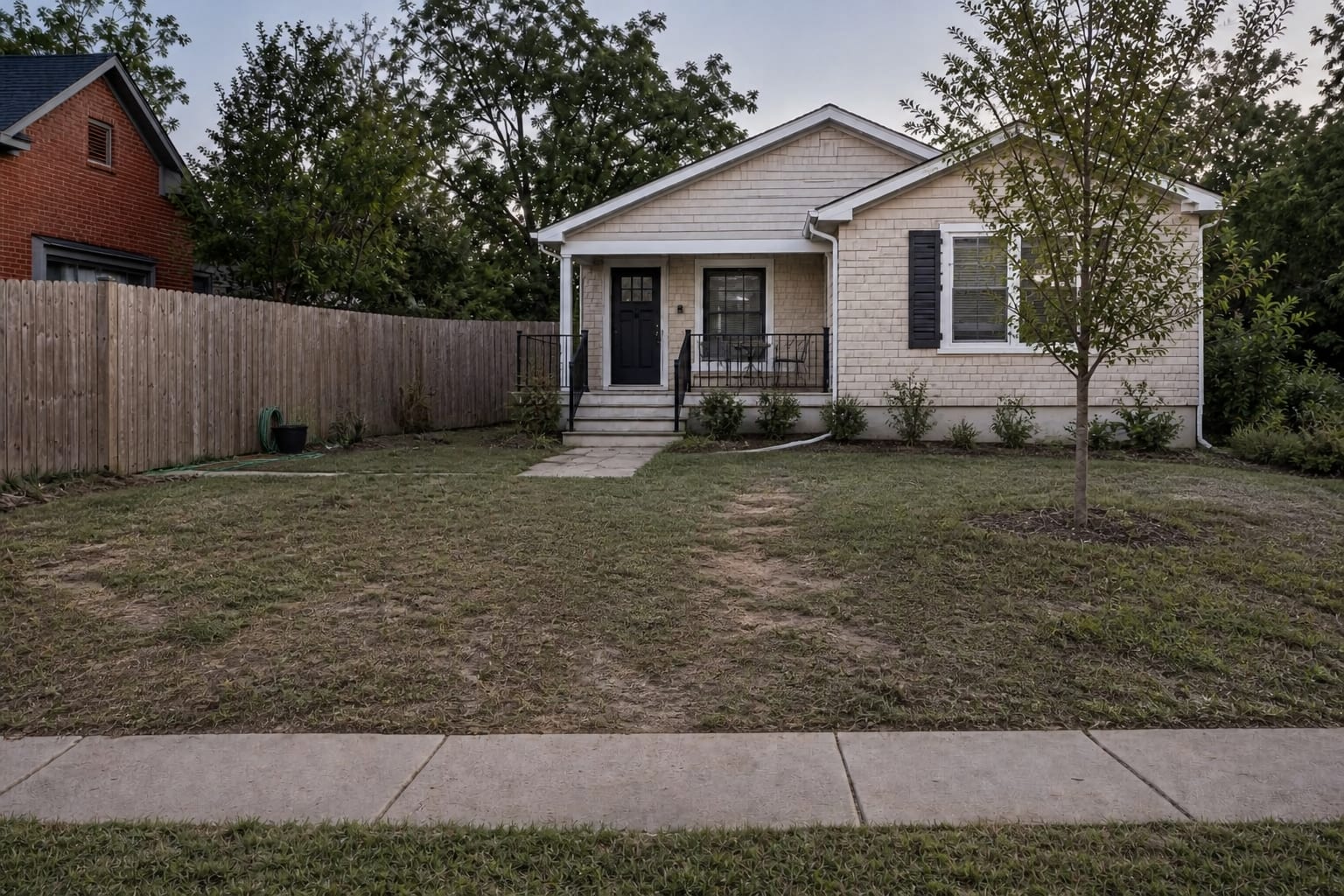
Native plant landscaping ideas work when you group plants by native community (woodland edge, meadow, wetland margin) and keep at least one clipped or mown edge so the informality reads as intentional, not neglected. The best native garden still needs a plan as strict as any formal border. This guide covers plant selection, bed depth, edges, circulation, and seasonal rhythm before you buy a single flat.
What makes a native garden look designed instead of accidental?
A native garden looks designed when the structure is calm and the planting is generous. Birds and pollinators don't care whether your edge is crisp, but your eye does, and so do your neighbors looking at the yard through winter.
Decide where the garden has a frame: a mown lawn panel, gravel path, stone edge, low fence, or hedge of native shrubs. A native meadow pressed against a driveway looks abandoned; the same planting behind a 4 inch steel edge or 12 inch stone mowing strip reads as deliberate.
Bed depth matters more than most plant lists admit. A 24 inch strip holds groundcovers, but not a layered native border. Aim for at least 4 feet along a front walk or fence line, and 6–10 feet in a backyard habitat bed so small trees, shrubs, grasses, and flowers can layer convincingly.
| Garden condition | Native landscaping move | Concrete spec |
|---|---|---|
| Sunny front yard | Pollinator border with a clean public edge | Keep the first 18 inches low, using sedges, thyme, or compact flowers near the walk. |
| Shady side yard | Woodland groundcover and understory shrubs | Plant drifts at least 24 inches wide so shade texture reads as mass, not speckles. |
| Wet low spot | Rain garden with moisture-tolerant natives | Set the basin away from foundations; use plants that tolerate both wet feet and dry spells. |
| Family backyard | Habitat beds around usable open space | Keep one clear lawn, gravel, or patio area instead of planting every inch. |
If you're rethinking the whole property, follow the sequence in Landscape Design Principles: Structure, Rhythm, and Focal Points: circulation first, then bed shape, then plants.
Test this on your own photo with ReDesign before choosing a final direction — keep the house edge, horizon line, hardscape, beds, and main path visible so the preview solves the space you actually have.
Which native plant landscaping ideas actually work?
The strongest ideas solve a real problem: bare soil, too much lawn, a harsh fence, a soggy corner, or a yard that blooms for two weeks and disappears. Pick the move that fixes your site instead of copying a plant list from another climate.
- Replace weak lawn with a deep pollinator border. Remove strips under 6 feet wide, hold the edge with stone or steel, and plant repeated drifts of coneflower, milkweed, aster, salvia, or native grasses.
- Add a small native tree before more perennials. Shade, berries, and branching structure do more than another tray of plants; keep trunks at least 5 feet from narrow paths and clear of rooflines.
- Use native shrubs as the backbone. A 3–5 shrub rhythm along a fence gives winter mass and nesting cover when perennials go flat from November to March.
- Plant sedges and grasses instead of mulch. Space many sedges 10–14 inches apart in shade, and larger grasses 24–36 inches apart as they mature.
- Turn a wet depression into a planted basin. Shape a gentle edge, route overflow away from the house, and group moisture-tolerant natives to hold the slope visually.
- Fold habitat planting into raised beds. Use the layout from Pet-Safe Garden Plants: What to Grow and What to Avoid, then soften the edges with native herbs and flowers.
Color should follow season, not impulse: spring blossom, summer flowers, fall color, and winter seed heads. Pick two or three seasonal anchors and repeat them in visible bands from the house, path, and street.
For dry climates, this overlaps with Hardscaping vs Softscaping: What They Are and How to Balance Both — the goal isn't using less water, it's matching plants to your rainfall pattern and giving them enough soil, mulch, and spacing to mature.
Common native plant landscaping mistakes
- Buying natives without checking site conditions. "Native to the region" isn't the same as suited to your yard. Walk the garden at 9 a.m., noon, and late afternoon to mark sun, shade, wet soil, and reflected heat before shopping.
- Planting too sparsely and expecting a meadow. Space compact species 12–18 inches apart and larger grasses or clumps 24–36 inches apart so plants shade soil before weeds move in.
- Skipping the edge. Keep the nearest 18–24 inches along sidewalks and driveways lower and tidier so seed heads don't flop into circulation.
- Removing all lawn without replacing its function. Convert weak leftovers first — narrow side strips, hot curb zones, awkward corners — and keep any lawn your family actually uses.
- Confusing wildlife value with year-round neglect. Leave seed heads that look sculptural, cut back only what collapses into paths, and edit aggressive spreaders before they take over.
Use AI design to preview your native garden before you plant
The expensive decisions in native landscaping are spatial: how much lawn to remove, where the path runs, whether beds are deep enough, and whether plant masses look generous or messy. Upload a straight photo from the porch, sidewalk, or patio door you use most, and test two or three layouts before ordering plants.
Ask for a native garden with layered shrubs, pollinator perennials, a defined path, and a maintained edge, tied to your actual conditions — sunny clay front yard, shady woodland side yard, dry curb strip, or wet back corner. Compare structure before flower color: the right preview shows a readable route, a strong bed shape, repeated plant masses, and one quiet resting area. If the rendering turns the whole yard into an undifferentiated meadow, revise the prompt with clearer edges and a smaller plant palette.
Frequently Asked Questions
What are the best native plants for a home landscape?
It depends on region: northeast US — coneflower, little bluestem, inkberry, serviceberry; southeast — beautyberry, muhly grass, wild columbine; midwest — prairie dropseed, silphium, wild bergamot; Pacific Northwest — red-twig dogwood, camas, sword fern.
Do native plants need fertilizer?
No. Native plants evolved in your region's soils and shouldn't be fertilized — excess nitrogen produces floppy, disease-prone growth. Amend only if a soil test reveals a specific deficiency, and never apply general-purpose fertilizer to a native planting.
How long do native plants take to establish?
Follow the rule "first year sleeps, second year creeps, third year leaps." Most native perennials and shrubs look sparse for two seasons while building root systems; regular weeding in years one and two produces a self-sustaining planting by year three.
Should I leave native plant debris over winter?
Yes. Leave seed heads, dead stems, and leaf litter in place until temperatures stay consistently above 50°F in spring. Native bees overwinter in hollow stems and leaf litter, and seed heads feed birds through December–March.
Do native plant landscapes attract pests?
They attract predator insects like wasps, lacewings, and beetles alongside herbivores, which self-regulates pest pressure. Native landscapes typically see lower net pest damage than conventional landscapes because the predator guild is present.
> Try this: Ready to see this on your own outdoor space? Open ReDesign and run the preview before you buy materials, plant, drill, or move furniture.
Three transformations to try
1. Native meadow with mown path edge 2. Woodland edge planting with serviceberry 3. Prairie-style native border with Echinacea and grasses