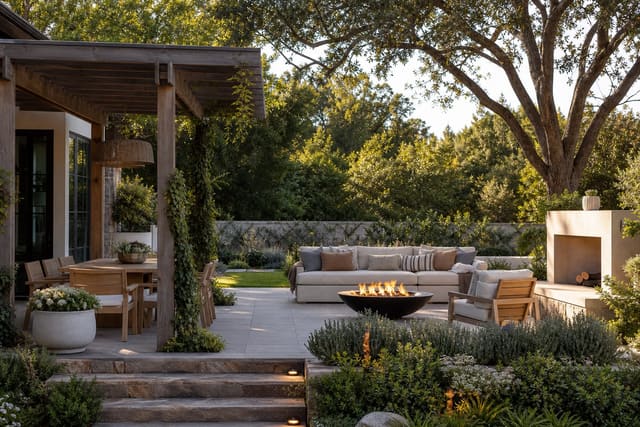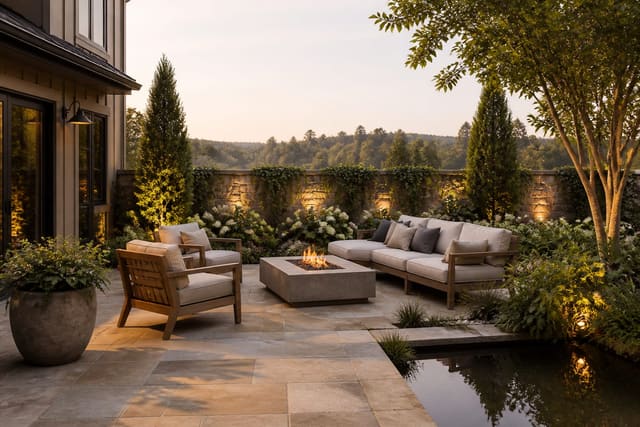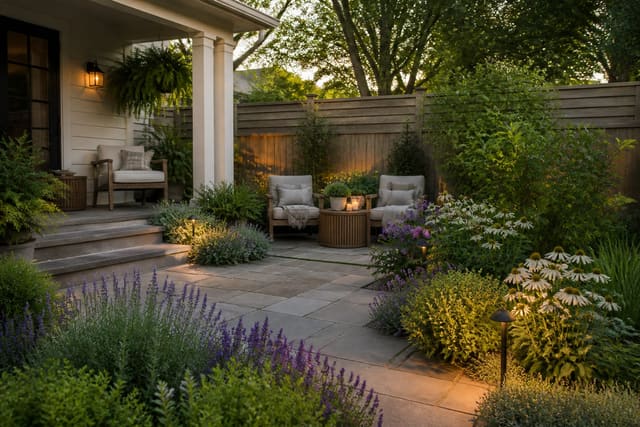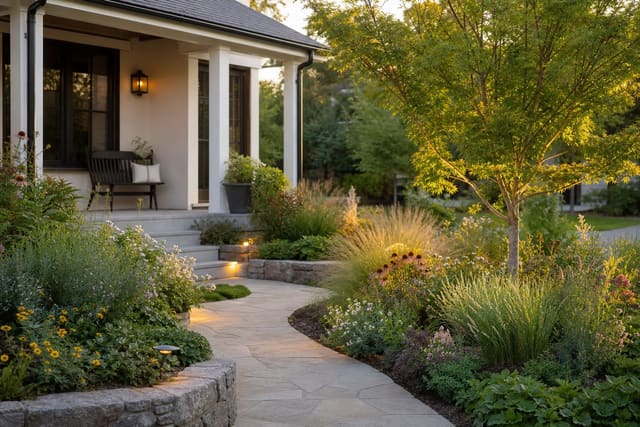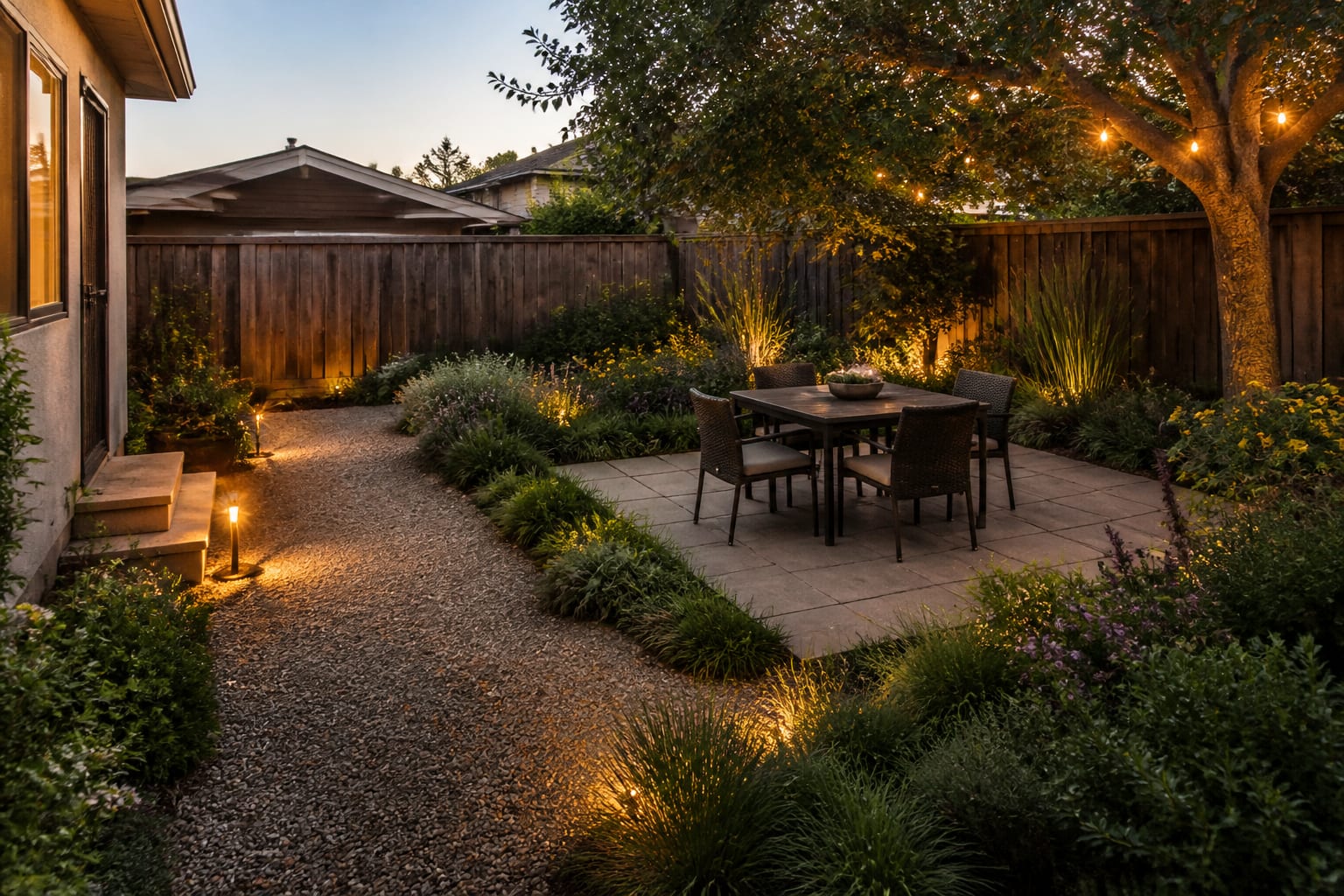
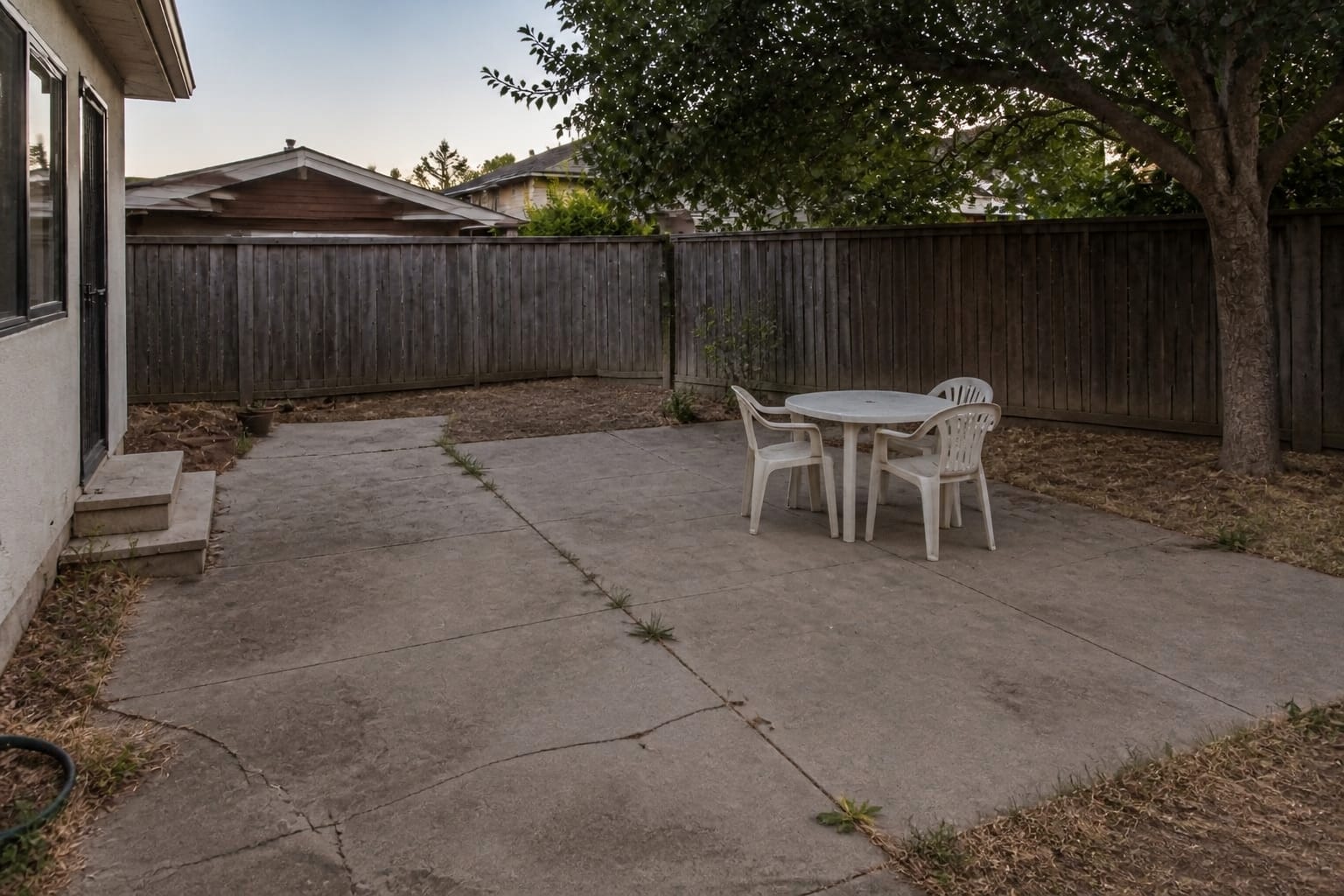
Hardscaping is the non-living structure of a landscape, patios, paths, walls, decks, while softscaping is everything alive: lawn, beds, shrubs, and trees. The right balance for most yards is about one-third hardscape to two-thirds softscape, giving each element a clear job so they frame rather than fight each other.
What's the difference between hardscaping and softscaping?
Hardscaping covers every non-living, constructed element: patios, walkways, retaining walls, fences, decks, pergolas, fire pits, steps. These are the permanent bones that define where you walk, sit, and gather, and they're expensive and slow to change, so they get measured twice and built first.
Softscaping is everything that grows, lawn, flower beds, shrubs, ornamental grasses, groundcover, trees. It's what makes a yard feel alive and seasonal, and it's far cheaper and more forgiving since a misplaced shrub moves in an afternoon. The landscape design principles of repetition, scale, and flow apply to both, but softscape is where color and texture shift year to year.
The distinction matters for sequencing and budget. Hardscape eats most of a landscape budget and dictates the layout, so it should go in before a single plant is placed. Get the hard structure wrong and every plant choice afterward fights the bones.
| Element | Typical Size or Spec | Rough Cost |
|---|---|---|
| Dining patio | 12 x 12 ft | $15\u2013$50 per sq ft installed |
| Main walking path | 36\u201348 in wide | $15\u2013$50 per sq ft installed |
| Planting bed | 36 in deep minimum | A few dollars per sq ft |
What's the ideal hardscape-to-softscape ratio?
Designers generally reach for roughly one-third hardscape to two-thirds softscape, though it flexes with how you live. A family that entertains constantly might push toward more patio; a gardener tilts heavily toward beds. The danger zone is a yard that's mostly paving, which bakes in summer, sheds rainwater into the storm drain, and feels like a loading dock.
How to split a yard between the two:
- Map use zones first: dining, lounging, play, and growing space.
- Give hardscape to zones that need a stable, level, all-weather surface.
- Give softscape to everything else, especially edges and borders that frame the hard areas.
- Soften every hard edge with planting so nothing sits raw and exposed.
- Leave permeable ground, gravel or planting, so rain soaks in instead of running off.
If pets or pollinators share the space, coordinate softscape choices using this pet-safe garden plants guide so the living layer doesn't become a hazard.
How do you make hardscape and softscape work together?
Balance isn't just square footage; it's how the two meet. A patio with a bare, hard edge looks unfinished, but the same patio with a planted border and a tree for shade reads as designed. Plants soften and frame hardscape, and hardscape gives plants a clean structure to push against.
Repetition ties it together: echo a stone color in a gravel path, repeat one shrub along a wall, let materials rhyme across the yard. Contrast works too, crisp paver geometry against loose, billowing grasses makes both look better. Scale keeps the handoff honest, a planting bed under 36 inches deep reads as leftover space rather than intentional design, and a 200-square-foot patio with only a narrow ribbon of green around it reads as imbalanced even if no one can name why.
What mistakes should you avoid?
- Over-hardscaping. Paving most of the yard to dodge maintenance produces a hot, sterile slab that drains poorly and ages badly; keep that two-thirds soft target in mind before pouring more concrete.
- Sequencing backward. Planting beautiful beds and then tearing them up to install a patio wastes money; hardscape goes in first, every time.
- Raw edges. A patio or wall meeting bare dirt at a hard line looks unfinished; soften it with planting.
- Ignoring drainage. Every square foot of added paving is rainwater that has to go somewhere, and a yard that floods after every storm has too much impermeable surface.
How can you preview the balance before you build?
The hard-to-soft ratio is tough to judge on paper and even tougher standing in a half-finished yard. Re-Design lets you upload a photo of your space and re-render it with different balances, more patio versus more planting, so you can see which ratio fits before committing to a load of pavers. Seeing a paving-heavy version next to a planting-heavy one usually settles the argument fast.
Upload a photo, ask the AI design tool for a generous dining patio framed by deep planted borders, then ask for a smaller patio with more lawn and beds. Comparing the renders shows how the same yard feels at different ratios and keeps you from over-paving a space you'd rather keep green.
Frequently Asked Questions
What is the difference between hardscaping and softscaping?
Hardscaping is the non-living, built structure of a yard, patios, paths, walls, decks, fire pits. Softscaping is the living plant material, lawn, beds, shrubs, and trees. Together they form the full landscape, with hardscape providing structure and softscape providing color, texture, and seasonal change.
What is a good hardscape to softscape ratio?
Most well-balanced yards land around one-third hardscape to two-thirds softscape. The exact split shifts based on use, a family that entertains often may want more patio, while a dedicated gardener will favor more planting beds and lawn.
Should you install hardscaping or softscaping first?
Install hardscaping first. Patios, walls, and paths are expensive, permanent, and disruptive to build, so laying them before planting avoids tearing up established beds later and lets the plant layout respond to the finished hard structure.
How much does hardscaping cost compared to softscaping?
Hardscaping typically runs $15 to $50 per square foot installed, depending on materials and complexity. Softscaping costs just a few dollars per square foot, making it the far cheaper and more flexible layer to adjust after the hard structure is in place.
How do you keep a patio from looking too bare or too paved?
Size it appropriately, around 12x12 feet for a dining patio, and border it with a planting bed at least 36 inches deep. A shade tree and grasses spilling over the edge soften the hard lines and keep the space from reading as an empty slab.