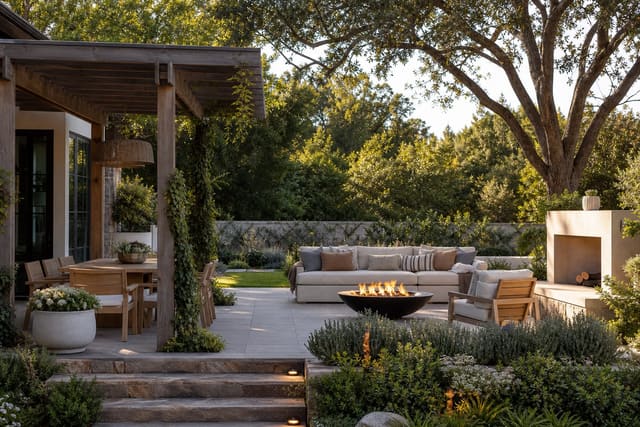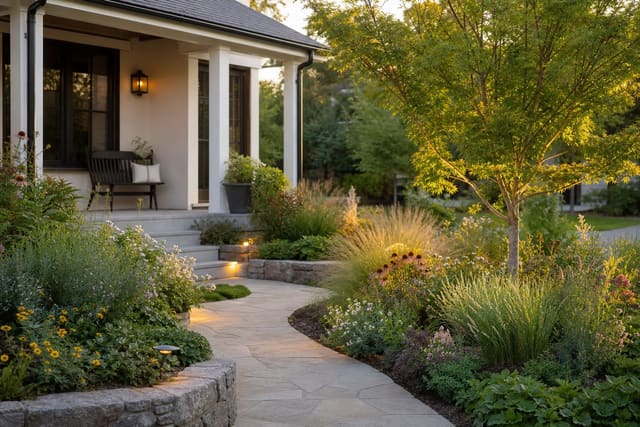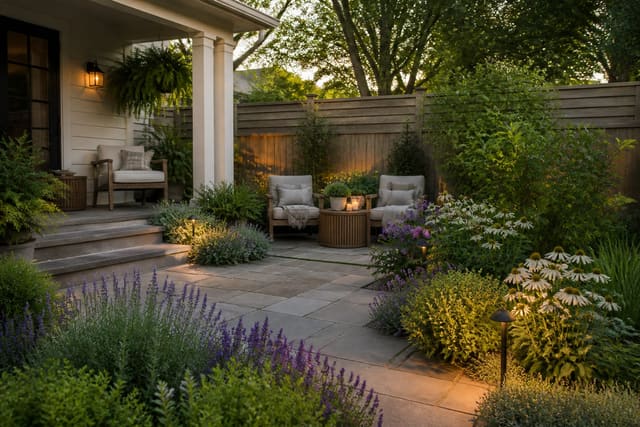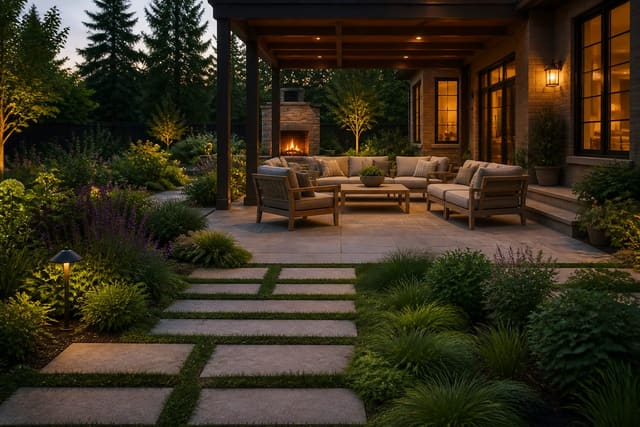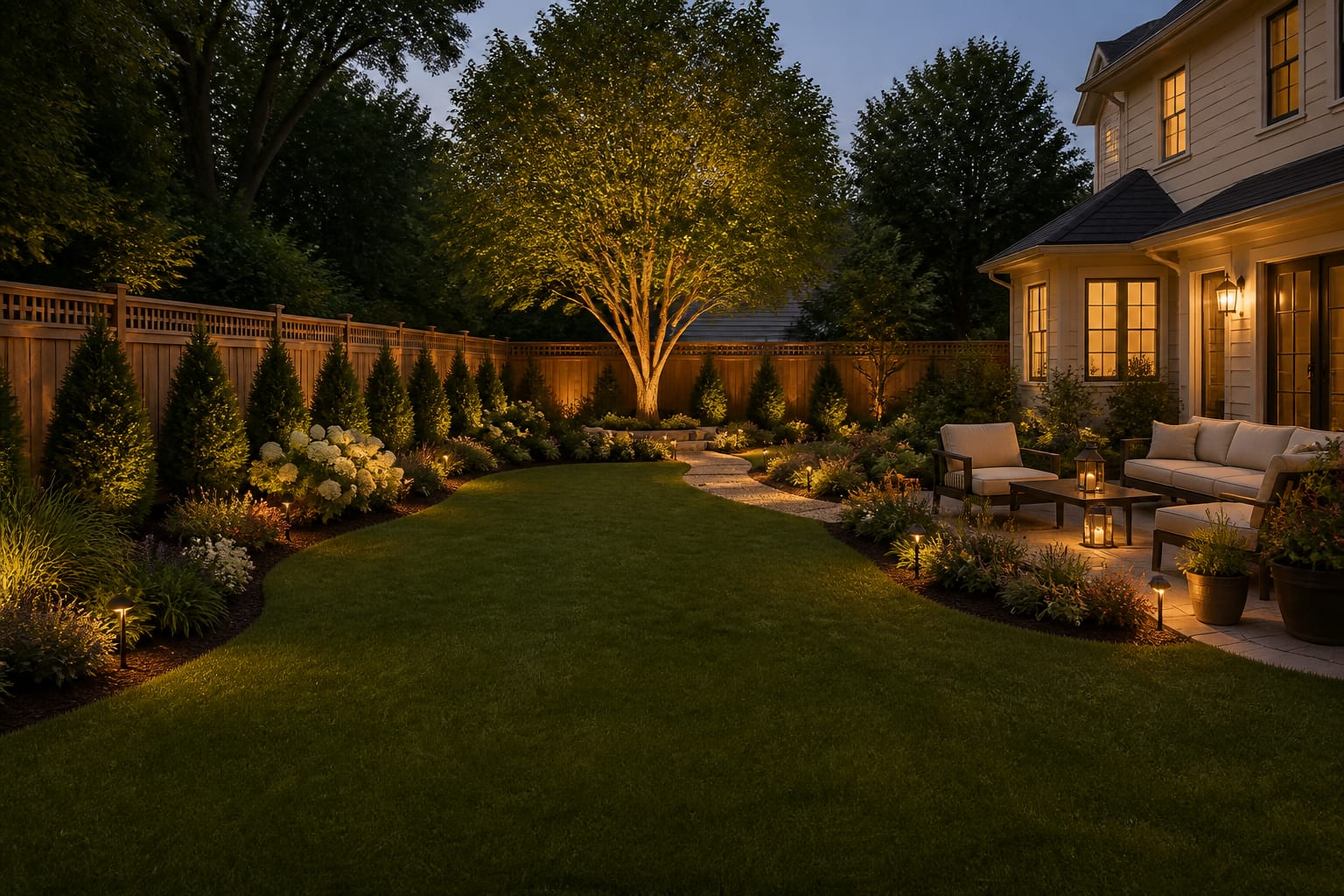
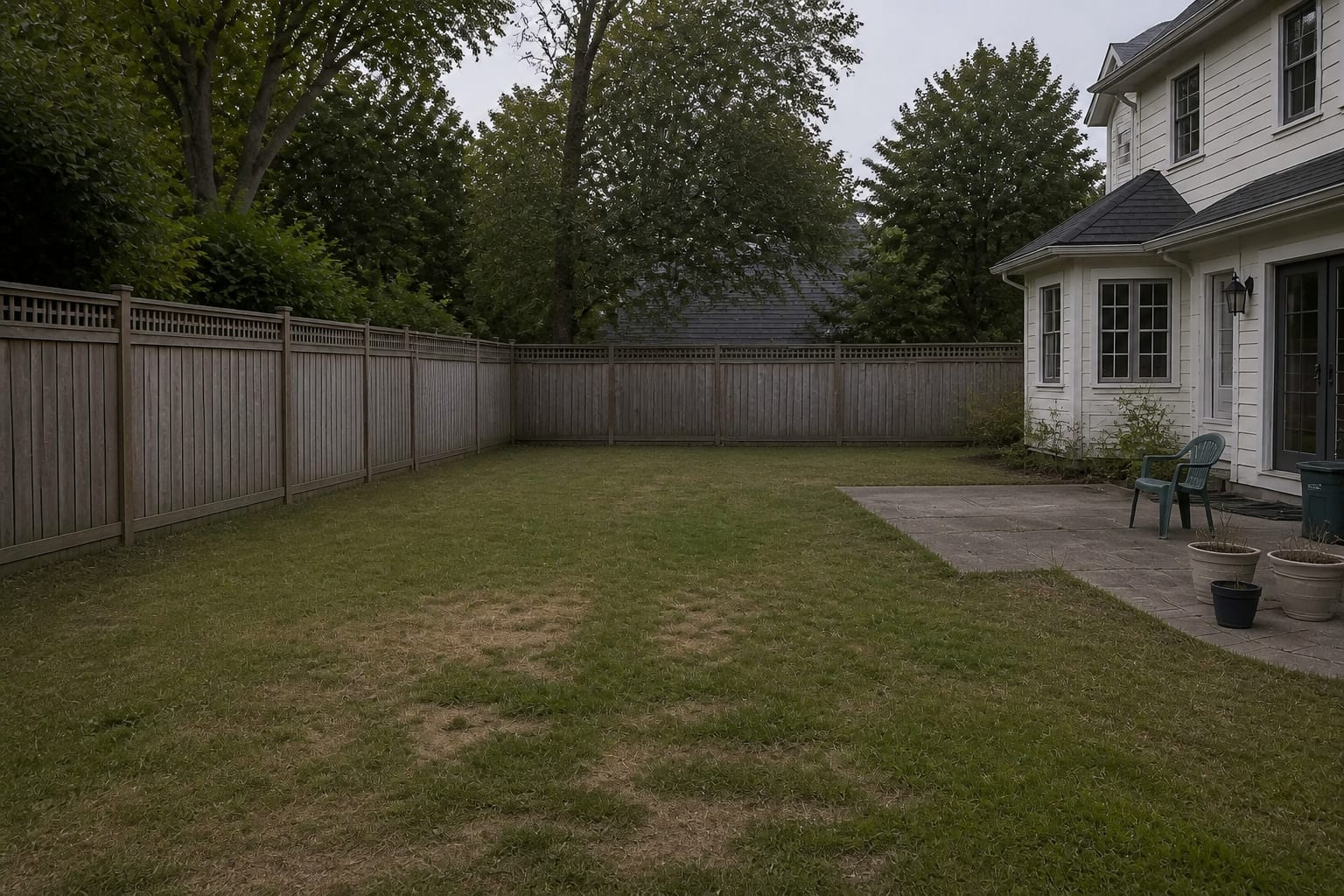
Landscape design principles that actually work come down to five things: structure, balance, rhythm, scale, and a clear focal point. Most struggling yards have plenty of plants and no structure, so the eye has nowhere to rest. Get the bones right first, the way you'd frame a room, and planting becomes the easy part.
What Gives a Garden Structure?
Structure is the permanent geometry of a garden: bed edges, paths, walls, hedges, and woody plants that hold their shape in winter. When flowers fade, structure is what's left, and a garden with good bones looks intentional even bare. Start every plan by drawing the lines: where beds meet lawn, where you walk, and where a hedge or fence forms a backdrop.
Hard elements and living ones work together. The split between paving, walls, and steps versus planting and lawn matters, and this guide to hardscaping versus softscaping maps onto the structure-versus-softness balance every design needs. Aim for roughly one-third hard structure to two-thirds planting in a typical yard, shifting toward more hardscape in a tight courtyard.
Evergreens carry the structural load through winter: three or four well-placed shrubs give the eye year-round anchors, so deciduous plants can come and go around them.
Cut a clean line between bed and lawn, about 6 inches deep with a slight 2-inch lip, so mulch stays put and the mower rides the lawn side. Ragged edges make good plants look unkempt; a sharp edge makes the same plants look cared for, and paths do the same job for the ground plane, telling the eye where to go and keeping the lawn from turning to mud.
How Do Rhythm, Balance, and Scale Work Together?
Rhythm is repetition with intent. Repeat the same grass, boxwood ball, or gravel three or more times down a border and the eye reads movement instead of chaos. Balance doesn't mean symmetry; an asymmetric bed balances when a large mass on one side is answered by a cluster of smaller plants on the other.
Scale is the principle people get wrong most. A plant too small for its space disappears; a tree too large for a courtyard swallows it. Picking plants that fit both your conditions and dimensions is its own discipline, and this guide to pet-safe garden plants is a reminder that the right plant for a space has to satisfy practical limits, not just looks.
Proportion ties scale and balance together:
- Borders should be at least 3 feet deep, ideally 5 to 6 feet for real layering.
- A tree's mature canopy should relate to the house behind it; a 40-foot shade tree 6 feet from a single-story wall overwhelms both.
- Group plants in odd numbers (threes, fives) so the eye has a clear center with weight falling away on either side.
Check a planting scheme for these cues: a repeated element appearing at least three times, a height gradient with taller plants set back, one dominant focal point rather than several competing ones, and consistent edging or material framing the beds.
Why Does Every Garden Need a Focal Point?
Every good garden has a destination: a specimen tree, a bench, a pot, a sculpture, or a gap in a hedge that frames a view. The focal point stops the eye and organizes everything around it. One per sightline is the rule; two competing focal points cancel each other out.
Place it where it does the most work, usually at the end of a path, across a lawn, or framed by an opening. A native plant backbone often makes these anchors easier to maintain, and these native plant landscaping ideas show how a regionally adapted palette can supply both the repeating rhythm and the standout specimen.
Unity holds the rest together: limit materials and colors so the garden reads as one place, not a sampler. Pick one paving material, one or two hardscape colors, and a single accent color for planting, letting texture supply variation. A garden feels calm with three or four dominant leaf textures and restless with more; repeat a finish or color across containers and furniture too.
What Mistakes Undermine These Principles?
Nearly every landscape mistake traces back to skipping structure. Planting before drawing the lines leaves a garden with no edges and no path for the eye, so define beds, walks, and a backbone first.
- Over-variety. Buying one of everything produces a collection, not a composition; pick a small palette and repeat it.
- Ignoring mature scale. A one-gallon shrub looks fine in its pot and vanishes against a two-story wall; size plants to their mature spread.
- No focal point. Without one clear thing to land on, the eye wanders across every main view.
How Can You Preview Garden Structure Before You Dig?
Structure is hard to picture from a paper plan, since you're imagining hedges and paths that don't exist yet. Upload a photo of a bare yard or tired border to Re-Design, and the AI re-renders it with defined bed edges, a clear path, a repeating shrub backbone, and one focal specimen so you see the bones before you dig.
Test more than one layout: run the same yard photo through a symmetric formal scheme and a looser asymmetric one, then judge which suits your house. Seeing structure rendered against your actual fence line tells you more than a sketch and keeps you from planting first and regretting it later.
Frequently Asked Questions
What are the 5 basic principles of landscape design?
The five basic principles are structure, balance, rhythm, scale, and focal point. Structure defines the permanent framework of edges, paths, and evergreens, while the other four organize how plants and features relate to each other and guide the eye through the space.
How wide should a garden path be?
Main paths should be 36 to 48 inches wide so two people can walk side by side, while secondary paths can be as narrow as 24 inches. Wider paths also read as more formal and important within the overall layout.
How many times should you repeat a plant for rhythm?
Repeat a plant, color, or material at least three times across a bed or border. Three or more repetitions is enough for the eye to register a pattern rather than a random assortment of individual plants.
How big should a focal point be?
A focal point roughly one-third the width of its bed or border reads as intentional and proportionate. Much smaller and it disappears into the planting; much larger and it overwhelms everything around it.
Do small gardens need fewer plant types?
Yes. Limiting a small garden to 3 to 5 core plant types, repeated throughout, reads as calm and composed, while one of everything reads as cluttered no matter how well each individual plant is chosen.