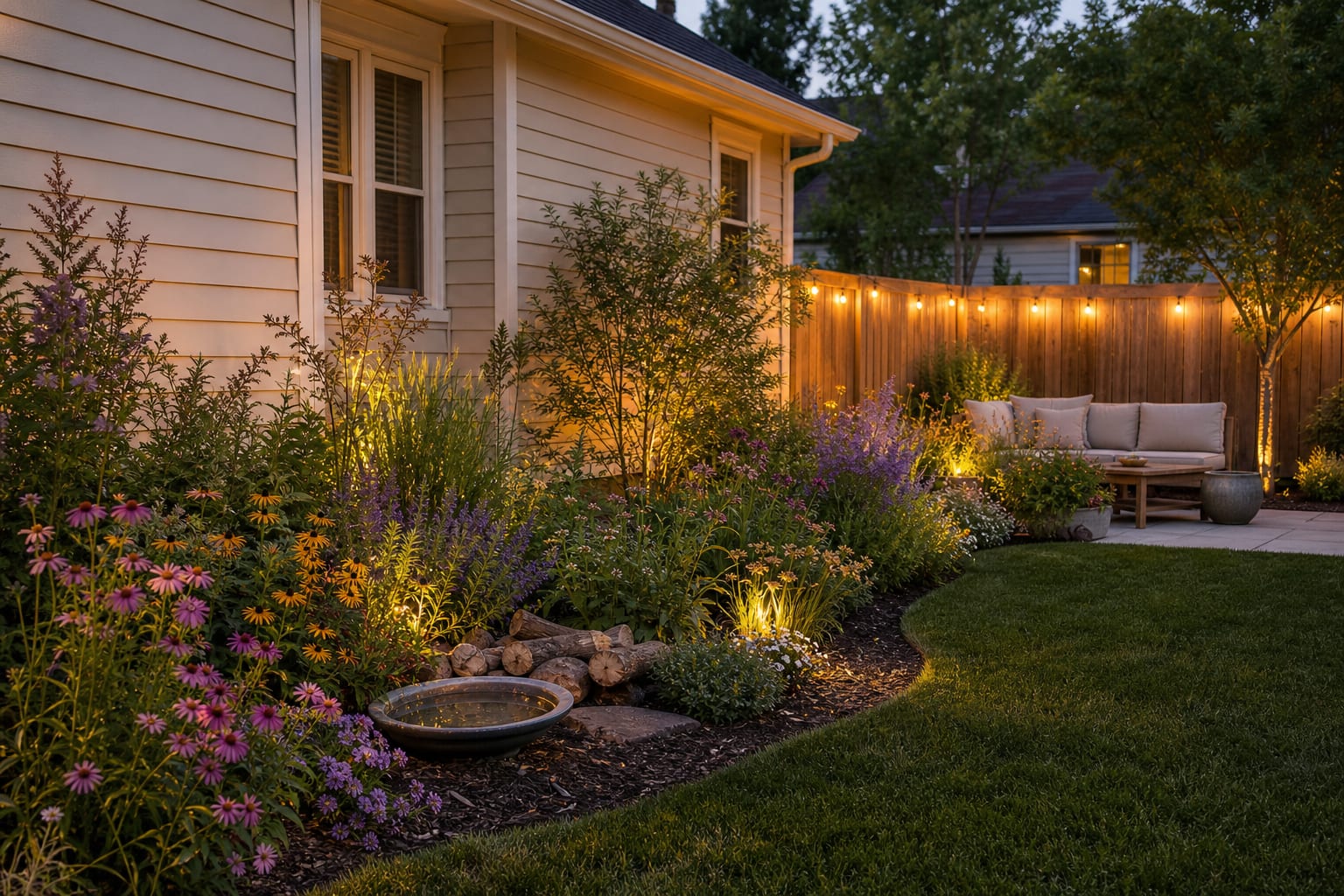
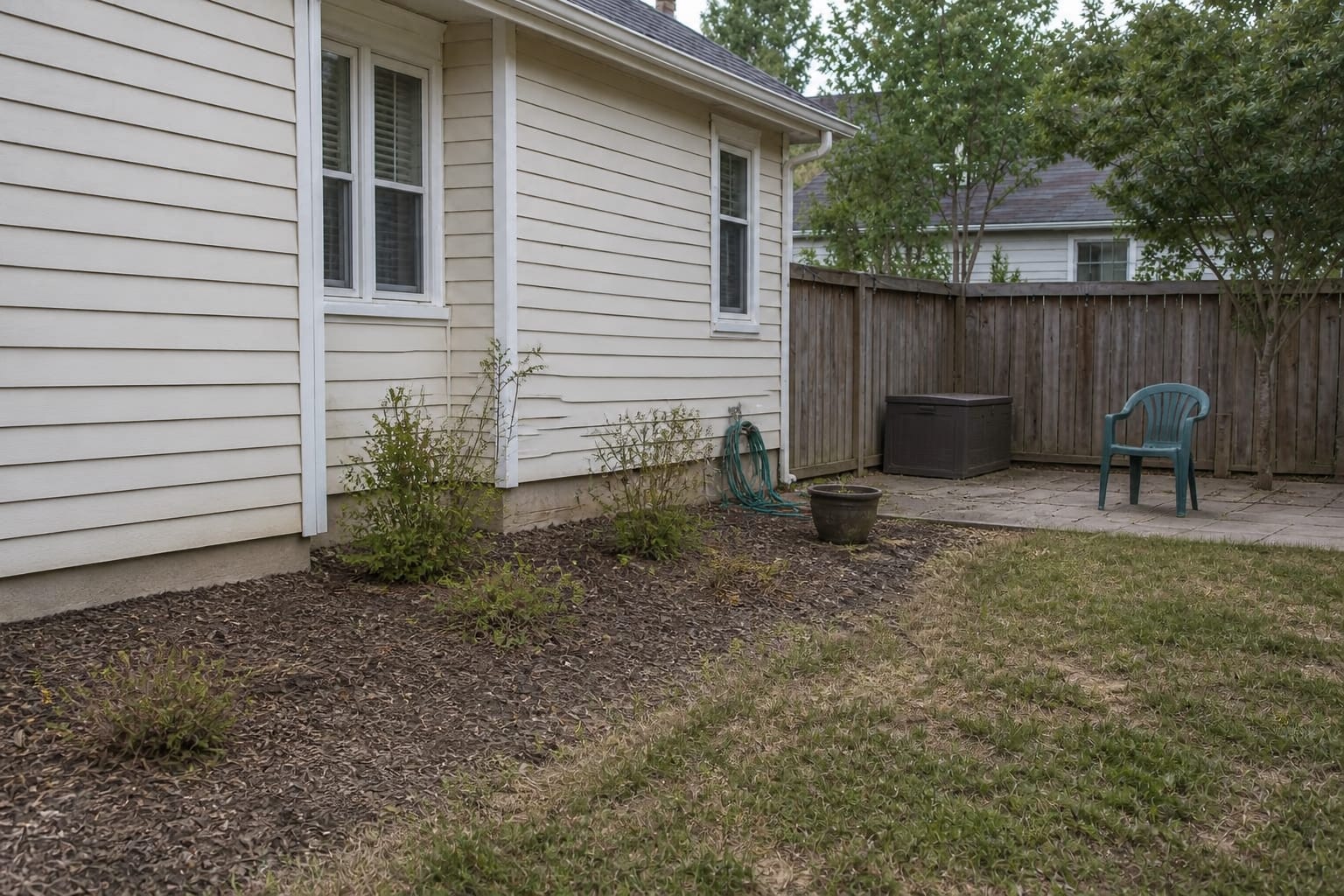
A pollinator garden works when nectar and pollen plants bloom in overlapping waves from early spring through fall, planted in drifts of 5 or more per species, with at least one host plant such as milkweed for monarchs. Skip pesticides, add a shallow water source and some bare soil or stems for shelter, and give the bed a defined edge so the loose planting still reads as designed.
How do you make a pollinator garden look designed instead of weedy?
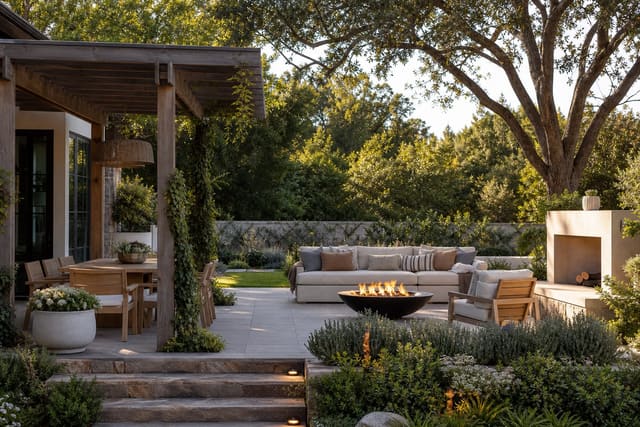
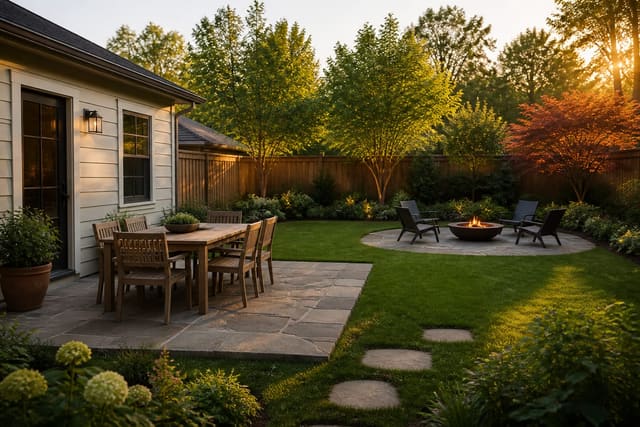
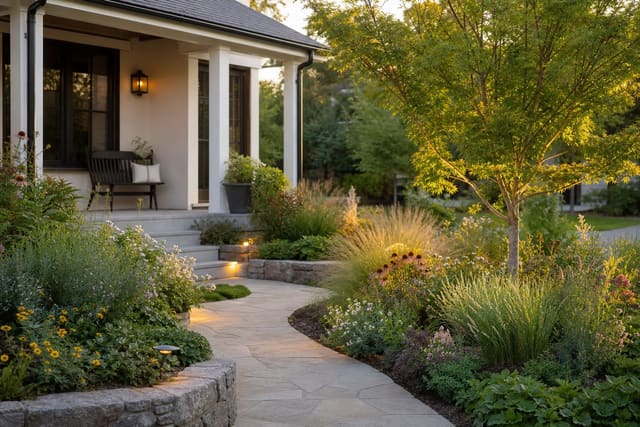
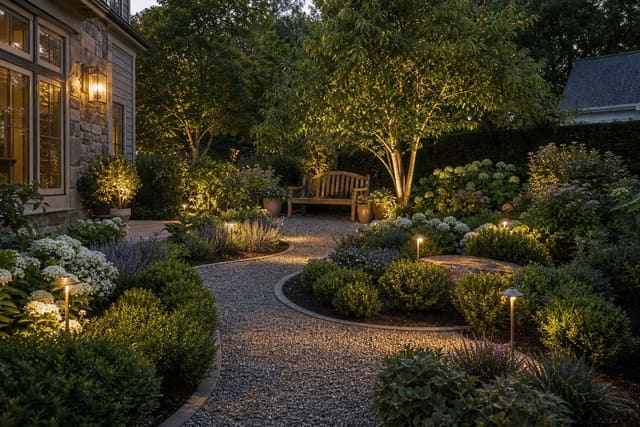
Wildlife-friendly planting works best with more structure, not less. Loose, layered flowers inside a disciplined frame read as intentional; the same flowers spilling over a path read as neglect.
- Protect a 30 to 36 inch path before choosing plants, furniture, or lighting.
- Repeat one visual cue three times: a metal finish, planter shape, or edge material.
- Solve the layout problem first, then add accessories.
Start with sun. Most strong nectar and pollen plants need 6+ hours of direct light, so pick the brightest practical bed. Layer heights: low plants (10 to 18 inches) along the path edge, mid-height perennials (18 to 36 inches) as the main field, and taller plants or shrubs at the back or center.
Borrow from broader garden design ideas for real outdoor rooms: one edge material, one path surface, and one or two dominant flower colors keep a wildlife bed calm from the house even with dozens of species inside it.
Which plants keep bees and butterflies fed all season?
Plant by bloom time and flower shape, not by whatever the nursery has on a given Saturday.
- Early spring: Crocus, grape hyacinth, pulmonaria, hellebore, native violets, and early shrubs feed queen bumblebees before summer perennials wake up.
- Midsummer core: Coneflower, bee balm, salvia, mountain mint, anise hyssop, black-eyed Susan, milkweed, yarrow, and lavender-like herbs carry the garden's bulk.
- Late season: Asters, goldenrod, sedum, rudbeckia, Joe-Pye weed, and ornamental grasses hold color and food toward frost.
- Host plants: Milkweed feeds monarch caterpillars, parsley and fennel host swallowtails, and violets support fritillaries — expect some leaf damage.
- Water: A shallow saucer or stone basin with pebbles, 1 to 2 inches deep, refreshed often.
| Garden choice | Better for bees | Better for butterflies |
|---|---|---|
| Flower form | Open, single flowers with visible centers | Flat-topped clusters and landing pads |
| Planting pattern | Dense drifts repeated across the bed | Sunny patches with nearby shelter |
| Habitat detail | Bare soil, stems, small cavities | Host plants, warm stones, wind protection |
| Maintenance style | Leave some stems through winter | Avoid cutting host plants during caterpillar season |
On hot, dry, or irrigation-limited sites, pair pollinator planting with drought-tolerant landscaping ideas so the bed survives August without constant watering.
Test this on your own photo with ReDesign before choosing a final direction; keep the house edge, horizon, hardscape, beds, and main path visible so the preview solves your actual space.
How do you pick plants without creating a maintenance headache?
Match plants to your soil, sun, and tolerance for self-seeding, since a great pollinator plant in the wrong site will fail or take over. Native plants deserve priority because local insects recognize them fastest, but a small urban garden can mix natives with well-behaved herbs and non-invasive ornamentals and still feed pollinators well.
Use raised beds only where they solve a real problem, such as compacted soil or a rental yard. Shallow-rooted herbs and annuals do fine raised; deep-rooted prairie perennials and shrubs prefer open ground. For soggy or poorly edged beds, check raised garden bed ideas that suit real yards before building a box that dries out by noon.
Mulch with a 2 inch layer of leaf mold, fine bark, or compost around new plants, but leave a small sunny patch of bare soil for ground-nesting bees, kept away from the hose path.
What mistakes ruin a pollinator garden?
- Planting only for peak summer. Map bloom windows so spring, summer, and fall each have a strong group working.
- Choosing double flowers. Heavily doubled blooms hide pollen and nectar; mix in single, open flowers bees can actually reach.
- Spraying at the first sign of damage. Chewed leaves on a host plant often mean it's working; treat the specific problem, not the whole bed.
- Letting everything self-seed. Edit volunteer seedlings while small and keep one path or edge clean.
- Skipping winter structure. Leave some seedheads and hollow stems, balanced with evergreens, grasses, or a stone edge, so the bed reads as habitat, not leftovers.
Should you test the design with AI before you dig?
Use AI to judge layout, scale, and visual order before buying trays of plants. Upload a clear photo from the patio or main window, then test a curved border, a straighter formal edge, and a larger habitat corner.
Ask for layered planting with repeated drifts, a 30 inch path, early-to-late bloom color, shallow water, and a defined lawn edge. The preview won't tell you which native species suit your county, but it will show whether the bed is too skinny, whether tall flowers block a window, or whether the design looks intentional from where you sit. Remove loose pots and hoses before shooting, use daylight, and include the full bed edge and path for context.
Frequently Asked Questions
What are the best plants for a pollinator garden?
Coneflower (Echinacea), native Salvia, Rudbeckia, Agastache, Liatris, and Asclepias (milkweed) together cover April–October bloom, attract 50+ pollinator species, and stay drought-tolerant once established.
How big should a pollinator garden be?
A minimum of 100 sq ft (10 by 10 feet) provides enough floral resource for consistent bee visitation; smaller patches read as ornamental rather than functional habitat.
Do pollinator gardens need to be sprayed?
No. Keep insecticides and fungicides out of the bed and within 30 feet of it — even "organic" neem oil applied during bloom kills bees on contact. If disease appears, cut back the affected plant and wait for rebloom instead of spraying.
How do I create a pollinator garden from a lawn?
Sheet mulch it: lay three layers of cardboard over the mown lawn, cover with 4 inches of wood-chip mulch, and plant through the cardboard. The lawn smothers within one season with no herbicide required.
Do pollinator gardens need to be watered?
Yes, weekly through the first growing season. After year two, established native drifts typically thrive on natural rainfall above 20 inches a year with no supplemental irrigation.
> Try this: Ready to see this on your own outdoor space? Open ReDesign and run the preview before you buy materials, plant, drill, or move furniture.
Three transformations to try
1. Echinacea and Rudbeckia drift with native grasses 2. Milkweed colony in informal meadow corner 3. Layered native border with spring-through-fall bloom