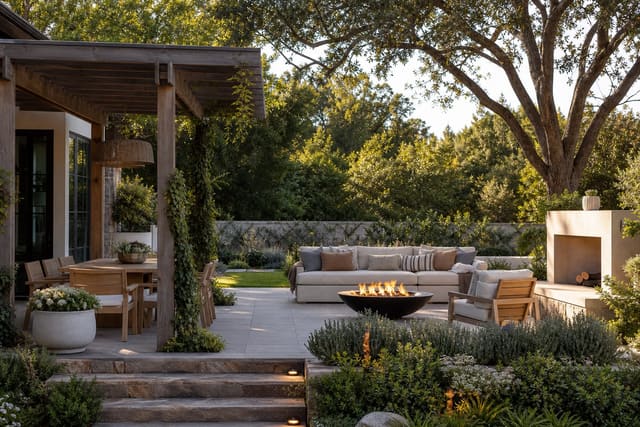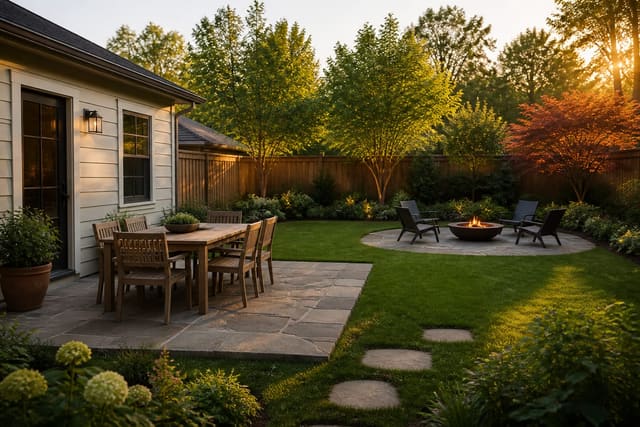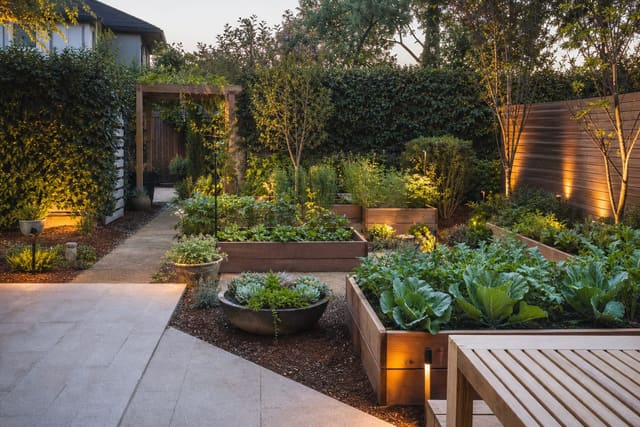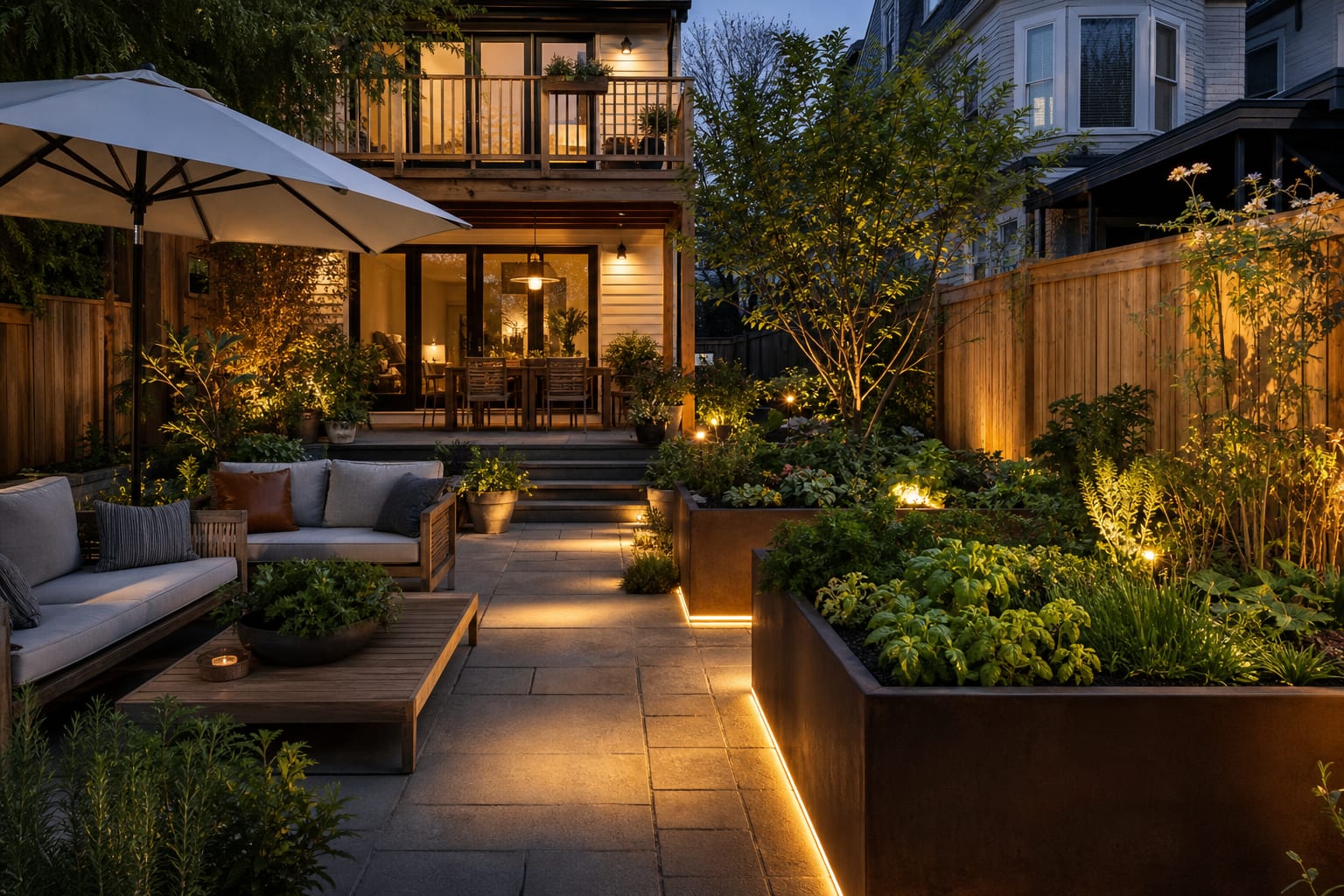
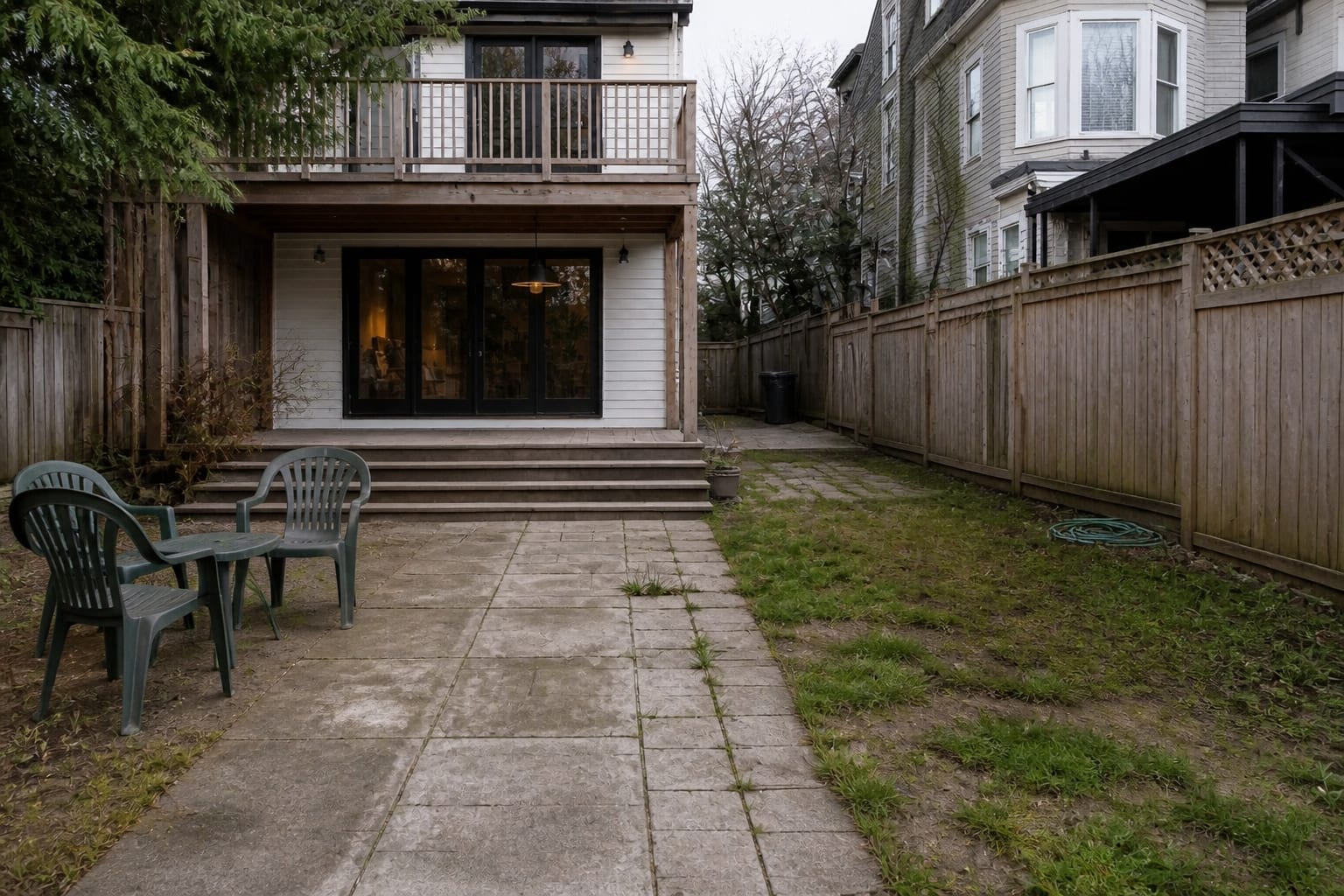
A raised garden bed produces when the box is 12 to 24in tall, no more than 4ft wide so you can reach the center from either side, and filled with a 50/50 native soil and compost blend capped by 2in of mulch. Treat the layout like a small outdoor room, not a box dropped on empty lawn: solve reach, drainage, paths, and sunlight before picking materials or plants.
What makes a raised bed layout work?
A layout works when you can reach every plant, water without dragging hoses through seedlings, and move through the space without crushing soil. Start with sun: most vegetables and cut flowers need 6 to 8 hours of direct light, so the sunniest strip wins even if it's along a driveway. Use narrow beds and a clean path edge there, with a hose connection nearby.
The most reliable beginner layout is a pair or quartet of rectangular beds with a main path down the middle. Two beds at 4 by 8 feet with a 36in path between them can supply herbs, greens, flowers, and compact vegetables without taking over the yard.
Which raised bed materials should you choose?
Material affects lifespan, cost, soil temperature, and mood. A cedar box, a galvanized trough, and a mortared stone bed grow the same lettuce but read completely differently in a yard.
| Material | Best use | Watch-out |
|---|---|---|
| Cedar or redwood | Warm-looking edible beds near patios | Needs secure fastening; 2in thick boards resist warping longer |
| Galvanized steel | Crisp modern beds, narrow side yards | Can heat soil in full sun; check for rounded edges |
| Stone or block | Permanent terraced beds | Higher cost and labor; best for retaining, not moving |
| Pressure-treated lumber | Budget framing | Check the soil-contact rating before using near food crops |
For a permanent garden wall or terraced edible area, see garden wall ideas for structure and privacy; retaining soil is a different job than building a freestanding planter.
Fill matters as much as the box. Don't fill a 24in deep bed entirely with heavy yard soil, or you'll get a compacted bathtub. Use high-quality topsoil blended with compost and a mineral component like coarse sand or fine bark, leaving 1 to 2in below the rim so water and mulch stay put.
Test this on your own photo with ReDesign before buying lumber; keep the house edge, horizon line, hardscape, and main path visible so the preview solves the space you actually have.
Which raised bed ideas improve access and looks?
- U-shaped beds against a fence: creates a working pocket without wasting the back edge; keep the inside path 36in+ and beds under 2ft deep on the fence side.
- Trellis panel on the north edge: frees soil for peas, beans, cucumbers, or small squash; leave 12 to 18in in front for lower herbs or flowers.
- Flowers mixed into vegetable beds: marigolds, calendula, nasturtiums, alyssum, and compact zinnias fill gaps after harvest and mark corners.
- One dedicated herb bed near the kitchen route: a 2 by 4ft bed for parsley, chives, thyme, oregano, basil, and a contained mint pot.
- Block planting instead of long rows: sow lettuce, radish, arugula, and bush beans in 2 to 3 week intervals so the bed doesn't peak all at once.
To push the season further, pair the plan with greenhouse ideas for small gardens so seedlings and protected crops support the beds instead of competing with them.
What mistakes should you avoid?
- Building too wide. A 5ft bed forces you to step into the soil; keep beds within arm's reach and add length instead of width for more growing area.
- Ignoring irrigation until the first heat wave. Raised beds drain fast; run drip lines or soaker hoses before plants sprawl and mulch with straw or bark.
- Lining beds with plastic. Plastic traps water and sours the root zone; use hardware cloth underneath only for burrowing pests.
- Planting only summer stars. Add early greens, herbs, root crops, and fall sowings so the bed isn't empty half the year.
- Forgetting a tool and compost zone. A bench, narrow screen, or lidded box keeps watering cans, pruners, and compost buckets out of sight.
How do you use AI to preview a raised bed garden?
Upload a daylight photo from the patio, back door, or main garden view, including the fence line, house wall, trees, and hose location. The preview should answer whether cedar clashes with the house color, whether steel looks too harsh, whether paths feel wide enough, and whether the garden needs a vertical backdrop. Keep the camera angle identical when comparing options so the raised bed design is the only variable.
After choosing a direction, mark the beds outside with stakes, string, or a garden hose. Walk the paths with a bucket in each hand and check whether the hose reaches the far corner; a tight layout now will feel worse once tomatoes sprawl in July.
How should you phase a raised bed project?
- Plan the bones first. Map sun, bed placement, path width, water access, and materials before buying seeds.
- Mark and prep the footprint. Remove turf, level the base, add hardware cloth if needed, and step beds with the grade on slopes.
- Build, irrigate, and fill. Water the empty bed once to settle it, then top off before planting so crops don't sit in a sunken box.
- Plant by season and height. Give perennials like strawberries or asparagus permanent spots, put annuals in the easiest-to-reach beds, and reserve corners for flowers.
Frequently Asked Questions
What size raised bed works best for vegetables?
Use 4ft wide (any length) and at least 12in tall for greens or 18 to 24in for root crops and accessibility. Below 12in the soil dries fast, and beyond 4ft wide you can't reach the center without stepping in.
What material should I use for raised bed sides?
Cedar or western larch last 10 to 15 years, and galvanized steel lasts 20+ years. Avoid pressure-treated lumber for food crops and skip pine, which rots within 3 to 5 seasons.
How do I fill a raised garden bed cheaply?
Use the lasagna method: sticks and logs in the bottom 8in, leaves and grass clippings in the middle 4in, then 50/50 native soil and compost in the top 6 to 10in. This saves 30 to 50 percent on soil cost.
Do raised beds need irrigation?
Yes. Drip lines or soaker hoses on a timer keep beds productive since they dry faster than in-ground beds; expect to water every 2 to 3 days in summer.
How much can a 4x8 raised bed actually produce?
A well-planted 4x8 bed yields 40 to 80 pounds of vegetables per season with succession planting. One bed covers salads and herbs for a household; three beds approach self-sufficiency for produce.
> Try this: Ready to see this on your own space? Open ReDesign and run the preview.
Three transformations to try 1. Cedar raised bed grid with gravel paths 2. Galvanized steel raised beds in U-shape 3. Single tall raised bed with trellis