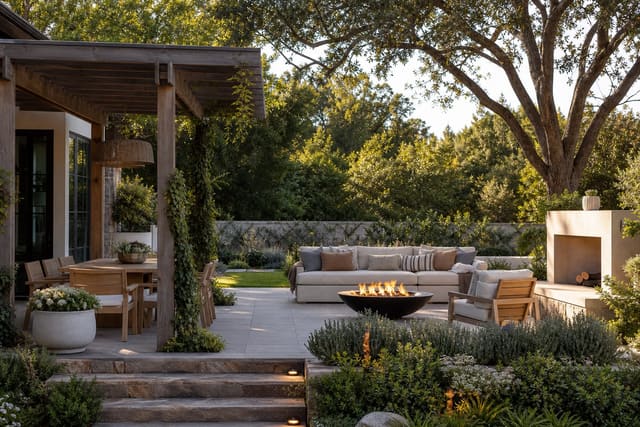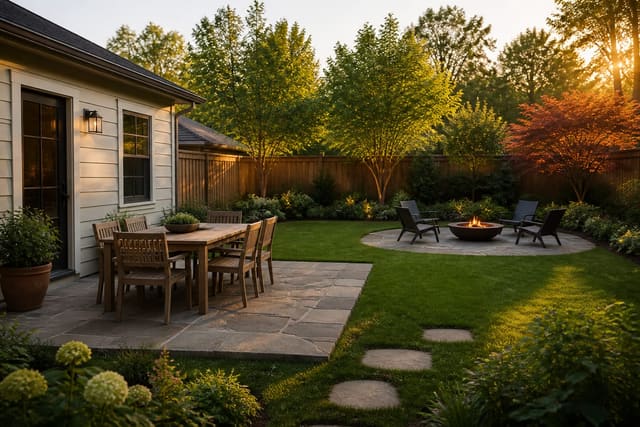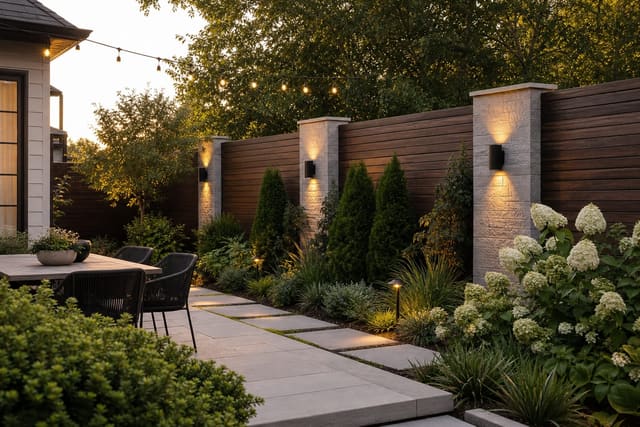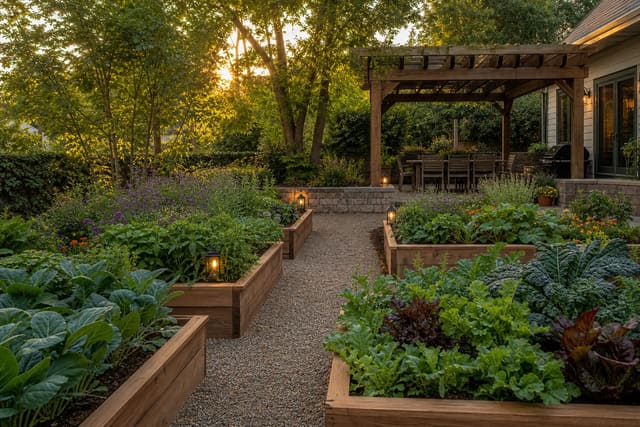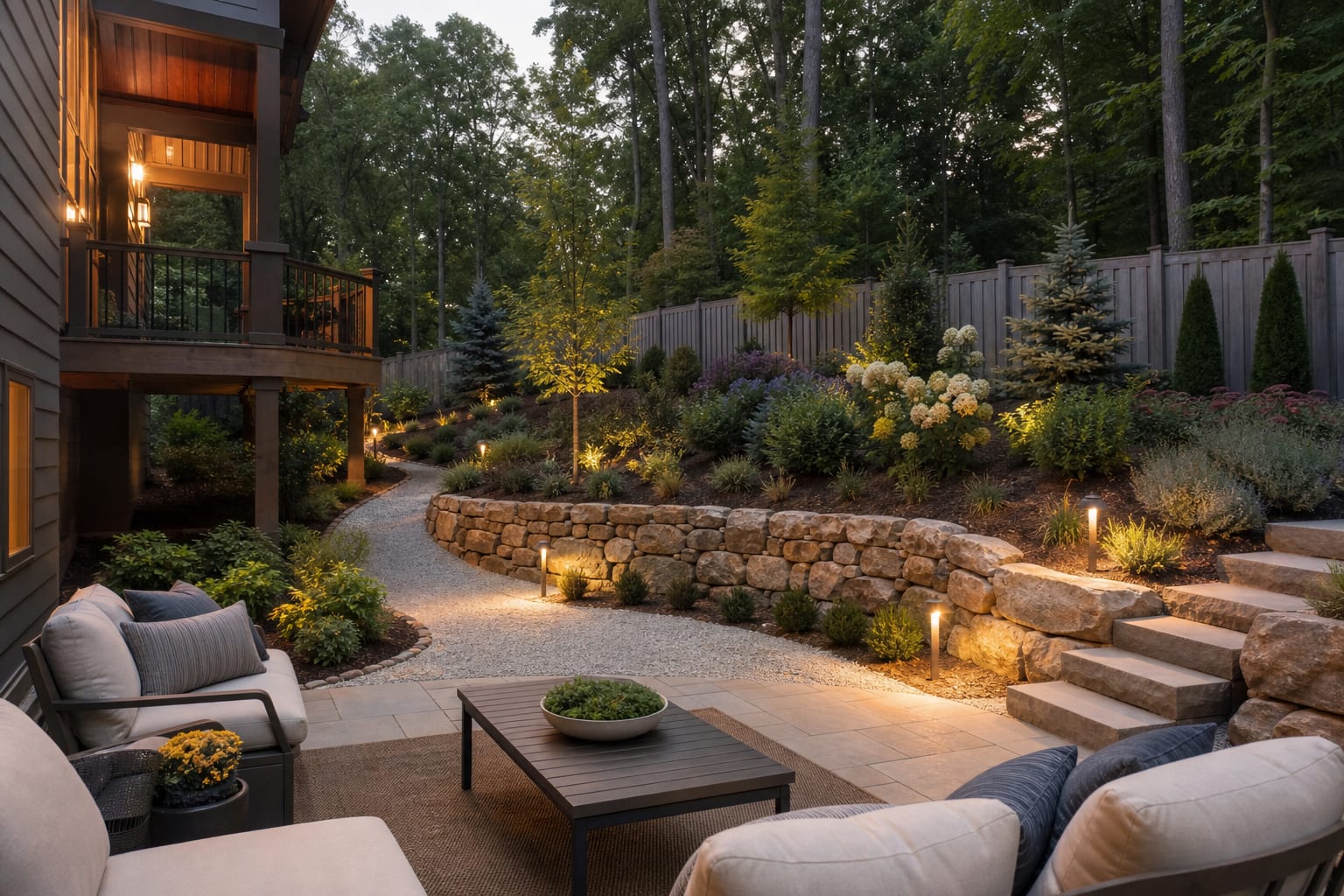
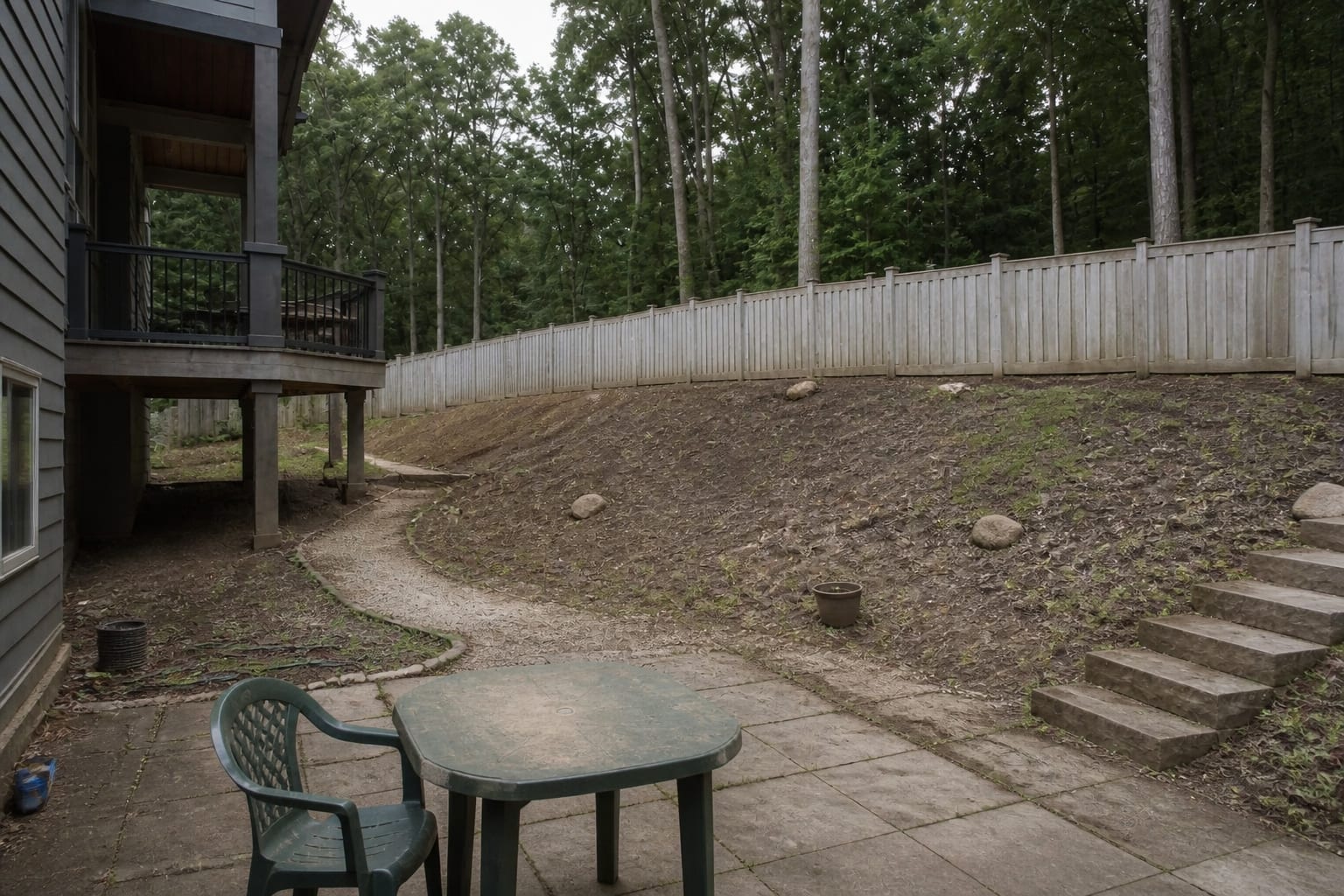
Garden wall ideas work best in stone, brick, concrete block, or timber when height, drainage, and soil pressure match the slope and planting. Keep dry-stack walls under 36in (48in mortared) without engineering, add a 6in gravel drainage course, batter dry-stack walls 1in per 12in height, and cap with an overhanging stone or concrete cap to shed water.
What materials are best for garden walls?
Natural stone, brick, reinforced concrete block, and rated timber are the four practical choices, picked by wall height, drainage demand, and soil pressure rather than looks alone. A low decorative wall under 18in gives more material freedom; a true retaining wall needs construction that matches the load behind it.
- Natural stone ages well and hides imperfect planting, but still needs a compacted gravel base, backward batter, and clean joints. Best beside gravel paths, herb beds, and cottage-style borders.
- Brick gives a formal edge but punishes sloppy proportions. Plan piers, caps, or returns so a long run doesn't read like a utility wall, and use exterior-rated brick in freeze-thaw climates.
- Concrete block is the practical choice for taller retaining walls since it can be reinforced, drained, and faced with stone veneer or stucco. Check local code before a wall approaches 3-4ft.
- Timber suits dry, casual gardens rather than permanent architecture. Use rated landscape timbers, keep soil off cut ends, and expect a shorter lifespan than masonry.
The retaining wall decision that controls the whole garden
The first decision is whether the wall holds back soil or simply defines space. A decorative stone wall can wander and soften a bed edge; a retaining wall must manage pressure, water, and movement, and confusing the two is how a wall that looks fine in year one starts bowing by year three.
On a slope, start from the finished grade you want, not the stone you like. Two 24in terraces with a 30-36in planting shelf between them usually read calmer than one harsh 4ft wall and are easier to plant. Where steps are needed, use 12-16in treads and roughly 6in risers so the route feels like a garden walk, not a ladder.
Wall thickness should look believable for its height; a thin veneer under a heavy cap reads fake even when the engineering is sound. A low freestanding wall with a 12-18in-wide cap can double as casual seating near a fire pit or path intersection. For nearby beds, borrow the spacing logic from raised garden bed layouts: at least 24in for a tight path, 36in where tools or soil bags need to pass.
Test this on your own photo with ReDesign before committing to a direction. Keep the house edge, horizon line, hardscape, planting beds, and main path visible so the preview reflects the space you actually have.
How to make a garden boundary wall feel designed, not defensive
A boundary wall that only signals separation feels defensive. Make it do two or three jobs at once: screen a neighbor's driveway, hold espalier fruit, frame a gravel path, and give the garden a strong winter shape.
Height sets the mood. A 30in wall feels friendly and architectural; a 6ft solid wall adds privacy but can box in a narrow garden. For privacy without bulk, use a 36-42in masonry base topped with trellis, shrubs, or pleached trees so planting breaks up the mass.
Ends and corners matter: a wall that simply stops at the fence line looks abandoned. Return the end 18-24in, terminate with a pier, or tuck it into a bed. On long runs, add piers every 8-12ft or vary the planting rhythm to break up the boundary.
Light the surface, not the whole wall. Space low-voltage path lights 6-8ft apart along circulation, and reserve solar lighting for outdoor paths for steps, gates, and turns rather than every shrub.
Common garden wall mistakes to avoid
- Choosing the face material before planning drainage. Saturated soil behind a wall gets heavy fast, so plan gravel backfill and drainage before debating stone versus brick.
- Building one tall wall instead of two shorter terraces. Splitting the grade often feels calmer and gives you a planting shelf for shrubs or herbs.
- Running the wall dead straight through a naturalistic garden. A slight curve, step, or wider planting pocket at the corner gives the wall a reason to exist.
- Skipping the cap. An unfinished top makes even expensive stone look cheap; the cap sheds water, creates a seat or shelf, and casts a shadow line that reads as deliberate.
- Planting too close to the face. Leave room for mature spread and keep aggressive roots away from structural walls.
Use AI to preview your garden wall before you commit
Walls change a garden's geometry, not just its palette, so preview before you price masonry. Upload a photo from the patio, back door, or main path, then test stone, brick, concrete, and timber versions from the same angle. The goal is checking height, material, and planting mass, not letting software design the structure.
Vary one thing at a time: compare a 24in stone wall with layered perennials, a 36in stucco block wall with olive-toned shrubs, and a timber terrace with gravel steps. Keep the house facade visible in at least one preview so the wall doesn't look imported from elsewhere.
If a greenhouse or potting shed is part of the plan, preview how the wall lines up with doors, paths, and bed edges before excavation; the same circulation discipline used in small greenhouse placement applies here. Once a direction is set, hand retaining sections to a qualified contractor or engineer wherever height, slope, drainage, or code requires it.
Frequently Asked Questions
What is the maximum height for a dry-stack stone wall?
36in without engineering review. Above 36in, a dry-stack wall needs a compacted gravel deadman anchor every 4-6 lineal feet and a batter of 1.5in setback per 12in of height to stay stable.
What materials work best for a garden wall?
Dry-stack fieldstone or limestone looks the most naturalistic. Concrete block with stone veneer is the most structurally reliable for tall walls. Poured concrete with a board-form or exposed-aggregate finish gives the most modern look.
Does a garden wall need a footing?
Walls over 24in tall need a continuous concrete footing set at frost depth (24-36in in zone 6). Walls under 24in can sit on a compacted 6in gravel course that drains freely without heaving.
How do I build a garden wall to retain a slope?
Treat it as a structural element: batter it 1in per 12in of height, backfill with drainage gravel, and add a weep hole every 6ft at the base. Walls over 4ft need an engineer's stamp in most jurisdictions.
What plants grow well on or alongside a garden wall?
Creeping phlox, Aubrieta, Sedum, and creeping thyme root in dry-stack wall joints and cascade over the face. Alchemilla (lady's mantle), Geranium (hardy cranesbill), and ornamental grasses soften the base at ground level.
> Try this: Ready to see this on your own outdoor space? Open ReDesign and run the preview before you buy materials, plant, drill, or move furniture.
Three transformations to try
1. Dry-stack fieldstone wall with planted joints 2. Mortared limestone retaining wall with cap 3. Concrete block wall with stacked stone veneer