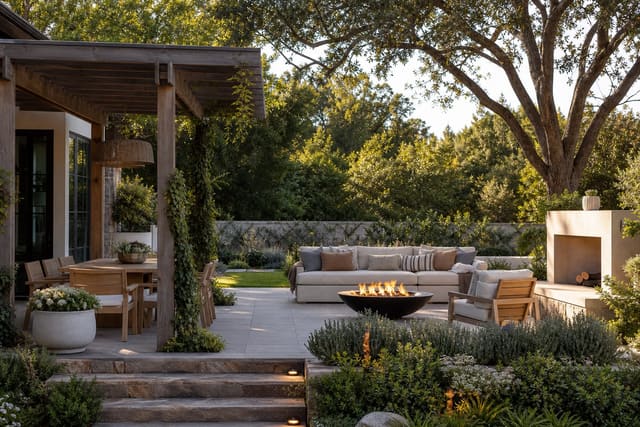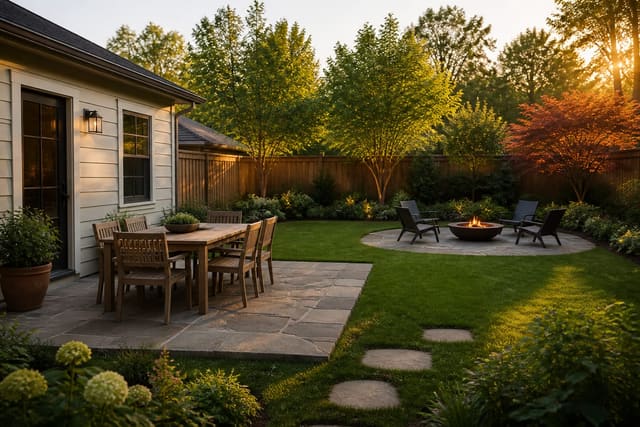
Solar outdoor lights work for path lighting, fence-post accents, and string-light runs when the panels see 6+ hours of direct sun, the fixtures use a lithium iron phosphate battery (not NiMH), and the layout matches the use — solar earns its keep on long paths and remote corners where running wire costs more than the fixture. Most solar outdoor lights fail because people buy them like decorations instead of designing them like a lighting plan. My blunt view: one good warm path light beats a dozen icy plastic stakes scattered through the mulch. If you want outdoor lighting without running electricity, solar can work beautifully, but only when you match the fixture to the job, the sun exposure, and the way you actually move through the garden after dark.
Are solar outdoor lights worth it for a real garden?
Solar outdoor lights are worth it when they solve low-voltage jobs—paths, steps, garden edges, dining corners, and accent moments—rather than pretending to replace a hardwired floodlight. The best use is not blasting the yard; it is giving your eye a safe rhythm from gate to patio, from patio to raised bed, and from back door to bins.
Think of solar lighting as a layer, not the entire electrical plan. For a path, choose fixtures around 2–10 lumens each and space them 6–8 feet apart so the ground reads as a continuous route without looking like a runway. For a small patio table, solar lanterns or down-facing sconces in the 50–150 lumen range usually feel more civilized than one bright security light above the door. For garden features, warm 2700K–3000K light keeps foliage, brick, timber, and stone from turning blue.
The hard truth is that solar fixtures need sun more than they need enthusiasm. A light under dense tree canopy, tucked against a north-facing fence, or shaded by tall grasses at noon will disappoint you by dinner. Before buying, watch the proposed location for one clear day and choose spots that get roughly 6 hours of direct or strong open-sky light in the charging season.


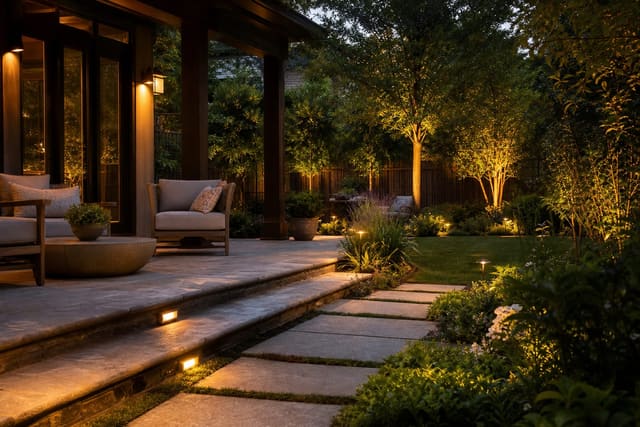
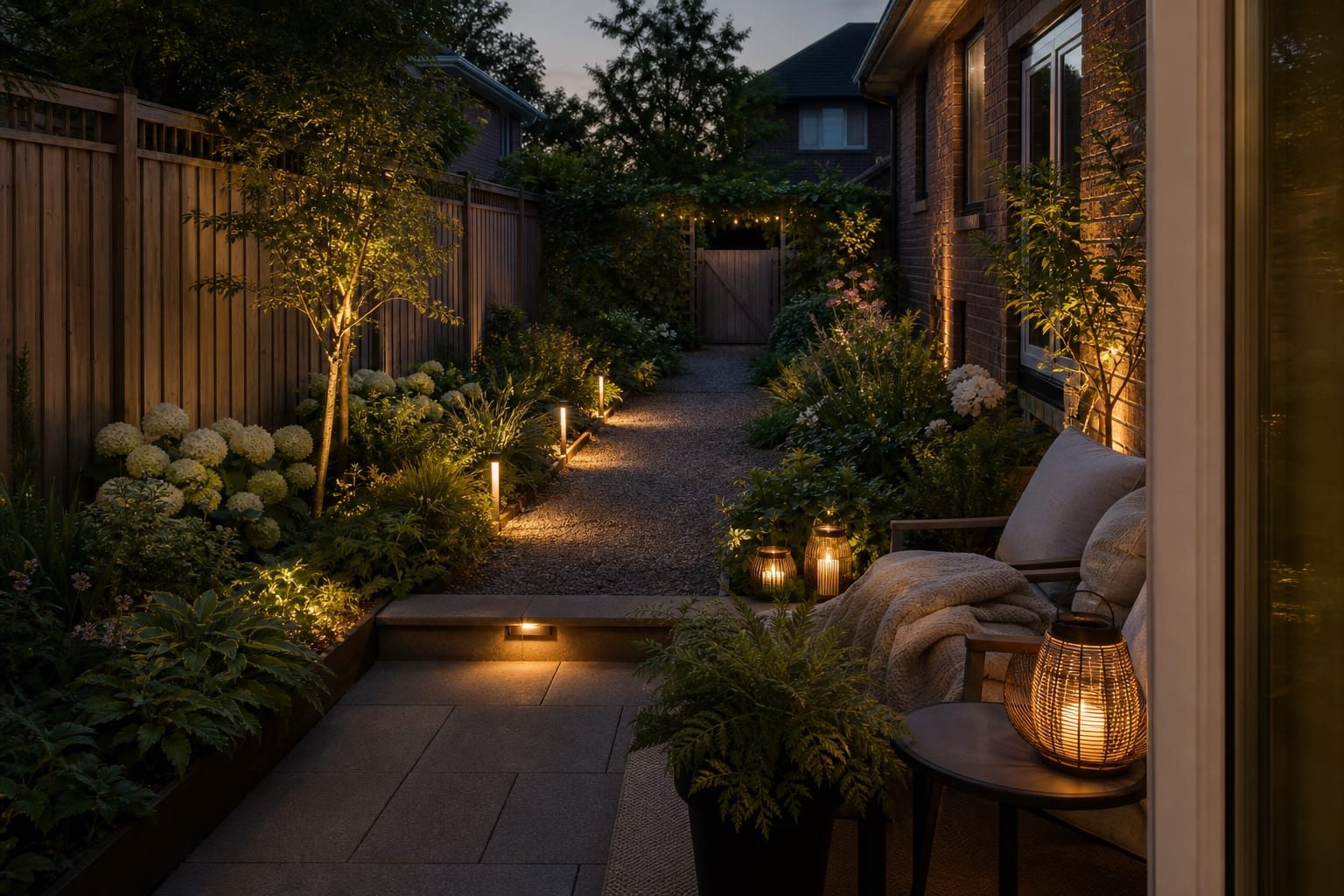
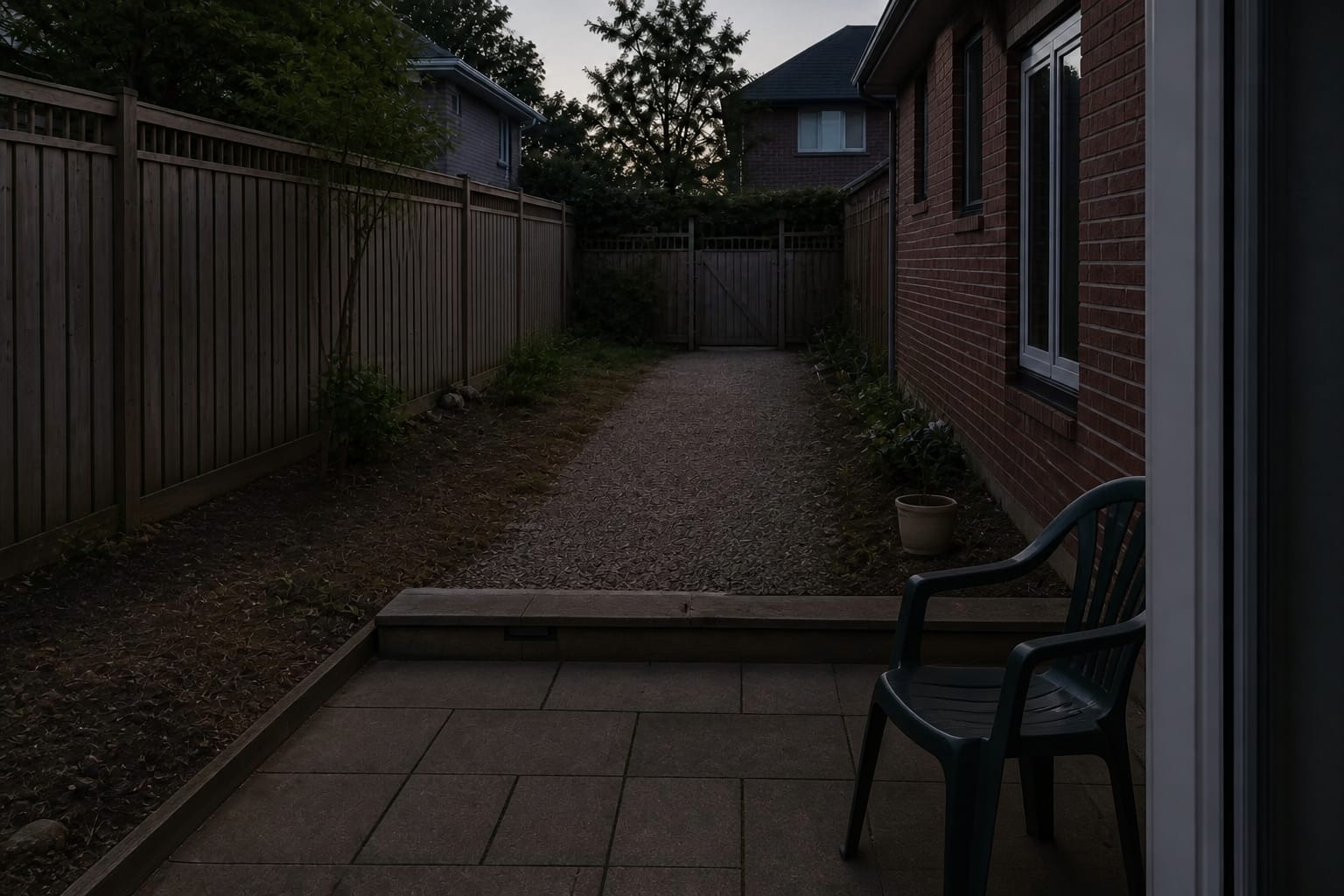
A dim garden path becomes usable after dark with warm solar bollards, low step lights, and a softly lit patio edge.
Where should solar garden lights go first?
Start with movement, then atmosphere, then accents. If the garden is dark, the first fixtures should show ankles where to go: the path from the door, the step off the deck, the turn near the hose bib, and the edge of the patio where chairs get pulled back.
For a main path, use down-facing solar path lights 12–18 inches tall so the beam lands on gravel, pavers, or mulch instead of shining into eyes. On wider paths, a 24–36 inch bollard can feel more architectural, but it needs more open space around it; in a narrow cottage path, taller lights can look bossy. If you already have planted edges, borrow the rhythm from your bed spacing. A path beside vegetables or herbs can coordinate with a raised bed lighting plan so the lights mark both the walking line and the working zone.
Patios need a different move. Solar patio lights should sit lower and warmer than the house light. Try one solar table lantern, two clip-on railing lights, or a short run of solar string lights hung 8–10 feet above finished floor height. Keep bulbs 12–24 inches apart on string lights; wider spacing can look skimpy unless the bulbs are large and decorative.
Garden walls, fences, and screens are the best places to hide the source. A downlight fixed to a wall, even a solar one with a remote panel, usually looks calmer than a row of exposed stakes. If your garden depends on vertical surfaces for privacy, a few ideas from garden wall lighting and planting can help you place light where texture catches it.
Test this on your own photo with ReDesign before you choose the final direction; keep the house edge, horizon line, hardscape, planting beds, and main path visible so the preview solves the space you actually have.
Which solar outdoor light ideas are actually worth copying?
The strongest solar schemes repeat a small set of fixtures instead of collecting one of everything. Pick one path light family, one patio light type, and one accent fixture; then let the garden feel edited.
- Run warm path lights along only one side of a walkway, not both. Single-side spacing at 6–8 feet apart gives the eye a clean line and prevents the airport-runway effect that happens when every paver gets a matching dot.
- Use solar step lights on the riser face, not the top tread. A fixture under 3 inches tall, mounted low and aimed across the step, shows the level change without glaring into someone walking up from the lawn.
- Place a solar uplight behind one sculptural shrub or small tree. Keep it close to the trunk, use warm light, and avoid aiming it into bedroom windows; one Japanese maple or olive tree lit this way has more presence than ten random flower-bed stakes.
- Choose solar lanterns for movable patio seating. A lantern around 50–100 lumens can shift from dining table to side table, which is useful in rentals, small courtyards, and gardens where the furniture layout changes with the season.
- Try remote-panel solar lights in shaded entertaining areas. Put the fixture under the pergola or eave, then run the small panel to a sunny fence or roof edge; this is often the difference between a light that lasts until bedtime and one that fades before dessert.
- Mark working routes to sheds, compost, and greenhouses with fewer, better lights. If you have a glasshouse or potting zone, coordinate the approach with greenhouse path lighting ideas so the route feels safe without turning the whole garden into a work site.
Common solar lighting mistakes to avoid
The first mistake is buying by quantity. A box of twenty cheap stakes often gives you twenty weak batteries, twenty mismatched beams, and twenty little maintenance problems. Spend the same budget on fewer fixtures with replaceable rechargeable batteries, a weather rating listed by the manufacturer, and a housing material that will not crack the first winter.
The second mistake is choosing cool-white light because it seems brighter on the shelf. In outdoor rooms, brightness is not the same as usefulness. Cool light reflects harshly off pale paving and makes planting look flat; warm light at 2700K–3000K gives enough visibility while keeping the garden comfortable.
The third mistake is ignoring water and cleaning. For exposed paths, look for at least IP65 when rain, spray, or irrigation may hit the fixture. Wipe panels every few weeks in pollen season and after dusty weather, because a dirty panel is basically a shade cloth over the charger.
The fourth mistake is aiming every accent upward. Uplighting can be beautiful on one tree, but repeated uplights create glare and erase the softer darkness that makes a garden feel layered. Mix one accent with several down-facing path or wall lights so the space has depth.
The fifth mistake is letting solar lights fight the house. If your porch lantern is 4000K and your path lights are amber, the garden will look patched together. Match color temperature as closely as possible, or deliberately make the solar layer warmer and dimmer so it reads as landscape lighting rather than a competing fixture family.
Use AI design to preview your garden lighting before you buy
Solar lighting is hard to judge in a shopping cart because the fixture is only half the decision; the other half is where the light lands. Upload a photo of the garden, patio, or path and test a few versions before you buy: one with path lights, one with wall-mounted downlights, one with lanterns near the seating, and one with a single tree accent.
Keep the preview honest. Use the same camera angle you see from the back door, not a fantasy aerial view. Ask for warm 2700K garden lighting, path lights spaced 6–8 feet apart, and no visible glare above eye level. If the preview looks busy, remove fixtures before spending money. If one dark step still disappears in the image, that is the place where the next solar light has earned its keep.
This is especially useful for renters and anyone avoiding trenching. You can compare clip-on rail lights, freestanding lanterns, stake lights, and remote-panel fixtures without drilling into masonry or committing to a permanent layout. The point is not to make the app design the garden for you; it is to let your own space show which solar outdoor light ideas look calm after dark.
Frequently Asked Questions
How long do solar outdoor lights actually last?
Lithium iron phosphate (LiFePO4) solar fixtures last 5 to 8 years before battery replacement; cheap NiMH-battery fixtures fade within 1 to 2 seasons regardless of brand claims. Use the outdoor photo to compare the visible layout and fixed constraints before committing, because slope, shade, drainage, doors, utilities, and traffic paths decide whether the idea survives daily use.
Will solar lights work in winter?
Yes — short days reduce charge by 30 to 50 percent but lights still run 4 to 6 hours nightly if the panel is angled south at 45° and snow is cleared off the panel face. Keep the preview honest by leaving the problem area visible in the frame, then compare one conservative version against one bolder version before you buy plants, materials, or furniture.
How much sun do solar lights need?
6 to 8 hours of direct unobstructed sun on the panel daily for full nightly runtime; fixtures under tree canopy or facing north chronically under-perform. Check the result against ordinary movement first: chair pullout, walkway width, gate swing, glare, storage reach, and evening light matter more than a perfect catalog angle.
Solar or low-voltage wired lights for a long path?
Solar wins under 12 fixtures or remote runs (no trenching, no transformer); low-voltage wins above 12 fixtures or where uniform brightness and warm 2700K color matters — wired systems have a more consistent look. Use the image to narrow priorities and measurements before ordering anything custom; final purchases still need real dimensions, code checks, utility locations, and product clearances.
What is the right brightness for solar path lights?
10 to 15 lumens per fixture for a path light spaced every 6 to 8ft reads warm and intentional; 100+ lumen 'security' solar lights wash out the path and read industrial. If the preview invents architecture or hides the awkward feature you need solved, rerun it with stricter instructions so the result remains tied to your actual outdoor space.
Three transformations to try
- Solar path light run from driveway to door
- Solar string lights between cedar posts
- Solar fence-post caps for backyard perimeter