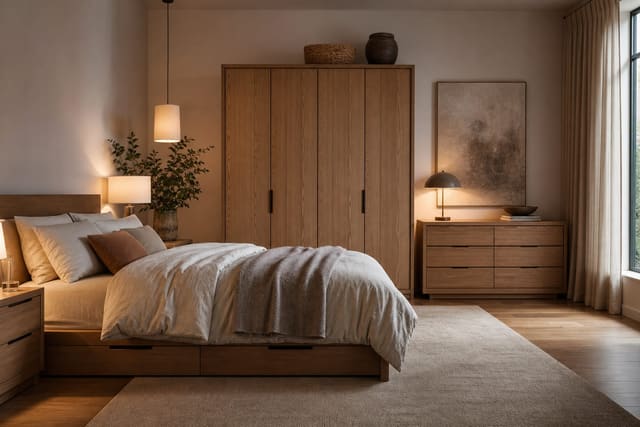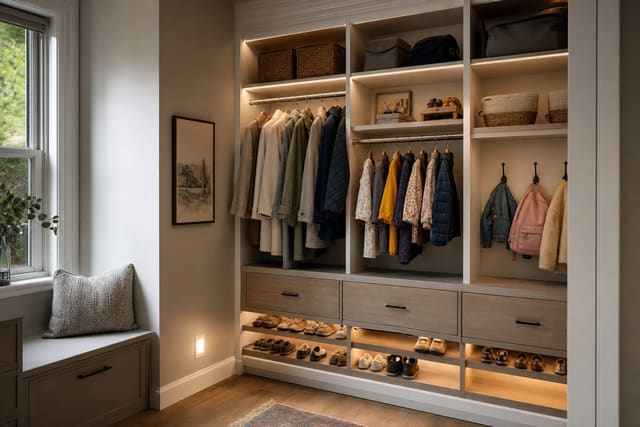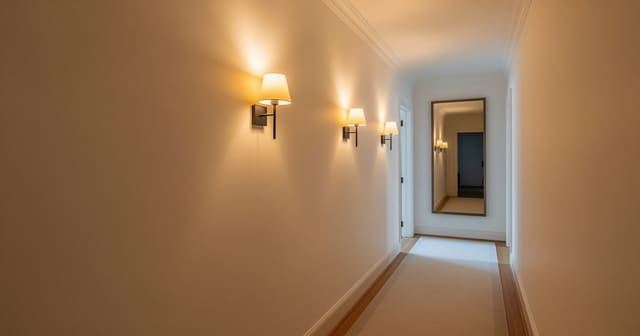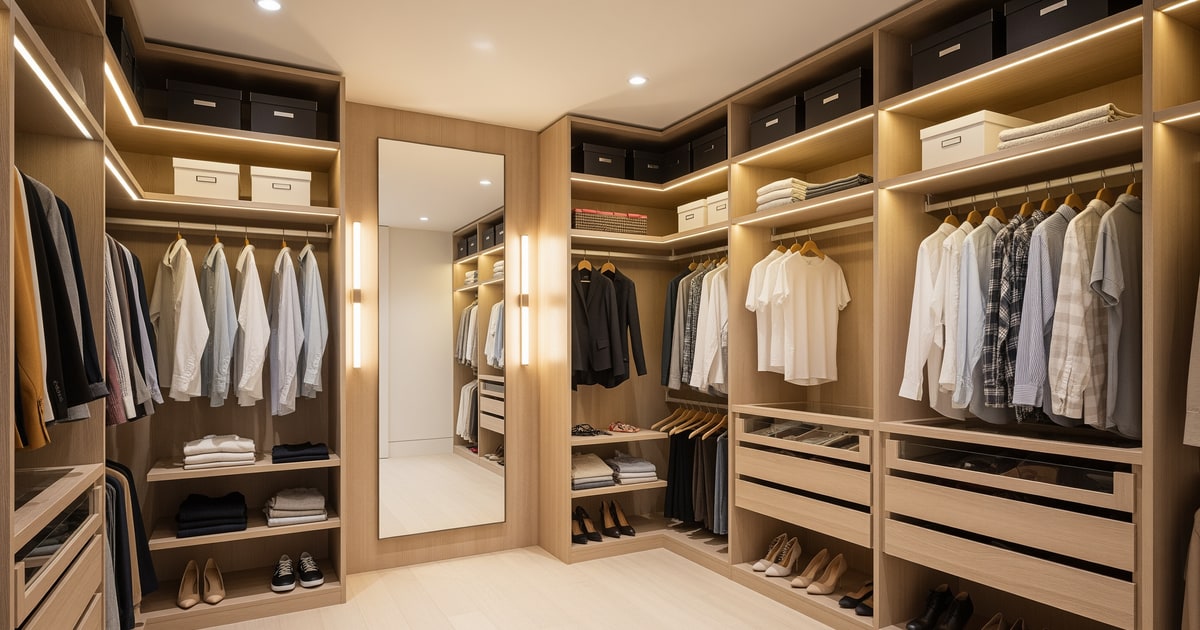
A closet lights right when the fixtures are 3000K LEDs with CRI 90+ (skin and color accuracy match the rest of the house), they run along the front edge of the shelving — not centered overhead — so light falls on clothes instead of the back wall, and motion-sensor switches handle on/off automatically because no one flips a closet switch with full arms. If your closet feels like a dark storage cave, you probably need better lighting more than bigger shelving. Most closets are lit like spare rooms: one bright ceiling bulb, lots of clutter, and no light where it matters. The result is frustrated outfits, misplaced ties, and no chance of making the room look calm in photos.
What is the best way to light a closet?
A closet needs two layers only: ambient shelf light and task-level wake-up light near the door and dressing zones. Start with a warm 2700K to 3000K base for everything you can control, and then add one vertical light line for outfit prep. This is especially important in walk-in closets because you are not just seeing colors — you are deciding outfits from eye level.
The closet lighting sequence that works
- Ambient base light around the full perimeter. Use ceiling-mounted or top-mounted strip light that covers at least 80% of open width. In narrow closets, one strip in a cove channel at the top of two walls is easier and cleaner than two singles.
- Task light for dressing and accessories. Put adjustable, low-profile lights where you choose outfits: near the mirror and where you stand to dress. A 2700K sconce, mirrored-mounted light bar, or slim shelf light all work if switchable and dimmable.
- Mirror-compatible front light. The mirror is your eye-level focal point, so mount a narrow strip or vertical puck beside it, never behind it, so you avoid backlight ghosting.
- Dimmability over brightness. Always buy dimmable fixtures. A full closet does not need nightclub output overnight, but morning can be brighter and calm at night.
Test this on your own room photo with ReDesign before you choose the final direction; keep the doorway, walls, windows, main furniture, lighting, and awkward fixed features visible so the preview solves the room you actually have.
Where to avoid spending on closet lighting
- A single bare-bulb ceiling light with 4000K or higher output.
- Decorative bulbs with poor beam control.
- Fixture placements that shadow your outfit area while lighting unused shelves.
Cost and install guidance
- Entry-level route: two plug-in warm lights plus one mirror strip: $60–$150.
- Mid-level route: one perimeter 12V strip + mirror light + one recessed ambient entry point: $180–$320.
- Best route for renters: battery puck strip + clamp-on reading lamp by mirror: usually under $120 and reversible.
Closet lighting is part safety, part color accuracy. For most reach-in closets, a low-profile LED disk or bar with 700 to 1,000 lumens is enough; for a walk-in, plan one ceiling source plus vertical or shelf lighting where clothes hang. Stay around 3000K and 90+ CRI so black, navy, cream, and white separate correctly. Keep fixtures at least 12 inches from the nearest storage surface when heat is a concern, and avoid old bare bulbs entirely. Hardwired LED strips such as Hafele Loox-style channels feel built-in, while battery pucks should be reserved for shelves and rarely used corners. If the closet may become a work nook later, the walk-in closet office guide shows why light and air need to be planned together.
Motion control is the upgrade people notice every day. A door-jamb switch, occupancy sensor, or magnetic contact sensor keeps the closet from being left on and makes morning use feel frictionless. Owners should wire the sensor and ceiling light together if the closet is opened daily; renters can use rechargeable bars with magnetic mounts and keep the charging schedule realistic. Do not put adhesive light strips where hangers will scrape them. A second finish pick is the diffuser: frosted channels are worth buying because they turn visible LED dots into an even line of light. For closets used as dressing zones, borrow the eye-strain standards from home office lighting: glare is still glare, even when you are choosing a shirt.
Start with the closet type. A 24 inch deep reach-in closet usually needs light from the front or ceiling because shelves and hanging clothes block side light. A walk-in closet needs at least one source that lights the vertical clothing plane, not only the floor. If you are choosing between a ceiling disk and shelf strips, choose the disk first for safety and orientation, then add strips only where they solve a real visibility problem.
Color rendering matters more in closets than in most utility spaces. A cheap 5000K puck can make navy look black and cream look dingy, which defeats the point of lighting the clothes. Look for 90+ CRI and a warm-neutral 3000K temperature. If the closet connects to a bedroom with 2700K lamps, 3000K still feels compatible while making fabric color easier to judge. That is a better compromise than blue-white light that makes the closet look like a store stockroom.
Product choice should follow access. Rechargeable magnetic bars are good for rental shelves and dark corners, but they become annoying in a daily primary closet if they need charging every week. Hardwired bars, door-jamb switches, and low-voltage channels cost more, yet they disappear into the routine. Owners renovating a closet should wire before adding organizers, because retrofitting around new cabinetry is tedious. Renters should choose lights with removable mounts and keep the charging cable in the closet so maintenance does not become a reason to stop using the system.
The finish does not have to be decorative, but it should be tidy. White channels on white shelves, black channels in dark millwork, and simple opal diffusers look built-in even when the parts are affordable. Avoid visible LED dots, dangling cords, and lights taped to the front edge of shelves. Those shortcuts may brighten the closet for a week, but they make the system feel temporary every time the door opens.
Closet size changes the budget. A simple reach-in can be solved for under $100 with a quality LED disk and a sensor, while a walk-in with cabinetry may justify several hundred dollars in low-voltage channels. Spend where the light touches daily decisions: hanging clothes, shoe shelves, and the mirror area. Do not spend first on decorative pendants in the center if the corners still stay dark.
Mirror placement is optional, but dressing accuracy is not. If the closet has a mirror, light the person from the front or sides rather than from one ceiling point behind them. A narrow vertical strip near the mirror can be more useful than another overhead fixture, provided it is diffused and warm-neutral.
Common closet mistakes to avoid
- Leaving the mirror in shadow.
- No task layer (people forget you are looking at a detail space from eye level).
- Mismatched color temperatures in a narrow room.
- No dimmer, which makes closets feel harsher than they should.
- Putting the light behind your body. A ceiling light behind the standing position throws your own shadow onto the clothes. Move the light forward or add shelf lighting that faces the wardrobe.
- Trusting adhesive strips near moving hangers. If the light sits where sleeves and rods hit it, the clean install will fail quickly.
Use AI design to avoid guesswork
Use Re-Design to render your current closet with and without warm task lighting. Seeing the outfit-selection line and mirror area in a realistic preview makes the right upgrade obvious quickly.
Frequently Asked Questions
What kind of light works best in a closet?
LED strip lighting along the front shelf edge at 3000K with CRI 90+ casts even light on clothing without shadowing; centered overhead fixtures throw shadows under the shelves where clothes hang. Use the room photo to compare the visible layout and fixed constraints before committing, because door swings, windows, outlets, storage reach, circulation, and existing furniture decide whether the idea survives daily use.
Are motion sensor closet lights worth it?
Yes — battery or hardwired motion sensors mean the closet light is always on when needed; the swap pays back the first time you walk in with a laundry basket and no free hand. Keep the preview honest by leaving the problem area visible in the frame, then compare one conservative version against one bolder version before you buy lighting, paint, furniture, or storage.
Do walk-in closets need different lighting than reach-in?
Walk-ins benefit from layered lighting — overhead general plus front-edge strip plus an island pendant if there is one; reach-in closets only need a single bright strip along the inside of the door header. Check the result against ordinary movement first: drawer clearance, chair pullout, walkway width, glare, switch access, and sightlines matter more than a perfect catalog angle.
Can I install closet lights without an electrician?
Yes — plug-in LED strip lights or battery puck lights install in minutes and look identical to hardwired strips; hardwired installs run 150 to 400 dollars but disappear into the architecture. Use the image to narrow priorities and measurements before ordering anything custom; final purchases still need real dimensions, outlet locations, installation limits, and product clearances.
What color temperature flatters clothes?
3000K with CRI 90+ reads the warmest while still showing accurate color; cooler 4000K reads commercial and warmer 2700K can shift navy and black indistinguishable in the closet. If the preview invents architecture or hides the awkward feature you need solved, rerun it with stricter instructions so the result remains tied to your actual room.
> Try this: Ready to see this on your own room? Open ReDesign and run the preview.
Three transformations to try
1. Walk-in closet with front-edge LED strip lighting 2. Reach-in closet with door-header LED strip 3. Pantry closet with motion-sensor puck lights