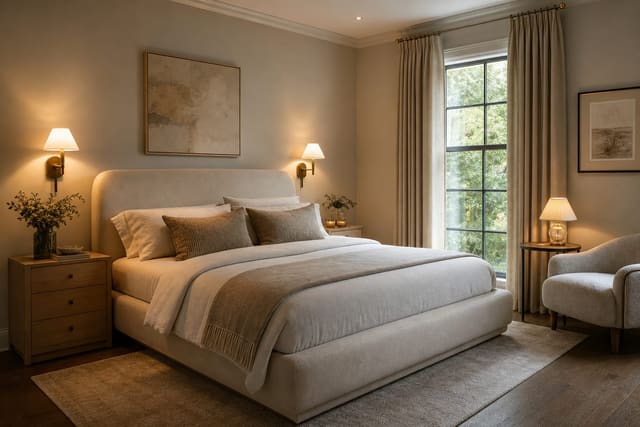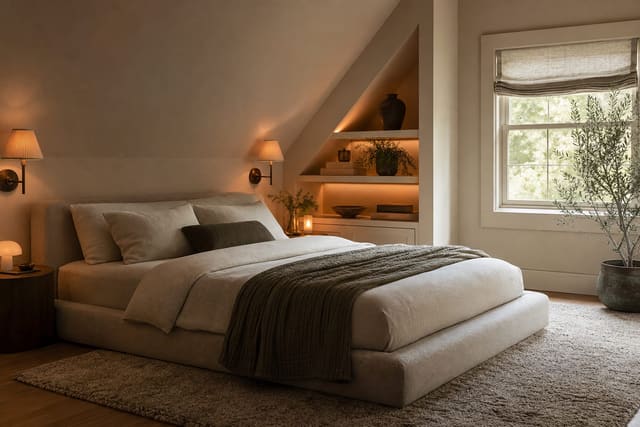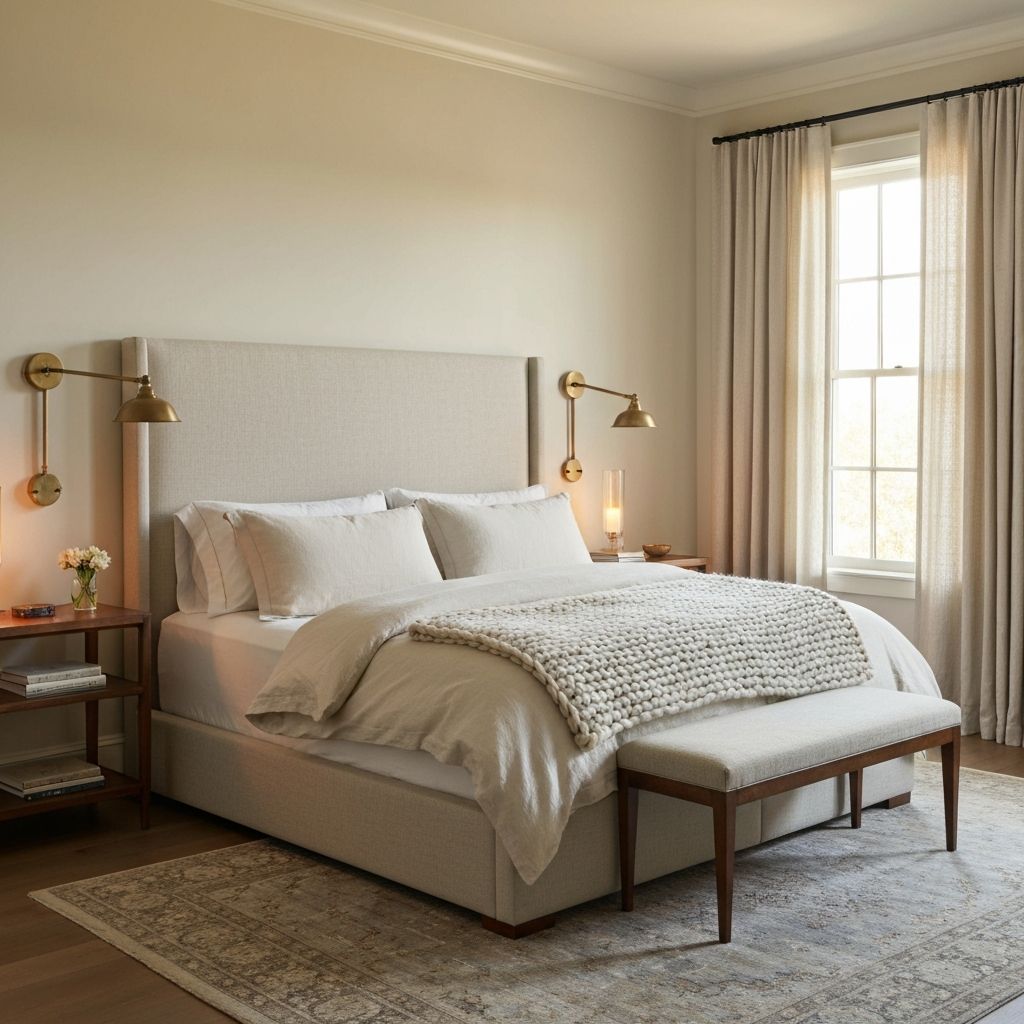
A master bedroom reads luxurious when the bed wall is treated as the room's primary scene — symmetrical bedside tables, two equal-height lamps, an oversized headboard or art panel above the bed — and the rest of the room edits down to one dresser, one bench or chair, and a single layered rug under the bed. Your master bedroom should be the calmest, most restorative room in your house. But for most people, it's the most neglected — a place you sleep, not a place you actually retreat to. The good news: a master bedroom that feels like a hotel suite isn't about square footage or budget. It's about a handful of design moves layered together intentionally.
What makes a master bedroom feel like a retreat
A "retreat" bedroom isn't a style — it's a feeling. That feeling comes from four design fundamentals, regardless of whether your space is 100 square feet or 400.
- A clear focal point. Almost always the bed. Sometimes a window or a fireplace. Everything else in the room should reinforce, never compete with, that focal point.
- Three layers of lighting. Overhead for cleaning, bedside for reading, and ambient (sconces, picture lights, a lamp on a dresser) for everything in between. A bedroom with only one light source will never feel luxurious.
- Soft surfaces in multiple weights. A rug under the bed, a throw at the foot, textured pillows, linen drapery, an upholstered headboard. Layered textures are what your eye reads as comfort.
- Restraint. A retreat is defined as much by what you don't see as by what you do. Clear surfaces, hidden cords, and edited nightstands matter more than any single decor purchase.
The bed: get this right and everything else follows
The bed is the single most photographed and most experienced object in the room. Splurge here.
- A tall upholstered headboard instantly raises the perceived quality of the whole room — aim for at least 50" from the floor.
- Layer your bedding in this order: fitted sheet, flat sheet, lightweight blanket, duvet folded at the foot, two euro shams, two sleeping pillows, two decorative pillows, one lumbar. Yes, all of it.
- A bench or stool at the foot finishes the bed visually and gives you a place to put on shoes.
Test this on your own room photo with ReDesign before you choose the final direction; keep the doorway, walls, windows, main furniture, lighting, and awkward fixed features visible so the preview solves the room you actually have.
For a useful room-planning comparison, keep Small Master Bedroom Ideas: How to Make It Feel Luxurious, Odd Shaped Bedroom Ideas for Slanted Ceilings or Alcoves, and AI Interior Design: The Complete Guide to What It Does, What It Cannot Do, and When to Use It nearby so this retrofit stays connected to the adjacent lighting, storage, scale, and layout decisions in the same photo-led workflow.
Lighting is half the design
If you take only one thing from this guide: kill the overhead light at night. Master bedrooms should be lit entirely by lamps, sconces, and warm wall fixtures after sunset.
- Bedside sconces save table space and read as architectural rather than decorative.
- Picture lights above art make the room feel finished, like a gallery.
- Use warm white bulbs only — 2700K or warmer. Cool white kills the entire mood.
Common master bedroom mistakes
- Bedside tables that are too small. They should be roughly the height of the top of your mattress and at least 20" wide.
- Matching everything from the same furniture set. This is the fastest way to make a bedroom feel like a showroom, not a retreat.
- Skipping window treatments. Linen drapery, even inexpensive, instantly upgrades the room and improves sleep.
- Overhead-light-only setups. Cold, flat, unforgiving. Always layer.
- Visible cords, alarm clocks, and chargers. A retreat is calm; visible tech is not calm.
The AI design approach
Most people stall on bedroom redesigns because they can't visualize how dark walls, a new headboard, or a different rug will read in their actual room. AI design solves this in seconds. Photograph your bedroom, then preview moody navy walls, warm white plaster, earthy clay tones, or wood-paneled wainscoting — all on your existing layout — before spending a dollar. The same applies to bed styles, rugs, drapery, and lighting. By the time you actually buy anything, you've already seen the room you're building.
Frequently Asked Questions
What makes a master bedroom feel luxurious?
Symmetry at the bed wall, an oversized headboard or art panel, two matching bedside lamps, a layered rug under the bed, and a strict edit to one dresser and one accent seat — luxury reads as restraint, not as more furniture. Use the room photo to compare the visible layout and fixed constraints before committing, because door swings, windows, outlets, storage reach, circulation, and existing furniture decide whether the idea survives daily use.
How big should a master bedroom headboard be?
Aim for 50 to 65 inches tall above the mattress (taller for high ceilings), and at least as wide as the bed; a small headboard on a king reads as a missed visual moment. Keep the preview honest by leaving the problem area visible in the frame, then compare one conservative version against one bolder version before you buy lighting, paint, furniture, or storage.
Where should the bed go in a master bedroom?
Center the bed on the longest unbroken wall with at least 24 inches of walkway on each side; avoid placing the bed under a window when daylight breaks across the head wall behind. Check the result against ordinary movement first: drawer clearance, chair pullout, walkway width, glare, switch access, and sightlines matter more than a perfect catalog angle.
What color should a master bedroom be?
Warm neutrals (cream, sand, taupe, soft greige) on the walls with one muted accent (sage, navy, terracotta) at the bedding or art reads designed; pure white reads cold, saturated walls compete with sleep. Use the image to narrow priorities and measurements before ordering anything custom; final purchases still need real dimensions, outlet locations, installation limits, and product clearances.
What lighting setup makes a master bedroom feel calm?
Two 2700K bedside lamps on dimmers, one floor lamp or sconce at the reading chair, overhead off at night; the overhead is for cleaning and dressing, not for evening. If the preview invents architecture or hides the awkward feature you need solved, rerun it with stricter instructions so the result remains tied to your actual room.
> Try this: Ready to see this on your own room? Open ReDesign and run the preview.
Three transformations to try
1. Symmetrical bed wall with oversized headboard 2. Two matching bedside lamps on dimmers 3. Layered rug under bed with bench at footboard