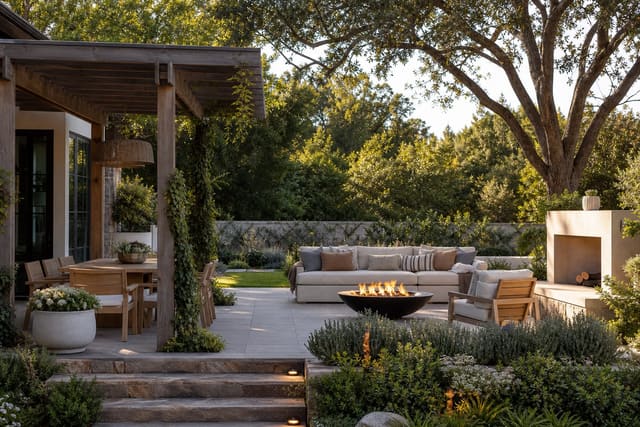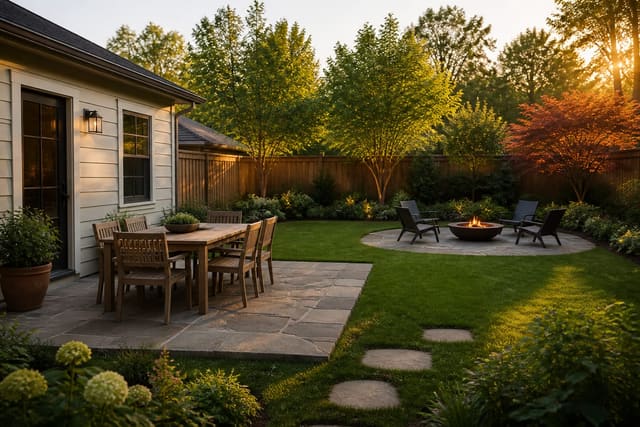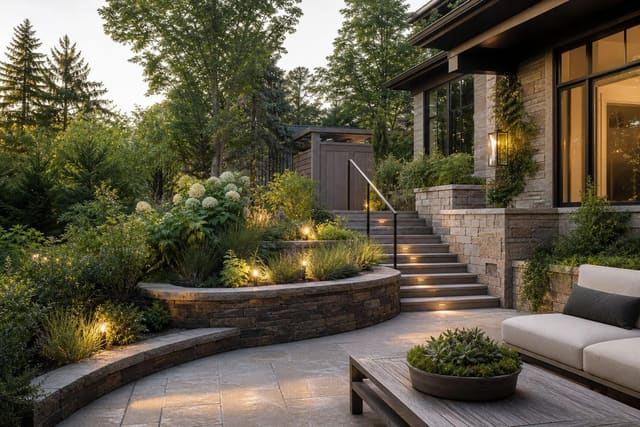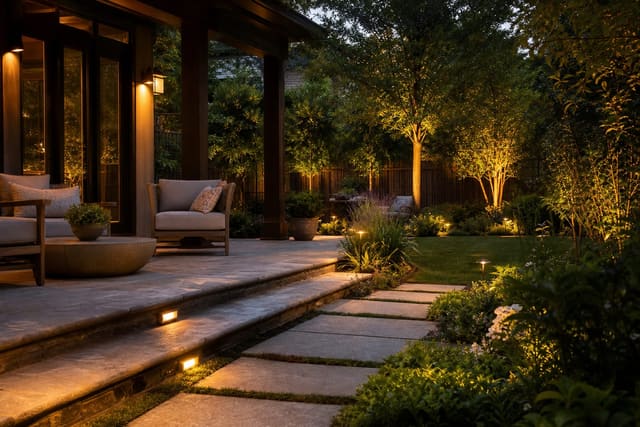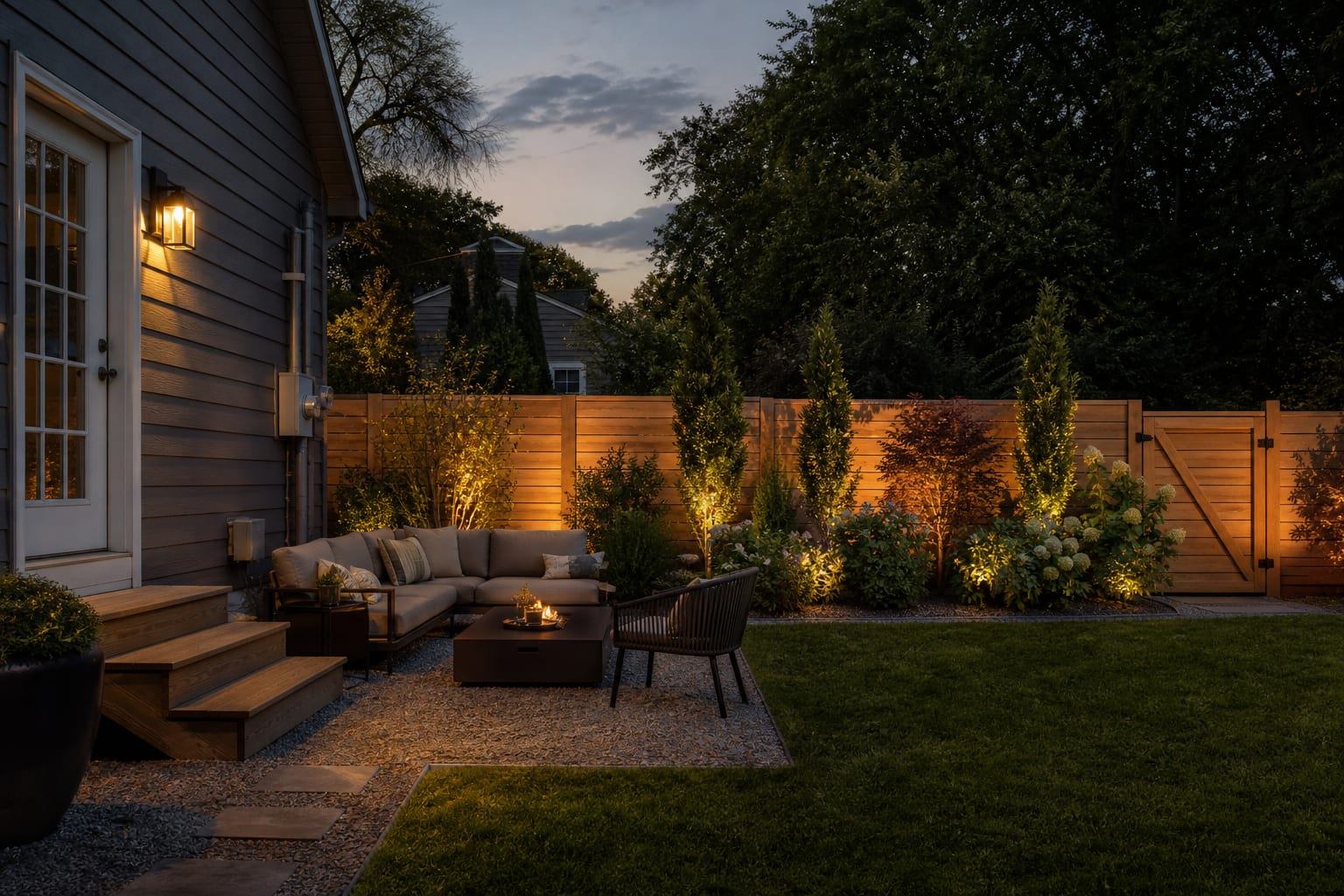
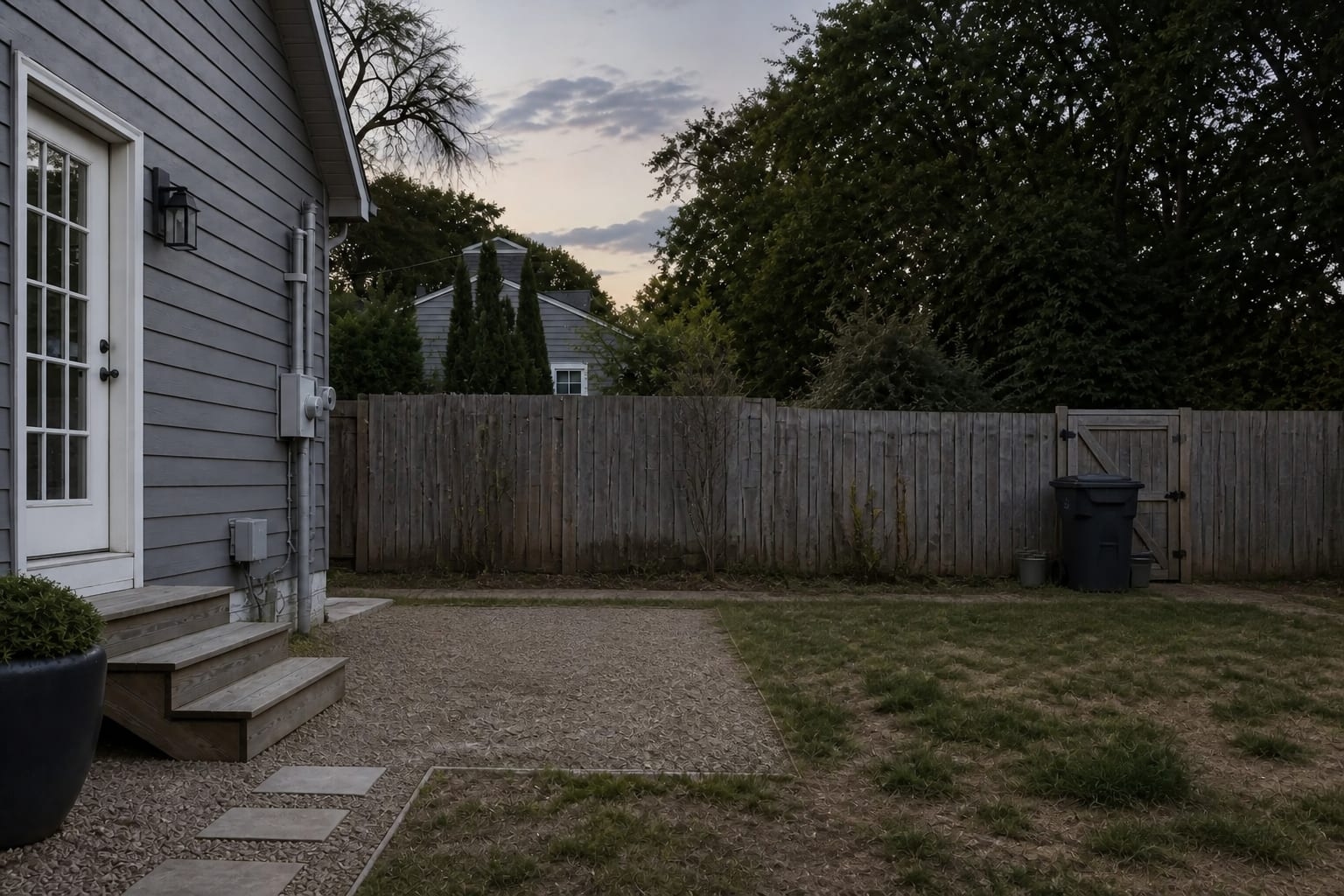
The best backyard fence idea is the one matched to what your yard needs: cedar for warmth, vinyl for low upkeep, metal for open views, composite for a cleaner long-life panel. Consistent post spacing (6-8ft on center), capped posts, materials that echo the house, and graduated height (taller at the boundary, lower near the patio) make a fence look designed rather than installed.
What makes a backyard fence feel designed instead of installed?
A fence feels designed when height, rhythm, material, gate placement, and planting all support how the yard is used. Treating it as a property-line product rather than one of the largest visible surfaces in the landscape is the core mistake.
- Protect a 30-36 inch walking route through the yard before choosing furniture, planting, or fence style.
- Repeat one visual cue three times — a metal finish, planter shape, paving joint, or trim color — to tie the fence to the rest of the yard.
- Solve the core layout problem with the fence itself before adding decorative accessories.
Start with sightlines, not height. If a neighbor's second-story window is the issue, a taller fence may not help; a small tree, pergola edge, or layered evergreen screen blocks the angle instead. A solid 6-foot fence makes sense against a street or alley, while open metal or spaced horizontal boards preserve depth when the yard backs onto trees.
Posts should look deliberate: 4x4 is standard for wood, but taller runs, heavy gates, and windy lots need stronger posts or tighter spacing. Most panel systems use 6-8 foot post spacing — don't stretch it to save a post, since a fence is a long horizontal line and crooked caps are painfully visible.
Color matters because fences dominate the background. Warm cedar, stained brown, charcoal, soft black, and weathered gray usually read better outdoors than bright white. Coordinate the fence with outdoor lighting for pathways and patios so panels don't go flat and dark at night.
Which fence material actually fits your yard?
Wood gives the most control over proportion and detail; vinyl gives predictable upkeep; metal keeps views open; composite splits the difference with a cleaner finish and less maintenance.
| Fence material | Best use | Watch point |
|---|---|---|
| Wood | Warm privacy fences, custom gates, older homes, layered gardens | Needs sealing or staining; boards near soil fail faster |
| Vinyl | Low-maintenance yards, bright trim, pools, rentals | Can look shiny/thin in sun; blank panels feel flat without planting |
| Metal or aluminum | Pools, view lots, modern yards, airflow-dependent boundaries | Adds security more than privacy unless paired with hedging |
| Composite | Cleaner privacy panels, modern homes, no-stain preference | Higher upfront cost; dark colors feel heavy in small yards |
Wood remains the most flexible choice because you can tune board width, gap, stain, cap, and gate. Vertical board-on-board hides seams and feels solid; horizontal boards can visually widen a narrow yard, but keep gaps under an inch if privacy matters.
Vinyl suits homes with bright trim or a pool landscape wanting a clean edge — look for thick posts and a color that doesn't glare against pale paving. Metal fencing defines a pool edge without trapping the view; compare it against backyard pool ideas before picking a panel that blocks the best sightline from the house.
Test this on your own photo with ReDesign — keep the house edge, horizon line, hardscape, planting beds, and main path visible so the preview solves your actual space.
Six backyard fence ideas that earn their cost
- Board-on-board cedar for privacy. Overlapping vertical boards close sightline gaps; a 6-foot height with a cap rail feels private without turning the yard into a corridor.
- Horizontal boards for a narrow yard. Keep boards level with a consistent 1/2 to 1-inch shadow gap, and avoid mixing widths so the run doesn't look restless.
- Open metal plus a hedge where the view matters. Aluminum pickets define a pool or boundary while shrubs planted 24-36 inches inside soften it without blocking every glimpse beyond.
- A gate that's the best detail, not the weakest panel. Build at least 36 inches wide (wider for equipment or bins) with hardware that matches the fence's visual weight.
- Planting pockets to break up long runs. A straight 70-foot fence feels like a stockade; interrupt it every 12-20 feet with bed projections, grasses, or one small tree.
- A short fence return to hide utilities. A 4-6 foot return near bins, pool equipment, or an A/C unit cleans up the patio view without enclosing the whole yard.
Common backyard fence mistakes to avoid
- Maxing out height everywhere. Full-height privacy on every edge can box in a small yard; reserve solid panels for the actual bad view and use planting or lower fencing elsewhere.
- Ignoring grade changes. A fence that stair-steps looks choppy; one that follows grade too closely leaves gaps underneath. Decide whether the run should step or rack before ordering.
- Placing wood directly in wet beds. Soil against boards shortens their life. Keep mulch below the lowest board and add a gravel setback where drainage is poor.
- Forgetting the night view. A tall dark fence disappears after sunset. Use low-glare 2700K fixtures or post downlights so the fence stays a quiet backdrop.
- Treating side yards as leftovers. A side fence seen from the driveway or a mudroom door still matters — a simple 4-foot gate, gravel path, and one repeated plant can look more finished than a tall blank panel.
Use AI to preview your backyard fence before posts go in
A fence panel isn't the project — the whole backyard edge is. Upload a current photo to Re-Design and test the big calls before paying for demolition, posts, panels, or custom gates.
Run one version with maximum privacy, one with a warmer wood or composite panel, and one with more planting and less solid fencing. If a version feels narrow, drop the height in one area or swap solid panel for open metal plus shrubs.
This matters most when the yard serves multiple purposes — pool, dining, play, pets, storage rarely need the same boundary treatment. Borrow the spacing logic from bocce ball court ideas when the fence will frame a long recreational zone, and let the preview guide you to the calmer option rather than the loudest one.
Frequently Asked Questions
What is the best fence material for a backyard?
Western red cedar is the best wood option, naturally rot and insect resistant with a 15-20 year life when maintained. Composite or PVC fence lasts 25+ years without painting but costs 2-3x more upfront.
How high should a backyard privacy fence be?
Six feet is the standard residential privacy height in most US zoning codes. Check local ordinances first — some municipalities cap rear-yard fences at 6ft and side-yard fences at 4ft.
How far from the property line should a fence be?
Check your survey before placing posts. Most jurisdictions require the fence to sit entirely on your property, so posts should go 2-4 inches inside the surveyed line.
What fence style gives the most privacy?
Board-on-board or shadowbox construction with no gaps between boards gives full privacy while still allowing airflow. Solid-close-board panels are cheaper but flex in wind and block air movement entirely.
Can I paint or stain a cedar fence?
Yes. Let new cedar weather 6 months before applying a semi-transparent penetrating stain, which lasts 4-6 years and shows the grain; solid paint lasts 3-5 years but needs full stripping before reapplication.
> Try this: Ready to see this on your own outdoor space? Open ReDesign and run the preview before you buy materials, plant, drill, or move furniture.
Three transformations to try
1. Board-on-board cedar fence with cap rail 2. Modern horizontal slat fence 3. Black steel panel fence with planted border