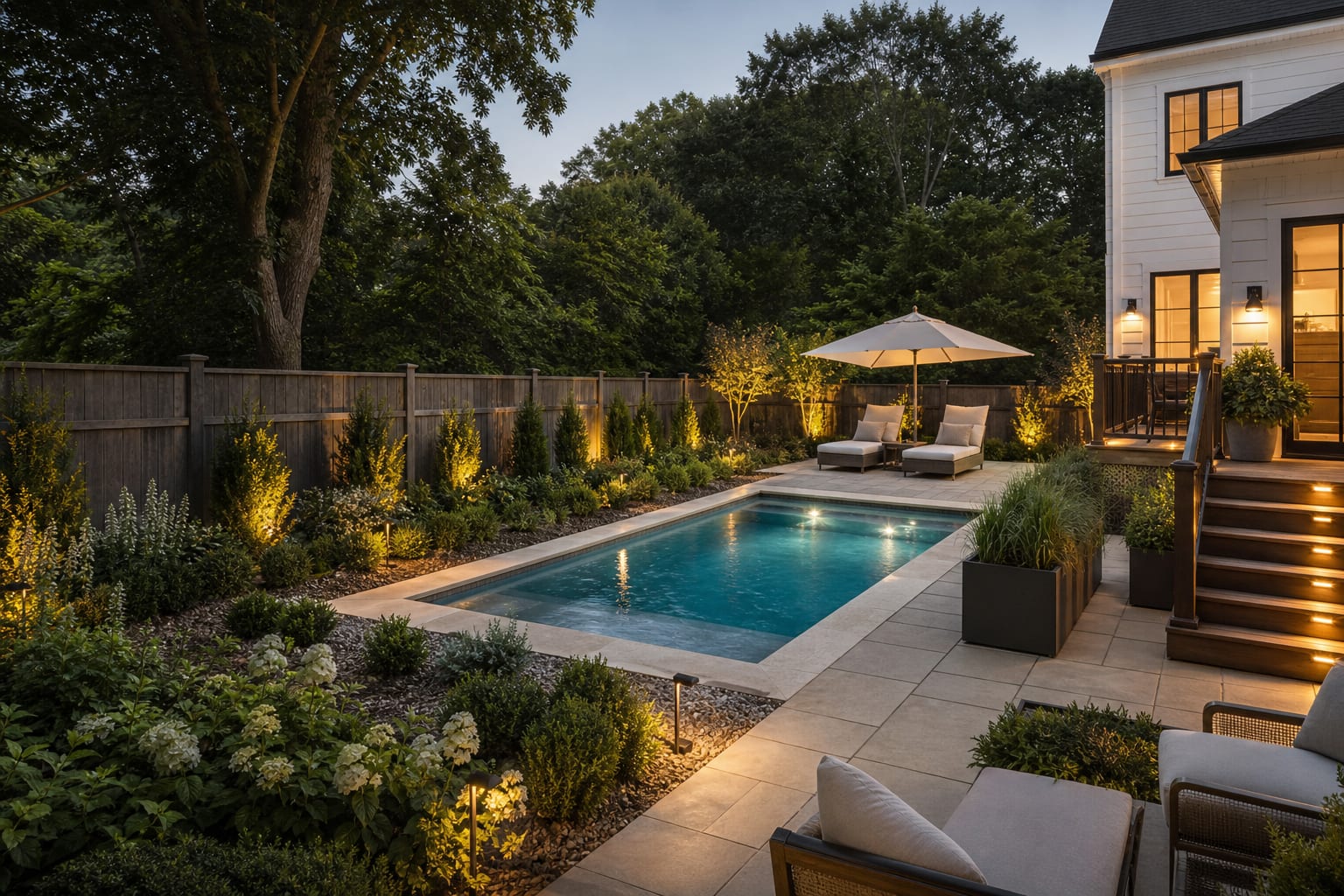
The best backyard pool is the smallest one that supports how you actually swim, relax, and entertain while still leaving a comfortable dry zone. For most yards that means a compact inground pool, a plunge pool, or a natural swimming pool planned as part of the landscape rather than dropped into the middle of it — not a long lap pool or a big freeform basin that eats every sunny corner.
What type of pool actually belongs in your backyard?
Start with use, not shape. A narrow 8-10 foot by 35-45 foot lap lane beats a big decorative pool for exercise. A 7-10 foot by 10-16 foot plunge pool near the patio delivers more pleasure per square foot for soaking and supervision. A natural swimming pool needs its planted regeneration zone or biofiltration system planned in from the start, not added later.
Keep a clear route around the water: 36 inches works on a tight side, 48 inches feels safer near loungers, towel hooks, and gates. Where chairs recline, plan about 7 feet from water edge to the back of the chaise, plus a side table off the coping. Coordinate the pool with your broader backyard landscaping plan so water, planting, and seating read as one design.
Which backyard pool ideas are worth stealing?
The strongest ideas solve a real constraint — a narrow lot, a hot fence line, a tight budget, or a family that needs both supervision and grown-up seating. Copy the principle, not the photo.
- Run a narrow rectangle along one side of the yard. A 9 by 22 foot pool leaves one generous dry side instead of four thin strips; keep the long edge parallel to the fence.
- Use a plunge pool as a patio feature. A 7 by 12 foot pool with bench seating and a 24-inch drink table suits a small yard better than a full-size pool crammed against the fence.
- Build a shaded lounging bay before adding more water. Plan a rectangle for two chaises, a 9-11 foot umbrella, and a side table; borrow layout logic from outdoor entertaining area ideas to keep wet traffic out of the dry zone.
- Frame the pool with repeated planting. Three or five matching grasses or large 20-inch-plus planters read as designed without shedding into the skimmer.
- Let a hot tub be a secondary moment, not a competitor. Align one edge, repeat the coping, and match the planting; see hot tub landscaping ideas for tight yards.
- Light for safety first. Low, shielded 2700K-3000K fixtures should mark steps and edges; save the brightest light for the gate or grill, not the water.
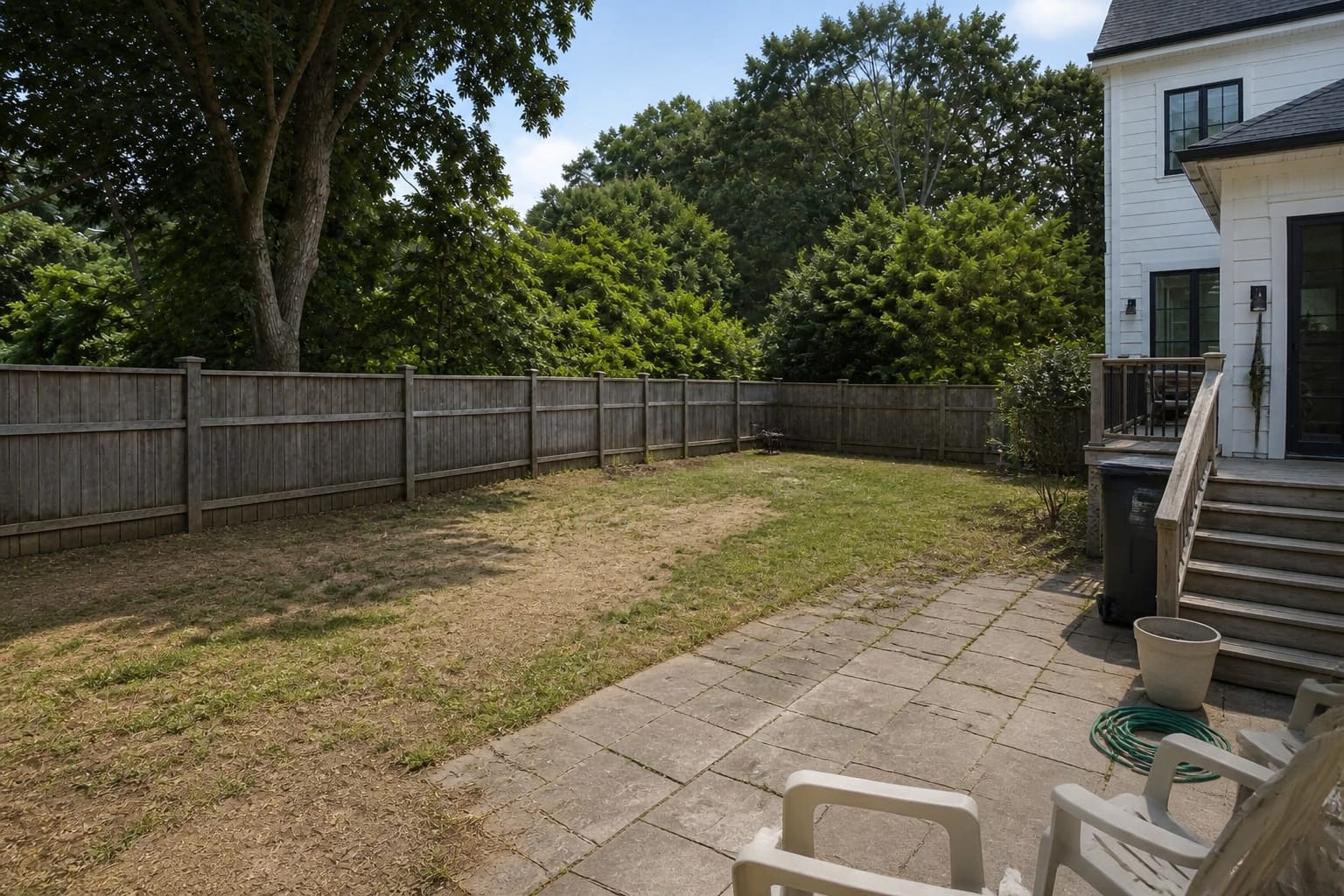
Test this on your own photo with ReDesign — keep the house edge, horizon line, hardscape, and main path visible so the preview solves the space you actually have.
Inground, plunge, or natural pool: which fits your yard?
| Pool type | Best fit | Watch closely |
|---|---|---|
| Inground pool | Families, swimmers, yards with room for deck circulation | Excavation access, fencing, drainage, coping heat, furniture clearances |
| Plunge pool | Small yards, cooling off, design-forward patios | Depth, step comfort, pump noise, whether a dry lounge zone survives |
| Natural swimming pool | Garden-led yards wanting softer water and planted edges | Filtration design, climate fit, plant maintenance, extra space beyond the swim zone |
For an inground pool, decide if it's the main event or a calm water plane within the landscape — a clean rectangle rarely looks boring, while a freeform edge with six plant types and scattered chairs can shrink a small yard. Place a plunge pool close enough to the house for ordinary evening use; one hidden at the back fence looks quiet in a rendering but goes unused. A natural swimming pool should match the house architecture: restrained planting for modern homes, looser edges for cottage or rustic ones.
What backyard pool mistakes should you avoid?
- Maxing out pool size and hoping the yard adapts. Reduce the basin before sacrificing the 48-inch route behind loungers or the shaded sitting corner.
- Ignoring sun and glare. Dark coping in full afternoon sun becomes a bright, hot surface — use pale textured materials, a pergola, or a shade sail.
- Planting too close with the wrong species. Keep flowering, thorny, or seed-dropping trees away from the waterline and skimmer.
- Forgetting the view from inside the house. Screen pool equipment, align furniture, and repeat one planting move near the closest edge.
- Treating safety features as visual punishment. Match gates, rails, and covers to the fence color and coping tone; a simple black gate disappears better than a chunky white barrier.
How can AI design help preview your pool?
Upload a straight photo from the angle you use most and ask for three versions: a compact rectangular inground pool with pale coping, a plunge pool with bench seating and umbrella shade, and a natural swimming pool with a planted filtration edge. Keep the same camera angle each time so you compare decisions, not viewpoints.
Be specific: request 36-48 inches of visible circulation, low-litter planting, warm 2700K poolside lighting, textured light paving, and a shaded seating zone. If the preview feels crowded, shrink the water before the patio. If it looks lonely, add shade, a repeated plant, or a dry seating pocket close enough to feel connected.
Frequently Asked Questions
What size pool is right for a backyard?
A 12ft x 24ft pool suits up to a 50ft x 100ft lot. A 16ft x 32ft pool is the practical family recreational minimum. A plunge pool (10ft x 14ft or smaller) suits small lots and hot climates where lap swimming isn't the priority.
What pool shape reads most modern?
Rectangular pools read as the most contemporary and hold the highest resale value. A geometric L-shape works well for combining a lap zone with a shallow wading area. Freeform kidney shapes read as dated in most current design contexts.
What pool coping material is best?
Bullnose-edge bluestone or limestone coping is the most durable and slip-resistant option. Travertine is popular in warm climates because it stays cool underfoot. Poured concrete coping is cheapest but needs resealing every 2-3 years.
How far should a pool be from the house?
Most codes require a minimum 5ft setback from the house and 5-10ft from the property line. Pool equipment like the pump, filter, and heater should sit 5+ feet from the pool edge and be screened from the main seating zone.
Do I need a fence around a backyard pool?
Yes. A 4ft minimum fence with a self-closing, self-latching gate on all four sides is required by code in all 50 US states for residential pools. Confirm your local code for exact height and barrier requirements before breaking ground.
> Try this: Ready to see this on your own outdoor space? Open ReDesign and run the preview before you buy materials, plant, drill, or move furniture.
Three transformations to try
1. Rectangular pool with bluestone coping and pergola 2. Plunge pool with adjacent patio and shade sail 3. Pool with water feature wall and night lighting