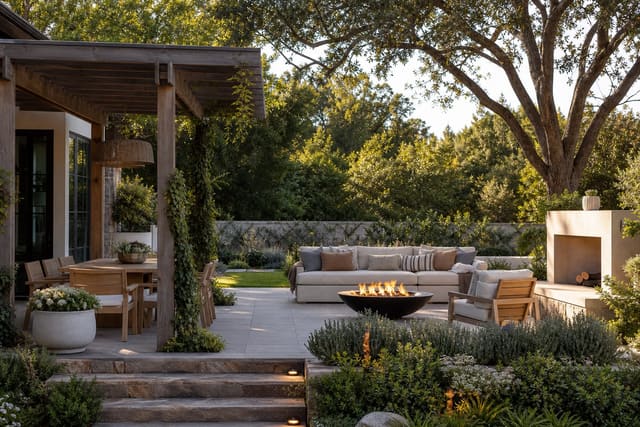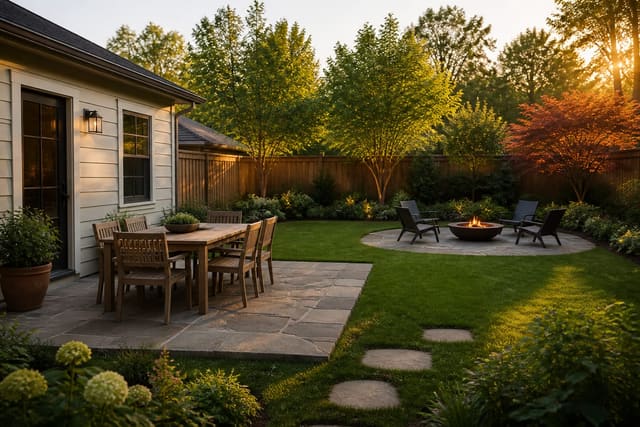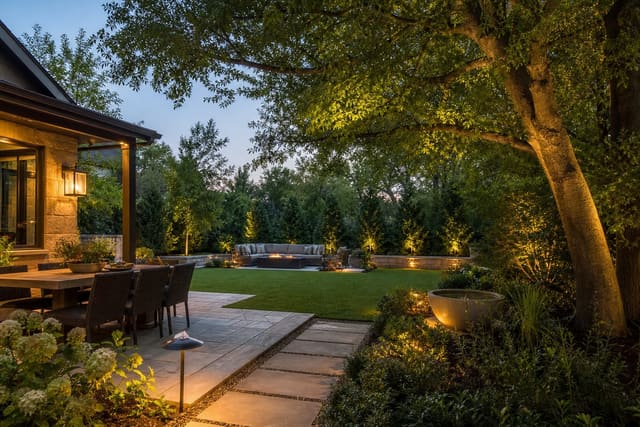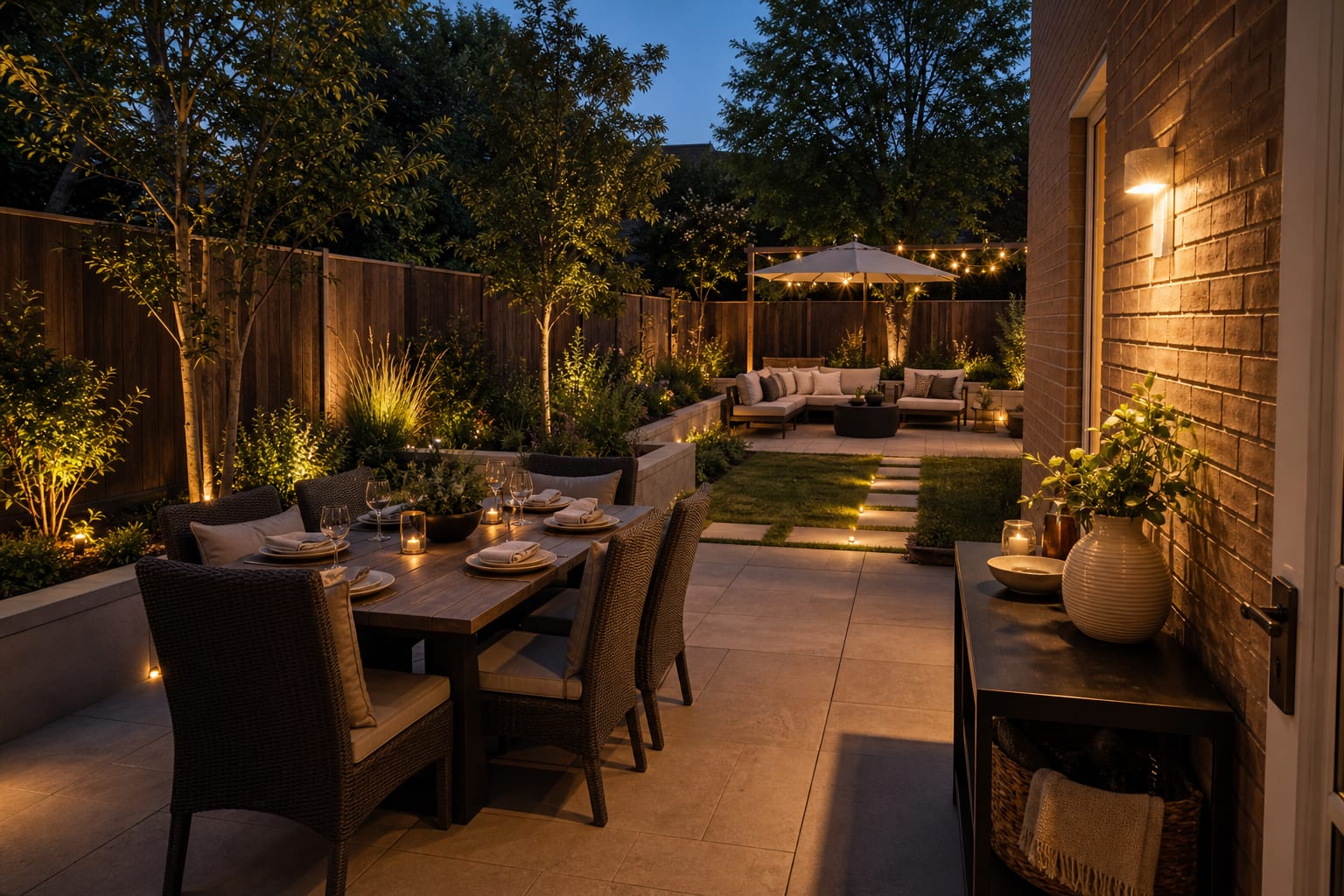
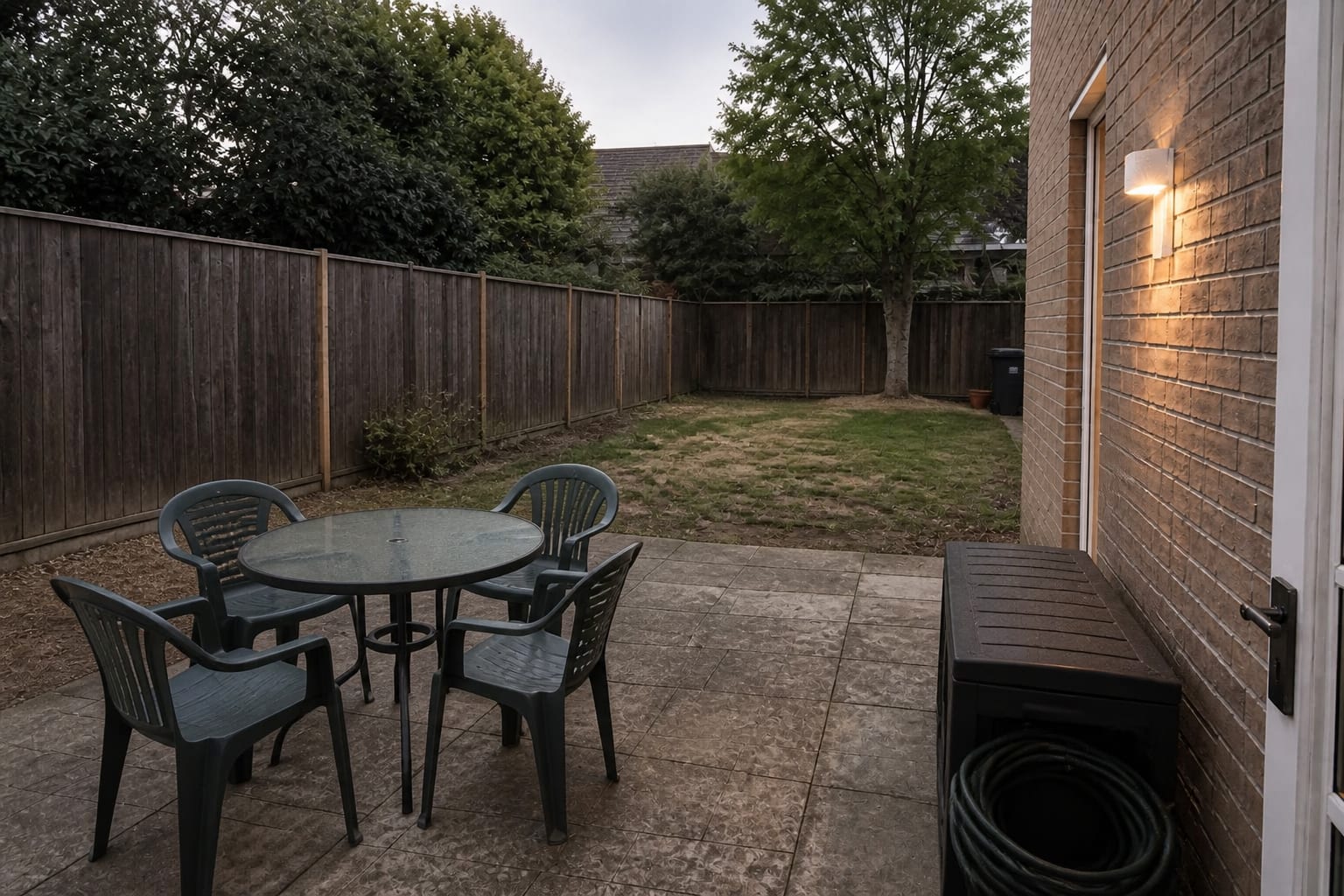
A good outdoor entertaining area separates a dining zone from a lounge zone, gives each a clear job, adds overhead shade to at least one, and lights the path between them. One big table on a bare patio isn't a hosting setup — it's furniture waiting for a plan. Define arrival, seating, food, shade, and after-dark movement before buying anything.
What makes a backyard feel ready for guests?
A backyard feels host-ready when it has a legible arrival point, a comfortable place to settle, a nearby surface for food and drinks, sun protection, and enough light to carry the evening past dusk. The best outdoor entertaining area ideas start with flow, not decor. Guests shouldn't have to ask where to sit, where to put a plate, or whether they're standing in the cooking zone.
Sketch the yard as three bands: house edge, hosting zone, and landscape edge. The house edge handles kitchen traffic and should stay open for the first 36 inches outside the door. The hosting zone is where people sit or eat — most yards need either a dining-first or lounge-first plan, not both crammed into one 12ft × 12ft slab. The landscape edge gives the setup a back: a hedge, tall planters, a fence, or a low wall so chairs don't feel stranded in the middle of the lawn.
Scale separates a designed space from a yard full of objects. Leave 30–36 inches behind a dining chair for pullback, 14–18 inches between a coffee table and lounge seating, and full manufacturer clearance around the grill. If the yard has awkward slopes or patchy edges, fix those first with backyard landscaping ideas that shape outdoor rooms before adding accent pillows.
Which hosting layout fits the way people gather in your yard?
The right layout depends on whether guests mostly eat, talk, watch kids, sit by a fire, or drift between kitchen and yard. A dining-first yard puts the table closest to the house or outdoor kitchen so serving isn't a relay race. A lounge-first yard can sit deeper in the yard if the path is clear and lighting leads people there.
| Hosting layout | Works best when | Copy the spec |
|---|---|---|
| Dining near the house | Meals are the main event and the kitchen is indoors | Allow a 10ft × 12ft zone for a table for six with chair movement |
| Lounge by the garden edge | Guests linger after dinner and the yard has a fence or view | Use an 8ft × 10ft rug or paver field for a sofa and two chairs |
| Grill plus serving bar | Cooking is social and the cook shouldn't face a blank wall | Keep a 24–30in deep prep counter beside the grill where allowed |
| Fire pit circle | Evenings run cool and conversation is the focus | Leave 30in between chair fronts and the fire, or follow product clearance |
Pets change the plan too: low tables, unstable lanterns, toxic plants, and pale cushions get fussy fast with a dog on the patio. Durable ground cover, shaded water access, and furniture that keeps tails away from the snack table matter more; see dog-friendly backyard design ideas for specifics.
Test this on your own photo with ReDesign — keep the house edge, horizon, hardscape, planting beds, and main path visible so the preview solves the space you actually have.
Seven outdoor entertaining area ideas worth copying
- Build a serving station first. A 48–72in console or outdoor-rated cabinet near the back door holds drinks, napkins, and platters so the dining table doesn't become the supply counter.
- Use one large table, not several small ones. For six adults, look for a 72in rectangle or a 54–60in round table, with room for chairs to pull back freely.
- Shade the seat people use most. A 9ft umbrella covers a small dining table; a cantilever umbrella or pergola handles a lounge hit by low sun.
- Add a landing zone for gear. A 36–48in storage bench near the door catches sunscreen, blankets, and leashes before they land on the furniture.
- Use planters as traffic directors. Two 36in rectangular planters can frame an entrance or screen trash bins — rosemary, dwarf evergreens, or grasses all work.
- Keep the drink station visible but off the main path. A rolling cart within 8–12ft of seating lets people refill without interrupting the group.
- Give the yard an after-dark destination. String lights over dining, a low lantern by the lounge, or step lights along the path signal where the evening continues; keep the color warm.
Common backyard hosting mistakes that push guests inside
- Letting the grill dominate the social spot. Smoke and tongs in the middle of conversation push guests away; keep the grill near the kitchen with its own counter and a route around the lounge.
- Seating without surfaces. Four lounge chairs with nowhere to set a glass feel unfinished; add a coffee table 14–18in away or side tables between chairs.
- Relying on one porch light. A single wall lantern lights the door and leaves the table dark; layer lighting near the door, the table, and any grade changes.
- Overdecorating instead of fixing comfort. String lights and signs can't fix an upright chair or a patio that bakes at 4 p.m. — spend first on shade and cushion depth.
- Ignoring maintenance. Cushions need storage or fast-dry fabric, rugs need drainage, and planters need a watering plan, or the setup becomes too precious for casual use.
How do I use AI design to preview a backyard entertaining area?
Upload a straight, well-lit photo of the backyard and test dining placement, lounge scale, shade, lighting, planters, and serving zones before buying bulky pieces. Keep prompts concrete: a six-seat table near the house, a shaded lounge at the fence line, two 36in planters, warm string lighting, and a narrow serving console — not a vague "party yard."
Shoot from the door guests actually use, then from the far corner looking back at the house. The door view checks the kitchen connection; the corner view reveals whether furniture blocks movement across the lawn. Scale lies in product photos outdoors — a sectional can swallow a patio and a pergola can fight the roofline once placed on the real yard.
Test a light version first (lighting, planters, a serving table), then a middle version (new seating and shade), then a built-in version (pergola, paver extension, outdoor kitchen, or low wall) to see where the real hosting value comes from.
Frequently Asked Questions
How big should an outdoor entertaining area be?
A combined dining-plus-lounge space needs 500–700 sq ft total for 8–10 people; the dining zone alone needs 12ft × 14ft for a 6-seat table with 36in chair pullback on all sides.
How do I zone an outdoor entertaining area?
Use material change (pavers for dining, stone for lounge), a level change (a slightly raised dining platform), or planted separation (a low hedge or grass row) instead of walls that block sightlines.
What lighting do I need for an outdoor entertaining area?
Use task lighting over the dining table (pendant or downlight at 6.5–7ft), ambient string lights or sconces for the lounge, and 2700K path lights to mark circulation between zones.
Does an outdoor entertaining area need a pergola?
Not required, but a pergola or shade sail over the dining zone extends comfortable summer use by 4–6 hours a day by cutting overhead sun without blocking airflow.
What outdoor furniture material lasts longest for entertaining?
Powder-coated aluminum with Sunbrella or Olefin cushions lasts 10–15 years with little upkeep; teak weathers to silver maintenance-free and lasts 25+ years; synthetic HDPE wicker looks great but fades faster in full sun.
> Try this: Ready to see this on your own outdoor space? Open ReDesign and run the preview before you buy materials, plant, drill, or move furniture.
Three transformations to try
1. Dining zone with pergola and lounge area beyond 2. Fire pit lounge ring beside paver dining patio 3. Outdoor kitchen bar with adjacent seating zone