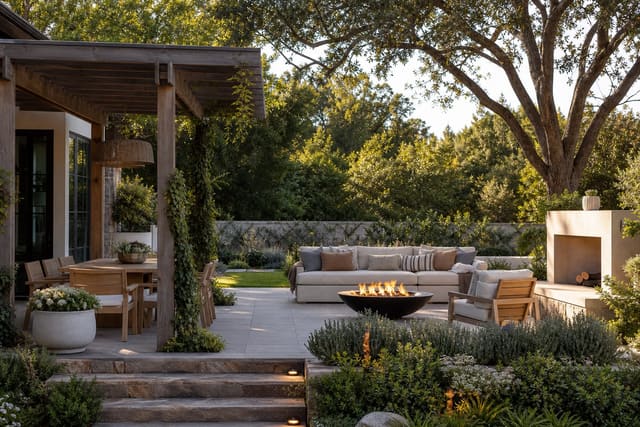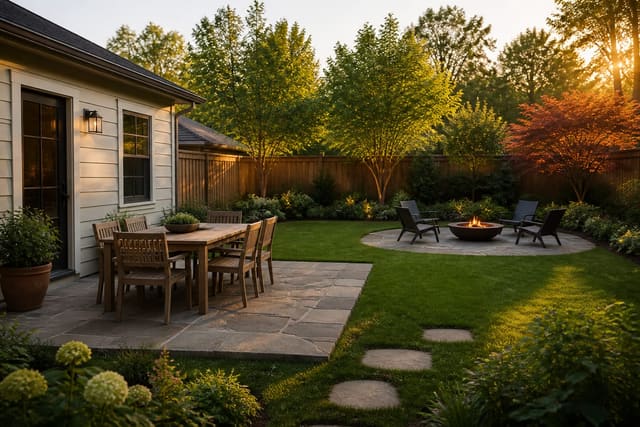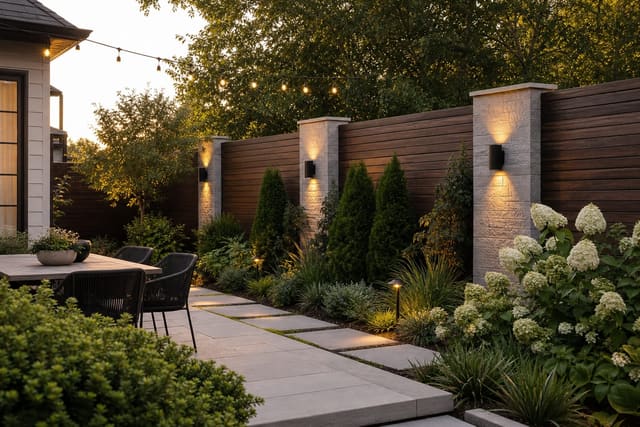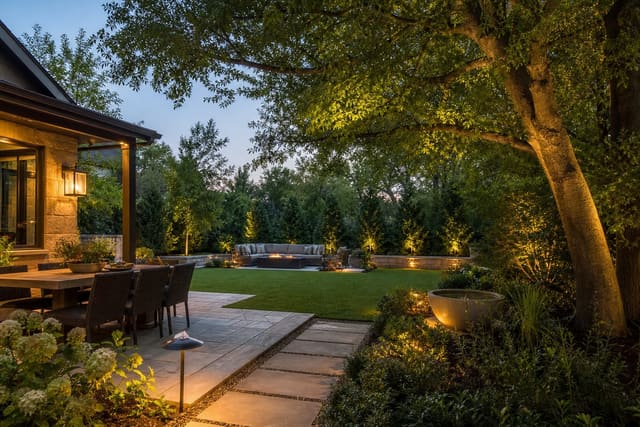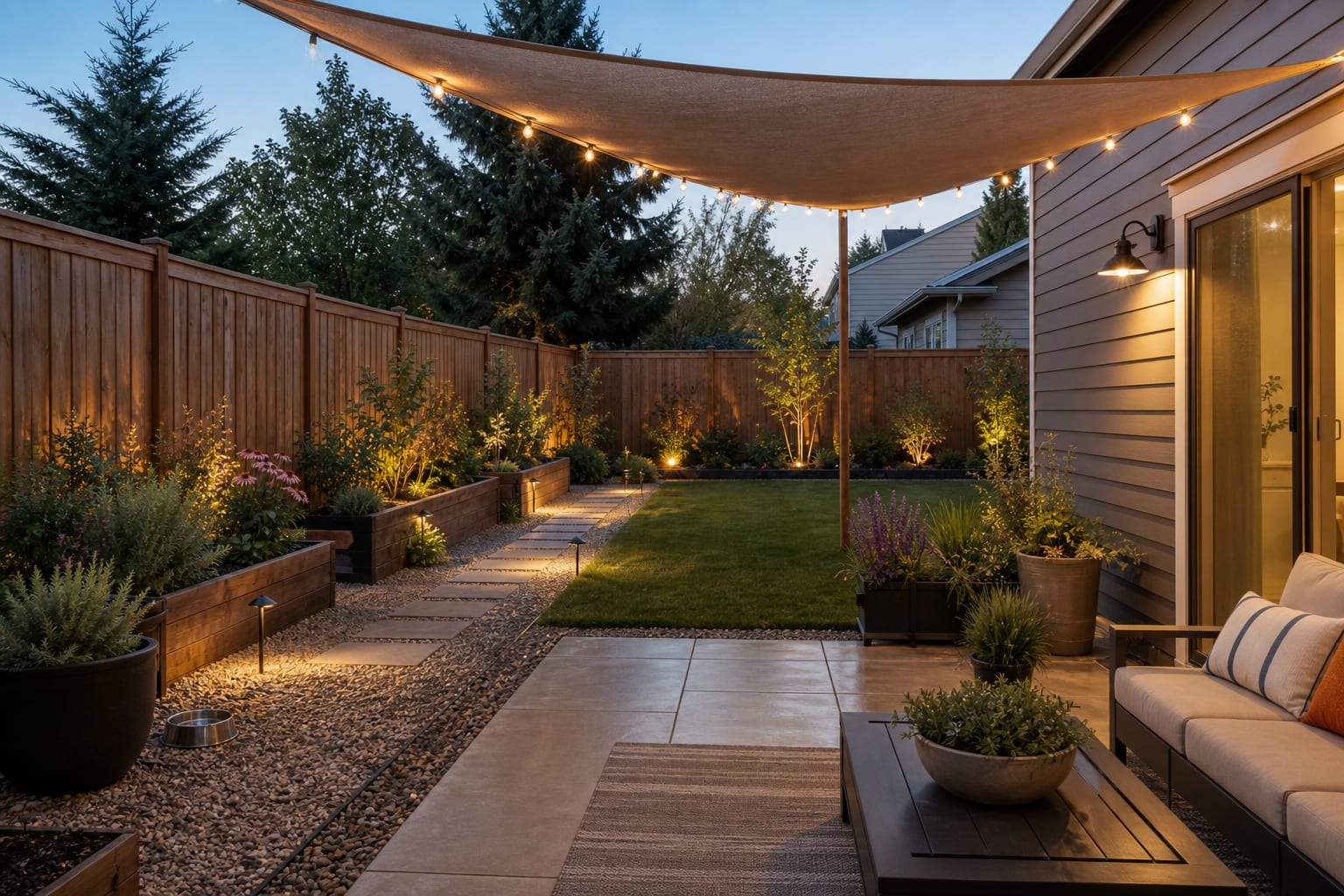
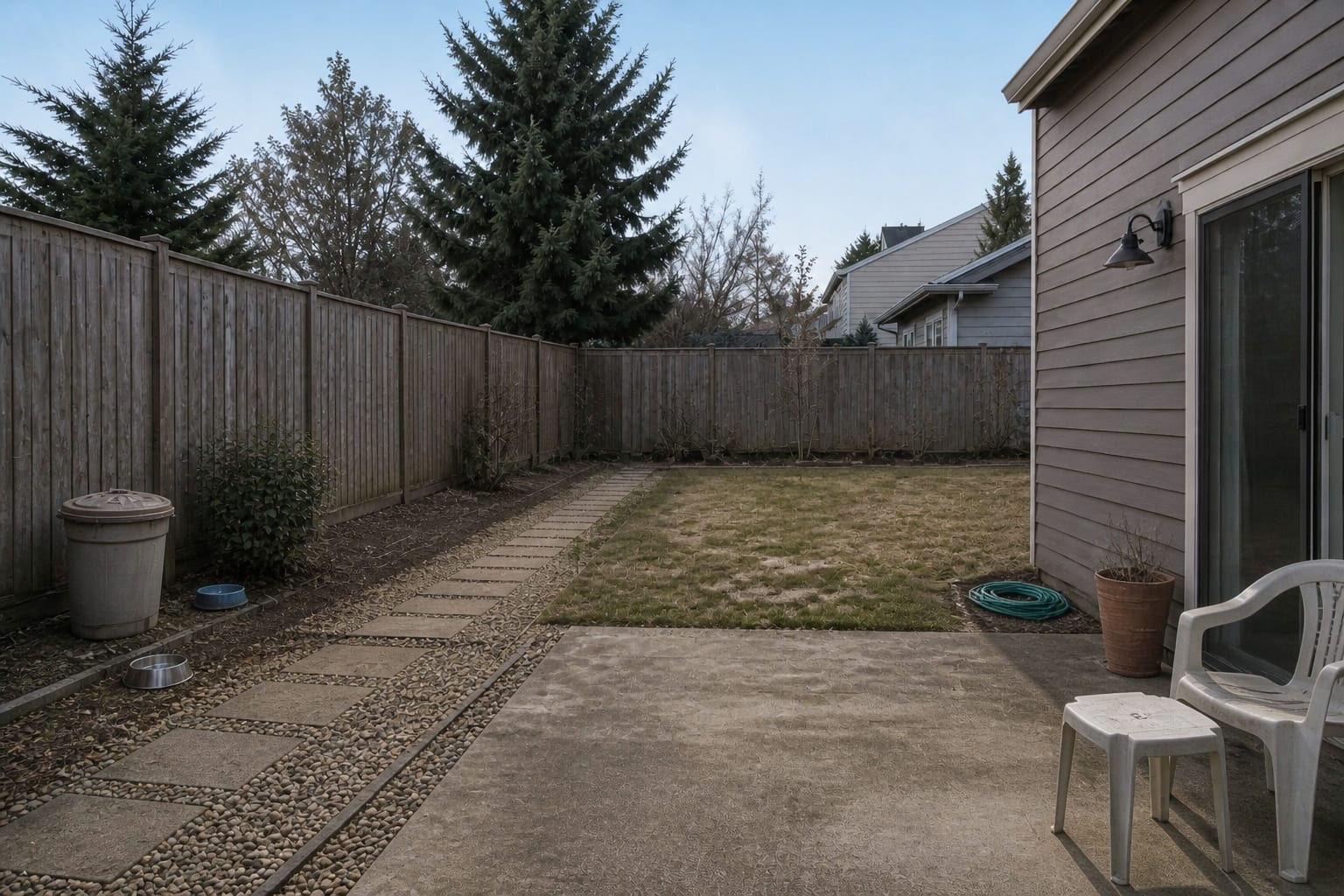
A dog-friendly backyard needs a 4ft+ fence with no gaps or footholds below 18 in, one shaded rest area, a defined dig zone or cool-down water feature, and paw-safe surfaces (no cocoa mulch, hot metal grates, or sharp river rock on run paths). Design for the dog's route, bathroom zone, and rest spots first, then layer in planting and people space.
What makes a backyard feel dog friendly instead of dog proofed?
A yard feels dog friendly when the daily loop, bathroom routine, digging impulse, and rest spots are designed in rather than punished after the fact. The goal is to make the best behavior the easiest one, not to wrap every plant in wire.
Watch the yard for three days before changing anything. Notice where your dog exits the door, where paws cut across the lawn, where it lies at 3 p.m., and which bed gets inspected after rain — those marks are your design brief. If the dog already runs the fence, pave or gravel that strip instead of reseeding it every spring.
Keep at least 36 in of clear passage from the back door to the main seating area so leashes and muddy towels don't block the patio. If the yard still lacks a larger structure, use backyard landscaping ideas that organize outdoor zones before buying gates or planters in isolation.
Which dog friendly backyard ideas solve the daily mess?
- Dedicated potty zone: a 6x10 ft area on a washable edge (larger for big breeds) using pea gravel, artificial turf with drainage, or refreshable mulch.
- Fence-line run: 3-4 ft wide, edged with steel, stone, or buried pavers, avoiding sharp gravel that irritates paws.
- Raised beds: 18-24 in tall for casual protection, or a 30-36 in barrier if the dog jumps in like a hobby.
- Rinse station near the main door: a wall-mounted hose, outdoor mat, and hooks for two towels fit in under 3 ft of wall.
- Sanctioned dig box: a 4x4 ft sand box with buried toys redirects the instinct instead of fighting it.
- Tougher perimeter planting: ornamental grasses, sturdy shrubs, and dense groundcovers hold up near traffic better than annuals — confirm plant safety before planting anywhere chewing is likely.
Test this on your own photo with ReDesign — keep the house edge, horizon line, hardscape, and main path visible so the preview solves your actual space.
How do you balance dog runs, planting, and people space?
Give each user a lane: dogs get a run and rest point, plants get protected soil, people get a patio that doesn't feel like a service yard. Use a three-ring plan — practical near the house, social in the middle, and the dog's highest-energy movement at the far or side edge.
A dog run doesn't need to be a fenced rectangle in the ugliest side yard. A narrow side passage works with a 42 in gate, 3 ft wide surface, and latch lighting. If the main yard is the only option, a low hedge, 36 in picket panel, or planter row separates the run from dining without blocking the view.
| Backyard decision | Better for dogs | Better for people |
|---|---|---|
| Main surface | Gravel, mulch, or turf in high-traffic lanes | Lawn or pavers where chairs and bare feet matter |
| Planting edge | Raised beds and sturdy shrubs away from patrol routes | Layered borders near patios and windows |
| Shade location | Over the dog's afternoon rest spot | Over dining, lounge chairs, or grill prep |
| Gate placement | Direct route to potty zone or run | Clear path from kitchen to seating |
Keep dining chairs out of the sprint path — a table needs roughly 36 in behind chairs, and a dog rushing between a grill and gate turns that clearance into a collision zone. If the patio hosts meals too, borrow spacing from outdoor entertaining area ideas for real backyards.
Common dog backyard mistakes to avoid
- Toxic or risky plants near chewing height. Dogs explore with their mouths, so verify species before placing them beside a run, water bowl, or dig zone.
- An undefined bathroom zone. A consistent surface and short path from the door beat expecting the dog to guess which patch of lawn matters.
- Turf without drainage. Pet turf needs a proper base and permeable backing, or it will smell worse after heat and rain.
- A dog run in full sun. Add shade before decorative edging, and set the water bowl on a level, washable pad instead of mulch.
- Ignoring kids or guests. If children share the lawn, compare your plan with kids outdoor space ideas for shared yards so routes don't all compete for the same 10 feet.
Use AI design to preview your backyard before you commit
Use AI design when you need to see whether the run, patio, shade, and planting can share one frame without looking like four separate projects. Upload a photo from the back door or fence line, then test a side-yard run, raised planters, and an open-lawn version for fetch.
This isn't a substitute for fence codes, plant safety checks, or drainage work — it's a fast way to catch layout problems before ordering gravel or installing a gate in the wrong spot. Ask for durable ground surfaces, pet-safe planting, a shaded rest zone, and a washable landing by the door.
Clear toys, hoses, and loose furniture before shooting. Use daylight, include the full fence line, and stand back far enough that the door, patio, and lawn appear together in one frame.
Frequently Asked Questions
What fence height do I need for a dog?
Use a 6 ft fence for large breeds like Labs and German Shepherds, or 4 ft for medium breeds if the top has a roller or inward angle deterrent. Horizontal rail fencing works poorly for any athletic dog since the rails act as footholds.
What is the safest ground cover for dogs?
Pea gravel (not sharp angular gravel), artificial turf with a permeable base, and engineered wood fiber (EWF) are the safest options. Avoid cocoa-shell mulch, which is toxic if ingested, and rubber mulch around dogs that chew.
How do I stop my dog from digging up the garden?
Designate a 4x4 ft sandbox or soft-soil dig zone in one corner and bury a few toys there. Dogs typically redirect digging behavior to the designated zone within 1-2 weeks of consistent redirection.
What plants are toxic to dogs in a backyard?
Sago palm, oleander, azalea, foxglove, and autumn crocus are among the most dangerous common garden plants. Check the ASPCA's toxic plant list before purchasing anything new for a yard your dog uses.
How do I create shade for dogs in a backyard?
A 10x10 ft shade sail on a stainless tension system covers a comfortable rest zone without blocking the yard view. Deciduous trees provide longer-term shade but take 5-7 years to build real canopy coverage.
> Try this: Ready to see this on your own outdoor space? Open ReDesign and run the preview before you buy materials, plant, drill, or move furniture.
Three transformations to try
1. Pea gravel run with shade sail 2. Raised garden beds with dog path between 3. Cool-down water feature and dig zone