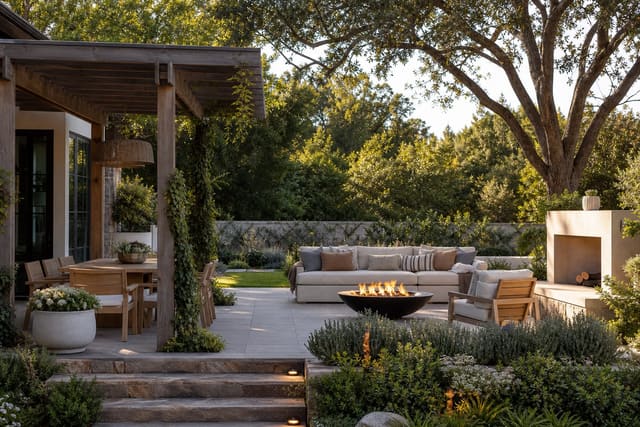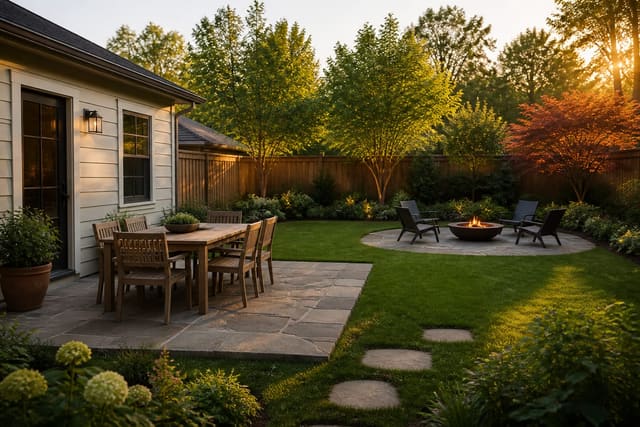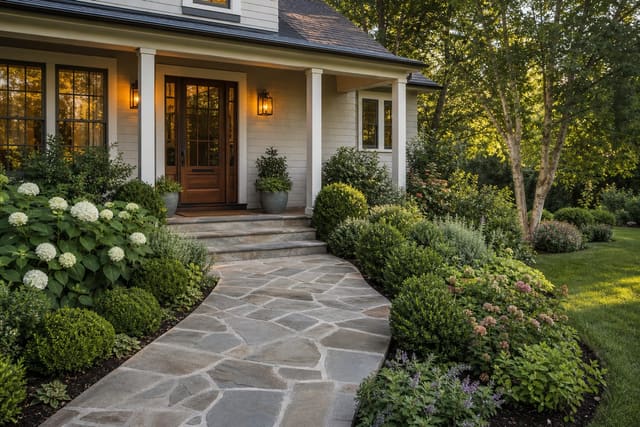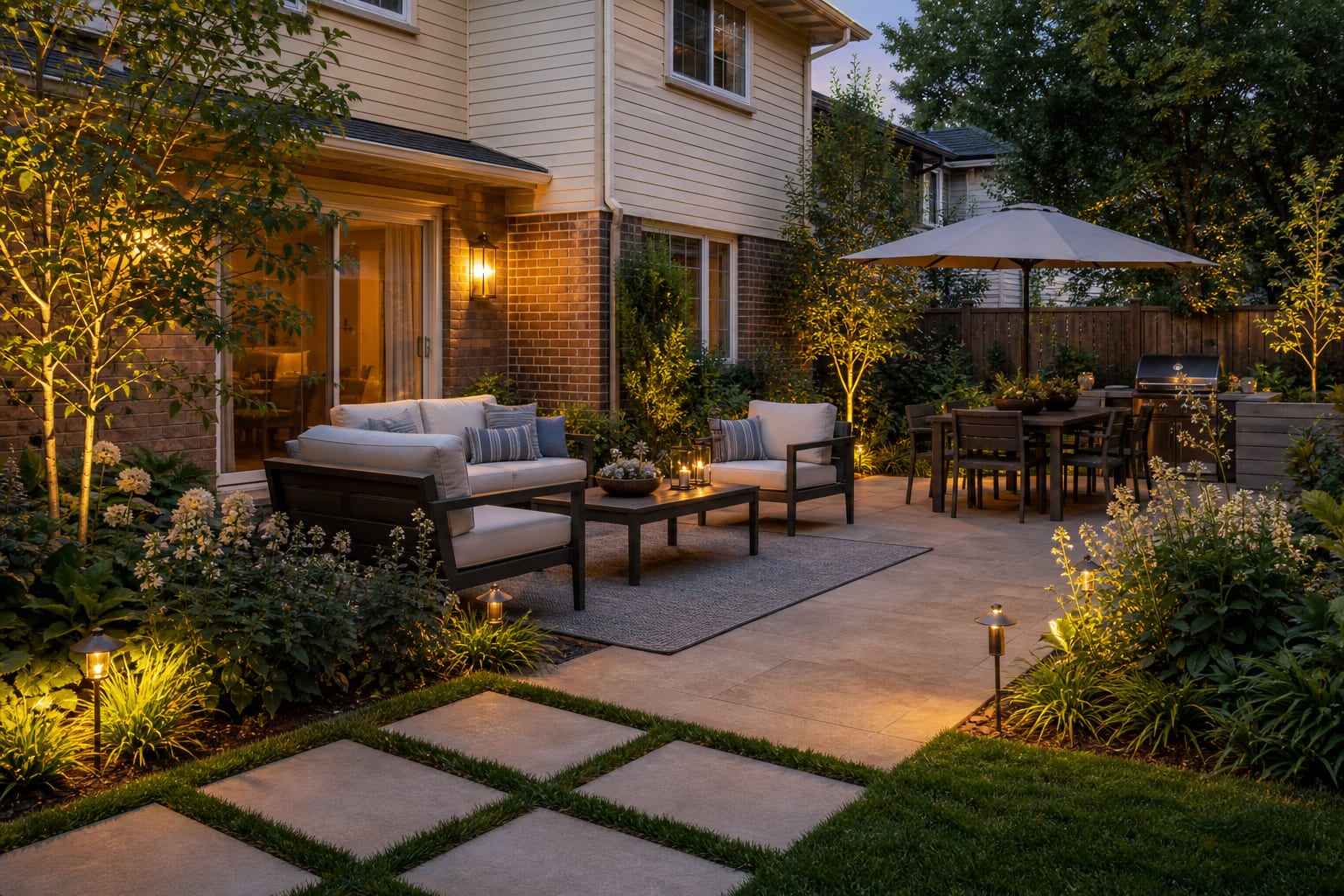
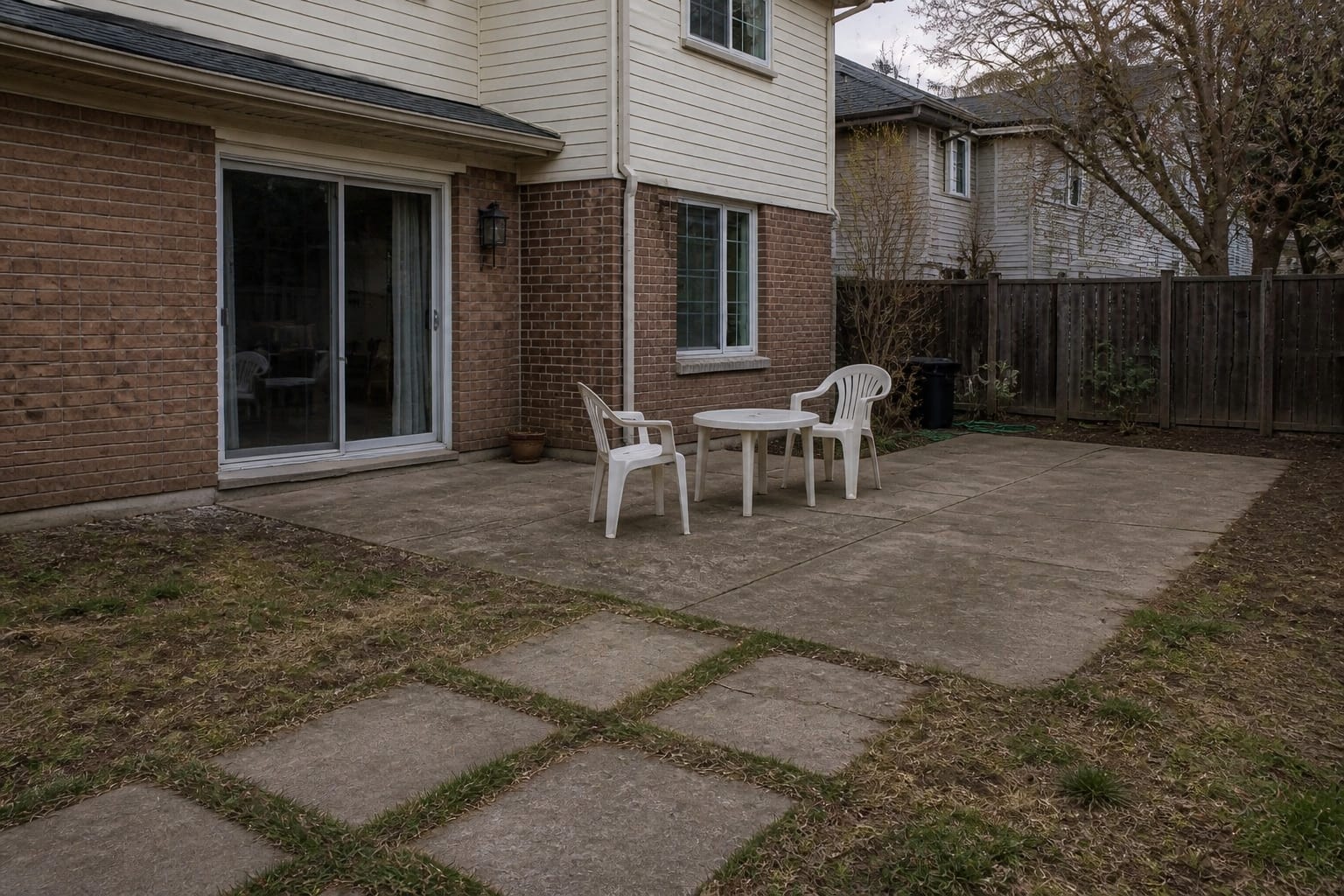
To landscape a backyard, divide the space into use zones, connect them with clear paths, add shade over seating, layer durable planting along the fences, and light the edges so the yard works after 6 p.m. Structure comes before decoration: a pretty planter can't fix a yard with nowhere to sit, walk, or gather. This guide turns bare lawn into a designed outdoor room.
What makes a backyard feel like an outdoor room?
A backyard feels designed when it has edges, destinations, and a clear route between them. Bare lawn fails because your eye slides across it with nothing to land on. Outdoors, "walls" can be clipped hedges, a vine-covered fence, a raised bed, ornamental grasses, or large planters.
Think in three layers: the ground plane (patio, deck, gravel, lawn), the vertical plane (fencing, shrubs, screens), and the overhead plane (tree canopy, string lights, or open sky over a fire pit). When all three are considered together, the yard starts to feel composed instead of scattered.
Assign the backyard one main social zone, one planted edge, one flexible open zone, and one small service zone — a 3-foot trash-screening strip, a hose bib corner, a storage bench. Hide the service zone poorly and the whole yard feels unfinished; give it a real place and the rest can breathe.
Which zones should you plan before choosing plants?
Plan sitting, eating, walking, playing, and maintenance zones before buying a single shrub. Put the patio within 8 to 15 feet of the kitchen or main door unless the best shade is elsewhere — too far, and weeknight meals stay indoors.
For dining, allow at least 10 by 10 feet for a small round table and four chairs, 12 by 14 feet for a six-seat rectangular set, and 30 to 36 inches behind chairs for pull-out room. If you host often, review outdoor entertaining area ideas before locking the patio size, since circulation around food and a grill needs more space than furniture catalogs suggest.
For play, keep sightlines open from the kitchen or patio, and put swings or climbing frames on mulch or turf rather than a narrow strip beside thorny planting. See kids' outdoor space ideas for making that zone feel integrated.
For pets, work with the patrol path dogs already walk along the fence. Use gravel, mulch, or stepping stones on that line instead of fragile planting, and check dog-friendly backyard ideas before choosing delicate borders near gates or sunny spots.
Test this on your own photo with ReDesign — keep the house edge, horizon, hardscape, beds, and main path visible so the preview reflects your actual space.
Five backyard ideas that add structure fast
- Build a real patio. Undersized hardscape makes furniture wobble on the lawn; aim for at least 12 by 12 feet for four lounge chairs, using pavers, concrete, brick, or gravel with a firm metal edge.
- Curve one planting bed around the lawn instead of dotting shrubs everywhere. Make it 3 to 5 feet deep so shrubs can mature without pressing flat against the fence.
- Add a path before more decor. Use stepping stones on 24-inch centers for a relaxed pace, or a 36-inch gravel path where two people need to pass.
- Plant one shade tree over the afternoon seating zone. Pick the mature canopy size first, then keep the trunk clear of paving and furniture roots.
- Repeat one house material in the yard — brick, black metal edging, cedar, limestone, or a matching fence color — so the landscape reads connected to the architecture.
- Layer lighting at ankle and shoulder height. One bright fixture by the door creates glare; combine low path lights, shielded wall lights, and soft string lighting over dining.
Common backyard landscaping mistakes to avoid
Buying plants as individual favorites instead of designing a bed as a group is the most common error. Three random shrubs and a lonely ornamental grass look spotty for years — repeat plants in groups of three or five and vary height and texture instead.
Making every inch "useful" backfires too. A yard needs negative space the same way a living room needs floor around the coffee table, so keep an open lawn or paved breathing zone between busier areas.
Drainage problems don't fix themselves with mulch. Slope hard surfaces away from the house, avoid trapping water behind solid edging, and use gravel or rain-garden planting where puddles return after every storm.
Choosing furniture before the surface is settled is another trap — deep sofas need flat, stable paving and 24 inches of walking room, so a narrow concrete strip calls for slimmer folding or bench seating instead.
Finally, planting for the first summer only leaves nothing in winter. Put evergreen and deciduous structure in first, then use annuals in pots for seasonal color.
Use AI to preview your backyard before you commit
AI design works here as a visual checkpoint, not a substitute for measuring the yard. Upload a photo from the back door or main patio angle, then test a dining terrace, curved beds, shade structure, path lighting, and a retained open lawn to see whether the layout feels balanced before ordering pavers or trees.
Shoot in daylight, stand square to the longest view, and include the fence line and back of the house. Keep the camera angle identical across tests so any difference is the design, not the photo — this quickly reveals scale problems like an undersized patio or a tree in the wrong sightline.
Use the preview to compare bolder options: dark fencing against pale gravel, a cedar pergola against a fabric sail, layered shrubs against a cleaner lawn edge. Bring the winning direction to the yard with stakes or a garden hose before construction starts.
Frequently Asked Questions
How do I plan a backyard landscape from scratch?
Start with the three zones every yard needs: hardscape gathering (patio or deck), a planted buffer along the fences, and one focal point at the long view. Add lawn only where the family actually uses it, typically a 20-by-20-foot minimum for kids and dogs.
What plants work as a backyard fence-line buffer?
A three-layer buffer of evergreen anchors (8-12ft, such as arborvitae or ilex) every 8 feet, mid-tier shrubs (3-5ft) planted in drifts of three, and ground cover underneath reads finished within two seasons and screens neighbors without forming a solid hedge wall.
How much of a backyard should be lawn?
Limit lawn to 30 to 50 percent of the yard and design the rest as patio, beds, and gravel paths. Over-lawned yards cost more in mowing and irrigation and read less designed than yards with mixed plantings.
What is the right order to install a backyard landscape?
Run drainage and irrigation first, then hardscape (patio, paths, walls), then anchor trees and shrubs, then perennials and ground cover, and lighting last. Planting after hardscape avoids trampled beds and broken irrigation lines.
How long does a backyard landscape take to mature?
Hardscape and lawn establish in one season, shrubs and perennials fill in over 2 to 3 seasons, and anchor trees or screen plants need 5 to 7 seasons to reach functional size. Design for what you want in year three, not year one.
> Try this: Ready to see this on your own space? Open ReDesign and run the preview.
Three transformations to try
1. Three-zone backyard with patio, planted buffer, and focal tree 2. Fence-line buffer in three planting tiers 3. Compact lawn frame inside a planted backyard