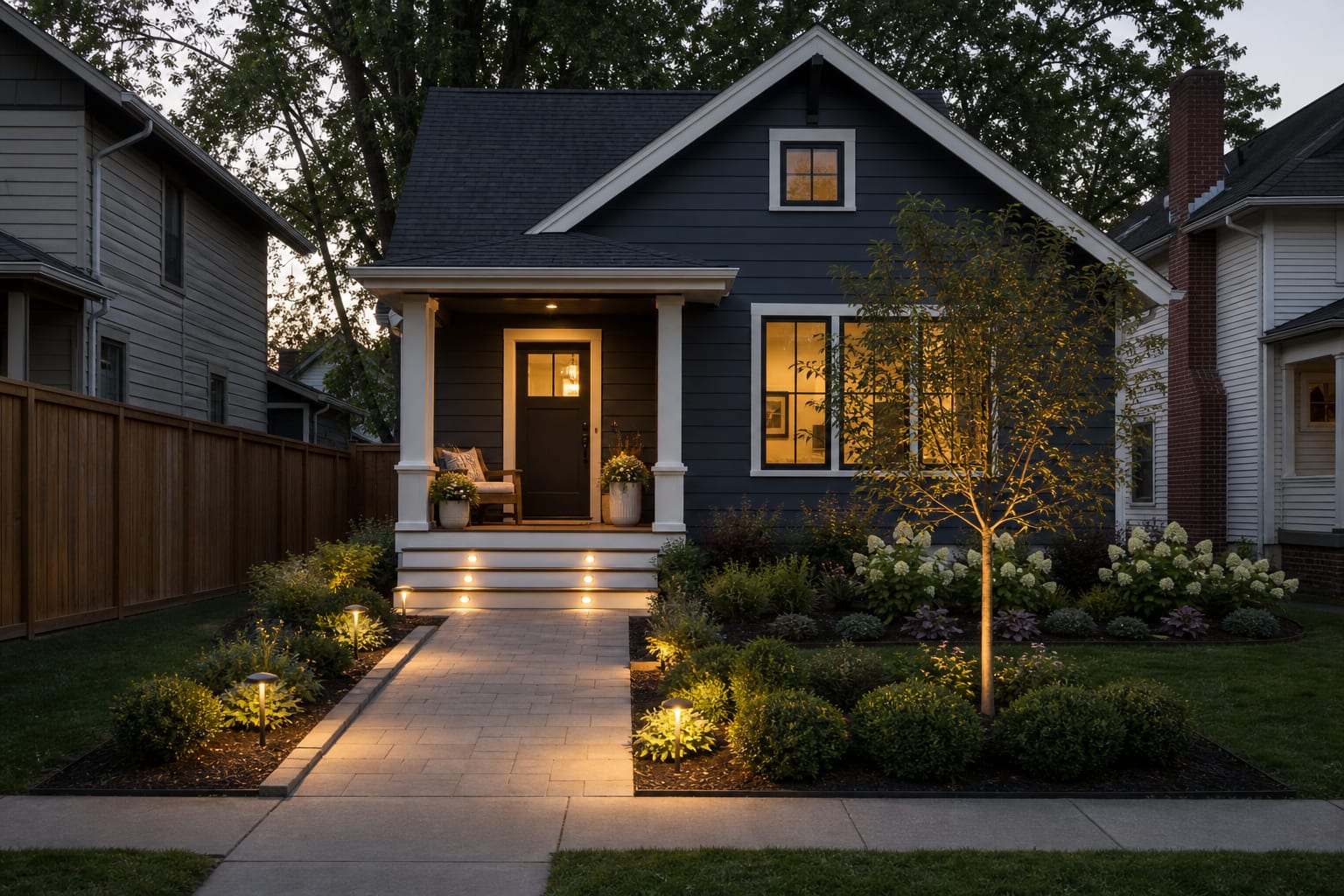
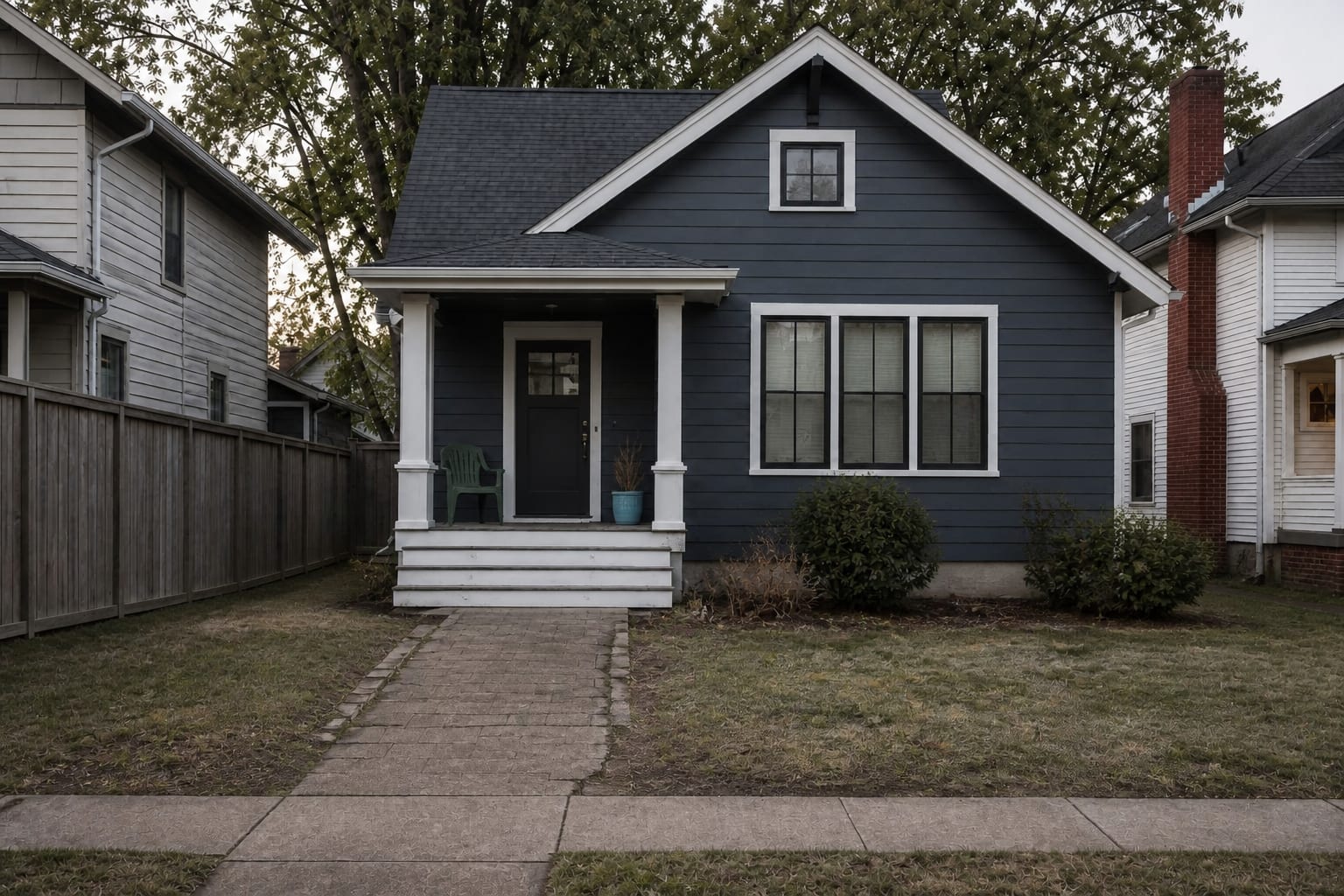
A welcoming front yard starts with a clear route to the door: a walk at least 4ft wide, a foundation bed 4 to 6ft deep with anchor evergreens at the house corners, and one specimen tree breaking up the open lawn. Landscape from structure first, then layer in seasonal planting and lighting. Grass alone rarely gives a house presence.
What makes a front yard feel welcoming from the sidewalk?
A front yard feels welcoming when the eye can find the door, read the route, and see enough planting to soften the house without hiding it. A straight walk suits formal houses; a gentle curve suits cottages, bungalows, or yards with a mature tree already in place. The common failure is the half-path, where pavers stop short of the driveway or the route angles awkwardly through wet lawn.
Foundation beds need depth more than novelty. A 12-inch mulch strip with tiny annuals can't balance a two-story facade; it reads as a border, not a garden. Run the bed 3ft deep at its narrowest, expanding to 5-6ft at corners, for room to layer evergreen anchors, perennials, and seasonal pots.
If the house sits close to the street, keep planting low near the sidewalk so the facade stays open. If it sits far back, add a stronger foreground layer of grasses, low hedging, or a small ornamental tree near the curb. See more on how yard, porch, and paint work together in curb appeal ideas that change the first impression.
Which front yard landscaping ideas give the fastest structure?
- Widen the entry path. Aim for 42-48 inches using brick, pavers, stone, or decomposed granite with firm edging so wheels and strollers stay on track.
- Deepen one continuous bed. Keep it 3-6ft deep, mature shrubs below the sill, stepping plants down toward the path.
- Add one small ornamental tree. Choose a canopy that fits the setback and frames the facade instead of blocking it, kept clear of the roofline and gutters.
- Cut a crisp lawn-to-bed edge. Steel edging, brick soldier courses, or a clean spade line beats a messy border every time.
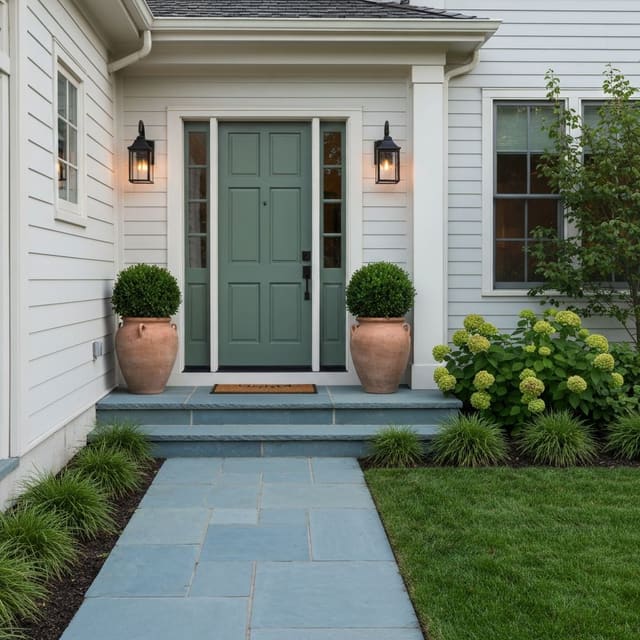
- Use two large containers at the porch. Go 18-24 inches wide, one upright plant, one rounded, one trailing.
- Add a small sitting nook if there's room. A 6x8ft bench area near a side path pairs well with ideas from Driveway Design Ideas: Pavers, Patterns, and Curb Appeal from the Street while keeping the front door the main event.
Test this on your own photo with ReDesign, keeping the house edge, horizon line, hardscape, beds, and main path visible so the preview solves your actual space.
Common front yard landscaping mistakes to avoid
- Hiding the house with tall shrubs. Lush foundation planting under windows becomes a dark, damp wall within a season; keep shrubs below the sill or prune deliberately.
- Making the driveway the only route. Add a real pedestrian path from the sidewalk, or connect drive to door with a 36-inch paved strip.
- Choosing plants only for bloom color. Mix evergreens, deciduous shrubs, grasses, and bulbs so the yard has shape in winter and texture beyond one short bloom window.
- Relying on solar stakes for lighting. They rarely light steps or address numbers well; use shielded path lights at direction changes plus a door fixture.
- Overplanting the yard. Leave 18 inches between mature shrubs and the walkway, and keep some negative space (lawn panel, gravel strip) to let the planting read as intentional.
Use AI to preview your front yard before you commit
Upload a straight-on daylight photo showing the full facade, roofline, path, and porch, then test versions with deeper beds, wider walks, different tree placement, and warmer lighting. Keep the camera angle identical across comparisons; a bed edge moving 2ft or a tree shifting to the corner changes the whole read. This also works well for renter-friendly tests: containers, gravel edging, removable path lights, before you touch anything permanent. Confirm the winning layout with tape, stakes, or marking paint before buying materials.
How do you phase a front yard makeover without wasting money?
Phase from permanent structure to seasonal detail. Settle drainage, grading, path width, and bed lines first, since those decisions determine whether everything added later looks intentional.
| Decision | Better first move | Concrete spec |
|---|---|---|
| Path vs. planting | Set the walk and bed edges first | Keep the main route 42 inches or wider |
| Lawn vs. garden | Decide the open area before adding shrubs | Leave a lawn or groundcover panel with a clear edge |
| Porch vs. yard seating | Size the landing before choosing furniture | Allow ~24 inches behind a chair for passage |
After the hard lines are set, choose an evergreen backbone: two or three reliable shrub types repeated across the front beat ten unrelated favorites. Then add perennials, bulbs, and pots where seasonal color has the most impact, near the walk, porch, mailbox, or a street-facing corner.
If the front yard also hosts gatherings, keep the scale honest; compare with Front Yard Privacy Ideas: Hedges, Fences, and Planting for Street Screening before squeezing a table into the only path to the door. Finish with durable details: a fresh mailbox, address numbers aligned with the door hardware, mulch 2-3 inches deep (never piled against trunks), and fixtures scaled to the facade. Curb appeal improves fastest when the yard looks maintained on an ordinary Tuesday.
Frequently Asked Questions
How wide should a front entry walk be?
Aim for 4ft minimum so two people can walk side by side, or 5-6ft if this is the main entry. Below 3.5ft the walk reads as utilitarian rather than welcoming.
How deep should the foundation planting bed be?
Go 4-6ft deep to fit a three-tier planting (anchor, mid, ground cover) without anything pressing on the siding. Beds shallower than 3ft force plants to spread sideways across the walk.
Where should the specimen tree go in the front yard?
Place a single ornamental tree, such as Magnolia, Crape Myrtle, or Japanese Maple, about one-third of the way in from the lawn's corner so it frames the house instead of blocking the front elevation.
Should the front yard have a lawn?
A 600-1,200 sq ft lawn is the sweet spot: large enough to read as formal and open, small enough to maintain easily. In arid climates, more front yards are trading full lawns for low-water plantings.
What is the best evergreen for a front-yard anchor?
Boxwood suits traditional houses, Ilex 'Sky Pencil' suits modern ones, and dwarf Alberta Spruce fits cottage style. Pick the form first (rounded, columnar, conical), then choose a variety that holds shape in your zone.
> Try this: Ready to see this on your own space? Open ReDesign and run the preview.
Three transformations to try 1. Symmetrical foundation planting with specimen tree 2. Cottage-style mixed border front yard 3. Low-water meadow front yard with mown path