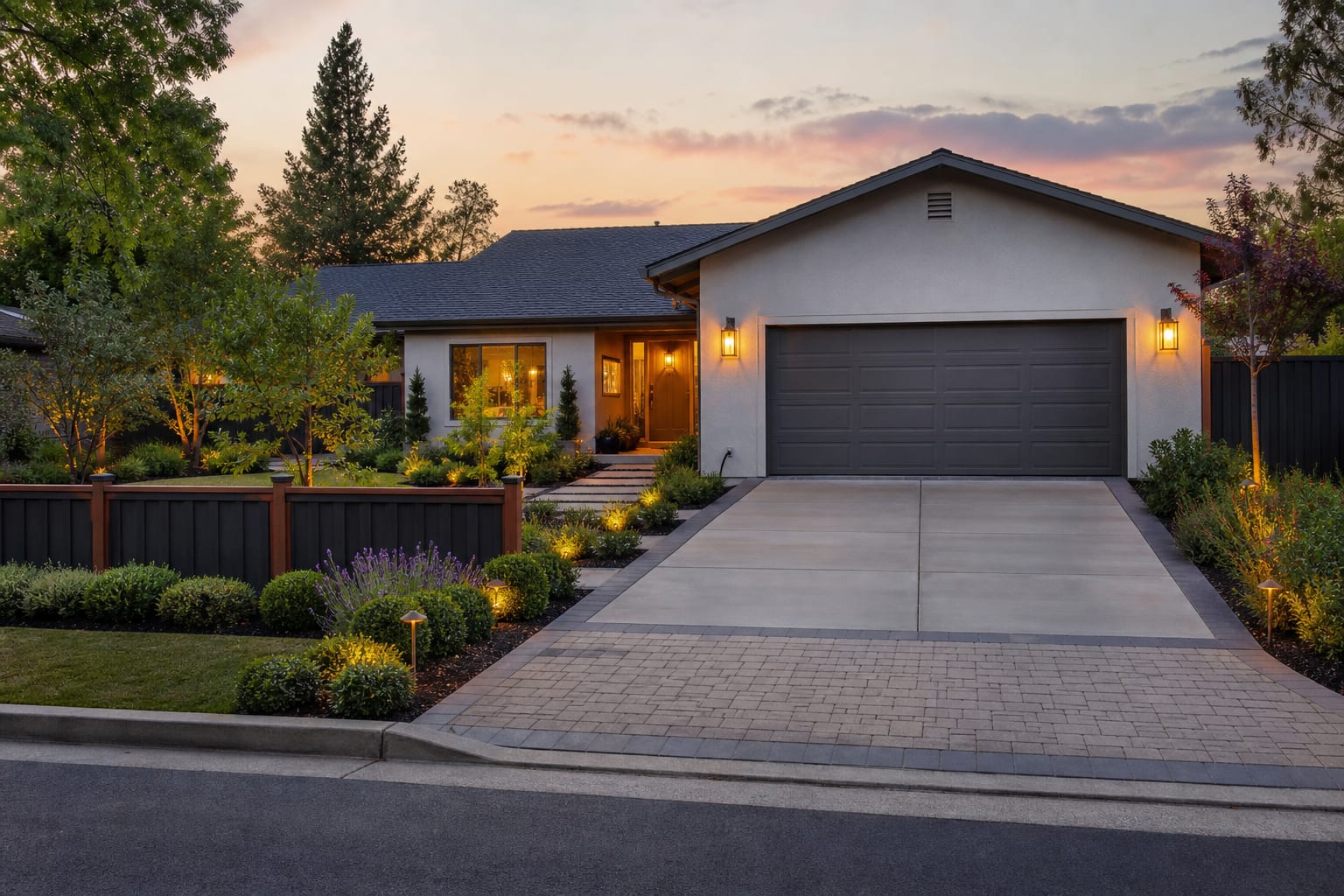
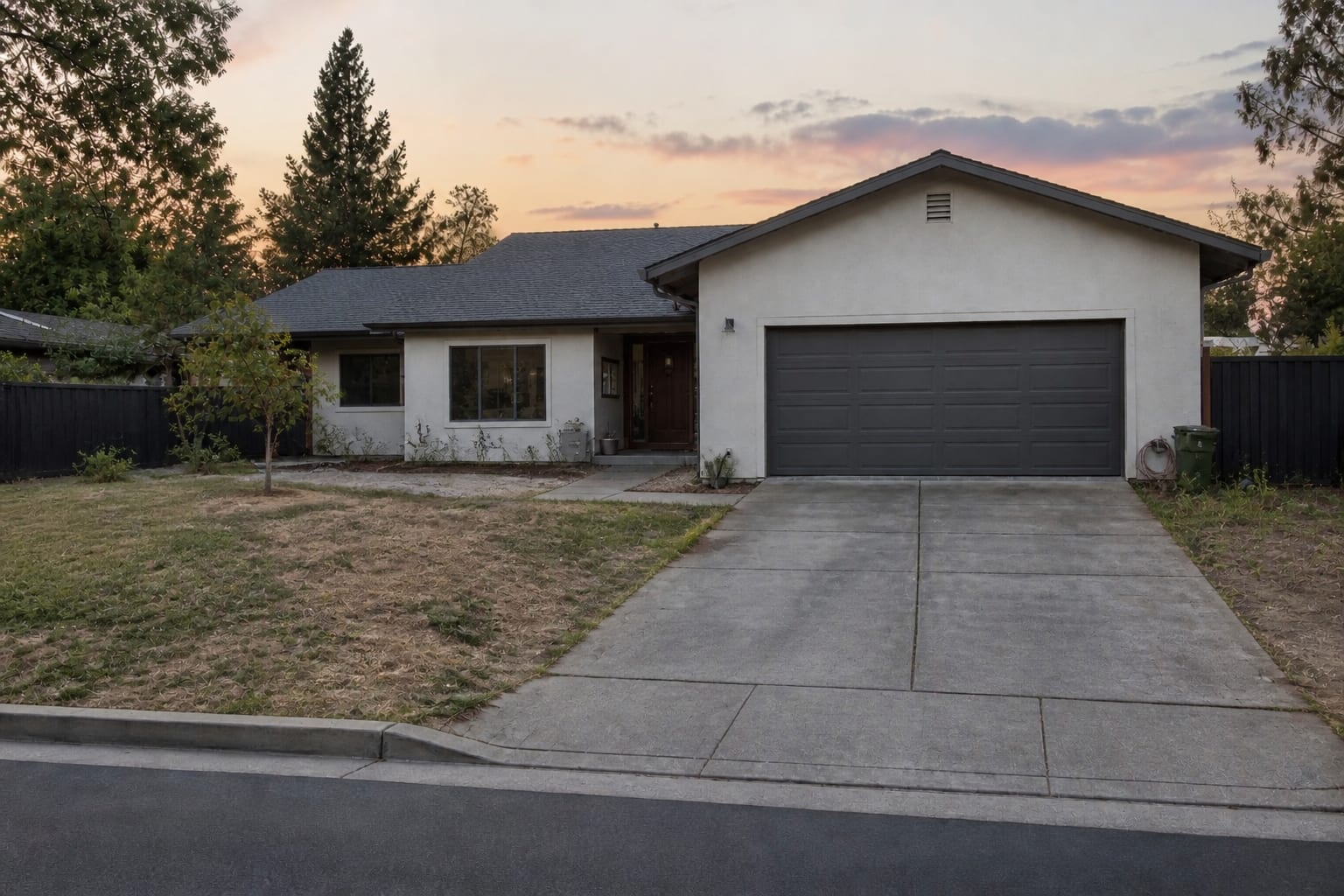
A driveway lifts curb appeal when a contrasting border or paver apron frames the paving, low layered planting replaces bare edges, and the entry walk meets the drive at a clear hand-off instead of dribbling into it. Treat the driveway as part of the front yard, not leftover paving — edges, rhythm, and a relationship to the house matter more than expensive materials.
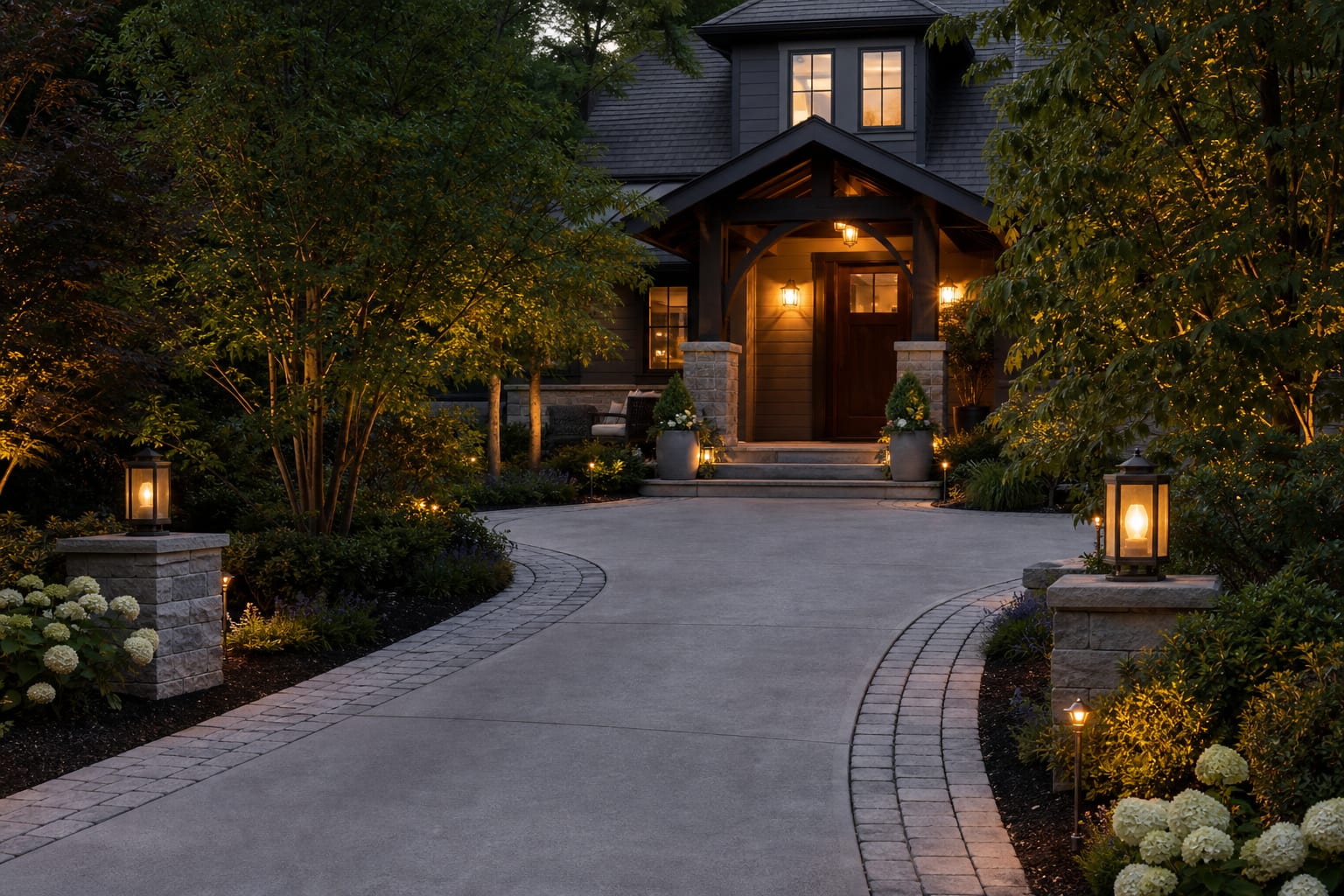
What makes a driveway look designed from the street?
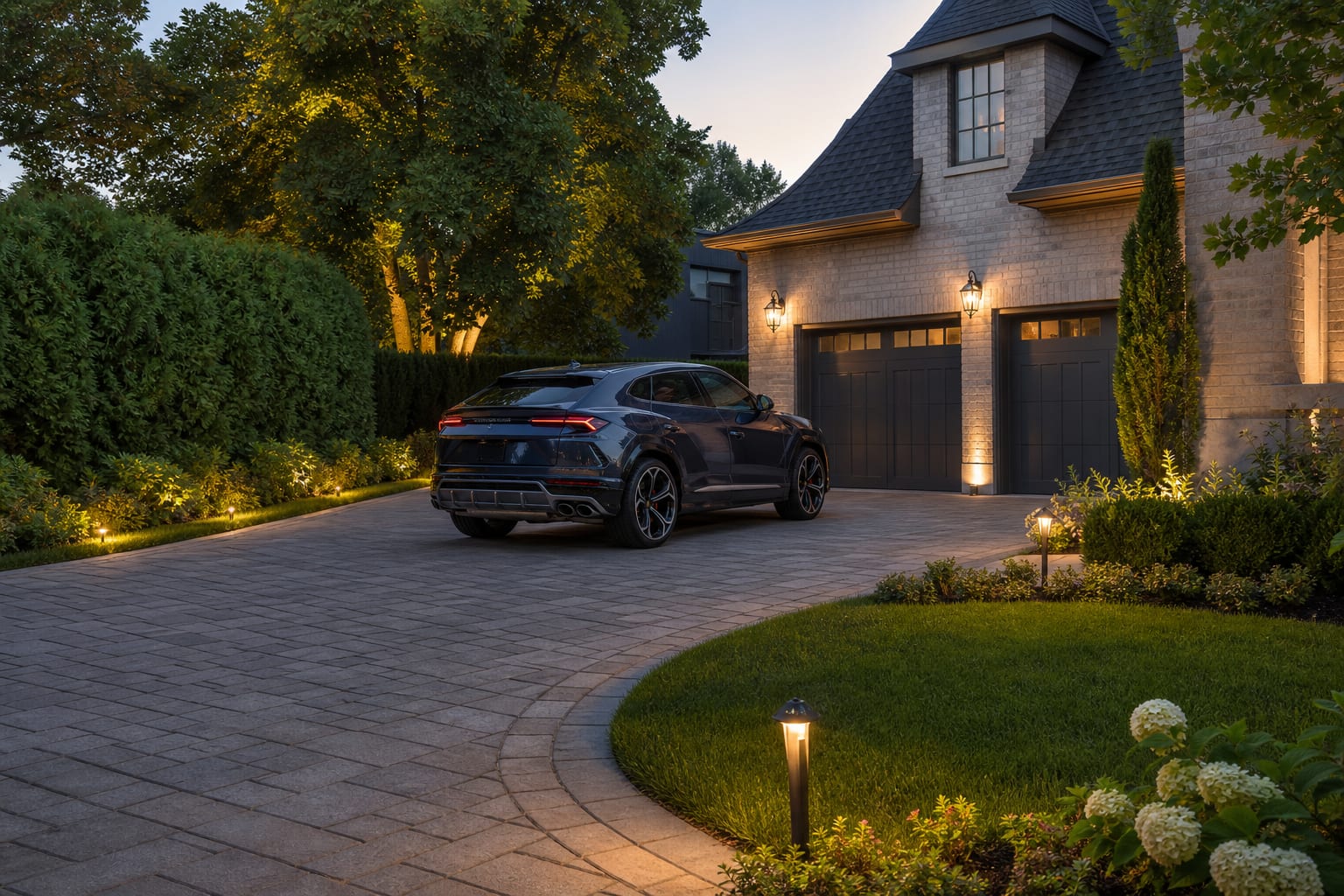
A driveway looks designed when paving, border, planting, and lighting create a clear route from street to house. The biggest visual failure isn't concrete — it's uncertainty about where the drive ends, where guests should walk, and why the planting stops abruptly.
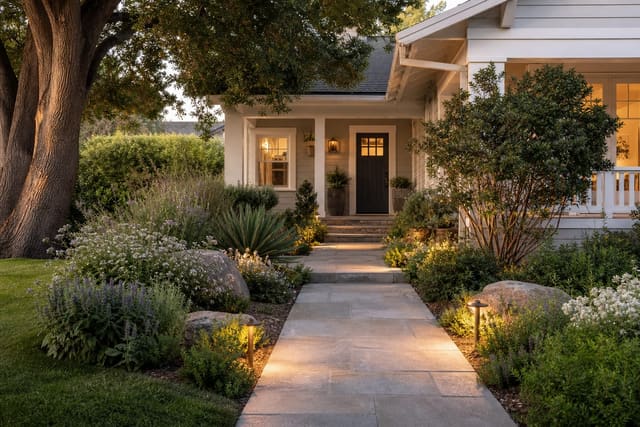
Decide what the driveway should visually connect. A prominent garage often needs a strong border so the doors don't dominate; a beautiful porch is better served by a walkway that peels off the driveway toward the entry. A 36–48 inch walk is comfortable for daily use and keeps visitors from cutting behind parked cars.
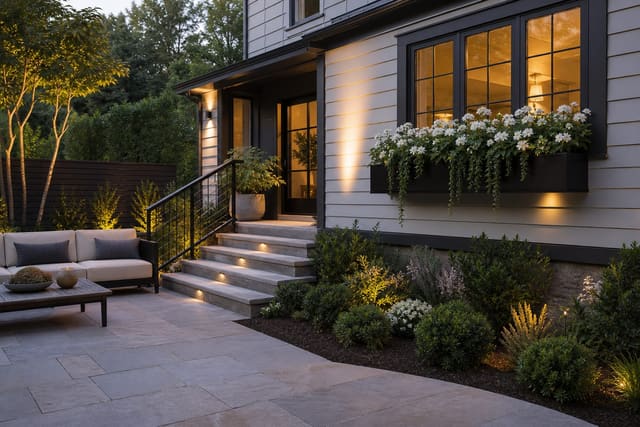
The edge is where projects win or fail. A crisp saw-cut joint, a soldier course of brick, steel edging, or a planted gravel shoulder makes basic paving look planned. If your facade already uses window boxes or strong porch details, repeat that framing logic — the same idea behind front-facing window box ideas applies at the curb.
Which pavers, borders, and concrete details are worth paying for?
The smartest approach is usually a hybrid: durable base material over most of the surface, better detailing where the eye pauses. Full paver driveways look great but need proper base prep, edge restraint, and drainage planning — if budget is tight, spend on the apron, border, or walkway connection first.
| Driveway move | Best use | Spec to copy |
|---|---|---|
| Paver apron | Breaking up a long concrete run near street or garage | 3–6 feet deep so it reads architectural, not like a stripe |
| Brick or stone border | Finishing plain concrete edges | 12–18 inches wide, repeated at the entry walk if possible |
| Large-format concrete scoring | De-blanking new concrete | Align cuts with garage doors or porch columns, not arbitrary squares |
| Permeable pavers | Managing runoff in suitable soils/climates | Confirm base depth, joint aggregate, and local stormwater rules first |
| Gravel shoulder | Softening rural or cottage front yards | Use stabilized gravel or a firm edge so stone doesn't drag into the street |
Color matters more than expected: bright white concrete can glare, very dark pavers absorb heat and show tire dust. Mid-tone gray, warm greige, clay brick, or buff limestone tends to age better than high-contrast checkerboard patterns.
Drainage isn't decorative footnote material. A driveway should slope away from the house or toward a drain, often 1/8 to 1/4 inch per foot. If water already pools near the garage, fix the pitch before spending on a paver border.
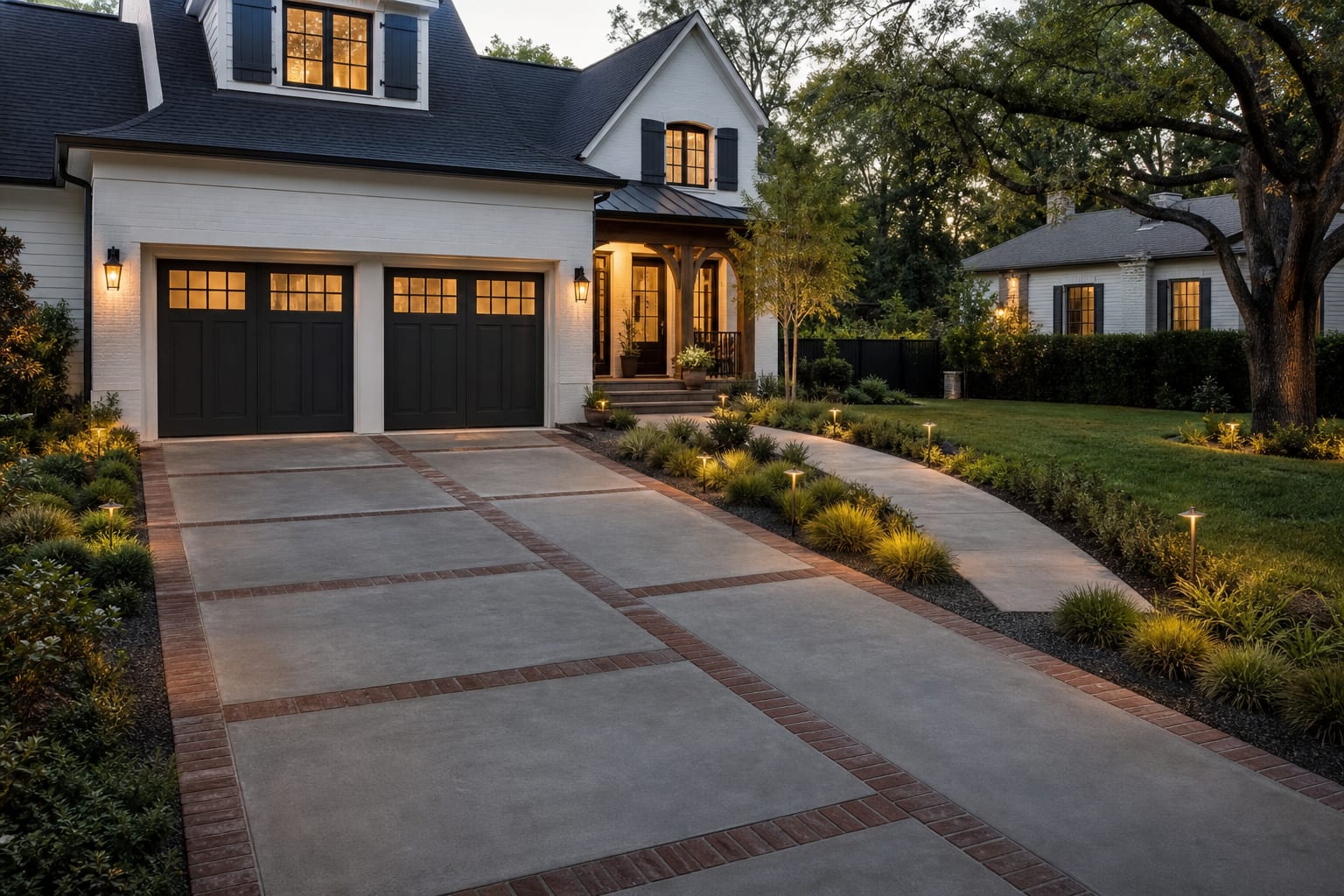
Test this on your own photo with ReDesign before committing — keep the house edge, horizon line, hardscape, planting beds, and main path visible so the preview solves the real space.
The 7 driveway ideas that earn their footprint
- Add a paver apron where drive meets street or garage — at least 3 feet deep, matched to the roof, brick, or step color.
- Add a soldier-course border along plain concrete: 12 inches for a modest drive, 18 inches for wider suburban approaches.
- Cut control joints that follow the architecture — align with garage edges or porch posts; avoid tiny panels under 24 inches, which look fussy.
- Plant a low, durable border — compact grasses, low evergreens, lavender, or liriope, kept under 24–30 inches near the street for visibility.
- Build a separate walkway to the front door if guests currently cut through parked cars; 42 inches wide with a gentle curve softens an all-paving front yard.
- Upgrade garage-side lighting first. Mount sconces roughly 66–72 inches above the driveway with warm bulbs before adding decorative objects.
- Add containers only where they won't block doors or turning space. A pair of 18–24 inch planters can frame a garage or walkway.
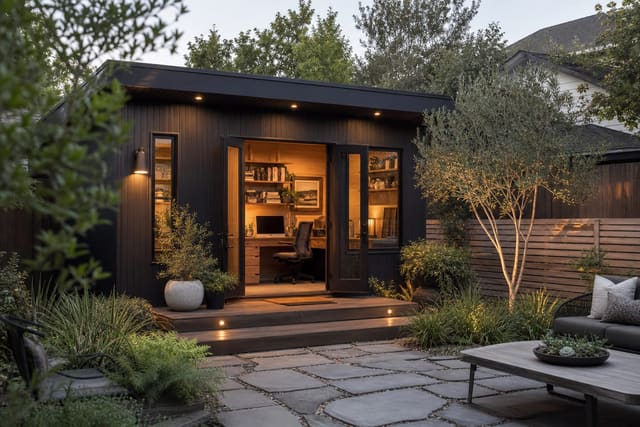
If the driveway leads to a side yard, gate, or outbuilding, keep the route intentional the whole way — the same planning discipline in backyard office shed ideas applies: clean approach, durable surface, visible threshold.
Common driveway mistakes that hurt curb appeal
- Choosing a pattern from a close-up sample. A busy herringbone can look rich in a showroom and chaotic across two car widths on an already-active facade. Choose a quieter field and save pattern for the border or apron.
- Planting too close to the tire path. Grasses brushing the car look nice for a week, then snap or brown; leave room for car doors, snow piles, bins, and delivery traffic.
- Ignoring the garage door. A dented door with harsh trim undermines any paving upgrade — paint it to match the siding before assuming the driveway is the problem.
- Mixing too many border materials. Brick, black pavers, gravel, river rock, and stamped concrete together look pieced together. Two hardscape materials, one repeated accent, is usually enough.
- Lighting the driveway instead of the arrival. Bright fixtures across concrete create glare and flatten planting; use shielded path lighting and controlled lantern moments instead — see outdoor lantern and candle ideas for restraint.
Should you use AI design to preview your driveway first?
Yes — upload photos from the curb, the front door, and inside the car approaching the garage, then test a paver apron, full paver drive, concrete border, darker garage paint, low border plants, or a separate walkway with a consistent camera angle. Use the preview to judge proportion, not engineering: it shows whether a 6-foot apron balances the garage, but it can't confirm base depth, drainage, freeze-thaw performance, or local permit rules.
Frequently Asked Questions
What surface beats a plain concrete driveway?
Concrete pavers in a herringbone pattern, a brick apron at the street, or stamped-and-banded concrete with a planted edge each lift a driveway from utilitarian to designed without exotic materials or full replacement.
How wide should a driveway be?
Plan 10–12 feet for a single car and 18–20 feet for a double, widening to around 24 feet near a two-car garage. Widening only near the garage, into a fan or court shape, keeps the street-facing width narrower and calmer.
Should the driveway match the front walk?
Either match the paver style exactly across apron and walk for a cohesive look, or use a clearly different but complementary material for the walk. Partial matches, where materials are almost-but-not-quite aligned, tend to read as accidental rather than designed.
What planting belongs at a driveway edge?
Use low groundcover or evergreen perennials within the first 24 inches for sightlines, then layered shrubs 30–48 inches tall farther back. Keep trees with low branches at least 4 feet from the parking line to avoid sap and clearance issues.
Does a driveway need dedicated lighting?
Yes. Low, warm 2700K bollards or recessed edge lights near the apron, plus wall sconces flanking the garage at 60–66 inches, keep the space welcoming and safer at dusk. Unlit driveways look abandoned and create back-out hazards after dark.
> Try this: Ready to see this on your own outdoor space? Open ReDesign and run the preview before you buy materials, plant, drill, or move furniture.
Three transformations to try
1. Paver driveway apron with planted edges