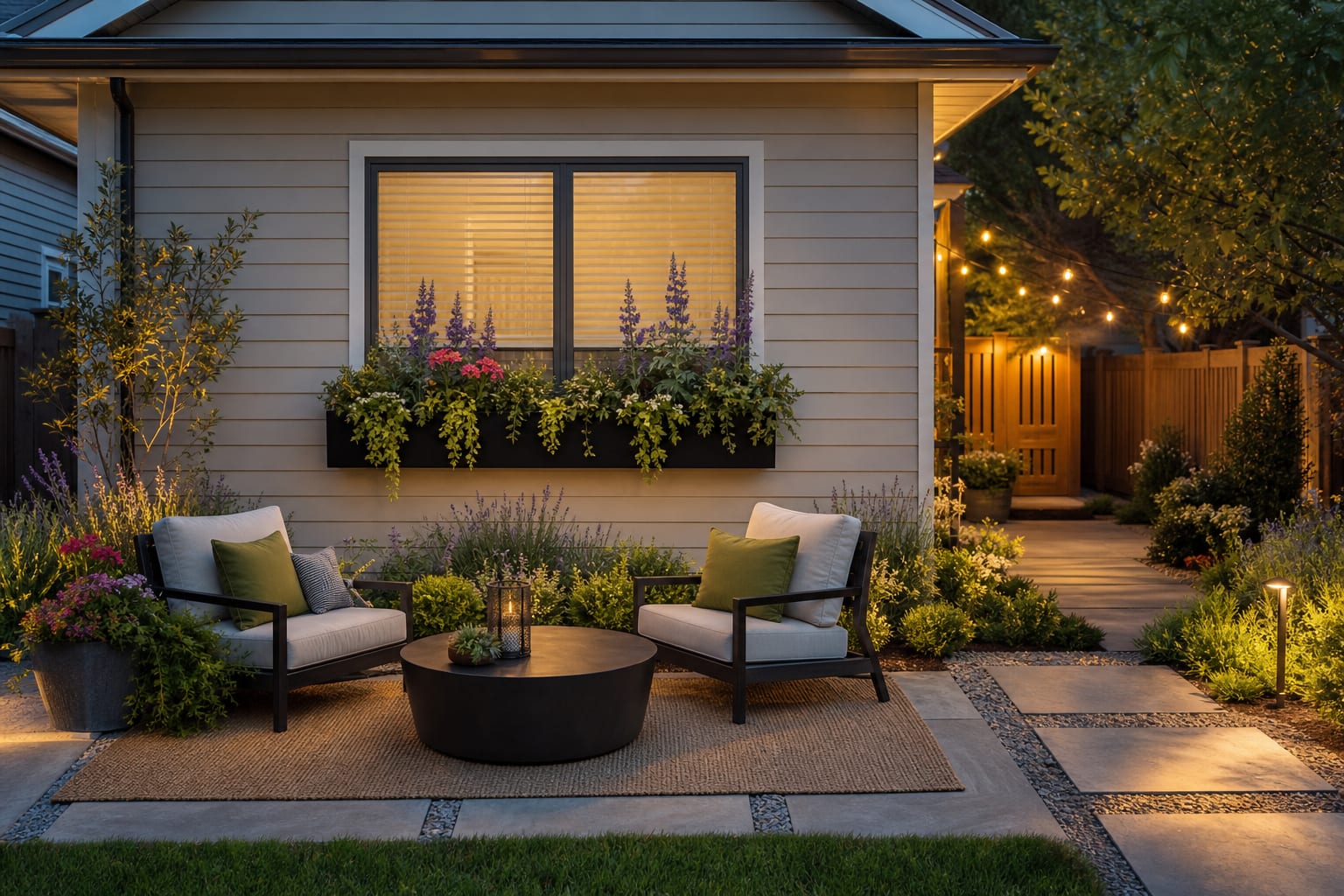
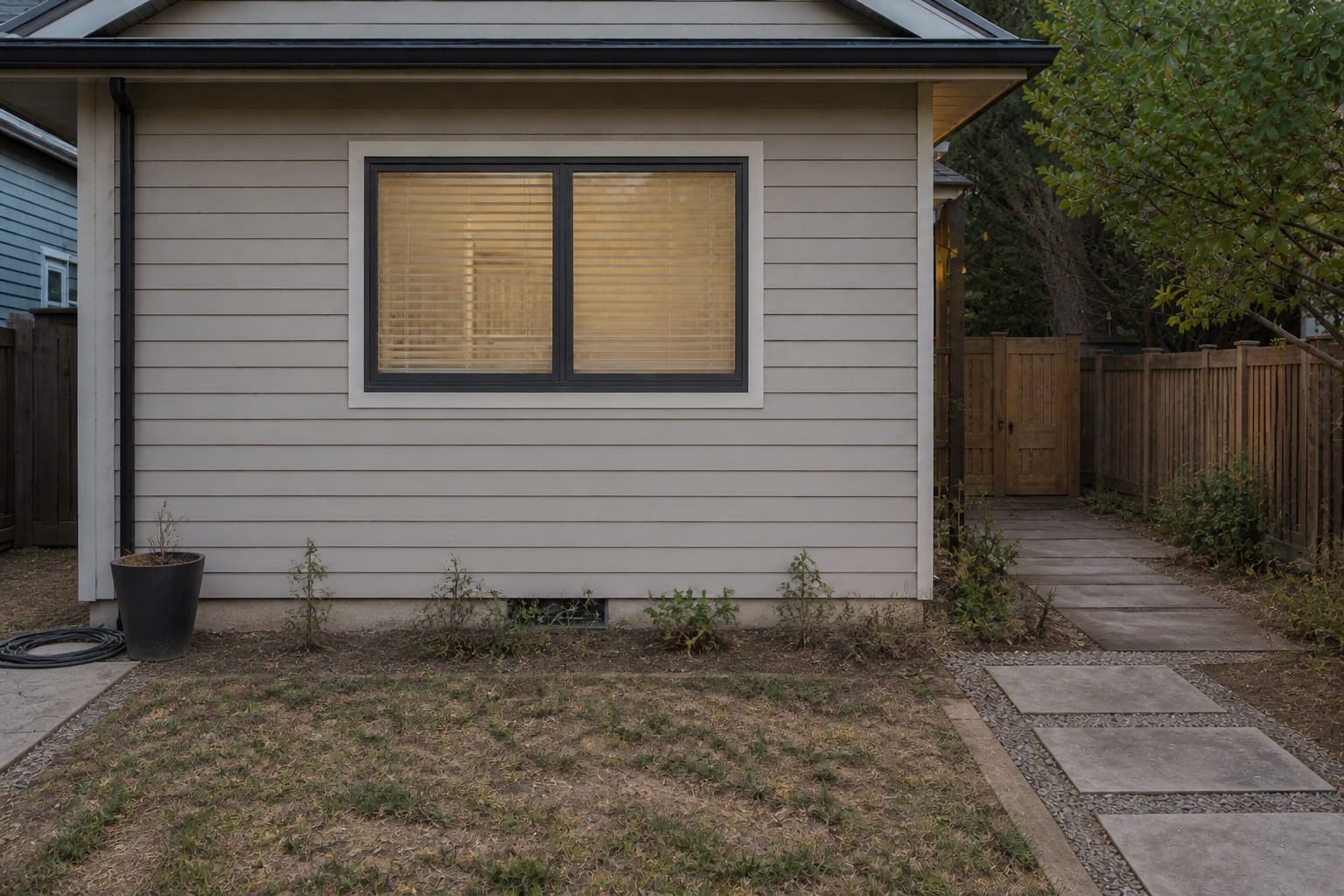
The best window box ideas combine a properly sized box (8-10in deep, running close to the window's width) with layered planting: an upright "thriller," mounding "filler," and trailing "spiller," chosen for the window's actual sun exposure and mounted on brackets anchored into studs.
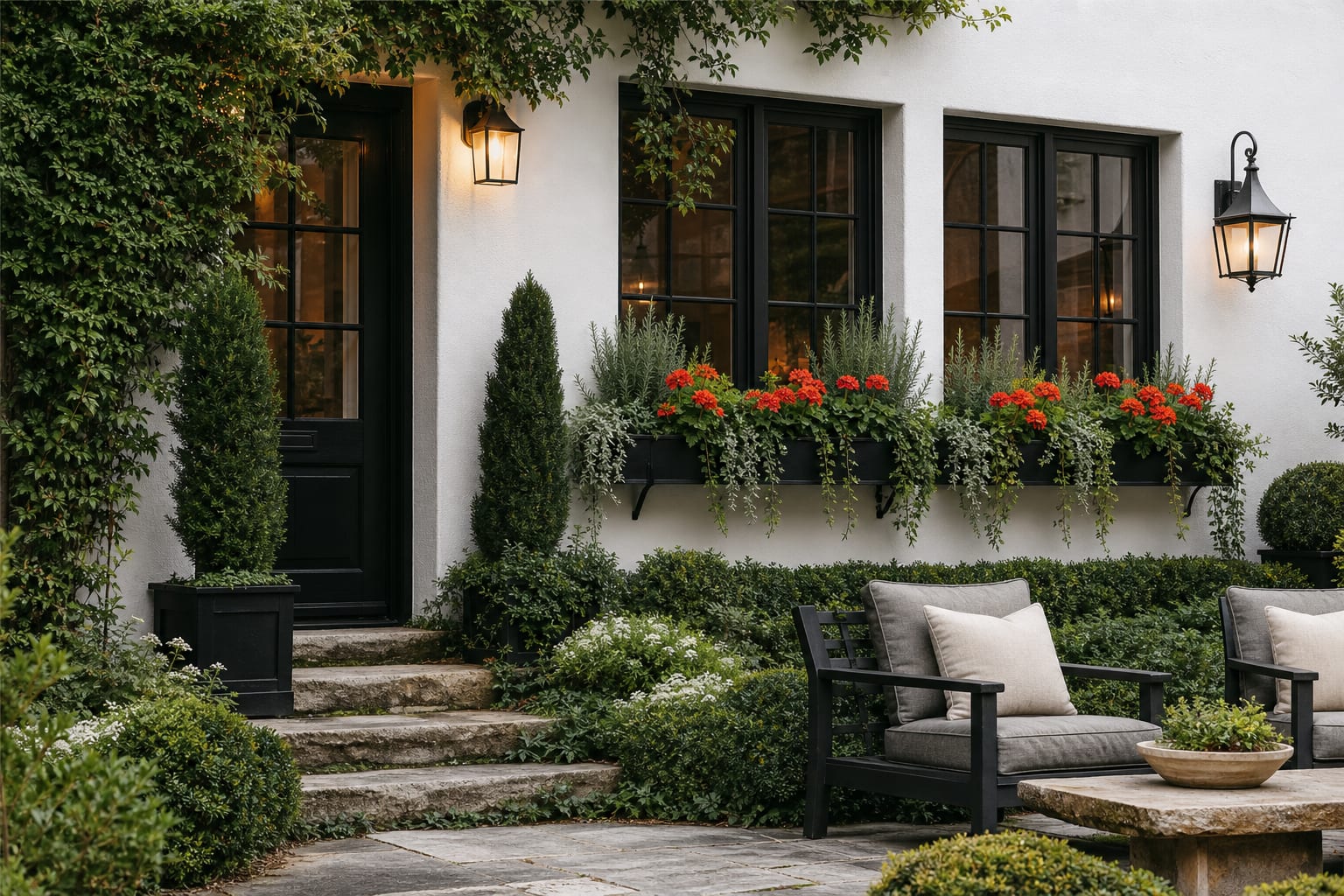
What should you plant in a window box?
Combine upright plants for height, mounding plants for body, trailing plants for softness, and one foliage or evergreen element that holds up when flowers pause. For sun: geraniums, calibrachoa, verbena, lantana, rosemary, lavender, creeping Jenny, sweet potato vine, trailing thyme. For shade: begonias, impatiens, coleus, heuchera, ferns, ivy, lamium, small carex grasses.
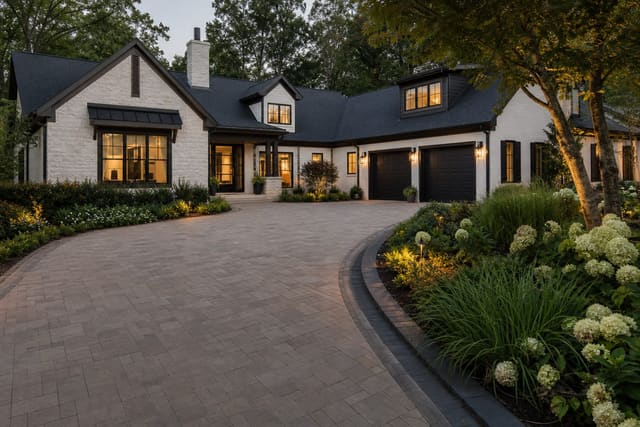
Match the style to the house. A brick colonial handles clipped boxwood, white begonias, and ivy in a dark metal box; a cottage takes looser nasturtiums, pelargoniums, herbs, and trailing lobelia; modern stucco often looks best with one restrained color and strong foliage. If the box competes with a busy walkway or driveway, coordinate with driveway design ideas that improve curb appeal so the whole approach reads as one composition.
What size and material window box won't look flimsy?
Size the box close to the window's width, casing included, or 2-4in wider per side if the architecture supports it. Too narrow looks timid; too wide makes the window look like it's wearing a shelf. Aim for 8-10in deep for annuals and herbs, 10-12in for small evergreens or mixed seasonal displays.
| window box material | best exterior use | spec to copy | watch out |
|---|---|---|---|
| powder coated metal | crisp facades, dark trim | 8in minimum depth with liner | can heat up in afternoon sun |
| cedar or redwood | cottages, bungalows, painted homes | rot-resistant wood, drainage holes every 6-8in | needs paint touch-ups |
| fiberglass | renters, upper windows | lightweight shell, UV-rated finish | cheap versions look plasticky |
| cellular PVC | painted trim, coastal homes | brackets into studs or masonry anchors | glossy profiles look fake |
| terracotta trough | Mediterranean, garden-heavy facades | 8-10in soil depth | heavy when wet, cracks in freezes |
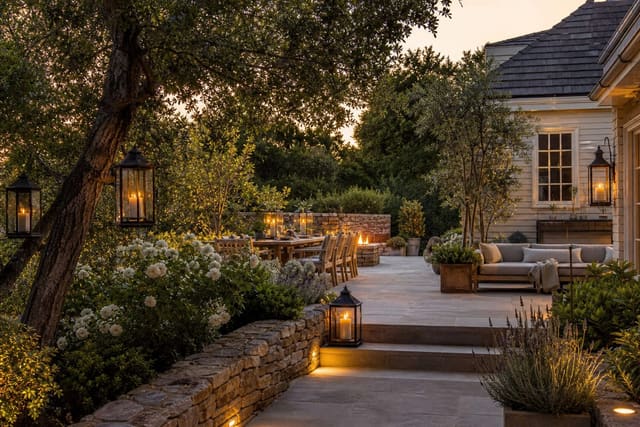
Mount brackets into structure on wood siding, not just trim; use correct anchors on masonry and leave a small air gap behind the box so moisture doesn't sit against the wall. If the box sits near a porch seating area, repeat one material from the outdoor room, like black metal or warm wood; outdoor lantern candle ideas can tie that wall detail together after dark.
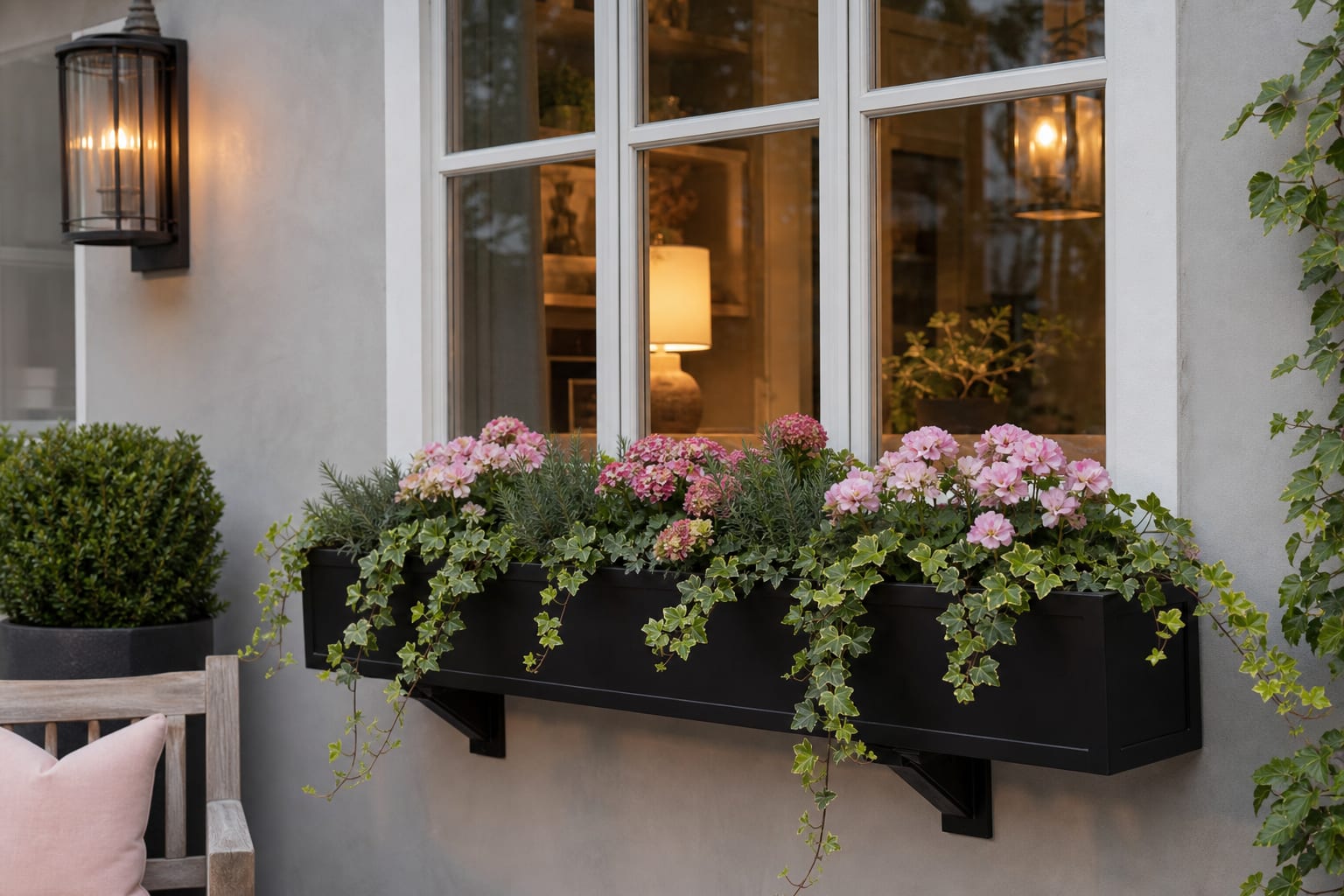
Test this on your own photo with ReDesign before choosing a final direction; keep the house edge, horizon line, hardscape, beds, and main path visible so the preview solves the space you actually have.
Five window box ideas with real character
- Green-and-white box for a house with strong color already: white begonias, variegated ivy, small ferns, and lime heuchera keep the window fresh without fighting a red door or patterned brick.
- Herb box near a kitchen or porch window: rosemary, thyme, parsley, chives, and oregano need roughly 6 hours of sun and enough depth that soil doesn't bake dry.
- Winter box with cut evergreen branches, small boxwood, red twig dogwood, pinecones, and trailing ivy, kept low and wide so it reads as architecture, not a holiday prop.
- One repeated flower color across every front window; three boxes of coral geraniums, dark foliage, and trailing white bacopa look more expensive than three unrelated mixes.
- Frame a backyard studio or shed with window boxes so it belongs in the garden instead of looking temporary; see backyard office shed ideas with planting.
Borrow finishes from the house: black shutters mean a black box can disappear while planting does the work; cream trim pairs better with warm white than bright vinyl white; stone facades read best when foliage carries the look and flowers stay quiet.
What mistakes make a window box look cheap?
- Too shallow. A 5in trough looks fine on day one but gives roots little buffer against heat and missed watering. Go 8-10in deep and use lightweight potting mix.
- Only upright flowers. A row of identical geraniums looks stiff. Add a trailing plant every 12-18in along the front edge to soften the sill.
- Ignoring wall color. Red flowers can vanish against red brick; hot pink can clash with warm beige siding. Test flower color in outdoor light, not nursery shade cloth.
- Staining the exterior. Drainage holes are non-negotiable, but water shouldn't run down painted siding. Use liners, safely-draining saucers, and brackets that hold the box slightly off the wall.
- Overfilling on day one. Annuals expand fast. Leave 3-4in between small nursery plants so the box fills in instead of becoming a crowded root mat by midseason.
Should you preview window boxes with AI before drilling?
Yes: the riskiest decision is facade proportion, box width, color, and plant height, and an AI preview lets you test black metal, painted wood, terracotta, white flowers, trailing greenery, herbs, and winter evergreens before drilling into siding or masonry. Upload a straight-on exterior photo and keep proportions honest; a 30in window shouldn't show a 60in overflowing box unless the wall has room. Check the design from both sidewalk and driveway distance, since curb appeal shifts with viewing distance. A preview won't replace bracket spacing, wall anchors, or drainage checks, but it will show if a box reads too shallow, if flower color fights the door, or if the facade needs two matching boxes instead of one.
Frequently Asked Questions
What size window box fits a window?
Width within 2-3in of the window trim's outer edge; narrower reads as an afterthought, wider crowds the trim. Depth should run 8-10in front to back, with a height of 6-8in.
What's the thriller-filler-spiller rule?
One tall upright anchor plant (thriller), 2-3 mid-height plants filling the middle (filler), and trailing plants spilling over the front edge (spiller). This layering rule applies to every window box and container planting.
What plants suit sunny window boxes?
Geraniums, petunias, lantana, calibrachoa, and lavender handle full sun well, with ivy or creeping Jenny as trailing spillers. Rotate seasonally, swapping in pansies once the weather cools.
What plants suit shade window boxes?
Begonias, impatiens, coleus, fuchsia, and torenia tolerate just 2-4 hours of sun. Pair them with trailing ivy or sweet potato vine spilling over the front edge for softness.
How is a window box mounted?
Use heavy-duty steel L-brackets every 18in along the window trim's base, secured with 3in screws into wall studs, never the trim alone. A fully planted, watered box can weigh 40-80 lb.
> Try this: Ready to see this on your own outdoor space? Open ReDesign and run the preview before you buy materials, plant, drill, or move furniture.
Three transformations to try
1. Window box with thriller-filler-spiller planting 2. Black metal window box with trailing vines 3. Kitchen window box with herbs