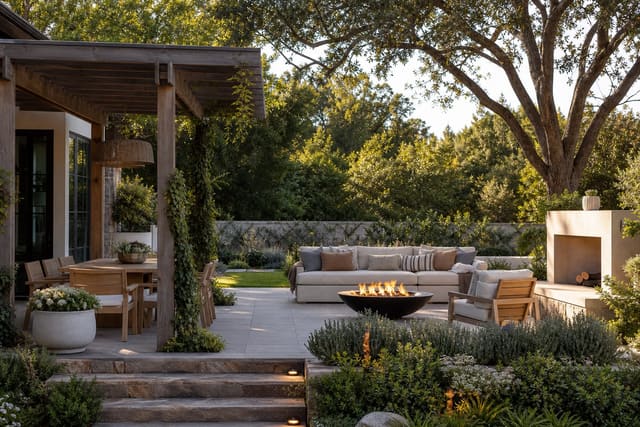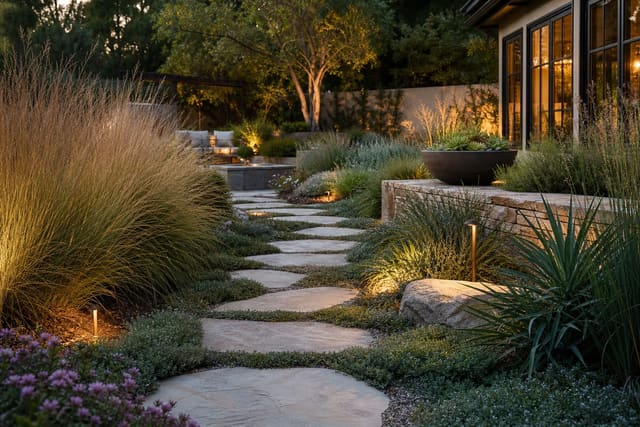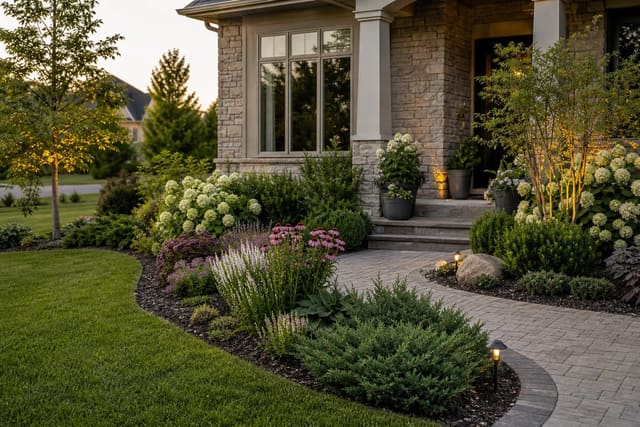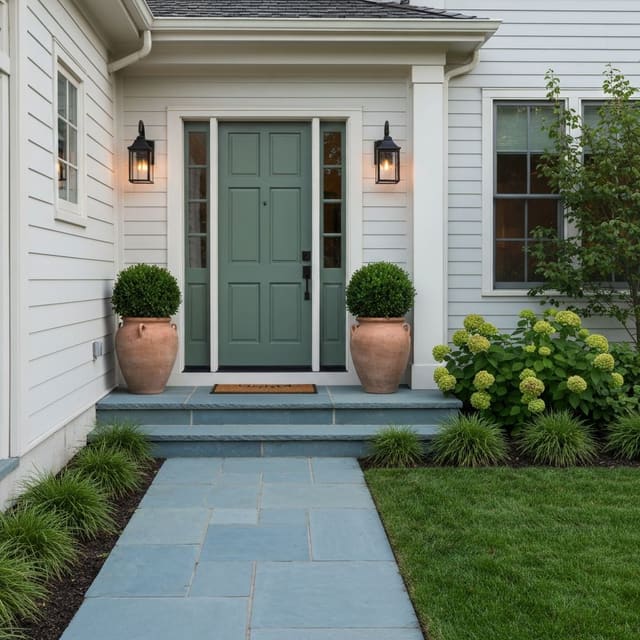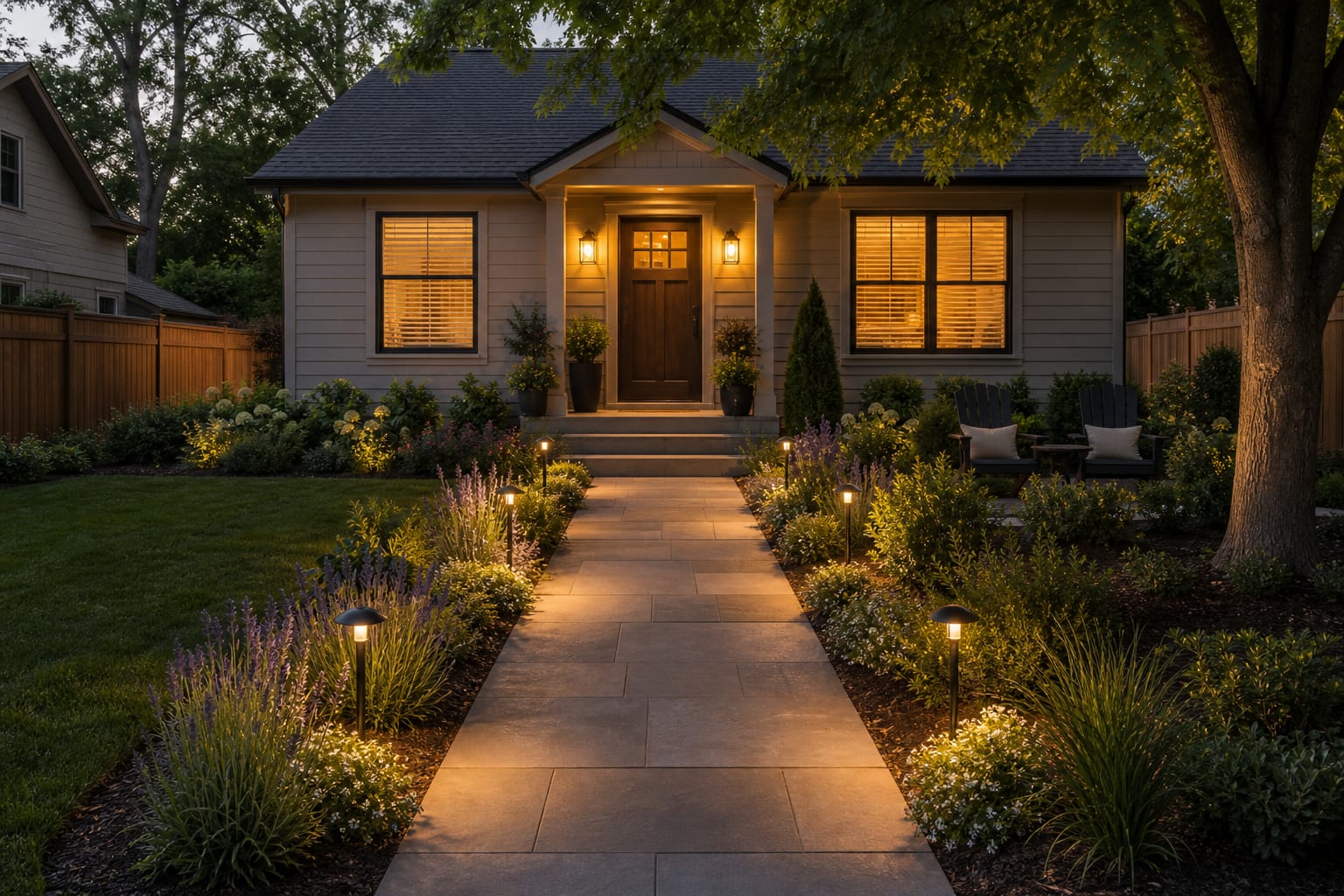
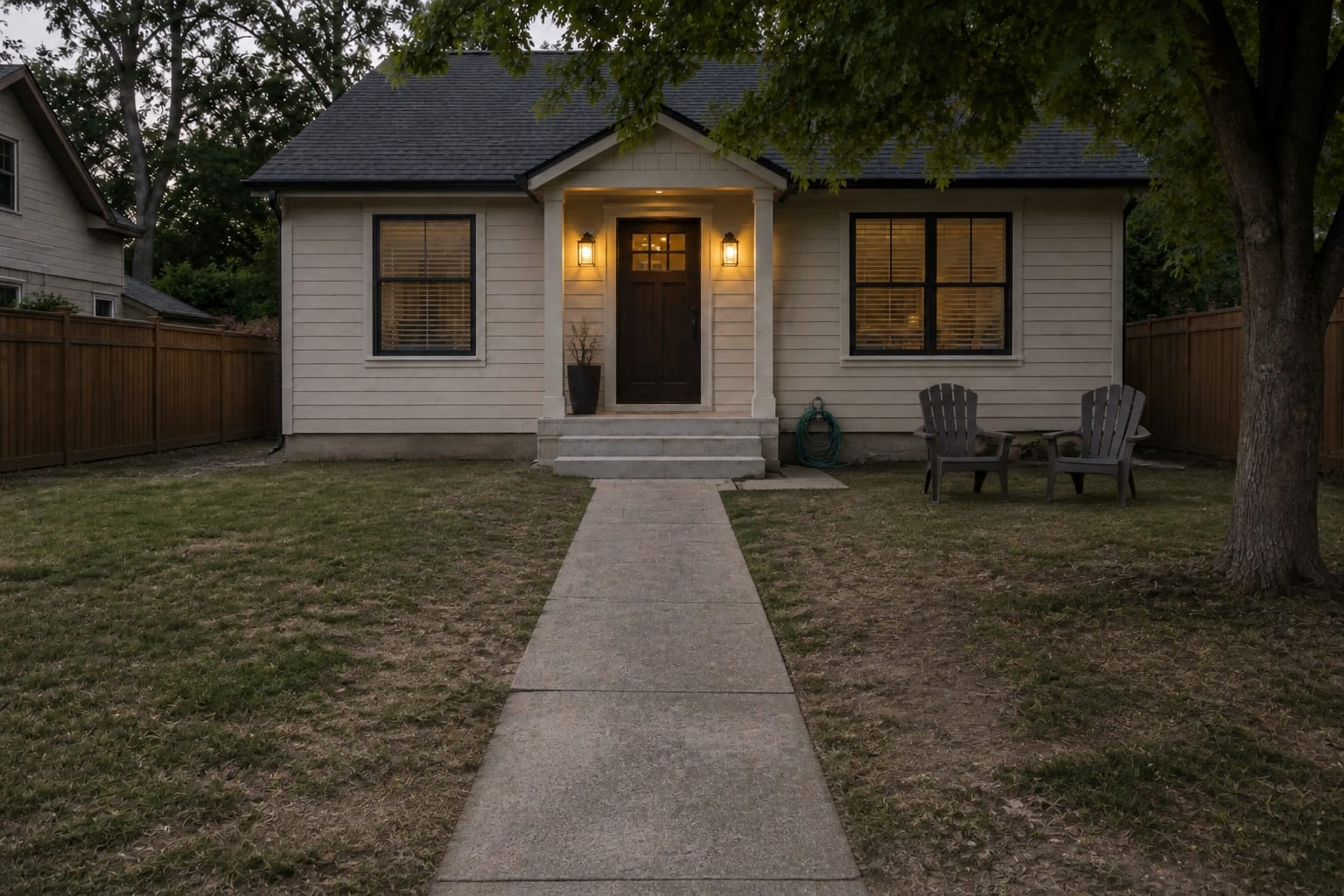
Design a front walkway by fixing the route first, then sizing width, material, planting, and lighting around it. Main walks should hold 4-5ft, secondary paths at least 3ft, using material that continues from the porch or driveway rather than adding a third hardscape. Treat the path as the first room of the house, not leftover paving.
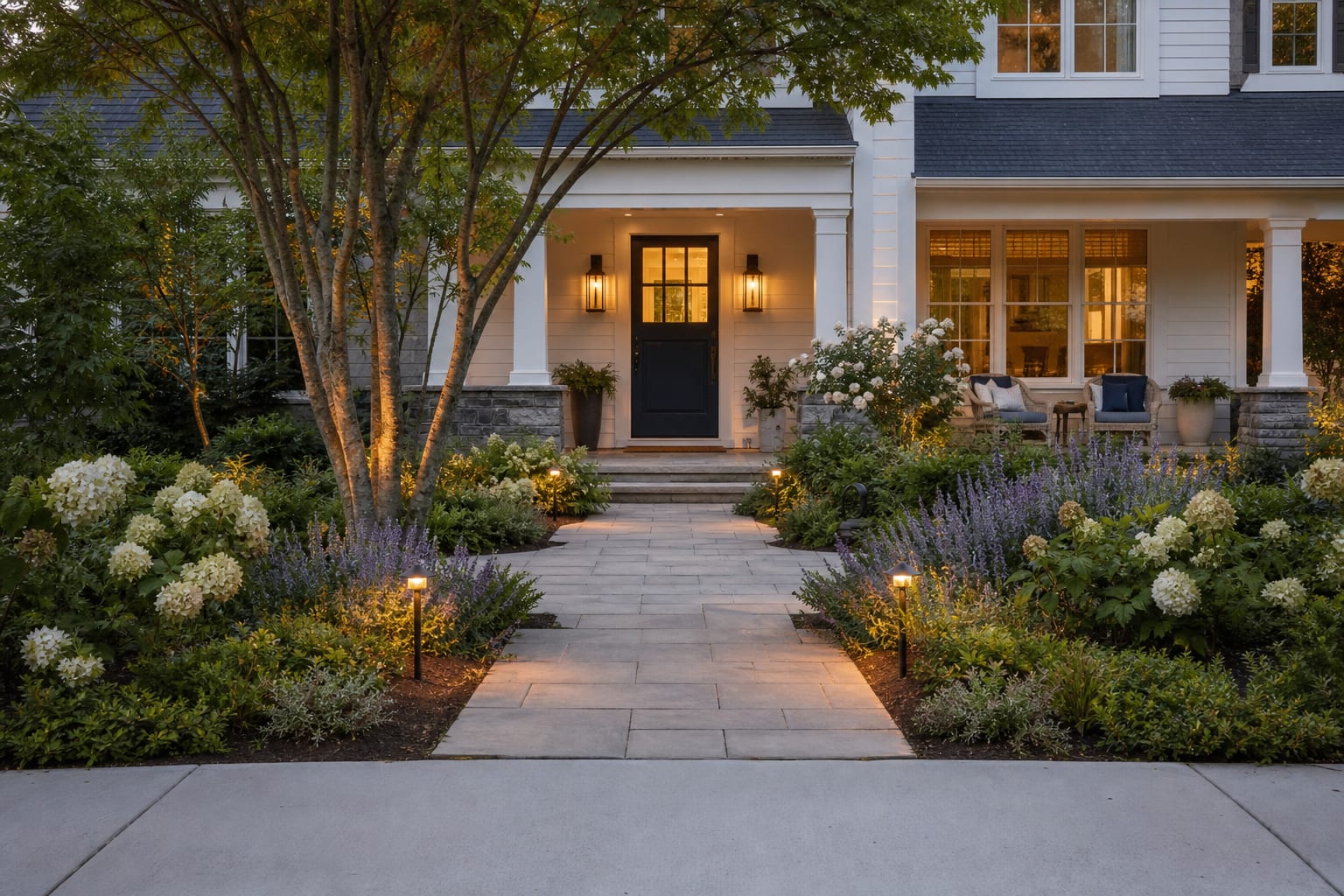
Test this on your own photo with ReDesign before you commit to a final direction; keep the house edge, horizon line, hardscape, planting beds, and main path visible so the preview solves the space you actually have.
What makes a front walkway feel intentional from the street?
Design a front walkway by making the door visually obvious, giving the path enough width for real bodies, and choosing materials that relate to the house rather than copying the driveway. A path fails when guests have to guess whether to cross the lawn, climb a driveway edge, or squeeze past shrubs.
For a main walk, 42 in. is the minimum, and 48 in. feels noticeably more generous when two people approach together. A broad porch or double doors can support a 54-60 in. path near the entry landing. At the stoop, leave a landing at least 4 ft. deep so someone can stand with a bag while the door swings.
The line of the walkway should match the architecture. A centered colonial, bungalow, or symmetrical cottage usually wants a straight or softly widened path. A ranch or house with an off-center door can handle a walk that bends once, then straightens before the step. Curves should be earned by a tree, bed, grade change, or view; a random wiggle in a small front lawn looks nervous.
Curved or straight: which front walk fits your house?
The curved-versus-straight question is really about hierarchy. A straight walk says "the door is right here." A curved walk says "move through the garden first." Mixing the wrong shape with the wrong house creates visual static.
| Walkway choice | Best fit | Spec to copy |
|---|---|---|
| Straight centered path | Symmetrical facade, centered door, formal porch | 42-60 in. wide, planting balanced on both sides |
| Offset straight path | Door sits left or right of center | One clean turn at 90 or 45 degrees, not tiny bends |
| Gentle curve | Tree, slope, or bed interrupts the direct line | Radius wide enough for a mower or stroller |
| Stepping-stone path | Secondary route to gate or garden bench | Stones 18-24 in. apart on center |
On a tight lot, don't let the walkway consume the whole front yard; it may need to share a widened driveway apron or run with slimmer planting on one side, following the discipline behind narrow lot front yard constraints. Keep at least 30 in. of planting depth where possible so the walk doesn't press flush against siding.
Corner lots add another layer, since the path may be visible from two public sides. Borrow the sightline logic of corner lot privacy planning: keep the entry visible, but use low hedges, grasses, or a small ornamental tree to soften diagonal views.
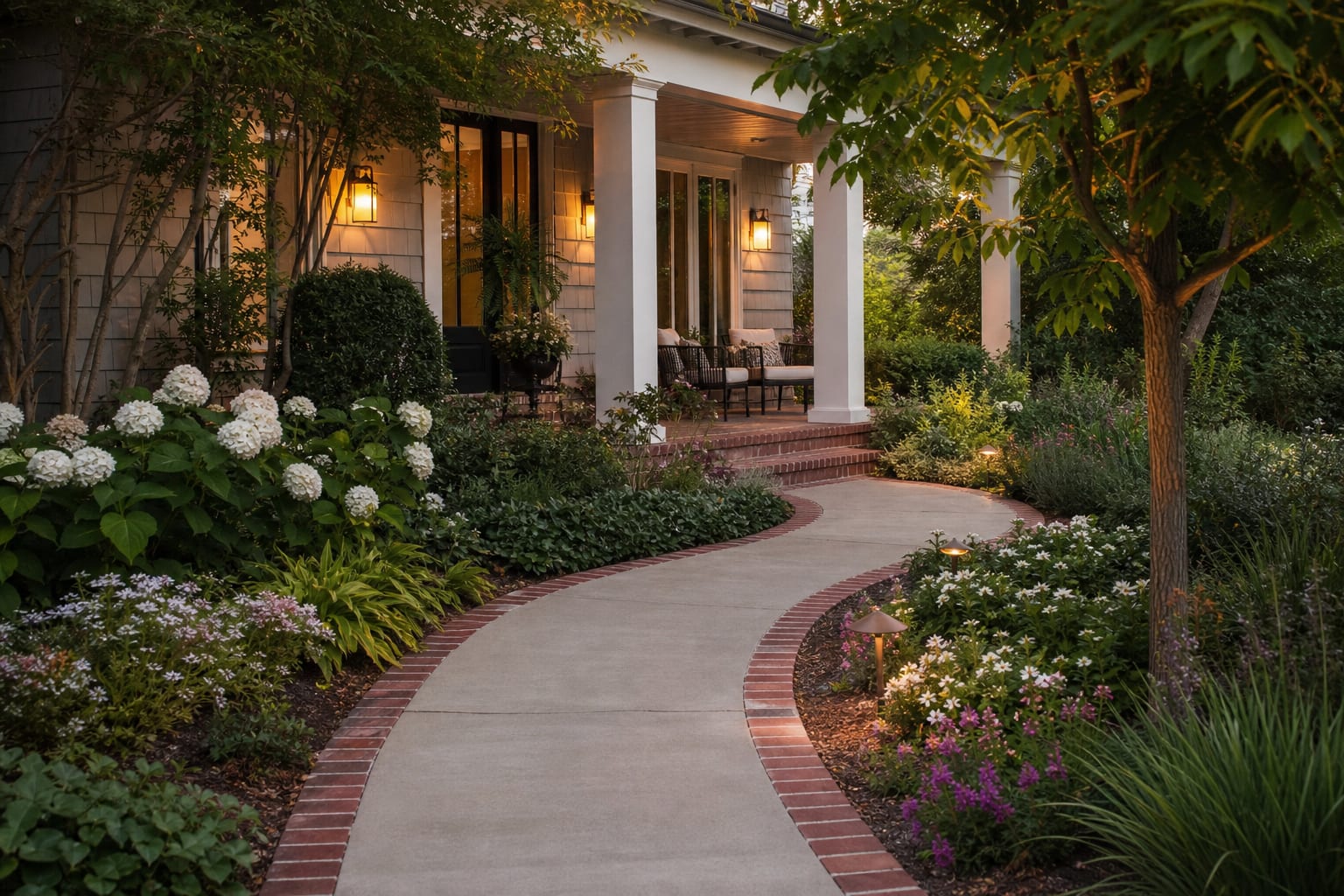
Five ways to upgrade a plain front walkway
- Go larger-format. Replace a skinny concrete strip with pavers at least 12 by 24 in., or a mixed modular pattern, and keep joints tight so heels, stroller wheels, and shovels don't fight the surface.
- Add an edge. A 4-6 in. brick, stone, or steel border frames an ordinary walk, especially when its color repeats the porch brick, roof tone, or step material.
- Widen only where people pause. A 48 in. main path with a 5 by 5 ft. pad at the door often beats paving the entire route at patio scale.
- Layer the plantings. Low groundcover near the paving, 18-30 in. perennials behind it, and evergreen anchors at corners give the walkway winter structure; see front yard flower bed ideas for beds that reinforce the route.
- Light for rhythm, not floodlighting. Space shielded path lights 6-8 ft. apart, staggered where possible, in 2700-3000K so the walkway glows without turning the yard blue-white.
Material choice matters because the walk sits beside driveway, foundation, and porch. Concrete is durable but can look like a municipal sidewalk if too narrow. Brick feels warm on older houses but needs a stable base in freeze-thaw climates. Natural stone works best in large, level pieces that are easy to shovel; irregular flagstone suits a slower garden path. Gravel is charming for secondary walks but rarely right as the sole route to a formal door unless edging is crisp and slope is gentle.
What mistakes ruin a front path design?
- Too narrow. A 30 in. walk forces single file; if replacement isn't possible, use planting and a wider landing to offset it.
- Matching the driveway. If the driveway dominates, the walkway needs a different scale, color, or edge so the arrival path reads clearly.
- Shrubs eating the circulation. Plants that look small at install can lean 12-24 in. over paving after a wet season; choose by mature width, not pot size.
- Ignoring drainage. The walk should pitch away from the foundation; correct low spots beside the path before new planting goes in.
- Glare at ankle height. Path lighting should reveal the paving edge and step change, not shine into eyes.
How can I preview a front walkway before I build it?
A front walkway is hard to judge from a material sample because the real question is scale — how width, curve, planting, porch, and driveway sit together from the street. Upload a straight-on photo of the front yard and test options from the same camera height: wider concrete with brick edging, rectangular pavers, a gentle curve through planting, or a straight walk with a larger landing.
Keep the door, driveway, sidewalk, and existing trees visible so the preview judges the whole arrival sequence. Test one version with planting on both sides and one with planting on only one side, since many front yards need asymmetry to work. The useful image is the one where a guest instantly understands where to walk.
Frequently Asked Questions
How wide should a front walkway be?
Use 4-5 ft. for the primary entry so two people can walk side by side; secondary walks can drop to 3 ft., but going below 30 in. makes the path read as a utility route rather than a welcoming entrance.
What material is best for a front walkway?
Bluestone, brick, concrete pavers, and broom-finished concrete all read as quality. Match the material to the porch or driveway so the front yard reads as one designed surface instead of competing hardscapes.
Should a front walkway be straight or curved?
A gentle curve that follows the natural desire line reads more inviting on most lots. Reserve straight, axial walks for formal, symmetrical facades where the door sits dead center.
How do I light a front walkway?
Use low bollards or downlit path lights at 2700K, spaced 6-8 ft. apart, plus one accent uplight on a focal tree near the entry. Skip solar stake lights, which typically fail within a year.
What plants edge a front walkway?
Boxwood, low ornamental grasses, lavender, or creeping thyme along the edge, stepping up to mid-height perennials further out. Keep path-edge plants under 18 in. to preserve the walk's visual width.
> Try this: Ready to see this on your own outdoor space? Open ReDesign and run the preview before you buy materials, plant, drill, or move furniture.
Three transformations to try
1. Curved bluestone front walkway 2. Brick front walkway with boxwood edge 3. Modern concrete walkway with grasses