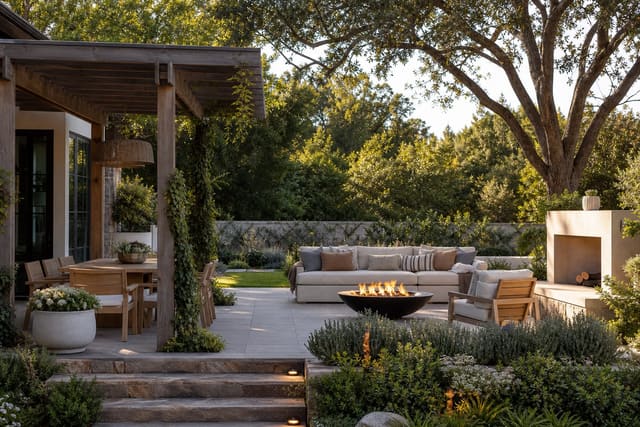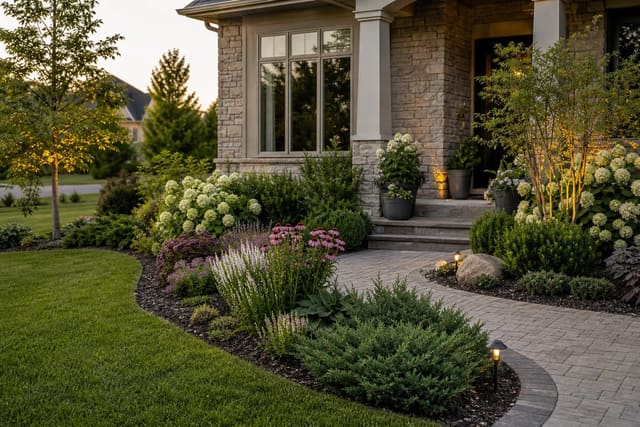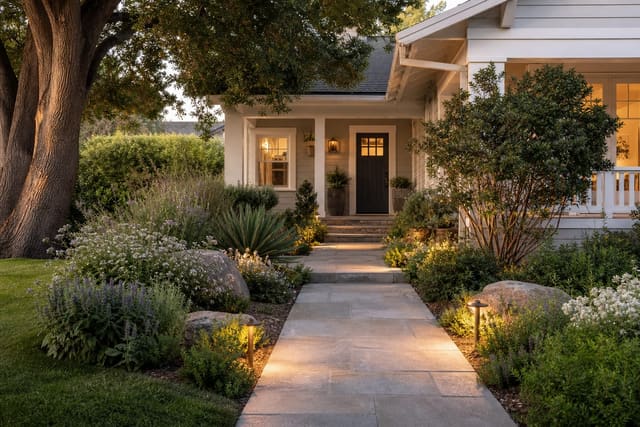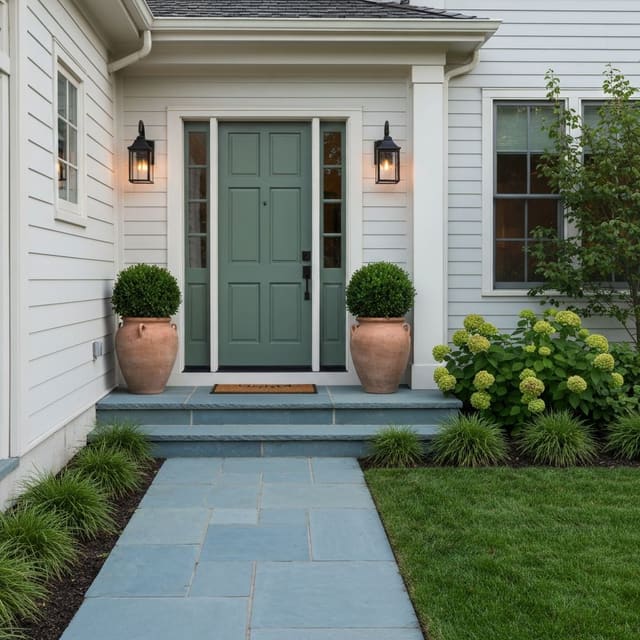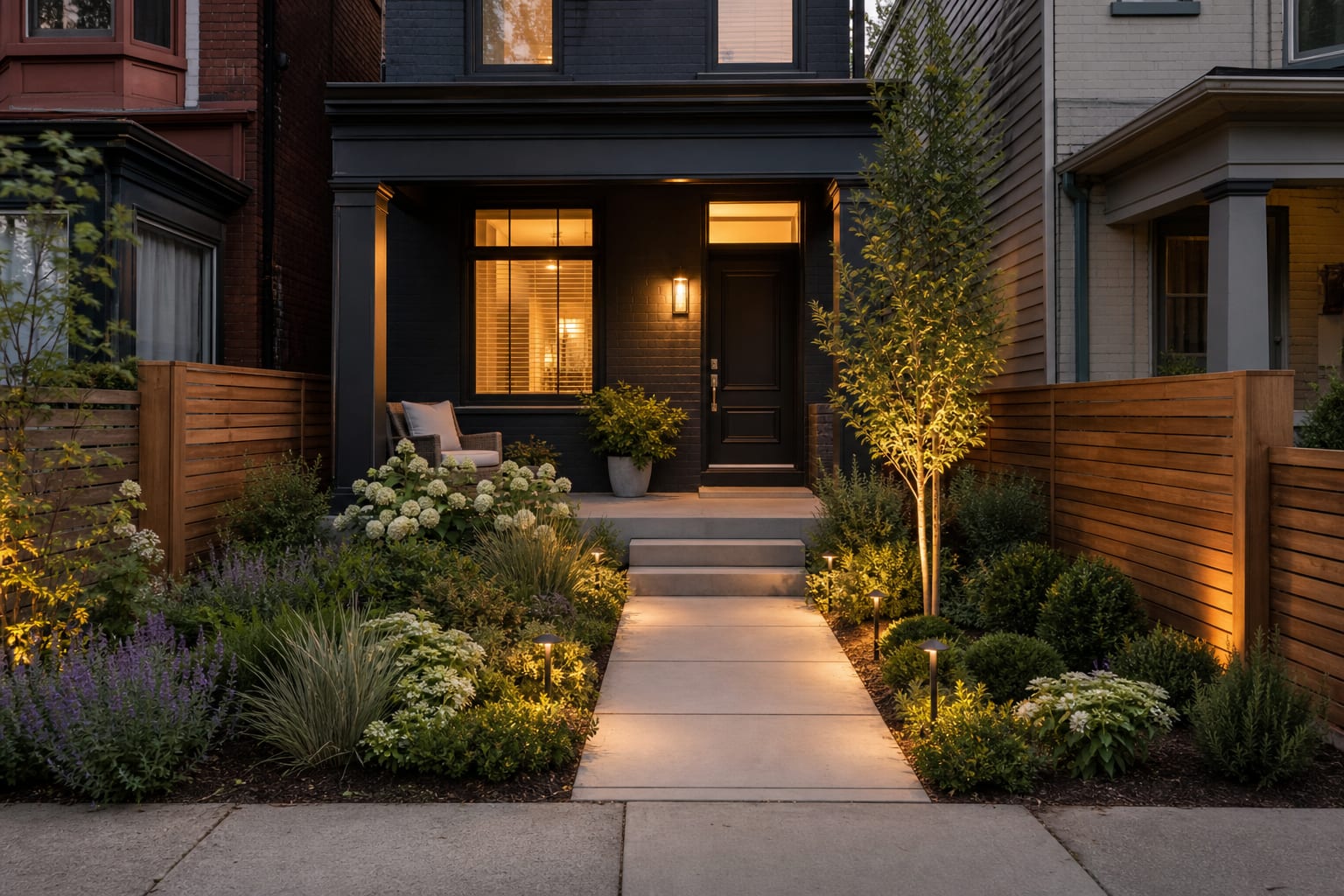
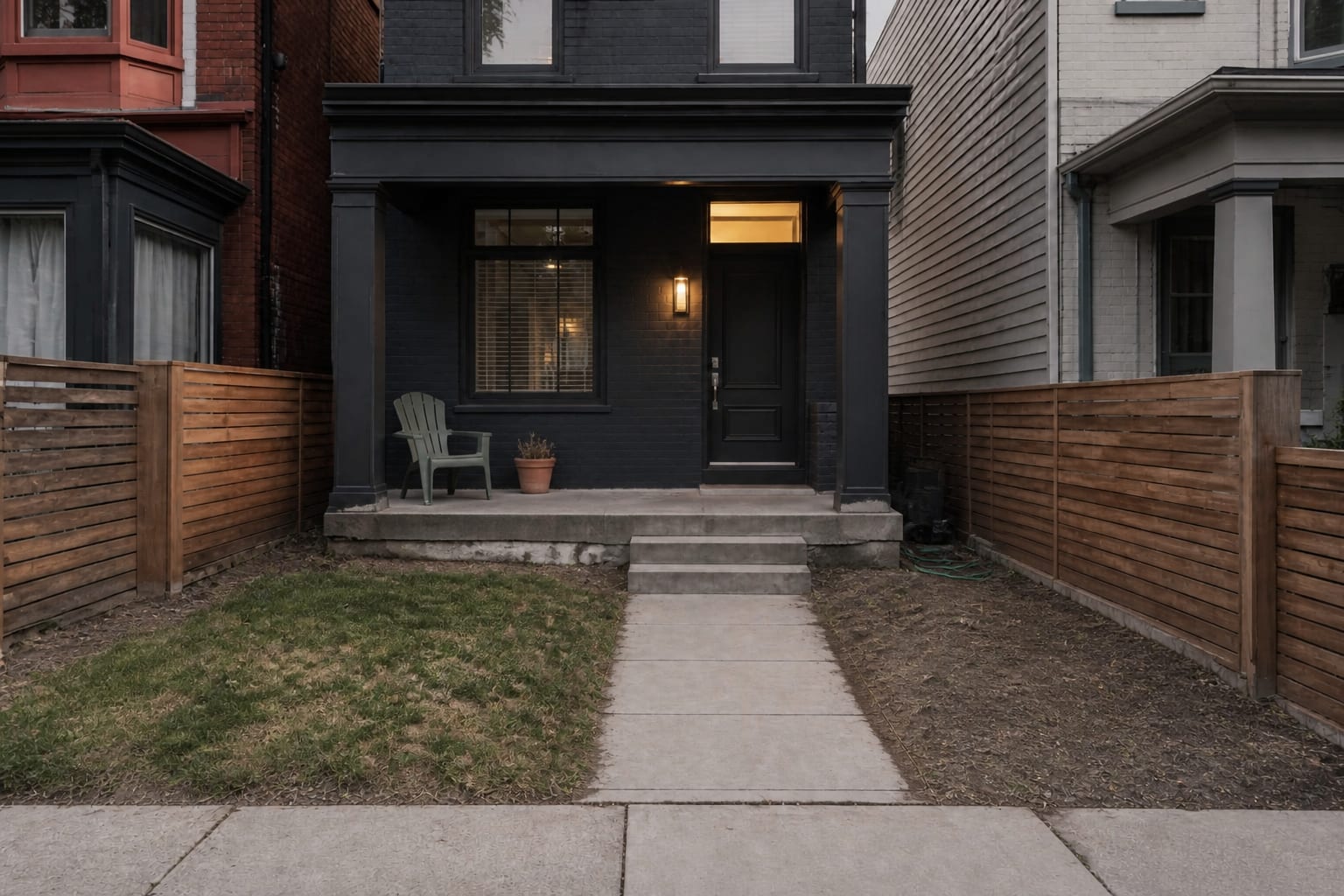
Narrow lot front yard ideas work best when you skip the strip-lawn, widen the walkway to 4-5ft, add a layered bed at least 3ft deep along the foundation, and plant one columnar tree as a vertical anchor. A tight urban frontage looks worse when features are scattered and looks expensive when the design is edited hard: one clear path, layered planting, and disciplined materials beat a dozen small gestures.
Field Checklist
- Keep the main walking line clear at about 36 inches before adding decorative layers.
- Settle on 3 dominant finishes, then repeat the calmest one where the eye needs a pause.
- Space repeated accents roughly 24 inches apart so the design reads connected, not scattered.
What makes a narrow front yard feel intentional?
A narrow front yard feels intentional when the design gives the eye one clean route from sidewalk to door, then supports that route with layered planting, scaled lighting, and a restrained material palette — the opposite of a little lawn, a little mulch, a lonely pot, and no clear priority.
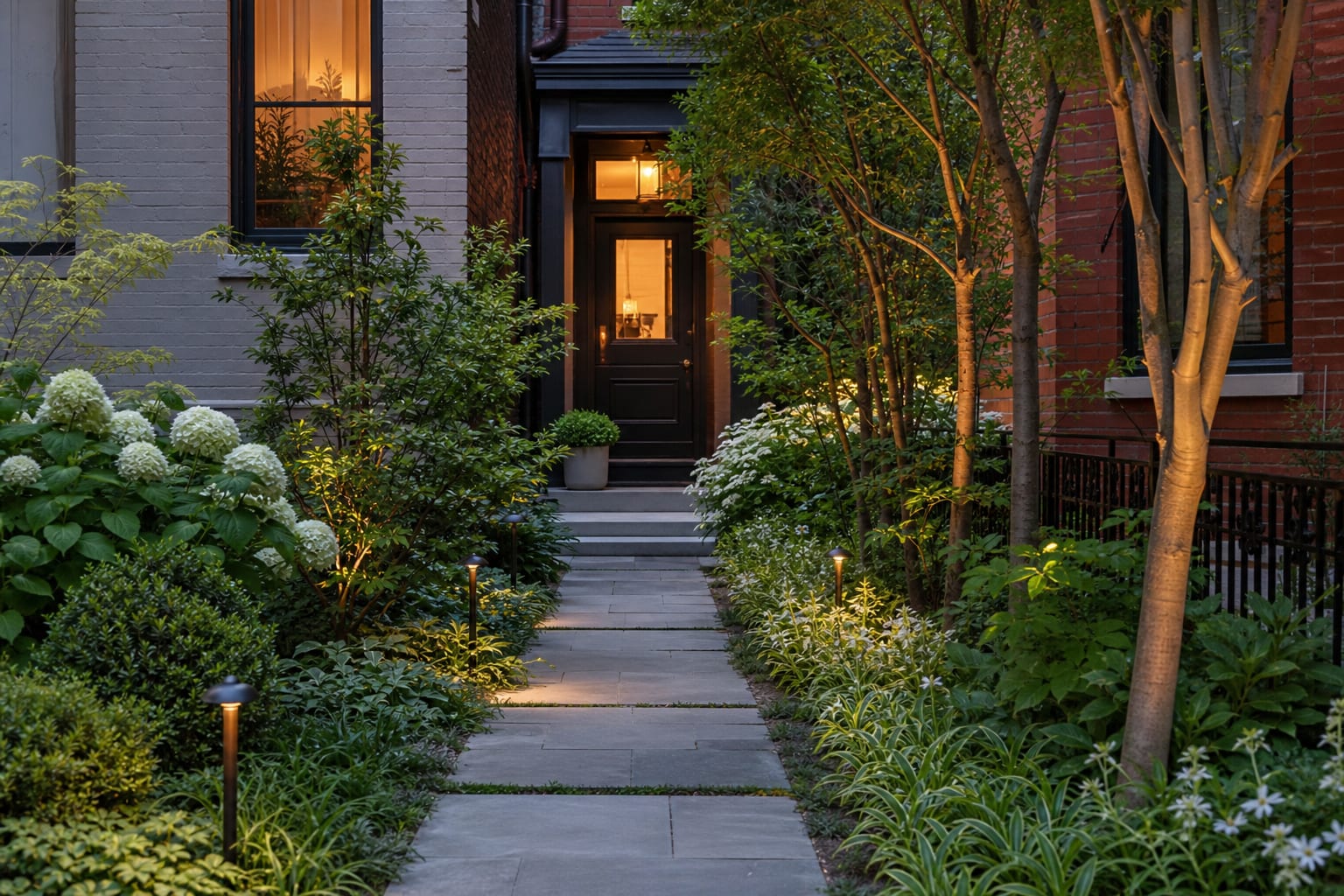
Start with the line of travel. A centered door often looks strongest with a straight walk; an offset door can take a gentle L-shape or angle, but the turn should feel planned, not squeezed around a utility box. See front walkway ideas for small entries for routes that use the walk as the yard's backbone.
Plant in layers: lowest plants (8-16 inches) closest to the walk, stepping up to 24- to 36-inch shrubs near the house. If the facade is flat, add one vertical element 5-8 feet tall — a trellis, columnar shrub, narrow tree, or wall-mounted planter grid. One tall move is enough on a 12- to 20-foot-wide frontage.
Hardscape needs the same restraint: use one main paving surface, one border material, and repeat the house color somewhere small — planter, rail, mailbox, or door hardware — since every joint is visible from the sidewalk.
Test this on your own photo with ReDesign before choosing a final direction; keep the house edge, horizon line, hardscape, planting beds, and main path visible so the preview solves the space you actually have.
Should the yard be a pass-through or a small garden?
Most narrow lots fail because the owner tries to make less than 200 square feet act as a lawn, a garden, and an entry court at once. Pick one hierarchy:
- Lawn strip vs. planted edge: choose the planted edge when the grass would be under 6 feet deep. A skinny lawn reads like leftover carpet; a 30-inch bed with repeating evergreen structure looks deliberate year-round.
- Curved path vs. direct path: choose direct when the frontage is under 18 feet wide. Cramped curves can make a townhouse front yard feel like a miniature golf hole.
- Open view vs. filtered privacy: choose filtered privacy when the sidewalk sits within 8 feet of the windows. Use open-branch shrubs, ornamental grasses, or a 3- to 4-foot fence rather than a solid hedge.
On corner or rowhouse lots, the front yard handles both arrival and exposure. Borrow tactics from corner lot privacy ideas that still feel neighborly: partial screening, staggered planting, and sight-line control beat one blunt barrier.
Seven ideas that earn their space
- Ribbon bed along the walkway: 18-24 inches deep, one low plant repeated every 18 inches — dwarf mondo grass, compact lavender, liriope, or low sedge.
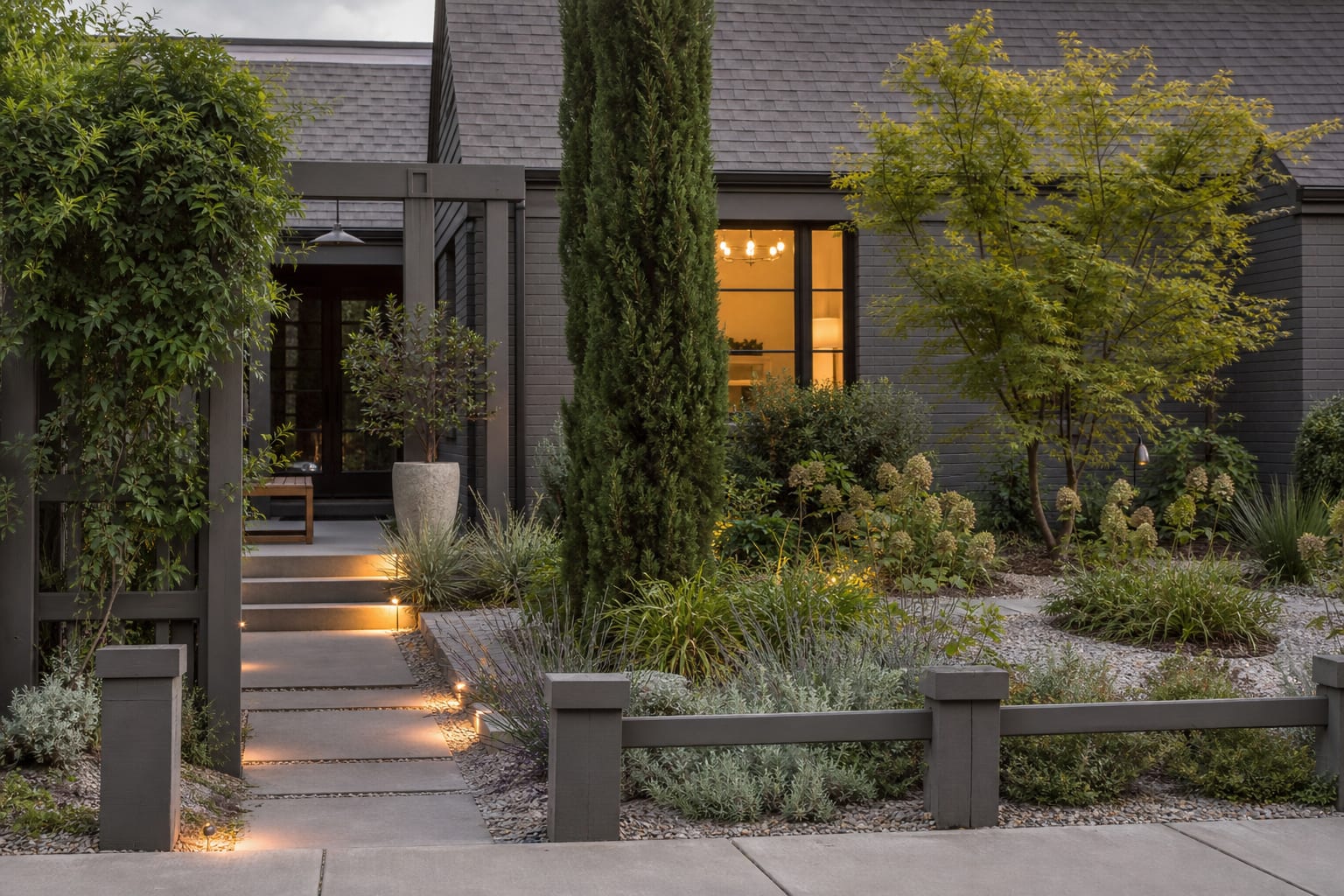
- Gravel garden instead of a tiny lawn: compacted base and 2-3 inches of gravel drains well and looks finished.
- One columnar tree near the door side, not centered — slim serviceberry, hornbeam, or upright evergreen — while keeping a 3-foot walking clearance.
- House-mounted planters where the ground is shallow: a 6- to 8-inch-deep wall planter adds life to brick, stucco, or siding without narrowing the walk.
- A low fence, 30-36 inches, only if it improves the edge; break anything taller with planting or open pickets.
- A stoop that does more work: two matching 14- to 18-inch pots, a fresh door color, and a visible house number.
- One seasonal flower pocket (about 3 square feet) near the mailbox, steps, or gate, keeping the rest structural — see front yard flower bed ideas for compact curb appeal.
Lighting is where narrow yards suddenly feel designed. Use warm white bulbs around 2700K, keep path fixtures below knee height, and avoid shining light into neighbors' windows. If a porch light is the only fixture, choose a shielded sconce that throws light down onto the threshold.
Mistakes to avoid
- One of everything shrinks the yard visually. Repeat three to five of the same plant in a line or drift instead.
- Shrubs that mature too wide mean constant pruning. In a 30-inch bed, choose compact varieties and leave 6 inches between mature foliage and the walkway.
- A 24-inch path punishes daily life — widen the main route before spending on decorative edging.
- Bright white landscape lights flatten the facade. Warm, low, shielded light gives texture to leaves, brick, stone, and steps instead.
- Blocking the house number hurts curb appeal and wayfinding. Keep the number visible, ideally lit or near the door.
Let maintenance shape the design: skip formal boxwood balls for loose grasses, evergreen groundcovers, or slow-growing shrubs if you don't want weekly trimming, and keep loose mulch away from the curb edge where it can migrate after storms.
Should I preview the design with AI first?
Yes — scale mistakes are hard to catch from a plant tag or paver sample, so AI previewing helps before you commit. Upload a straight-on photo from the sidewalk and test one variable at a time: wider path, no lawn, low fence, gravel garden, taller planting by the door, or a darker front door. The goal isn't to copy the first rendering but to see which idea makes the frontage feel calmer.
Take the photo at chest height, include the sidewalk and full door, and avoid parked cars. Photograph shaded yards in bright overcast light so the app can read planting zones and facade color, then ask: does this version make the entry more obvious from 30 feet away? For a tight urban property, the winning concept is usually the one with the fewest moves — a clean path, one vertical anchor, layered beds, warm lighting, and a visible address.
Frequently Asked Questions
What is the best front-yard layout for a narrow lot?
Replace strip-lawn with a 3-4ft deep planted bed against the foundation, a 4-5ft wide walkway routed in a gentle curve, and one columnar tree (Sky Pencil holly, columnar oak, parrotia) as a vertical anchor at the property line.
Should I have a lawn on a narrow front yard?
Often no. Strip lawns under 8ft wide are maintenance-heavy and rarely look good; converting the space to ground cover, hardscape, or a planted bed usually looks more finished and needs less upkeep.
What trees work for narrow front lots?
Columnar trees — Sky Pencil holly, columnar Norway spruce, Slender Silhouette sweet gum, and columnar hornbeam — stay narrow at maturity and won't crowd the lot line or driveway the way a spreading tree would.
How do I make a narrow front yard feel wider?
Curve the walkway, place plantings in diagonal sweeps rather than parallel rows, and skip front-yard symmetry. Diagonal lines read as more spacious than straight parallel ones in a tight frontage.
Can I add privacy on a narrow front lot?
Yes, within sight-triangle rules. A 36-42in low hedge, a layered planted edge along the sidewalk, or a small courtyard wall at the entry adds privacy without violating front-yard height limits.
> Try this: Ready to see this on your own outdoor space? Open ReDesign and run the preview before you buy materials, plant, drill, or move furniture.
Three transformations to try
1. Narrow front lot with curved path and columnar tree 2. Narrow front with planted bed replacing lawn 3. Narrow front courtyard at entry