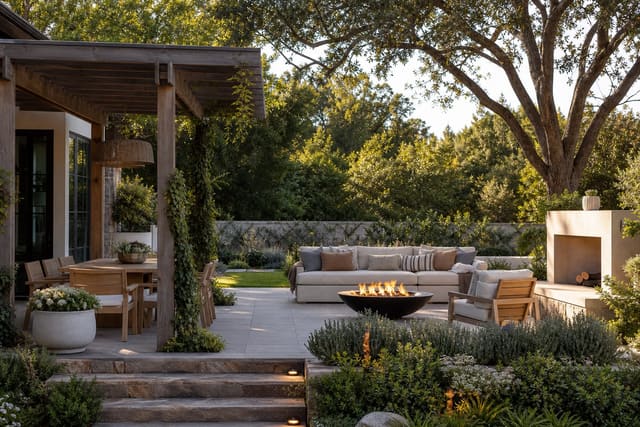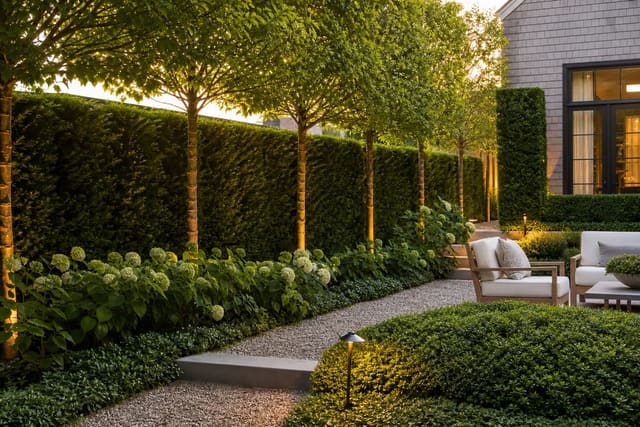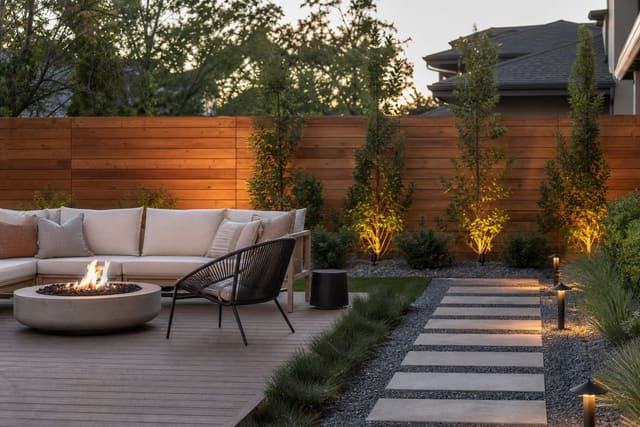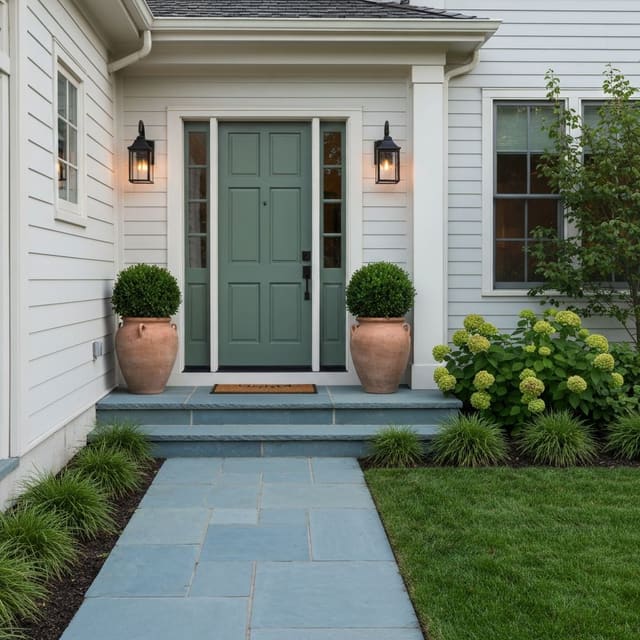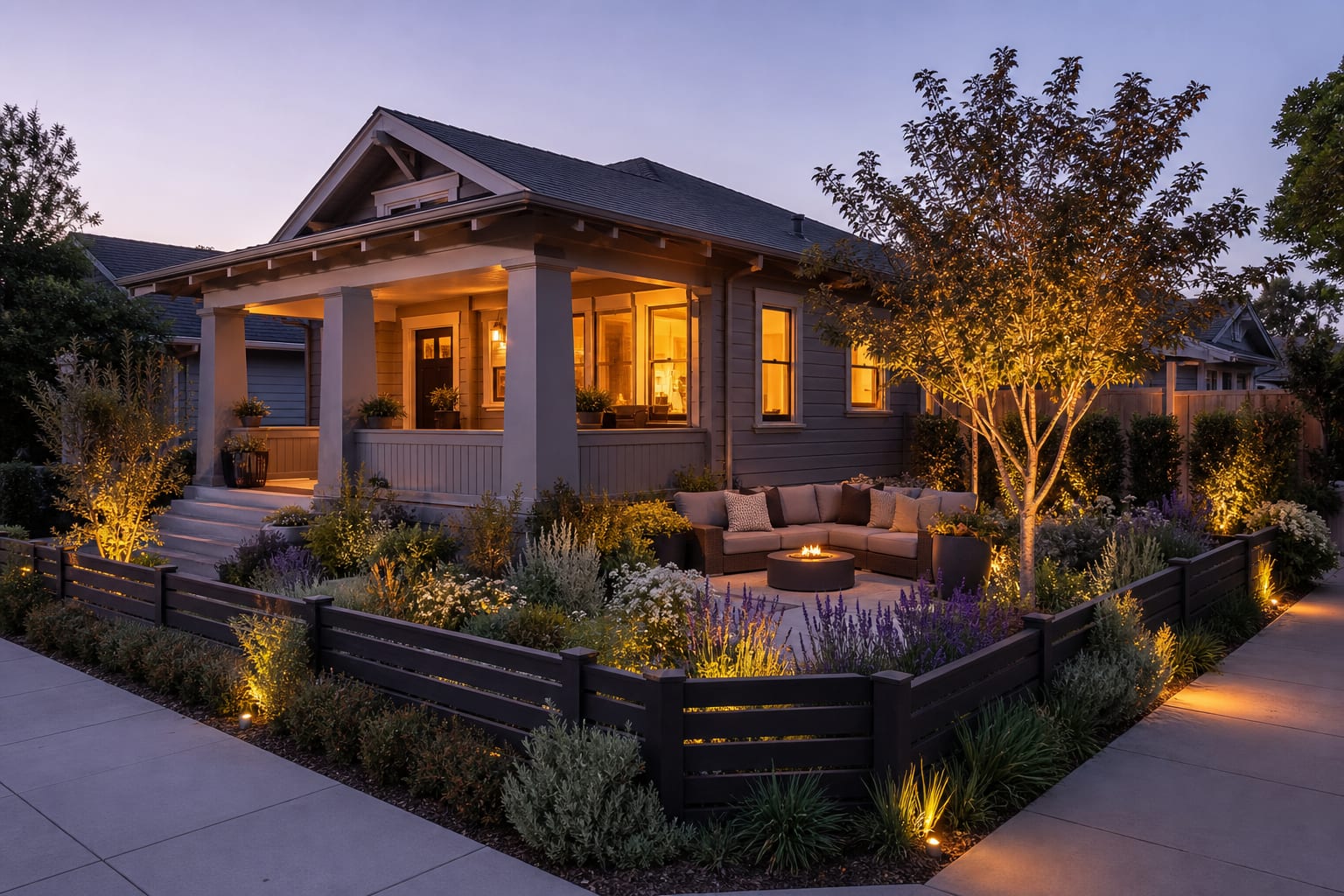
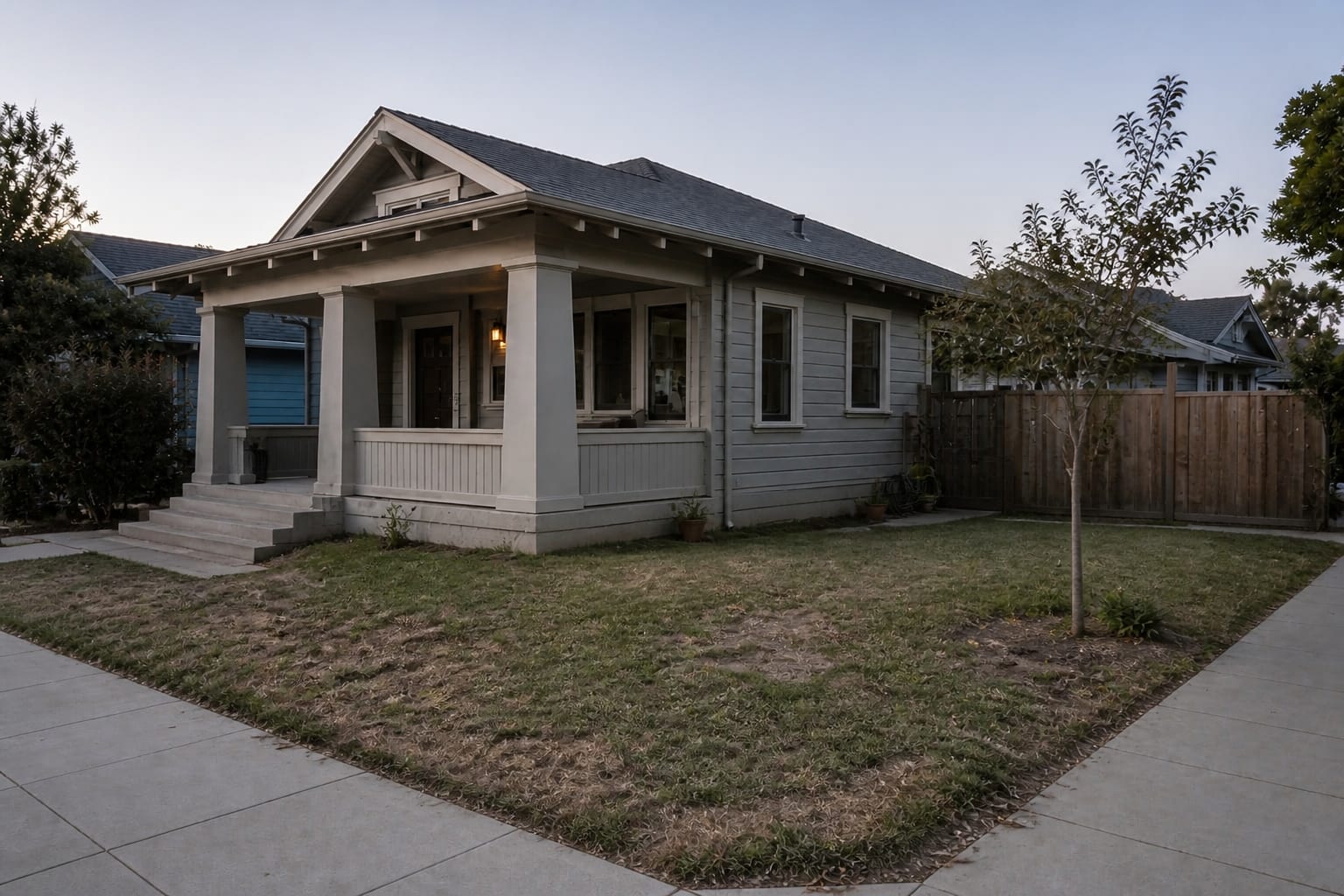
Corner-lot privacy works when you screen the two visible sides at different heights: a 5-6ft fence or hedge on the long side, a 36-42in lower screen on the entry side, an open corner sight triangle per code, and layered planting instead of one flat wall. The worst fix is a single tall fence wrapped around the whole corner. It looks defensive, blocks light, and may violate sightline rules. Good privacy comes from layering, not hiding.
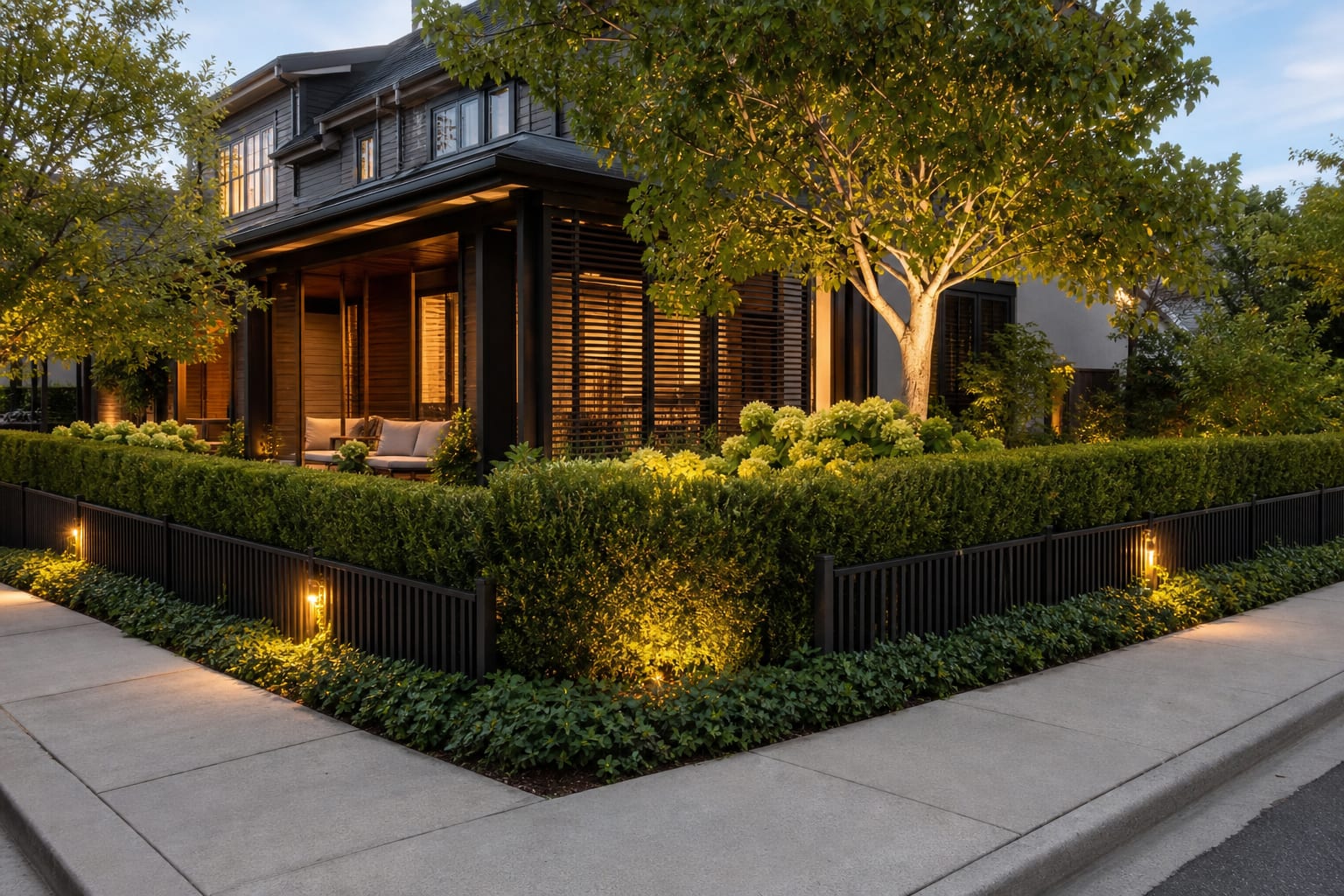
How do I add privacy to a corner lot without walling off the yard?
Screen the two street-facing sides with a mix of code-aware fencing, hedges, small trees, planting beds, and angled seating that blocks direct views without creating a blank fortress. The right mix depends on where people look in from: passing cars, a sidewalk, a bus stop, a neighbor's porch, or an intersection.
Start with sightlines before choosing materials. Sit on the porch, stand at the front window, and walk the sidewalk at eye height. A 42" hedge beside a porch may solve more than a 6' fence at the property line if the uncomfortable view happens close to the house. Near driveways and corners, keep planting low until code allows more height; most municipalities regulate a corner visibility triangle, so confirm the rule before planting dense evergreens near the curb.
Combine three layers: a low street edge (30"-42" fence or clipped hedge), a middle planting layer (18"-36" bed of grasses, shrubs, and perennials), and one taller accent, a small tree, trellis, or hedge section, to shield the porch, dining spot, or window that feels most exposed.
Which exposed edge deserves the strongest screen?
Give the stronger screen to the side where you linger, the porch, side patio, or seating area, not equally to both streets. Equal screening on both sides can steal light and make the property look boxed in.
On the formal front, use a lighter touch: a 30"-36" fence, clipped hedge, or low stone wall marks the boundary while keeping the entry readable. If the approach feels exposed, borrow ideas from front walkway design that guides the eye: curve or offset the path, flank it with layered planting, and make the door the destination.
On the side street, be more protective: a 5'-6' hedge, a short run of semi-solid fencing, or ornamental trees can shield windows without turning the facade into a barricade. Keep main circulation at least 36" wide and 30" minimum on a secondary path so daily use, car doors, strollers, trash bins, still works. Use posts, trunks, or shrubs at 6'-10' intervals rather than one flat green strip so the corner reads as designed from both streets.
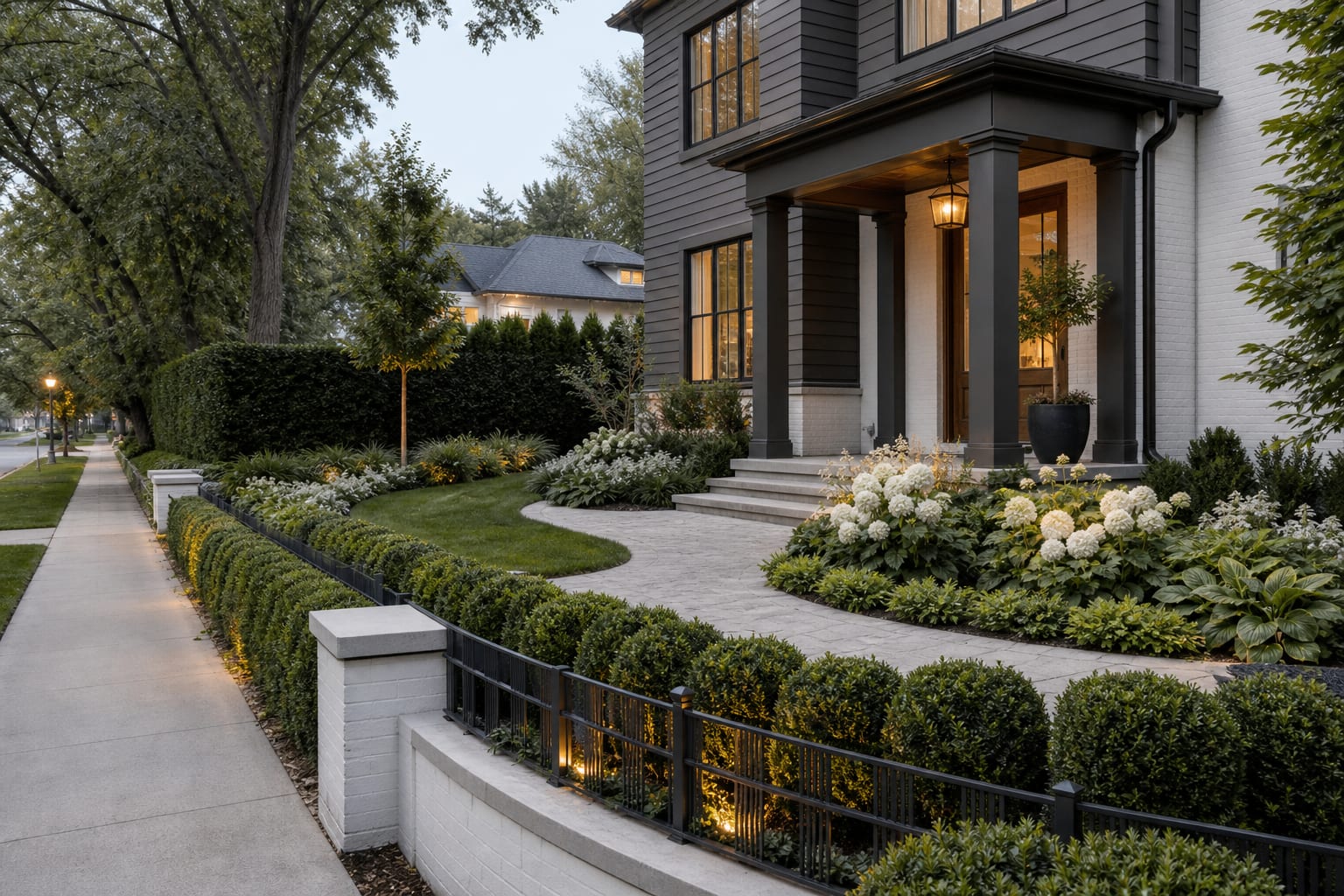
Five corner lot privacy ideas that respect the street
- Low fence plus planting behind it. A 30"-42" picket, rail, or metal fence with a 24"-36" deep bed filters sidewalk views while keeping the house visible.
- Tall screen only around the activity zone. Two 5'-6' panels near a porch swing or bistro table create a private pocket, set 24"-48" behind the sidewalk planting.
- An ornamental tree on the longest diagonal view. A small canopy tree shields upper windows; keep trunks clear near the corner and confirm mature height under utility lines.
- A layered front bed instead of one hedge line. Combine evergreen anchors, flowering shrubs, grasses, and groundcover in a bed at least 30" deep so the screen holds up in winter. See layered flower bed structure ideas for how this translates to exposed corners.
- Angled furniture instead of chairs aimed at the street. Rotating a bench 30-45 degrees toward planting or the door can make a sitting area feel private before any panel goes up.
On narrow parcels, skip oversized screening that swallows the lawn. A slim hedge, columnar evergreen, or trellis often beats a deep mixed border; the same discipline used in narrow lot front yard planning applies: one clear path, one main planted edge, no bulky feature blocking the entry.
What corner lot privacy mistakes should I avoid?
- Building to maximum height everywhere. A tall fence on two streets hides the house and may fail zoning. Go low at the intersection, medium along the public edge, tallest where the family sits.
- Planting one unbroken hedge. A continuous run reads as a green wall and can thin at the base. Break it every 12'-20' with a gate, small tree, or lower section.
- Ignoring night privacy. A lit window at 2700K with no treatment becomes a stage after dark. Pair screening with interior window treatments and shielded path lighting.
- Choosing plants for instant height only. Fast growers can go leggy or too wide. Check mature width, not just nursery height, and leave room to prune from the yard side.
- Blocking the entry. Keep the walkway legible and frame the door with a visible paving change; reveal the route in stages rather than hiding it behind a hedge.
How can I preview a corner lot design before building?
Upload a straight photo from each street-facing side and test a few versions: low fence with grasses, taller hedge on the side street, an ornamental tree at the diagonal view, and a screened porch pocket. Keep the sidewalk, curb, driveway, and door visible so the preview tests the whole public face of the house.
Compare height, not just style, by testing 36", 48", and 6' screening in the same camera angle to find the lowest option that still feels calm. Also test planting depth: a bare fence can look abrupt, while the same fence with 30" of shrubs feels settled. If a design hides the door or darkens front windows, revise it before buying posts or mature shrubs.
Test this on your own photo with ReDesign before choosing a final direction, keeping the house edge, horizon line, hardscape, beds, and main path visible.
Frequently Asked Questions
Can I put a 6ft fence on a corner lot?
Most jurisdictions allow 6ft on the rear and one side but limit the front and the corner sight triangle to 36-42in for visibility. Check local code before committing to a fence height.
What is a corner-lot sight triangle?
It's a 25-30ft right triangle at the corner intersection where any obstruction over 30-36in is prohibited. The triangle protects sightlines for drivers and pedestrians.
What plants screen a corner lot best?
Layer arborvitae, cypress, or hornbeam at the back, viburnum or ninebark at mid-height, and ornamental grasses or perennials up front. Five layers of 3-4ft each beat one wall of 12ft trees.
How do I screen a corner lot without a tall fence?
Combine a 5-6ft fence section with a hedge on one side, a 36-42in masonry wall on the front, and a tree cluster at the corner. The layered look reads as design, not blockade.
Are corner-lot hedges high maintenance?
Only when sheared formally. Switch to a naturally compact species like dwarf yew, dwarf eastern red cedar, or 'Sky Pencil' holly that holds shape with one annual trim.
> Try this: Ready to see this on your own outdoor space? Open ReDesign and run the preview before you buy materials, plant, drill, or move furniture.
Three transformations to try
1. Corner lot with layered hedge and low wall 2. Corner lot with cedar fence and tree cluster 3. Corner lot with grasses and stepped screen