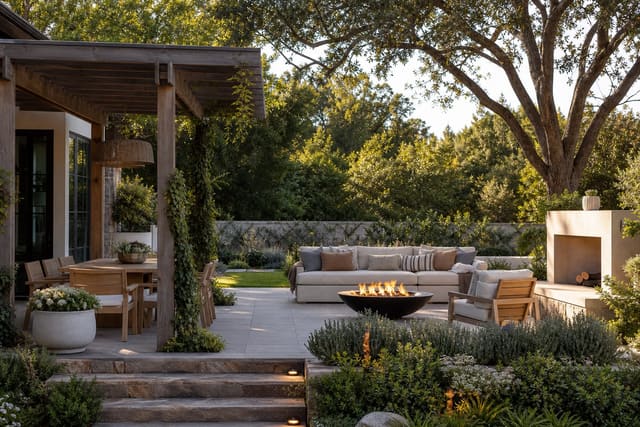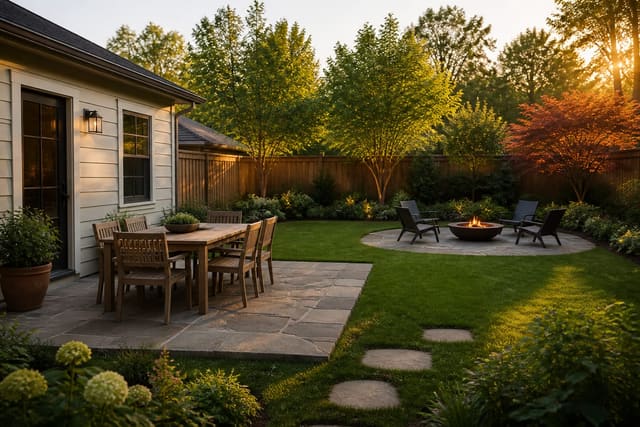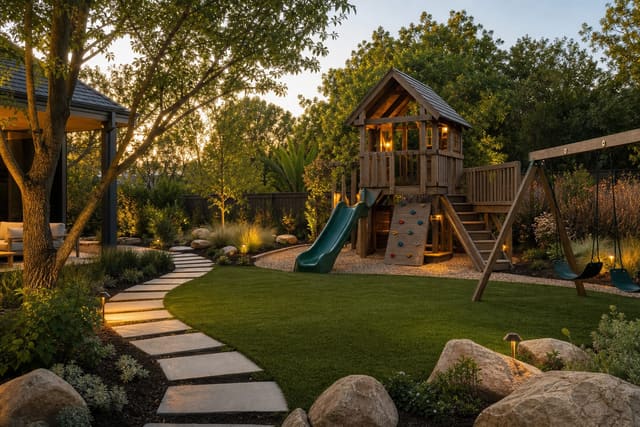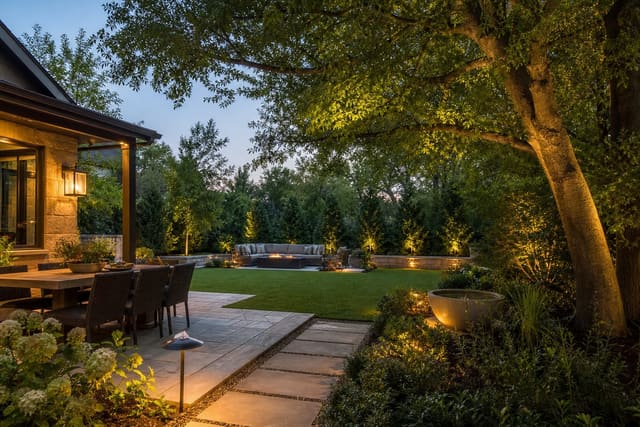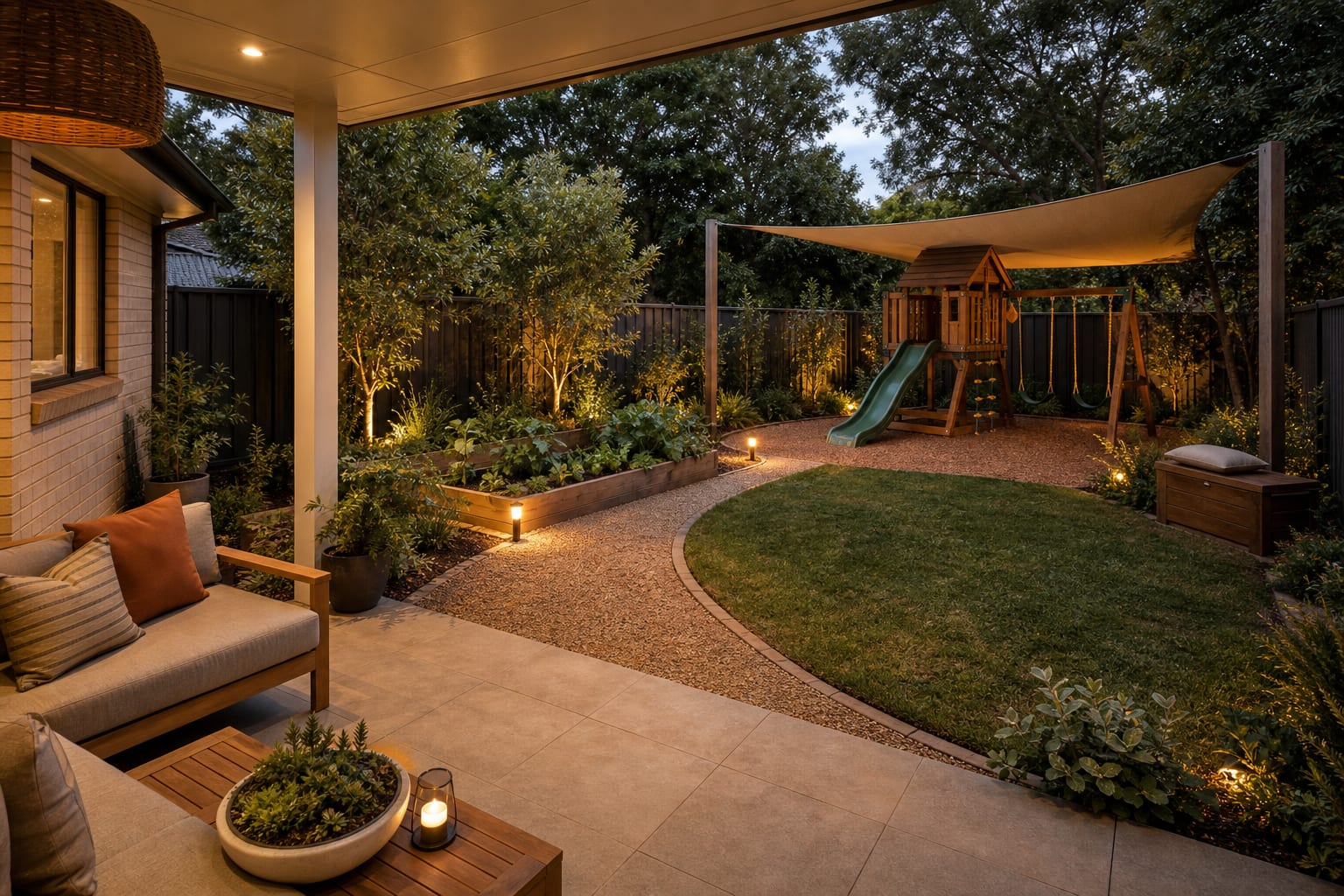
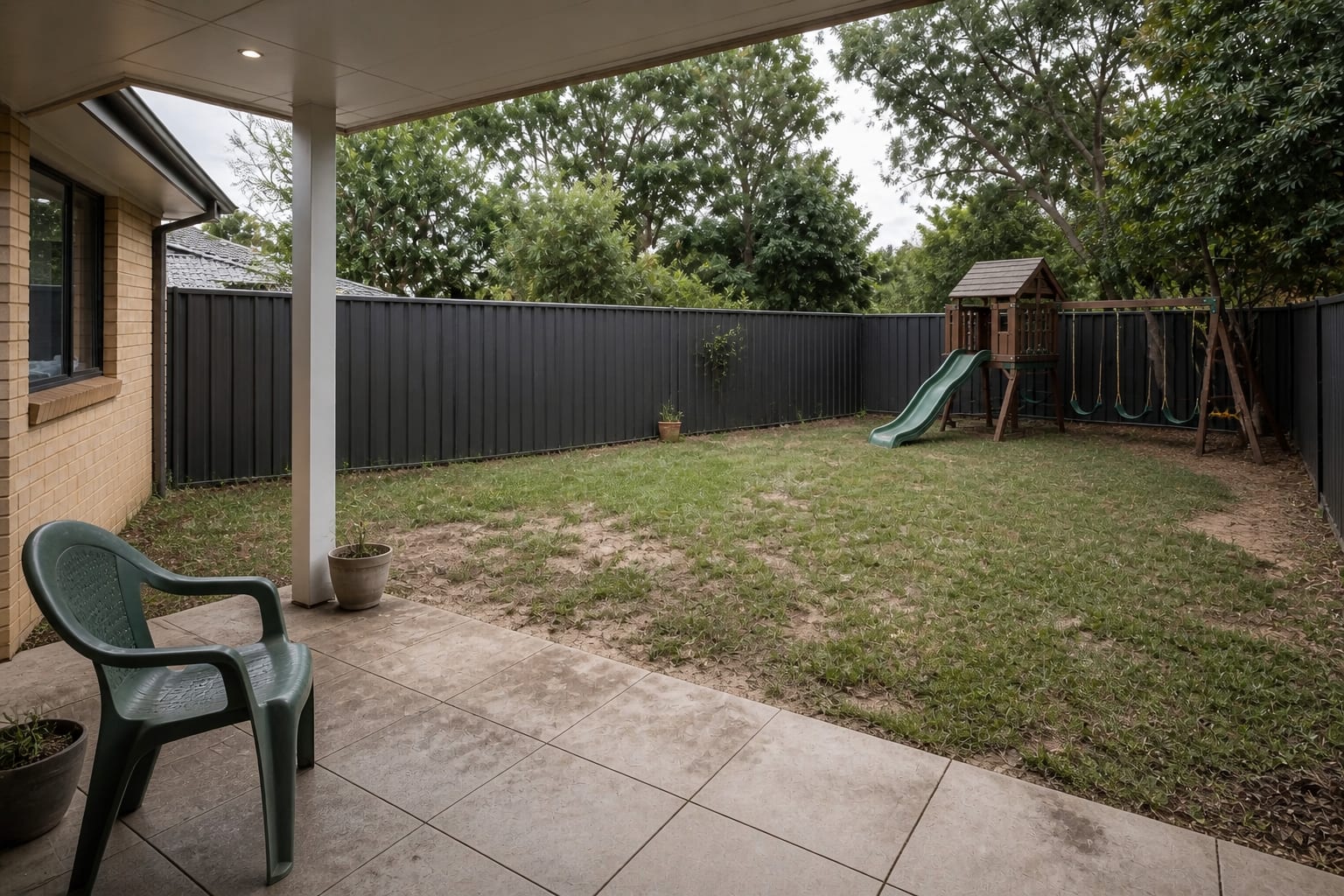
The best kids outdoor space ideas divide a yard into distinct zones - active play, messy/creative play, quiet retreat, open flex space, and adult seating - with safety surfacing only under equipment and clear sightlines from the house. Skip the miniature amusement park approach; a backyard with clear zones, soft landings, and visual order works better and lasts longer than more equipment.
What makes a backyard feel safe without looking sterile?
A kid-friendly backyard feels safe when active equipment has proper clearance, ground surface matches fall risk, and adults can read the whole yard at a glance. That doesn't mean wrapping every edge in plastic. It means placing risky movement in one deliberate zone and letting planting, paths, and furniture soften the rest.
- Protect a 30-36 inch route through the yard before choosing furniture or accessories.
- Repeat one visual cue three times (a metal finish, planter shape, or trim color) to tie the space together.
- Solve the core layout problem first; accessories should support the plan, not cover for weak planning.
Start with the playset since it has the least flexibility. Wood chips, engineered wood fiber (EWF), rubber mulch, and poured rubber all perform differently, but bare soil under a ladder is the first thing to fix. If budget is tight, spend on the landing surface before the taller tower.
Sightlines matter as much as surfacing. A play area 40 feet away can work if it sits on the same visual axis as the kitchen window; one hidden behind shrubs turns every scraped knee into a search party. If the broader yard needs structure first, see backyard landscaping ideas that organize zones.
What are the five kid zones worth designing on purpose?
- Active zone: Build around one main movement type (swinging, climbing, or sliding) with a 6-foot clear perimeter. Mixing every activity into one tight corner causes collisions.
- Children's garden: A 3-by-6-foot raised bed or two 24-inch planters near a hose gets watered and weeded more than one across the yard.
- Messy station: A mud kitchen or sand table on gravel or pavers, not lawn. A 4-by-6-foot pad fits two kids and defines where the mess belongs.
- Open flex space: At least 10 by 12 feet of empty lawn for balls, tents, and sprinkler play. This is the zone that saves you from overbuilding.
- Quiet edge: A low bench, stepping stones, or small shade spot gives kids somewhere to retreat from loud play.
| Decision | Better near the house | Better farther out |
|---|---|---|
| Toddler play | Low climbers, sand table, water table | Rarely; supervision is too constant |
| School-age play | Storage, snack landing, garden bed | Swings, climbing frames, open lawn |
| Adult comfort | Dining table, grill, lounge chairs | Fire pit, hammock, wilder planting |
Test this on your own photo with ReDesign before finalizing the layout; keep the house edge, horizon line, hardscape, planting beds, and main path visible so the preview solves the space you actually have.
How do playsets, paths, and gardens work together?
The yard works when kids can move in a loop without cutting through adult seating or the garden bed. Kids follow edges; give them a path and they stop inventing one through the flower bed.
A 36-inch-wide path suits one child with a scooter; 42 inches works better for two people passing often. Metal edging or buried paver borders keep gravel paths from dissolving into the lawn, and stepping stones should sit 18-24 inches apart center to center.
Keep at least 30 inches behind dining chairs so no one lands in a toy pile, and avoid placing a slide exit toward seating. For yards that also host dinners, see outdoor entertaining area ideas for family yards.
What backyard mistakes should you avoid?
- Buying the biggest playset the yard can hold. Fall zone, swing arc, and circulation space matter more than tower height; a smaller structure with proper clearance beats a tall one crammed near a fence.
- Treating lawn as the only safe surface. Grass under swings wears out fast in wet or shaded yards; use a defined landing material where feet drag and slides empty out.
- Tucking the garden into an inconvenient corner. Keep edible beds near water and close to the house so checking on strawberries isn't an expedition.
- Skipping storage. A 48-inch bench box, a wall-mounted scooter rack, or three labeled bins keeps balls and buckets from becoming the main view.
- Designing only for today's age. A toddler water table can become a potting bench and a swing bay can later hold a hammock if the layout isn't too childish.
Should you preview a kids' backyard with AI design first?
Yes, when the problem is layout rather than fantasy. Upload a straight-on photo from the patio door and test where the playset, garden bed, shade sail, storage bench, and path should go before buying heavy pieces or digging post holes. It won't replace equipment safety instructions, but it will show whether a 12-foot play zone blocks the dining area.
Clear loose toys first and shoot in daylight with the full fence line visible. Request one version with natural wood equipment, one with a colorful garden, and one that prioritizes adult seating. If pets share the yard, compare against dog-friendly backyard ideas for shared family spaces so the mud kitchen doesn't land in the dog's favorite run.
Frequently Asked Questions
What age range should a backyard kids area be designed for?
Design for the youngest child plus 5-7 years to avoid rebuilding every 3 years. A structure with monkey bars and a climbing wall suits ages 4-12, while a sandbox suits 2-6 and can convert to a planter after age 7.
How much outdoor space do kids need for active play?
400-600 sq ft for an active zone with one climbing structure allows adequate run-up. The minimum safe fall zone - 6 feet on all sides of any climbable element - defines the space more than total lawn area.
How do I make a kids outdoor space safe?
Use 9 inches of EWF or poured rubber under climbable structures, ensure no exposed bolt ends or splinter points, avoid gaps between 3.5 and 9 inches (head entrapment zone), and place the active zone where it's visible from the kitchen window.
What outdoor activities work best for kids ages 5-10?
A vegetable garden plot (2ft by 4ft raised bed per child), a chalk-paint concrete patch, and a mud kitchen convert passive lawn into active learning spaces that hold attention for 90-plus minutes.
How do I design a backyard kids space that doesn't look like a playground?
Choose earth-tone or wood-finish structures instead of primary-color plastic, use natural grass or EWF rather than garish synthetic turf, and edge the play zone with the same paver or plant material used elsewhere in the garden.
> Try this: Ready to see this on your own outdoor space? Open ReDesign and run the preview before you buy materials, plant, drill, or move furniture.
Three transformations to try
1. Climbing structure with natural EWF fall zone 2. Mud kitchen and raised garden plot corner 3. Picnic zone with chalk concrete and planting border