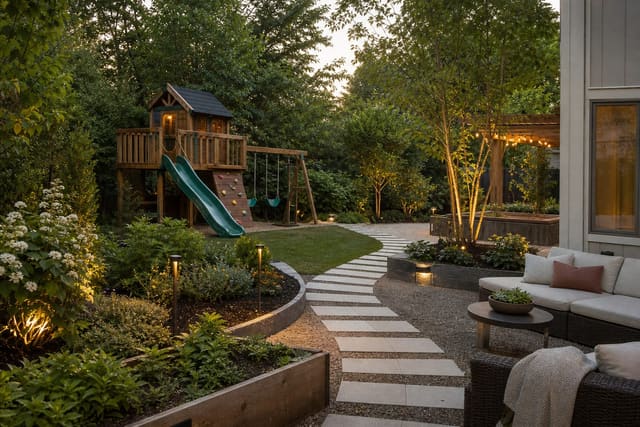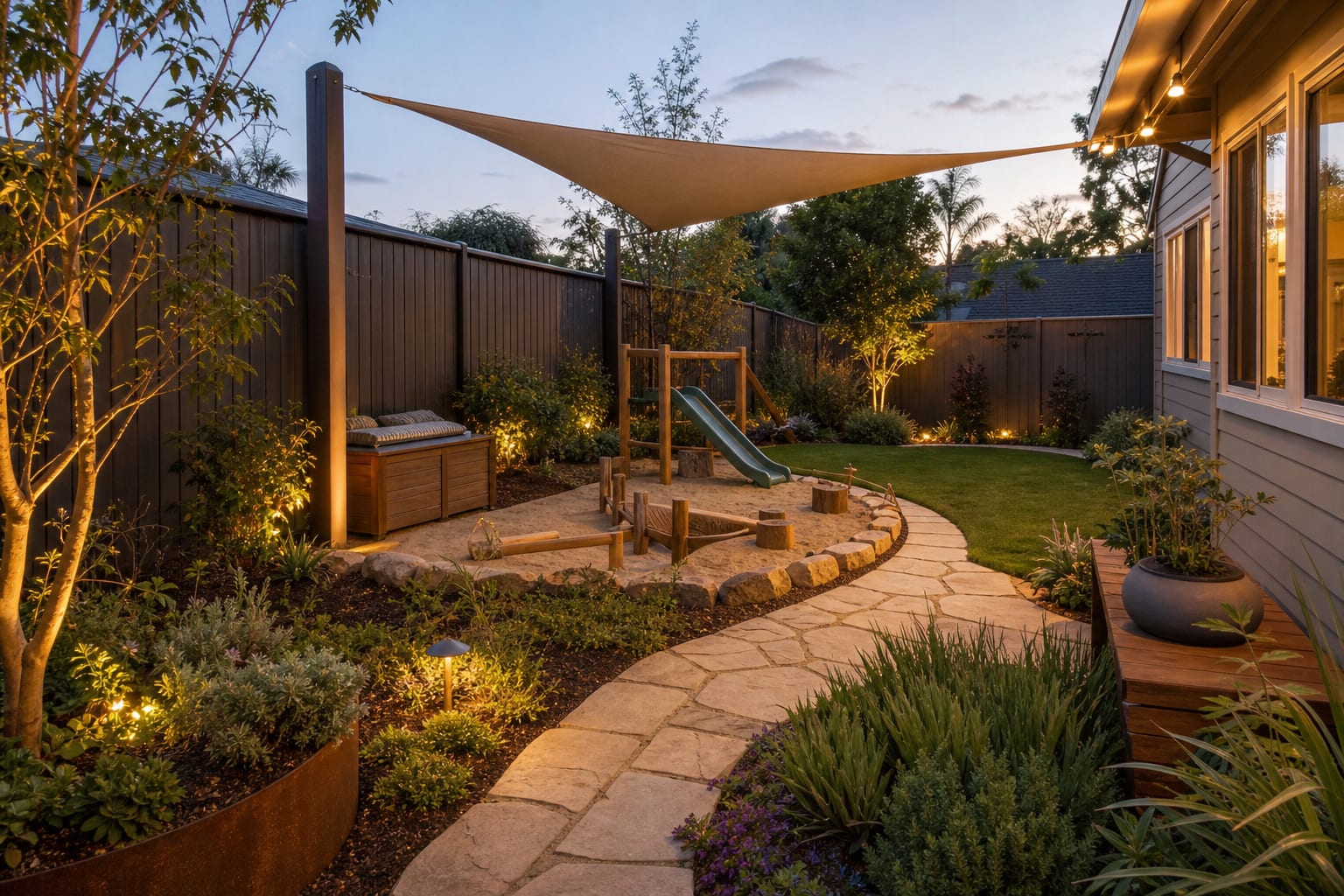
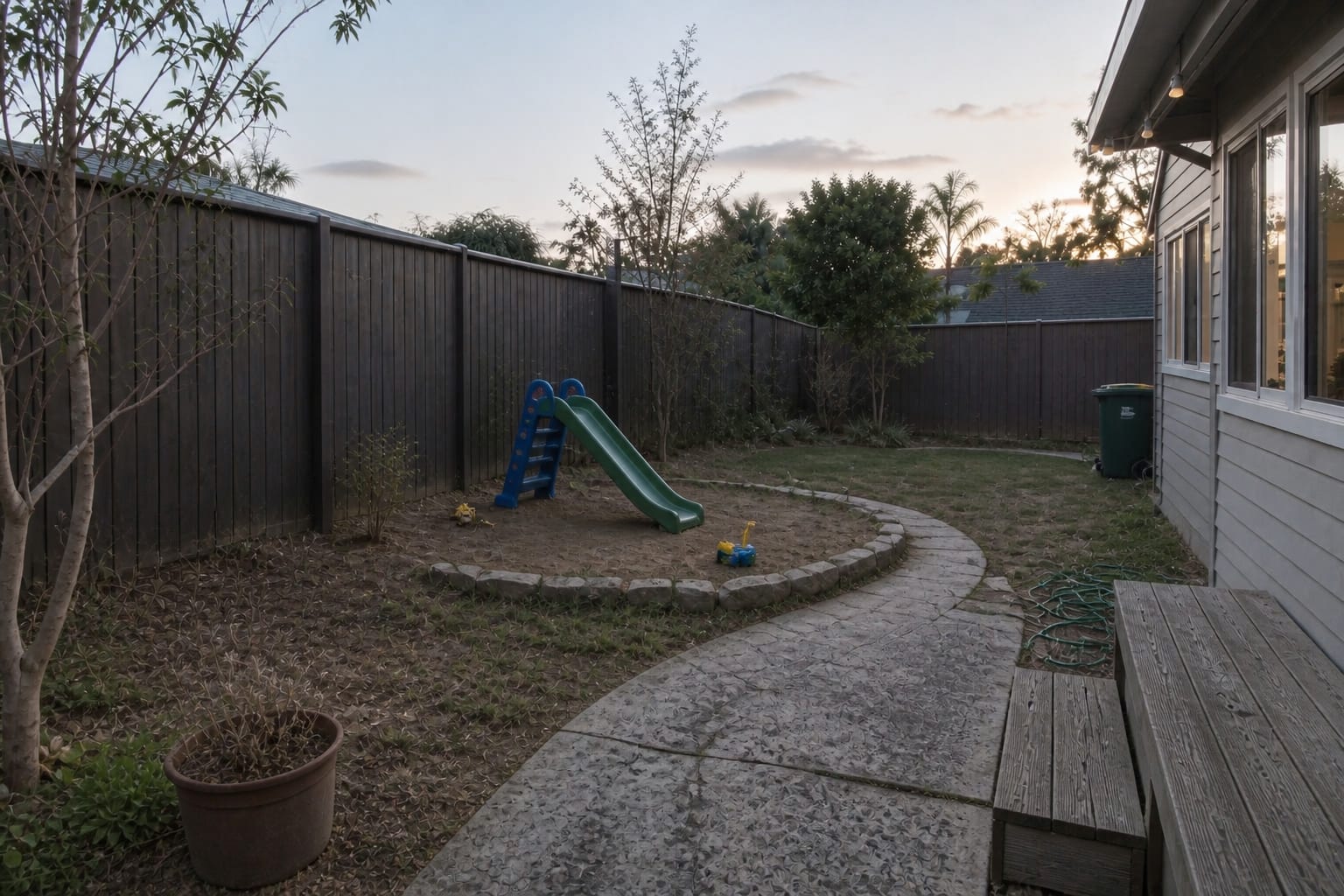
A backyard play area works when it sits on a 4-6in shock-absorbing rubber mulch or engineered wood fiber base, is sized at least 12ft x 12ft per structure, keeps a 6ft fall zone clear on all sides, and stays 3ft off the fence line. Design outdoor play areas around safety, shade, drainage, sightlines, and distinct zones before buying a slide.
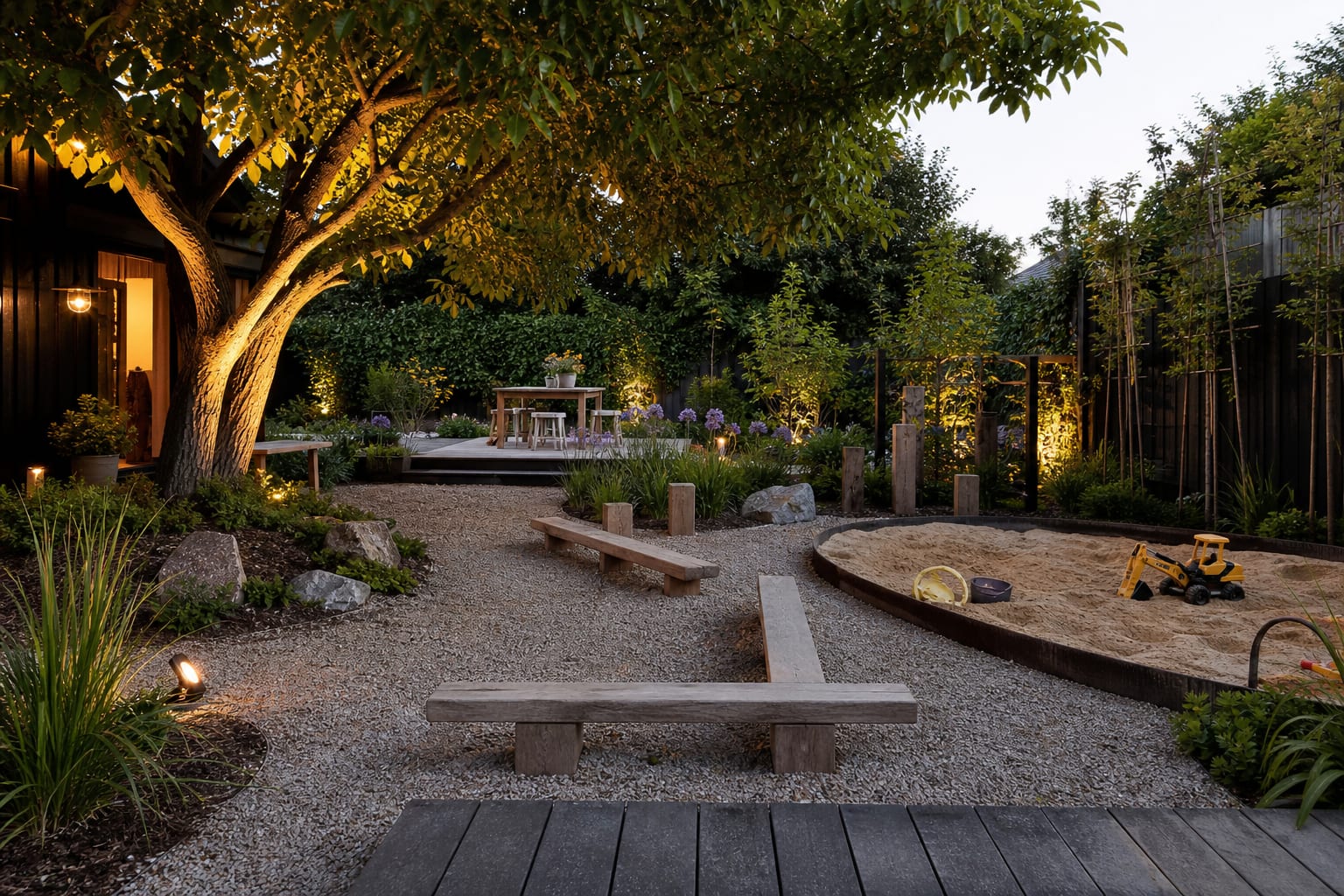
What makes a kids' backyard play area feel designed, not dumped?
A play area feels designed when equipment, surface, shade, planting, and adult sightlines work as one outdoor room rather than a playset dropped onto leftover lawn. Protect a 36 inch clear path from the door to the play zone that doesn't cut through swing arcs or behind a slide. Beside a dining patio, borrow the zoning logic from backyard landscaping ideas for real yards so the kids' zone, lawn, and seating read as related spaces.
Surfacing is the least glamorous, most important decision. Grass handles low play and tumbling but turns to mud under swings; engineered wood fiber, rubber tiles, poured rubber, pea gravel, sand, and turf each trade off differently by height, drainage, budget, and maintenance. Keep the manufacturer's required clear zone open around active equipment instead of ringing it with planters.
Shade should shape the plan early. A playhouse baking in western sun gets abandoned by August, while a platform under a mature tree becomes the favorite corner. If you add a shade sail, keep posts out of running lanes and hang it high enough that adults clear the edge.
Which zones should lead the playgarden plan?
Zones should follow how kids actually play: big movement, sensory mess, quiet retreat, pretend play, and shared family time. One giant structure rarely serves every age, and it often makes a small yard feel worse.
| play zone | best backyard use | spec that keeps it practical |
|---|---|---|
| climbing and sliding | preschool through grade-school | match fall surface and use zone to equipment instructions; no furniture in the landing area |
| sand or digging | toddlers, sensory play | a 4 by 6 foot box fits two children without swallowing the yard |
| balance trail | narrow yards, natural design | logs or beams set 6-12in high for younger kids |
| pretend house or stage | imaginative play, playdates | leave a 3ft approach so doors and props clear planting |
| art and water table | patios, supervised play | place near a hose and use a washable surface underfoot |
A natural playgarden design ages better than a themed plastic setup because timber, boulders, and platforms shift as kids grow. If the yard also hosts cookouts, connect the play layout to outdoor entertaining area ideas so adults can sit nearby without blocking the running route. Keep planting sturdy and non-spiky, skip thorns and toxic species near the collision zone, and leave 18-24in between fast-growing shrubs and play edges.
Test this on your own photo with ReDesign before choosing a direction, keeping the house edge, hardscape, and main path visible so the preview solves the space you actually have.
Five outdoor play area ideas that look good after the toys come out
- Timber balance path. Keep beams under 12in high in a 30-36in wide strip of mulch or turf so it reads as a landscape edge, not scattered obstacles.
- Sand and mud kitchen corner. Pair a 4 by 6 foot sand area with a 24in deep counter, bordered in timber or steel to stop the mess migrating into the lawn.
- Playhouse as a garden focal point. Paint it to match the fence or trim, add a 3ft landing at the door, and plant tough grasses nearby so it feels settled.
- Climbing-and-slide zone with generous landing space. Keep benches, planters, and fire pits outside the manufacturer's use area; decor at the bottom of a slide is still a collision point.
- Quiet nook for cooling down. A 5 by 5 foot corner with a shade canopy, cushion, and stump table gives overstimulated kids somewhere to pause.
A side-yard scooter and chalk lane, 42-48in wide with vertical storage at one end, can absorb overflow if the main backyard is tight. Review kid-friendly outdoor space planning before choosing the largest structure; smaller flexible zones often get used more than one oversized tower.
Common outdoor play area mistakes to avoid
Buying the playset before measuring its safe zone is the top mistake. Mark the footprint with string, then add the required fall clearance before deciding the yard can handle it. Treating shade as optional decor is next; plastic slides, dark decking, and rubber surfacing get uncomfortable in harsh sun, so shade the waiting and slow-play areas first.
Using loose toys as the whole design makes a yard look chaotic even when kids are happy; give balls, tunnels, and ride-ons one parking zone within 10-15ft of the main action. Dense planting near sightlines can hide a slide bottom or gate latch, so keep it low near play and tall only along the property edge. Finally, design for mowing, draining, and cleanup on ordinary days, not just for birthday-party photos.
Use AI design to test the play zone before anything is built
AI design helps with outdoor play area ideas because the hardest choices are spatial: where the zone sits, how large the structure feels, and whether adults can still enjoy the yard. Upload a photo from the usual supervision angle, then test a natural timber playgarden, a compact playset with mulch, and a mixed sand-and-balance zone from the same view.
If a rendering looks toy-heavy, remove one plastic item before adding a plant. If it looks too bare, add a defined edge or storage bench before upsizing the structure. Contractors, installers, and local safety guidance still matter for anchors, drainage, and fall zones, but a preview stops you from committing to the wrong layout while it's still easy to change.
Frequently Asked Questions
What is the safest ground cover for a backyard play area?
Engineered wood fiber (EWF) at a 9in loose depth or 3in rubber pour-in-place meets ASTM F1292 at 6ft fall height and drains faster than sand. Pea gravel works at lower fall heights but migrates out of the zone over time.
How much space do I need for a backyard swing set?
A full-size swing set needs a 6ft fall zone on all sides, so a 3-bay swing beam 12ft wide requires a 24ft x 20ft footprint minimum. Compact A-frame sets with two swings fit in 18ft x 14ft.
How do I keep a play area from becoming a mud pit?
Install landscape fabric as a base, border the zone with 6-8in pressure-treated timber or composite edging, and fill to a 9in depth of EWF. The edging retains material and the fabric blocks weeds from below.
At what age should a backyard play area include a sand table?
Sand tables suit ages 1-5 best. For ages 5-10, swap the sand table for a water table or garden patch and add a climbing wall panel to the main structure instead.
Should a backyard play area be fenced off from the rest of the yard?
A 3ft perimeter border or low garden rail is enough to define the zone and stop toddlers wandering out. Full fence enclosure is worth it only if the yard gate opens to a street.
> Try this: Ready to see this on your own outdoor space? Open ReDesign and run the preview before you buy materials, plant, drill, or move furniture.
Three transformations to try
1. Rubber mulch play zone with climbing structure 2. Swing set with soft-surface fall zone 3. Garden patch and sand table corner