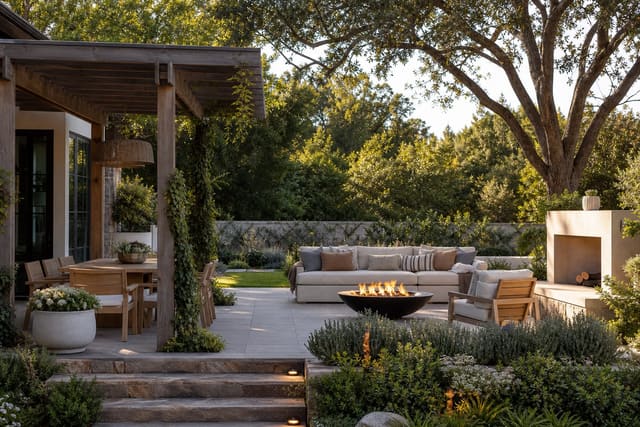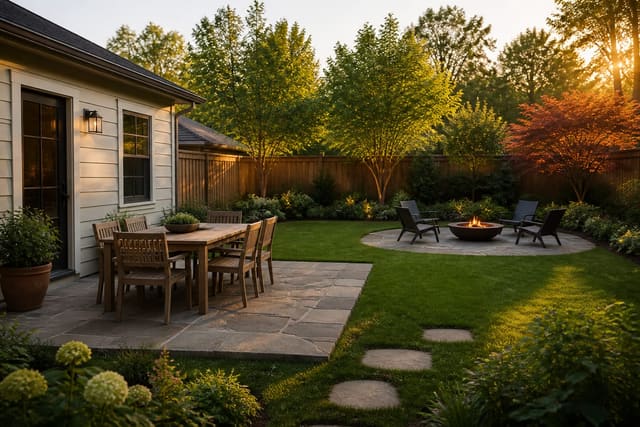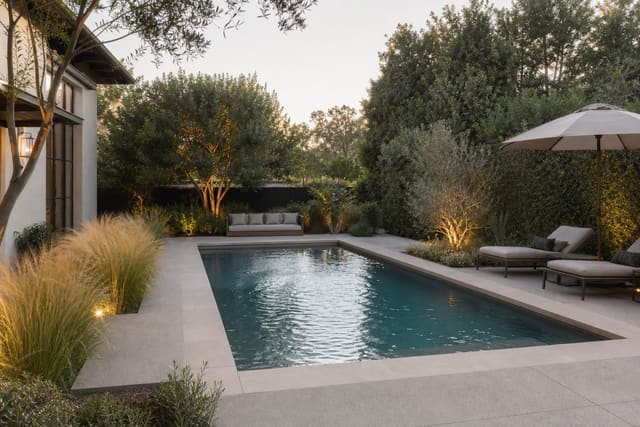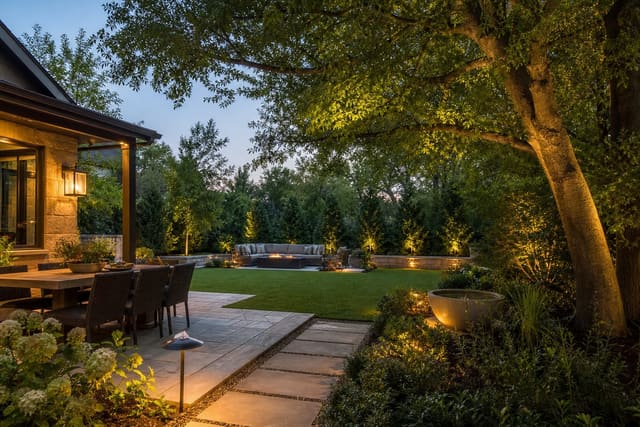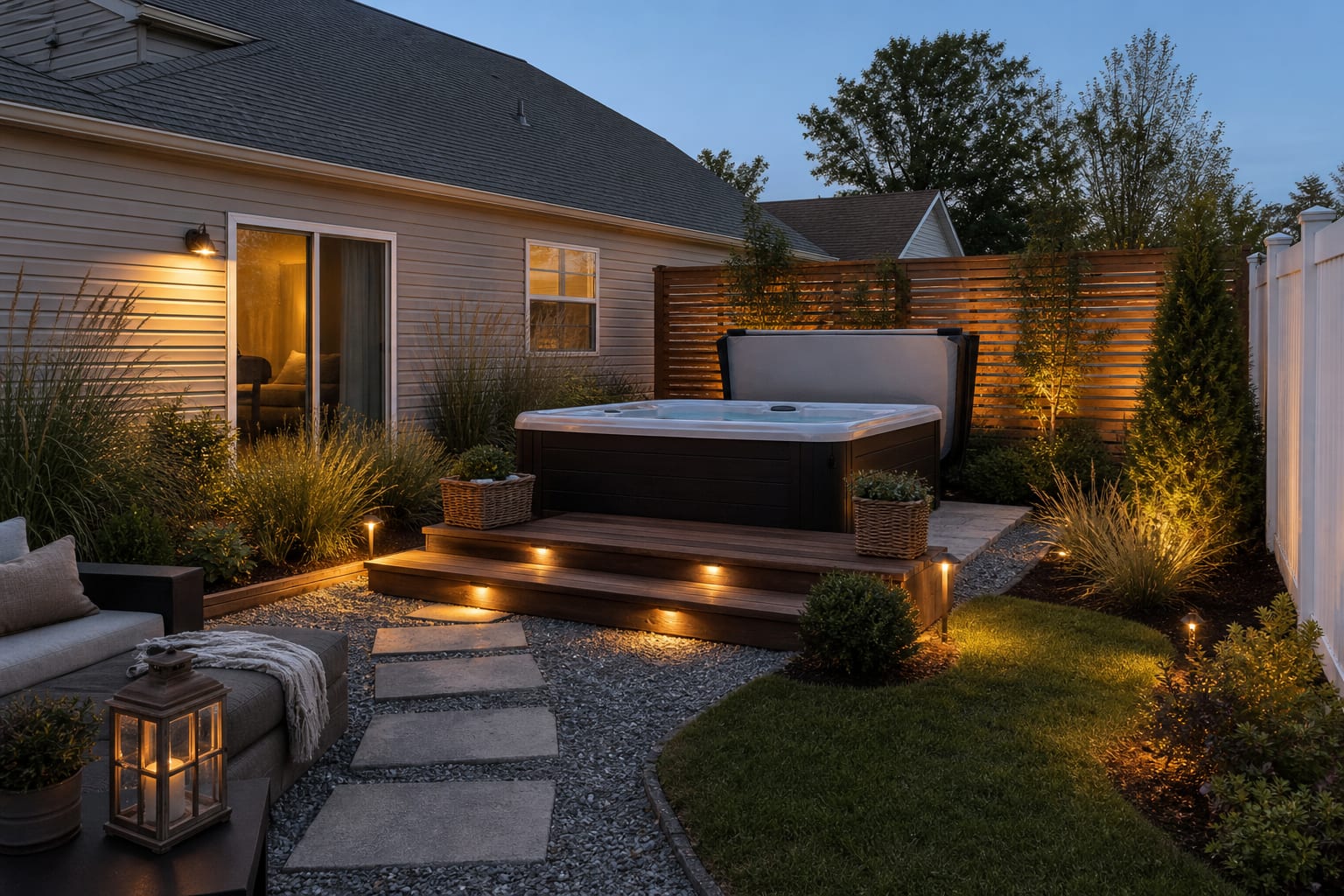
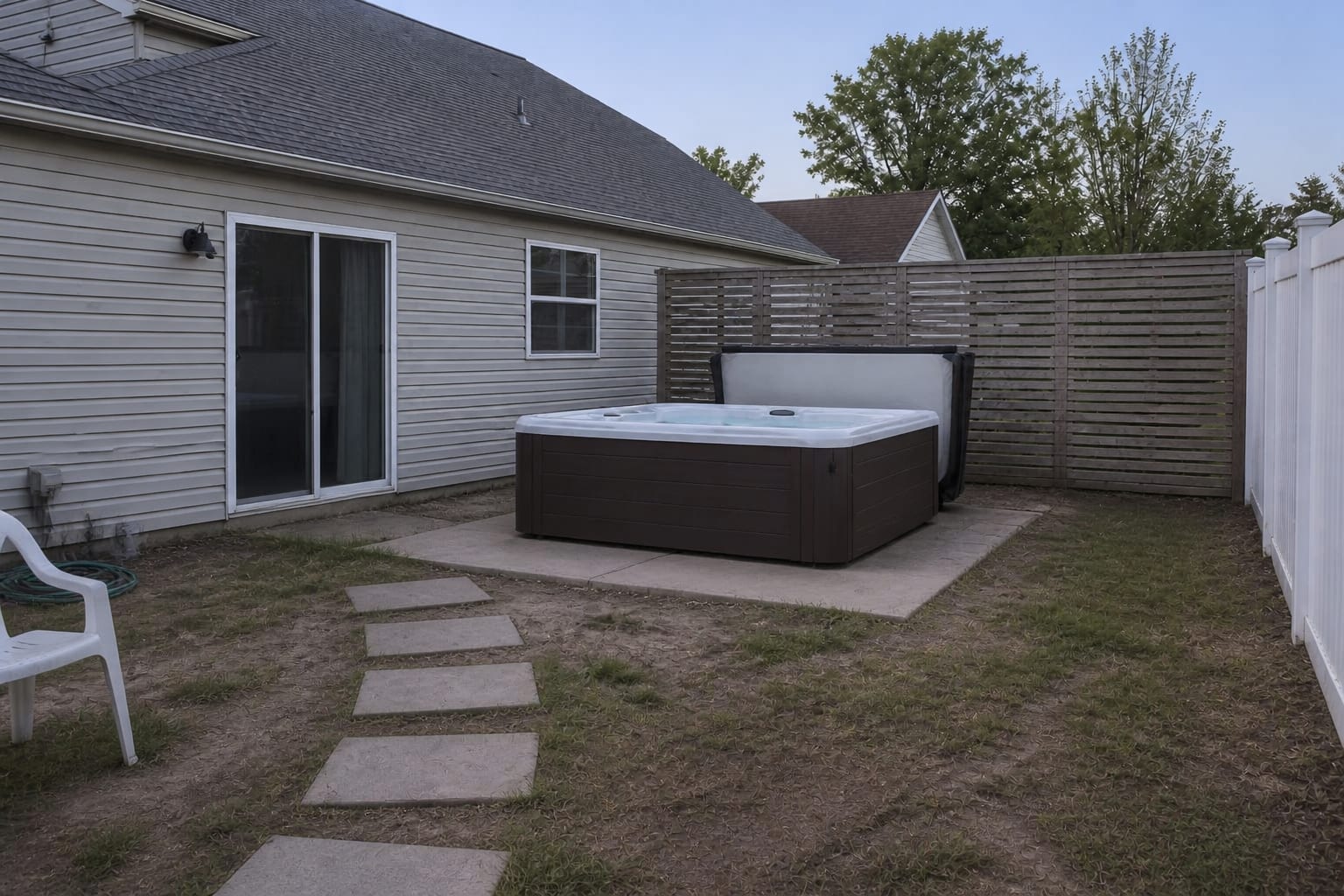
A hot tub reads as integrated when it sits on a reinforced pad or deck, is screened on at least two sides, has a GFCI outlet within 10 feet, and the approach is a non-slip surface matching the adjacent patio. The surround matters more than the shell: the eye reads the deck edge, planting, path, and lighting before it ever notices the jets. These hot tub landscaping ideas show how to make that shift without needing resort-size space.
What makes a hot tub feel built into the garden?
A hot tub feels built into the garden when its edges, access path, privacy, planting, and lighting are designed as one composition. The spa can be freestanding, sunken, semi-recessed, or deck-set, but it should never sit alone in the lawn with a cover lifter and two plastic steps. The approach should feel intentional from the back door, patio, or pool area.
Start with the platform: a poured concrete pad, large-format pavers, a composite deck apron, or pea gravel with steel edging, set tightly enough that bare feet do not wobble. Borrow the same material language used in your backyard landscaping plan rather than introducing a new surface just because the spa arrived later.
Then solve the height. Most tubs stand 34 to 38 inches tall, awkward with only a lightweight stair set. Use one or two broad landing levels with 7-inch risers and 11-inch-deep treads. A semi-sunken deck, where drainage allows, brings the top lip closer to bench height and reads calmer.
| Decision | Best when | Watch out for |
|---|---|---|
| Freestanding spa with steps | You rent, expect to move it, or have a tight budget | Needs planting, screens, and a wider landing so it doesn't look stranded |
| Semi-recessed deck surround | You want an integrated look without burying service panels | The deck must allow removable access on the equipment side |
| Fully sunken spa | You have professional drainage and structure | Water, leaves, and cover handling get harder if the pit is too tight |
Test this on your own photo with ReDesign before choosing a final direction; keep the house edge, horizon line, hardscape, planting beds, and main path visible so the preview solves the space you actually have.
Which hot tub landscaping ideas actually work?
The best spa garden design layers several modest moves rather than relying on one oversized feature. A giant pergola can't fix a tub with no path, no landing, and no planting at the base. Pick the ideas that solve your yard's real weak point: exposure, scale, mud, night safety, or an ugly view from the house.
- Build a real landing first. Give the entry side a deck or paver landing at least 4 feet deep for wet feet, towels, and cover movement; keep it rectangular in small yards so furniture tucks against it cleanly.
- Wrap two sides with planting, not four. Place grasses, ferns, dwarf conifers, or evergreen shrubs 18 to 24 inches back from the tub wall for airflow and service space, repeating one plant in groups of three or five.
- Screen only the exposed side. A 5- to 6-foot slatted cedar, composite, or metal screen with small gaps is usually enough near seated eye level; solid walls can trap steam and feel heavy.
- Design around the cover lifter. Keep 18 to 24 inches clear behind it and skip thorny shrubs there; screen the specific angle visible from a kitchen window with a taller evergreen or panel.
- Make the path bare-foot friendly. Set pavers with gaps no wider than 2 inches, use smooth gravel only where it won't migrate into the tub, and keep the path at least 36 inches wide for two people passing with towels.
- Add a perch that isn't the tub edge. A built-in bench, 16- to 18-inch ledge, or narrow console keeps phones, robes, and drinks away from wet controls.
- Borrow cues from nearby water features. If the spa sits near a pool, align one edge with the pool coping or patio grid so it relates to your backyard pool layout instead of sitting apart from it.
What mistakes make a hot tub look out of place?
The most common mistake is hiding the tub so aggressively it becomes hard to use. A spa needs privacy, but also clear access, a logical towel spot, and a route that works in rain, mud, or darkness. Another is planting too close to the shell: leaves, sap, and thorny plants near steps make cleaning and bare feet miserable. Keep messy canopy trees away from the spa zone and use cleaner structure instead—upright evergreens, clipped shrubs, or movable containers.
Never bury the equipment side behind a permanent planter, wall, or built-in bench; a surround that must be demolished for a repair is bad design. Use removable deck panels, a hinged screen, or a planter on casters to keep 30 to 36 inches of service access. Bad lighting is another giveaway—one bright house-mounted security light flattens the yard and makes steam look harsh. Use shielded path lights, step lights, or low wall washers aimed down instead.
Scale fails too: a tiny two-step stair on a large 7-foot spa looks temporary, while an oversized pergola can swallow a small yard. If you already have a dining or lounge zone, connect the spa with the same paving rhythm used in your small backyard plan, then let planting mark the shift from social space to soaking space.
How can AI design previews help before you build?
Use AI design once you know the practical constraints: tub size, service panel location, cover direction, main view, and walking route. Upload a yard photo, then test a cedar screen, stone landing, gravel path, or layered planting before ordering materials. The value isn't fantasy—it's seeing whether the tub looks anchored from the angle you actually live with.
Shoot from the back door, kitchen window, patio chair, or pool edge, since those views reveal whether the spa looks integrated or awkward. Include the full tub, one yard boundary, and the surface underfoot. For renters, AI previews separate permanent work from removable fixes—a freestanding privacy panel, wet-rated outdoor rug, oversized planters, and clip-on lights may solve the problem without a deck permit.
The final test: the hot tub should look good with the cover on, since most people see it covered far more often than bubbling. When the platform, path, planting, and light all point toward the tub, it stops looking plonked in the yard and starts behaving like a small outdoor room.
Frequently Asked Questions
What is the best surface under a hot tub?
A 6in reinforced concrete pad sized 2ft larger than the tub footprint on all sides is the most durable base. Composite decking on joists rated for 100+ lbs/sq ft is acceptable but needs inspection every 3 years for moisture damage.
How do I create privacy around a hot tub?
Use a 6ft cedar slatted screen or evergreen hedge on the two neighbor-facing sides, leaving one side open toward the house view. This three-wall enclosure gives most owners the privacy-to-openness balance they want.
What plants work best near a hot tub?
Choose evergreens that tolerate humidity and occasional chlorine overspray: clumping bamboo, ornamental grasses like Miscanthus, Phormium, and Fatsia japonica. Avoid flowering plants directly adjacent, since dropped petals clog the filters.
How do I light a hot tub area?
Use shielded warm 2700K path lights along the approach, GFCI-protected wall sconces on the privacy screen at head height, and the underwater LED lights supplied with the tub. Avoid overhead spotlights that shine directly into users' eyes.
How far from the house should a hot tub be placed?
NEC code requires a minimum of 5ft from the house for GFCI-protected electrical clearance from the water's edge. A distance of 8 to 10ft reads more spacious and allows room for a towel or accessories bench.
> Try this: Ready to see this on your own outdoor space? Open ReDesign and run the preview before you buy materials, plant, drill, or move furniture.
Three transformations to try
1. Hot tub with cedar screen and step lighting 2. Hot tub on composite deck with planted border 3. Hot tub with pergola and privacy hedge