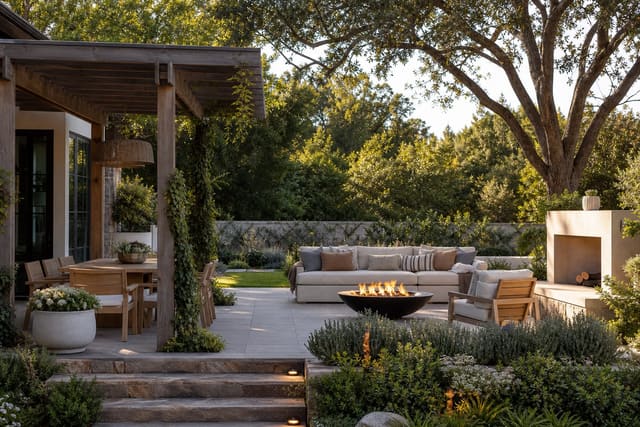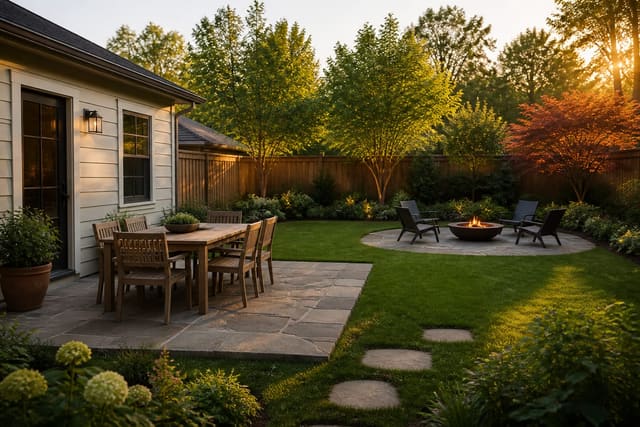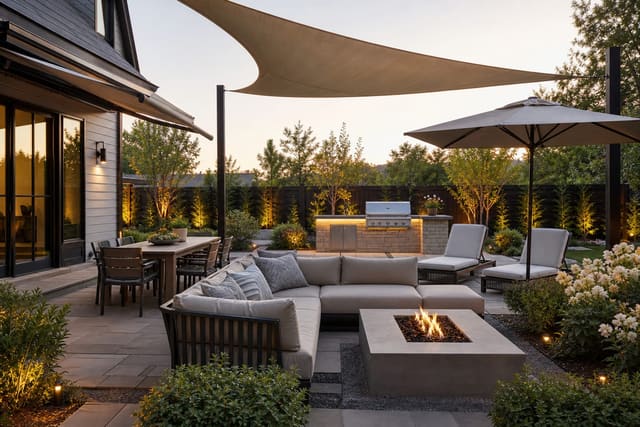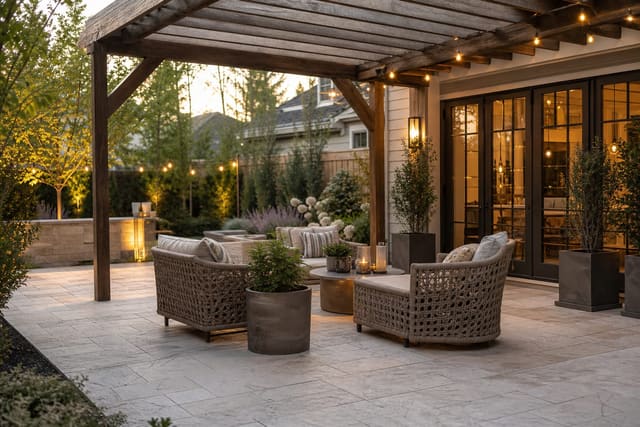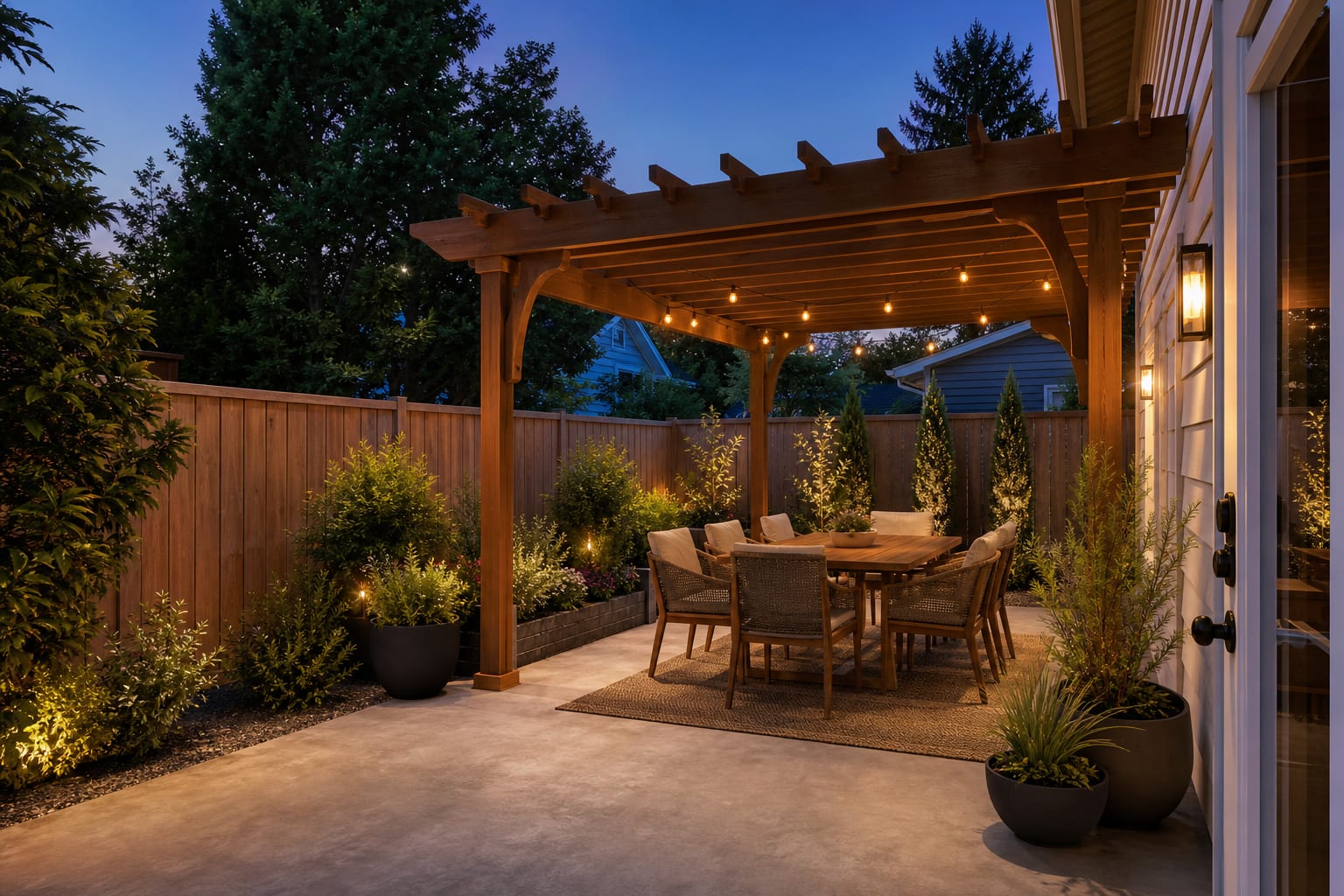
Good pergola ideas start with structure, not decoration: post size, beam depth, sun angle, and the furniture underneath. A 4x4 post on a freestanding pergola over 8 feet looks flimsy and is structurally marginal. Get the proportions right and the patio stops feeling like leftover paving.
What makes a pergola feel like an outdoor room?
A pergola feels intentional when its posts, roof pattern, and furniture layout all serve the same use. A 12-by-16-foot dining patio wants a rectangle that follows the table, not a decorative 10-by-10 frame floating in the middle. For a lounge zone, a 9-by-12 footprint with posts outside the seating corners makes the group feel gathered instead of trapped.
- Protect a 30-36 inch walking route through the patio before choosing furniture, planting, or lighting.
- Repeat one visual cue three times, such as a metal finish, planter shape, or trim color, to tie the space together.
- Solve the layout problem with the first permanent upgrade; accessories should support the plan, not cover for weak planning.
Height matters as much as footprint. A 7-foot underside can feel oppressive once lights or hanging plants are added, so aim for 8-10 feet of clear height under the lowest beams where code allows. On an attached pergola, align the ledger with doors and windows carefully; a beam crossing the top third of a window will bother you every time you look outside.
Roof pattern determines real shade. Wide-spaced rafters look airy but may do little at 4 p.m. in July, while tighter slats, angled louvers, or a retractable canopy keep the space usable during peak hours. For structures with full coverage, see covered patio ideas for shade planning; a true roof and a pergola solve different weather problems.
Lighting finishes the room. Outdoor-rated string lights work for casual patios if pulled tight rather than sagging; for a permanent look, add low-glare wall sconces, step lights, or a wet-rated pendant over the dining table. Warm 2700K light flatters wood, stone, and food without turning the patio blue.
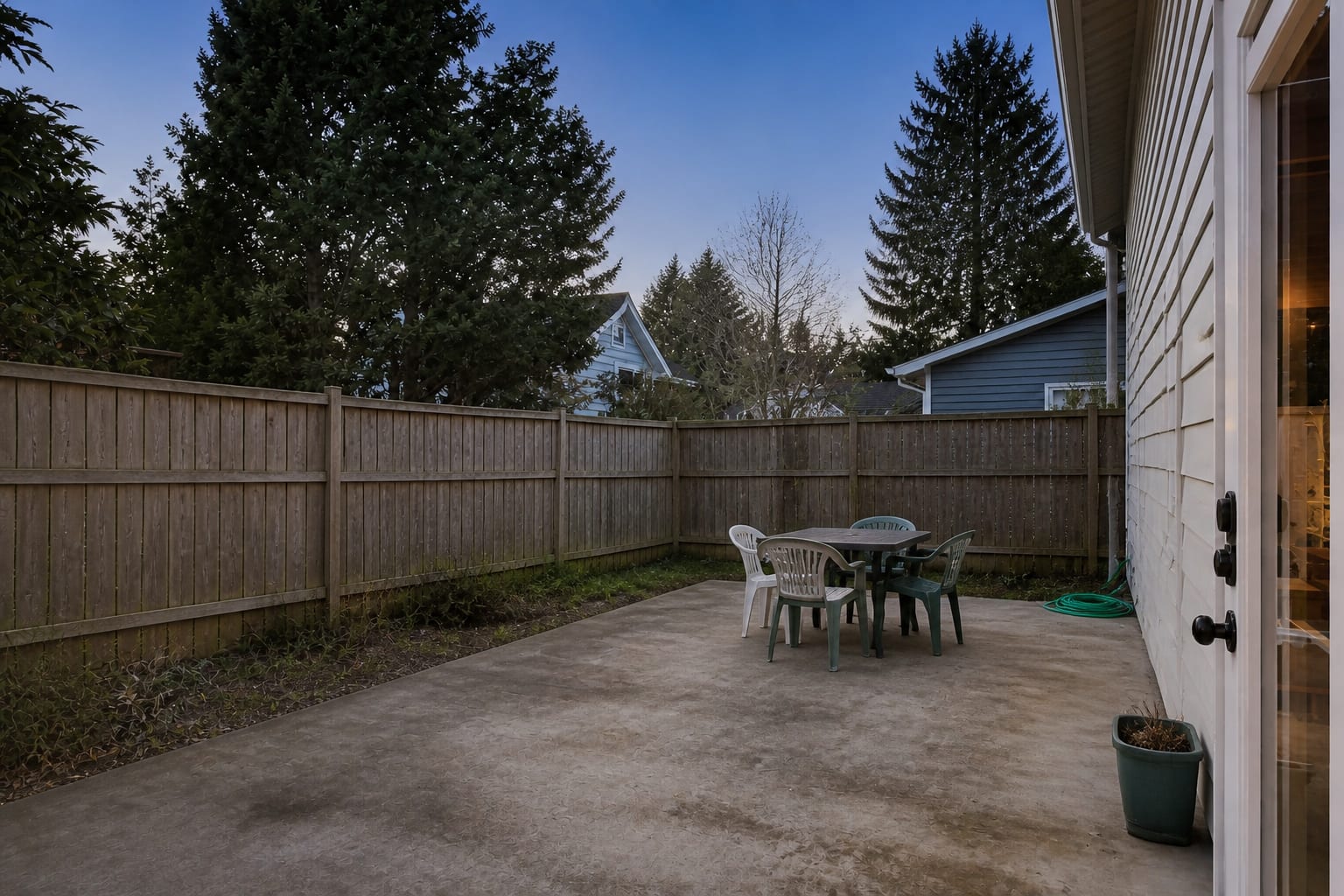
Test this on your own photo with ReDesign before committing, keeping the house edge, hardscape, planting beds, and main path visible so the preview reflects the space you actually have.
Which pergola material actually fits your house?
The wood-versus-aluminum decision comes down to which material looks intentional next to your siding, windows, and roofline, not which is objectively better.
| Material | Best for | Trade-off |
|---|---|---|
| Wood (cedar, redwood, pine) | Cottages, Craftsman homes, gardens with vines | Needs periodic cleaning and refinishing |
| Aluminum | Stucco, black-framed windows, modern terraces | Looks thin unless posts have a 5-6 inch visual profile |
| Vinyl | White-trim suburban homes near fences or pools | Can look plastic in full sun |
| Composite | Contemporary patios wanting low maintenance | Check heat gain where skin contact is likely |
Attached pergola ideas need extra scrutiny because the house becomes structural. Ledger boards, flashing, drainage, and fasteners protect the wall, not just the look. Renters should skip attached structures and consider weighted shade sails, freestanding metal pergolas, or large umbrellas instead.
Five pergola ideas that earn their footprint
- Size a dining pergola to the table plus 2-3 feet per end. A 36-by-84-inch table typically needs a 10-by-14-foot structure so chairs and serving movement aren't cramped at the corners.
- Use a narrow attached pergola on a blank rear wall. A 4-6 foot deep run over French doors adds shade and architecture without swallowing a small patio; align posts with window trim or door casing.
- Pair a lounge pergola with one strong fire or heat feature, not three competing focal points. Check clearances and local rules using backyard fire pit layout ideas before buying furniture.
- Soften posts with real soil volume. Use planters at least 18-24 inches wide for jasmine, clematis, rosemary, or dwarf shrubs; tiny pots at the base of a 9-foot post look apologetic.
- Add privacy panels only where the view is bad. One slatted screen on the neighbor side, with consistent 1-2 inch slat gaps, reads as architecture; wrapping three sides makes the patio hotter and darker.
Let the pergola organize an outdoor kitchen rather than cover every appliance. A grill needs ventilation and clearance, while a prep counter benefits more from shade; the smartest layout covers the eating side and keeps smoke and high heat outside the frame.
Planting makes a pergola look settled instead of installed. Repeat one or two textures instead of collecting random pots: rosemary, olive, agave, and grasses for dry patios; climbing hydrangea, star jasmine, or clematis for softer gardens. Borrow scale ideas from outdoor planter ideas for patios and group containers at uneven heights.
Use AI to preview your pergola before posts go in the ground
The same pergola kit can look elegant on one patio and squat on another. Uploading a photo of your patio to Re-Design lets you test attached versus freestanding, wood versus aluminum, and open rafters versus partial canopy before concrete footings or ledger boards make mistakes expensive.
Watch for specific problems: a pergola that blocks too much daylight into the kitchen, a frame that stops 12 inches short of the seating group, or a dark aluminum structure that feels harsh against a pale house unless the color repeats elsewhere. Run at least three versions before ordering: the simplest structure matching the furniture footprint, a version with the shade you think you want, and a restrained option with better furniture and lighting. Most patios need the pergola that gives the table or sofa a clear place to belong, not the biggest one available.
Frequently Asked Questions
What is the best material for a pergola?
Western red cedar is the premium wood choice, stable and rot-resistant with a clear finish. Aluminum or powder-coated steel is maintenance-free and can outlast wood by 20-plus years. Pressure-treated pine is cheapest but needs painting within a year to avoid grey weathering.
How big should a pergola be?
A dining pergola needs at least 12x12 feet for a 6-seat table with 36-inch chair pullback on all sides. A lounge pergola can work at 10x10 feet. Add roughly 2 feet per side to the furniture footprint so posts don't feel confining.
Does a pergola need a permit?
Freestanding pergolas over 200 square feet need a building permit in most US jurisdictions. Attached pergolas, ledger-bolted to the house, almost always require a permit regardless of size because they affect the structure.
What is the difference between a pergola and an arbor?
A pergola covers a living area like a patio or dining zone and typically runs 10x10 feet or larger. An arbor frames a passage, such as a garden gate or path entry, and is usually under 8 feet wide and 10 feet tall.
Can I attach a pergola to my house?
Yes. A ledger board bolts to the house rim joist with structural lag screws to carry one end of the rafters, while the other end bears on freestanding posts. This attachment requires a permit because it affects the building envelope.
> Try this: Ready to see this on your own outdoor space? Open ReDesign and run the preview before you buy materials, plant, drill, or move furniture.
Three transformations to try
1. Cedar dining pergola with rafter depth 2. Aluminum pergola with polycarbonate roof 3. Attached pergola with climbing rose and string lights