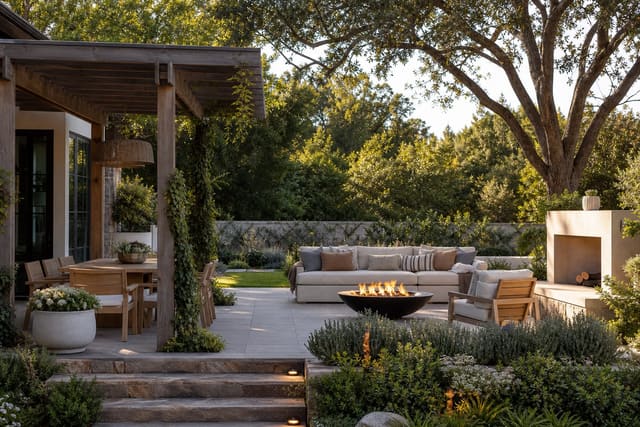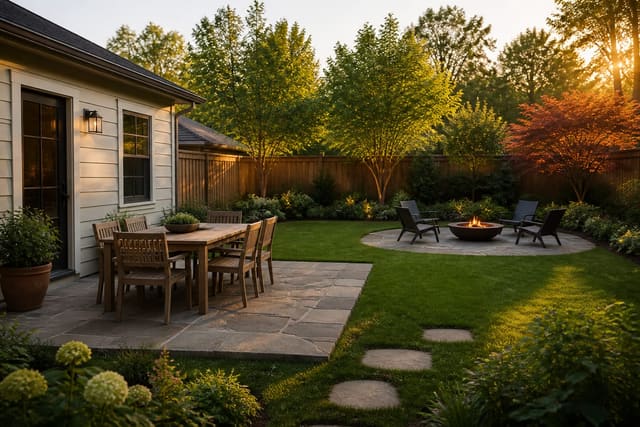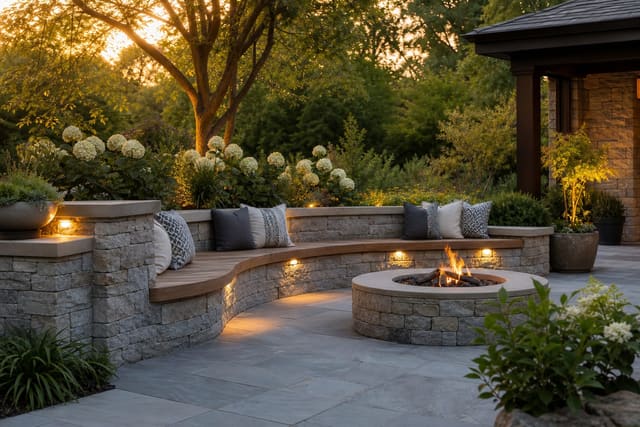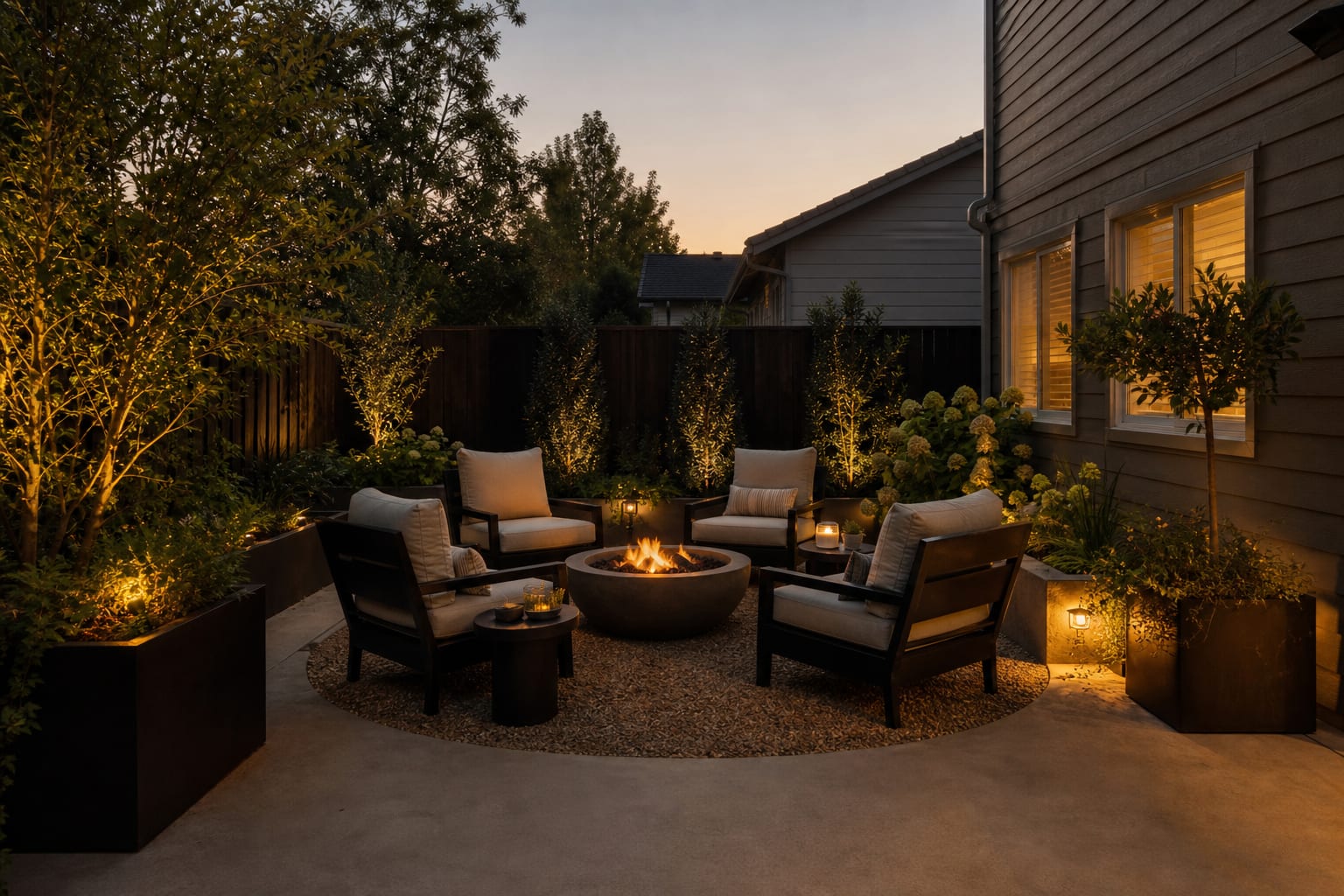
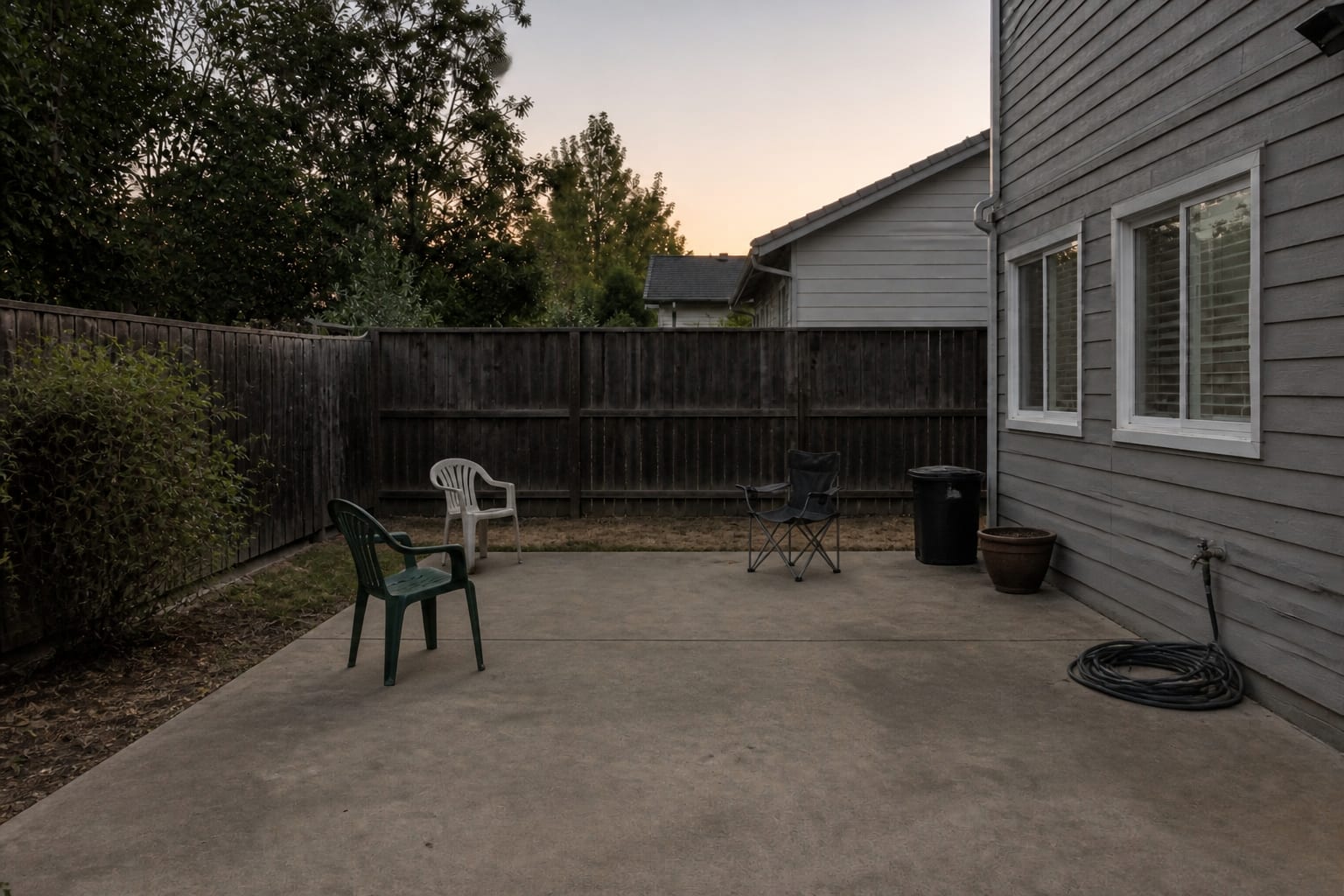
The best backyard fire pit is the one your patio can safely support: a gas bowl for low-maintenance seating, or a wood-burning pit only where smoke, storage, and local rules are manageable. A fire pit works when the seating ring clears the flame by 36-48in, sits 10ft from any combustible structure, and the surround extends 3ft past seating so feet stay off bare lawn. Layout, not looks, decides whether people actually use it.
What makes a fire pit area feel usable after summer?
Comfort comes from the ring around the flame, not the flame itself. If guests hold drinks in their laps, lean away from smoke, or step over chair legs to reach the house, the pit becomes a weekend novelty.
Start with the floor: pea gravel, decomposed granite, pavers, brick, or stone all work if level enough that chairs don't wobble. Plan at least a 12ft-diameter circle for four lounge chairs, or 14-16ft for six; on a tight patio, use a rectangular gas fire table in front of a sofa and two chairs instead of forcing a full circle.
Keep flames away from low fabric canopies, dry branches, or decorative shades that ignore manufacturer clearances. Near a roofed sitting zone, borrow comfort planning from covered patio ideas with real shade plans or pergola ideas that control overhead structure, but keep the actual flame in an approved open location.
Five fire pit ideas that extend the patio season
- Gravel fire circle at the patio edge: a 12ft-diameter gravel pad with metal edging gives four chairs stable footing while keeping the main patio open for traffic.
- Rectangular gas fire table for sofa seating: a 54-60in table runs along the conversation line, with a 6in ledge for drinks.
- One-sided seat wall: an 18in-high stone, brick, or concrete wall adds seating without crowding the ring; place it where it blocks wind or frames a view, not where people walk.
- Heavy planted backdrop: tall grasses, evergreens, or 20in-plus containers behind seating make the flame feel protected; see outdoor planter ideas for layered edges for bare fences.
- A side table at every chair: a 14-18in-wide table keeps glasses and skewers off the flame and calms the whole area after dark.
Repeat one material as an anchor: black steel across the pit, lanterns, and chair frames; pale stone across pavers and coping; or warm wood across benches and storage. The goal is a fire pit area that looks attached to the house, not dropped in from a showroom truck.
Test this on your own photo with ReDesign before committing; keep the house edge, horizon, hardscape, planting beds, and main path visible so the preview matches your actual space.
The gas vs wood fire pit decision that shapes everything
Fuel choice decides how close the pit sits to the house, how often you'll use it, and how much cleanup you'll tolerate. Wood gives crackle and scent but adds smoke, ash, sparks, and a log pile. Gas is easier on weeknights and often better near finished patios.
| Fire pit choice | Best fit | Spec to check before buying |
|---|---|---|
| Natural gas fire pit | Permanent patio seating near the house | Licensed gas line routing and appliance clearances |
| Propane fire table | Flexible lounge areas without trenching | Hide a 20lb tank where it stays ventilated and accessible |
| Wood-burning steel bowl | Open yards with casual seating | Noncombustible surface, spark screen, ash plan |
| Masonry fire pit | Larger landscapes with a fixed destination | Plan the seating circle before the wall diameter is built |
On a small patio, gas usually wins because a push-button flame gets used on a random Tuesday. On a large yard away from the house, wood can be wonderful if local burn rules allow it and smoke won't hit windows or a neighbor's porch.
Common fire pit mistakes that make backyards feel smoky or cramped
- Centering the pit on the kitchen window view instead of on actual use; shift it until chairs have clear access and wind behaves.
- Choosing upright dining chairs instead of lounge chairs with 22-26in seat depth and wide arms for long conversations.
- Skipping support pieces: a dry firewood rack, ventilated propane spot, cushion storage, and a metal ash container prevent clutter by the second weekend.
- Lighting only the flame, which leaves steps and drinks in shadow; add shielded path lights or downward-aimed sconces instead of a bright eave floodlight.
- Pushing the pit against a fence to save space, which worsens heat and smoke staining; leave room for air movement and use planting behind chairs instead.
Mock up the ring before buying: set a cardboard circle where the pit might go, arrange chairs, and sit there at the hour you'll actually use it.
Use AI design to preview your fire pit seating area before you commit
Upload a straight-on photo of the patio or yard, then test a gravel circle, a gas fire table, a seat wall, and a planted backdrop from the same angle. Keep the fence, door, steps, slope, and existing trees visible so the preview respects the real backyard.
Use the preview to judge proportion and mood, not safety approval. It can show whether a round pit crowds the walkway or whether large planters make seating feel sheltered; confirm clearances and local rules with the product manual or fire authority afterward.
Frequently Asked Questions
How far should a fire pit be from the house?
Maintain at least 10ft of clearance from any wall, eave, or overhang per most fire codes. Gas pits with shielded burners can sometimes sit closer, but confirm with the local jurisdiction before placing the unit.
Wood, propane, or natural gas fire pit?
Wood reads most traditional and crackles best; propane is portable and on-demand; natural gas is the cleanest install for a fixed location with a buried line. Choose based on maintenance tolerance, not just price.
How big should the fire pit seating circle be?
Plan a 12 to 14ft total diameter: the pit itself at 36-42in, plus a 36-48in buffer to the inside of seating. Below that, heat feels too close; above it, the social circle feels thin.
Does a fire pit need a permit?
Wood pits under 3ft diameter are usually exempt, but natural gas hookups always require a permit and a licensed gas line. Some municipalities also ban wood burning during summer fire season regardless of pit size.
What surface should sit under a fire pit?
A 6in-deep gravel or paver patio extending 3ft past the pit edge handles embers and foot traffic safely. Never set a wood-burning pit directly on a wood deck, even with a protective pad underneath.
> Try this: Ready to see this on your own space? Open ReDesign and run the preview.
Three transformations to try
1. Stone wood-burning pit with gravel circle and Adirondacks 2. Linear gas fire table with built-in seat wall 3. Sunken fire pit with paver patio extension