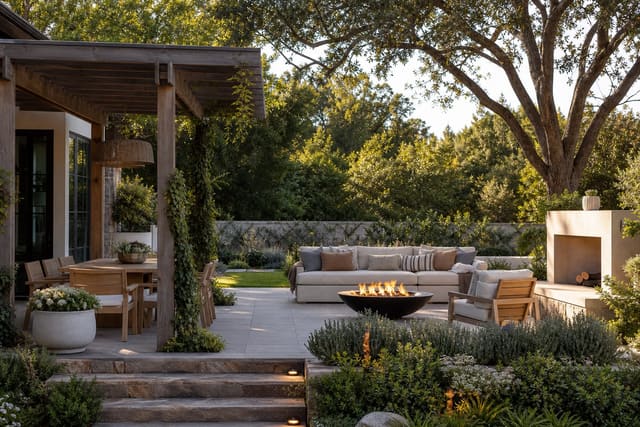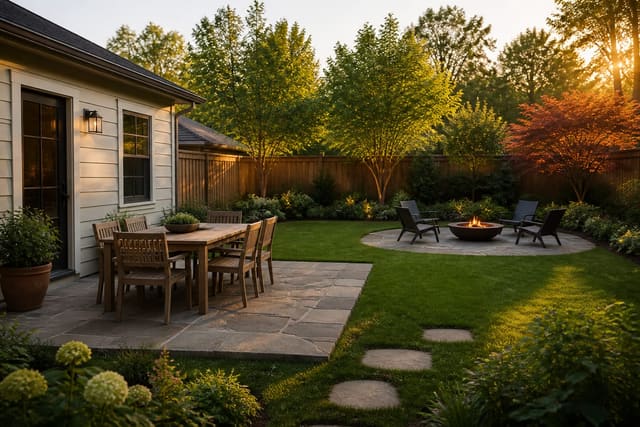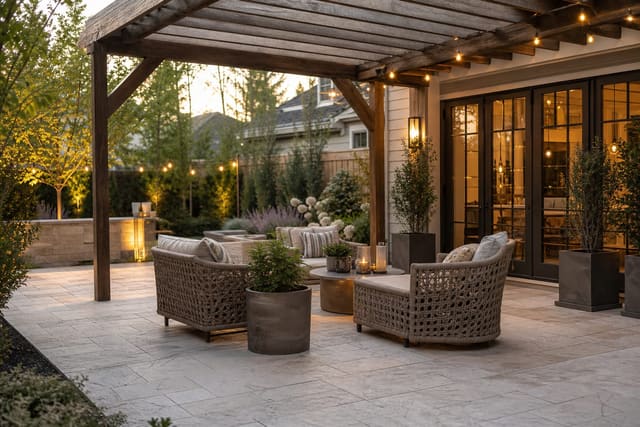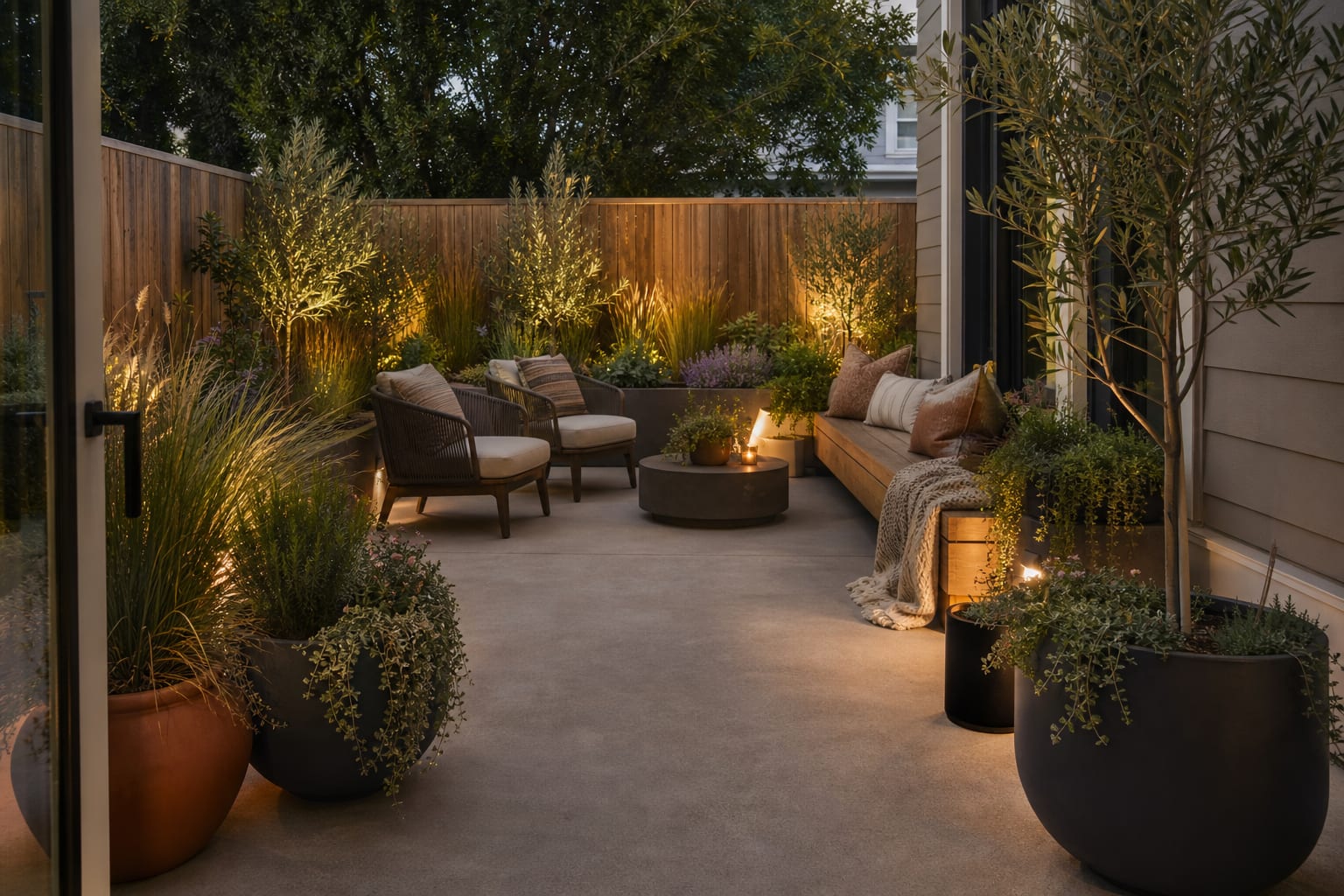
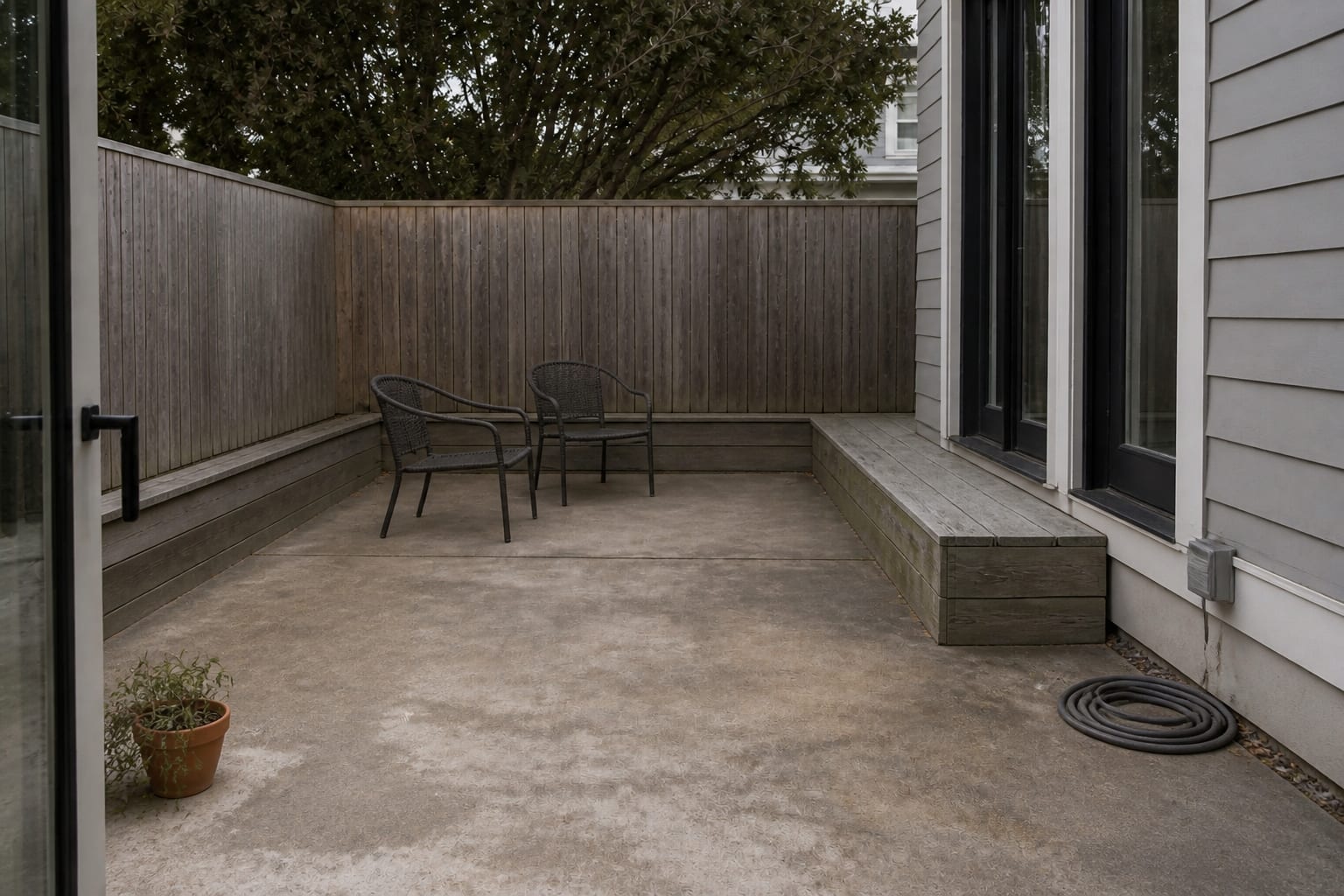
Outdoor planters look designed rather than scattered when you size pots to the patio, group them in odd numbers, match plants to sun exposure, and repeat one material or color. A bare patio needs planted volume at the edges, height near blank walls, and a few strong pots instead of twelve small ones. Undersized containers are the fastest way to make greenery look temporary.
What makes patio planters look intentional instead of random
Planters look intentional when they relate to the architecture, the furniture footprint, and how people move through the space. Start with the zones that bother you most: the dead corner by the door, the exposed fence line, the blank wall behind the sofa, or the hard edge between patio and lawn. A pot there is a vertical design tool, not just a plant holder.
- Protect a 30-36 inch route through the patio before choosing furniture, planting, or lighting.
- Repeat one visual cue three times — a metal finish, planter shape, or trim color — to tie the scene together.
- Solve the layout problem first; accessories should support the plan, not cover for weak planning.
Scale is the first filter. A main planter under 16 inches wide next to a full-size sofa reads as an afterthought. For large pots beside a lounge chair, aim for 18-24 inches; a statement corner pot wants 24-30 inches so roots and foliage look established. Keep at least 30 inches of clear width beside a door so leaves and guests don't collide.
Material should connect to something already visible. Terracotta suits brick and Mediterranean planting but dries fast in full sun. Fiberstone and lightweight concrete give modern patios clean edges without the weight of cast stone. Glazed ceramic works best under cover or in mild climates where freeze-thaw is less of a risk. If seating sits under a roof, coordinate planters with the shade structure as carefully as in covered patio design ideas, since planted edges make a roofed zone feel like a room.
How does planter size and grouping change the whole arrangement
Size controls whether the arrangement feels lush or fussy. A small pot can hold annual color, but it won't carry a corner unless the patio itself is tiny. On a balcony, a 12-14 inch pot beside a bistro chair is enough; on a ground-level patio, build the main grouping around one or two 20-30 inch containers.
Think in triangles, not rows. Put the tallest container at the back or corner, a medium pot 8-14 inches away, then a lower bowl or trailing planter forward. Pots touching each other feel cramped; pots 3 feet apart stop reading as a group. A gap of roughly 6-12 inches between rims usually looks deliberate while still allowing airflow.
Use the thriller-filler-spiller formula: one upright plant, one mounding plant, one trailing plant. For full sun, try a dwarf olive, rosemary, and trailing verbena. For shade, an upright fern, heuchera, and creeping Jenny. In windy areas, skip top-heavy standards and use grasses or compact shrubs that won't topple.
Drainage is not optional. Every container needs a real drainage hole unless it's a decorative cachepot holding a removable nursery pot. Raise heavy pots on feet or hidden risers so water escapes and the surface can dry — on timber decking this small air gap protects boards from constant wet rings.
Test this on your own photo with ReDesign before committing; keep the house edge, horizon, hardscape, beds, and main path visible so the preview solves the space you actually have.
What container ideas fix a bare patio
- Frame a door with two tall planters when the entrance feels abrupt. Use pots at least 20 inches wide and keep mature plant width clear of the handle or door swing.
- Use a trough planter along a fence for privacy without stealing depth. A 36-48 inch trough of grasses or bamboo alternatives softens a fence line while keeping walking space.
- Place a heat-tolerant herb cluster near the dining table. Rosemary, thyme, oregano, and sage want sun and lean soil — keep them separate from thirsty basil or mint.
- Put one sculptural pot beside a fire zone instead of scattering small containers. Follow the clearance discipline from fire pit ideas for patios and keep foliage off heat paths.
- Add a low bowl on a coffee table only if it survives elbows and wind. Keep tabletop planting under 10 inches high with succulents, sedum, or clipped herbs.
- Repeat one pot color in three places — black, warm gray, terracotta, or sand — to calm competing brick, decking, and cushions.
What planter mistakes make a patio look worse
Matching every container in the same size makes planters look like a garden-center aisle. Use one dominant pot, one supporting pot, and one lower container so the group has a clear lead.
Choosing plants only for flower color disappoints once the bloom fades. Foliage carries an arrangement longer than flowers, especially in heat — mix fine grasses, broad leaves, and trailing texture.
Grouping plants by look instead of water need creates maintenance drama. A thirsty hydrangea and drought-tolerant lavender shouldn't share a pot just because the colors work; group by irrigation needs.
Pushing pots tight against the house traps moisture and looks squeezed — leave a few inches for air and hose access. Around a pergola, posts create natural planter spots, but vines and large pots still need base clearance; the same spacing logic applies in pergola ideas for a patio.
Forgetting winter is costly. In cold climates, porous terracotta can crack when saturated soil freezes. Move delicate pots under cover, use frost-resistant containers, or plant hardy evergreens in vessels large enough to buffer root temperature swings.
How can I preview patio planters before buying pots
Planters live and die on scale, which is hard to judge from product photos. Upload a straight shot of the patio from the door or seating area, then test fewer large pots against a busier mix of small containers with the camera angle fixed. The useful preview shows door clearance, chair movement, and mature plant volume — not just the prettiest fantasy image.
Ask for variations that keep the same furniture and hardscape while changing only the planter strategy: terracotta bowls with herbs, tall charcoal pots with grasses, or a trough along the fence.
Frequently Asked Questions
What size outdoor planter works best for a patio?
A minimum 18in diameter suits perennial plants; 24-30in works for a summer annual combination. Smaller pots can dry out in under 24 hours in hot climates, forcing daily watering that's impractical for most households.
What planter material lasts the longest outdoors?
Concrete and glazed ceramic last indefinitely if rated frost-proof. Powder-coated steel lasts 10-15 years before surface rust, while resin and fiberglass stay light and frost-resistant but lose color vibrancy after 5-7 years in full sun.
Do outdoor planters need drainage holes?
Yes — no drainage hole guarantees root rot within a season. If a decorative pot lacks one, drill a 1/2in hole with a masonry bit, or use it as a cachepot around an inner pot that drains freely.
How do I stop outdoor planters from becoming waterlogged?
Use a free-draining mix (1/3 perlite or pumice, 2/3 potting soil), raise pots on feet or risers about 1in off the paving, and empty any saucers within 30 minutes of rain.
What plants work best in large outdoor planters year-round?
Phormium, Carex grasses, Cordyline, and clipped evergreen box spheres give year-round structure. Add seasonal color with Skimmia japonica in winter, tulips in spring, and Calibrachoa or Lantana in summer.
> Try this: Ready to see this on your own outdoor space? Open ReDesign and run the preview before you buy materials, plant, drill, or move furniture.
Three transformations to try 1. Concrete planter trio on steps with Phormium 2. Glazed ceramic cluster with seasonal annual color 3. Oversized powder-coat steel planter at entry