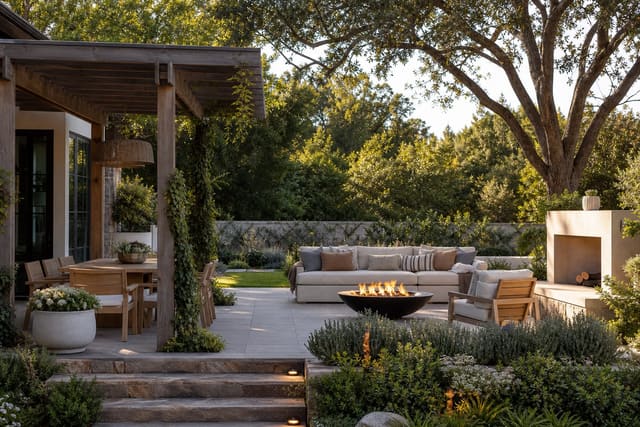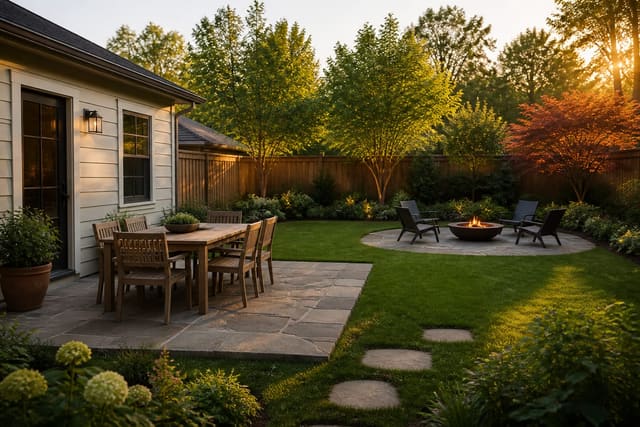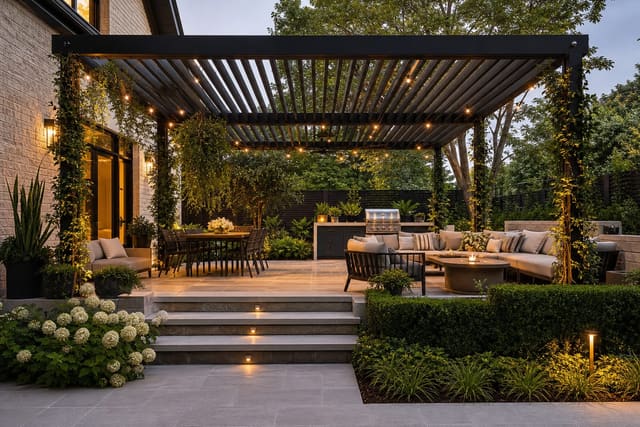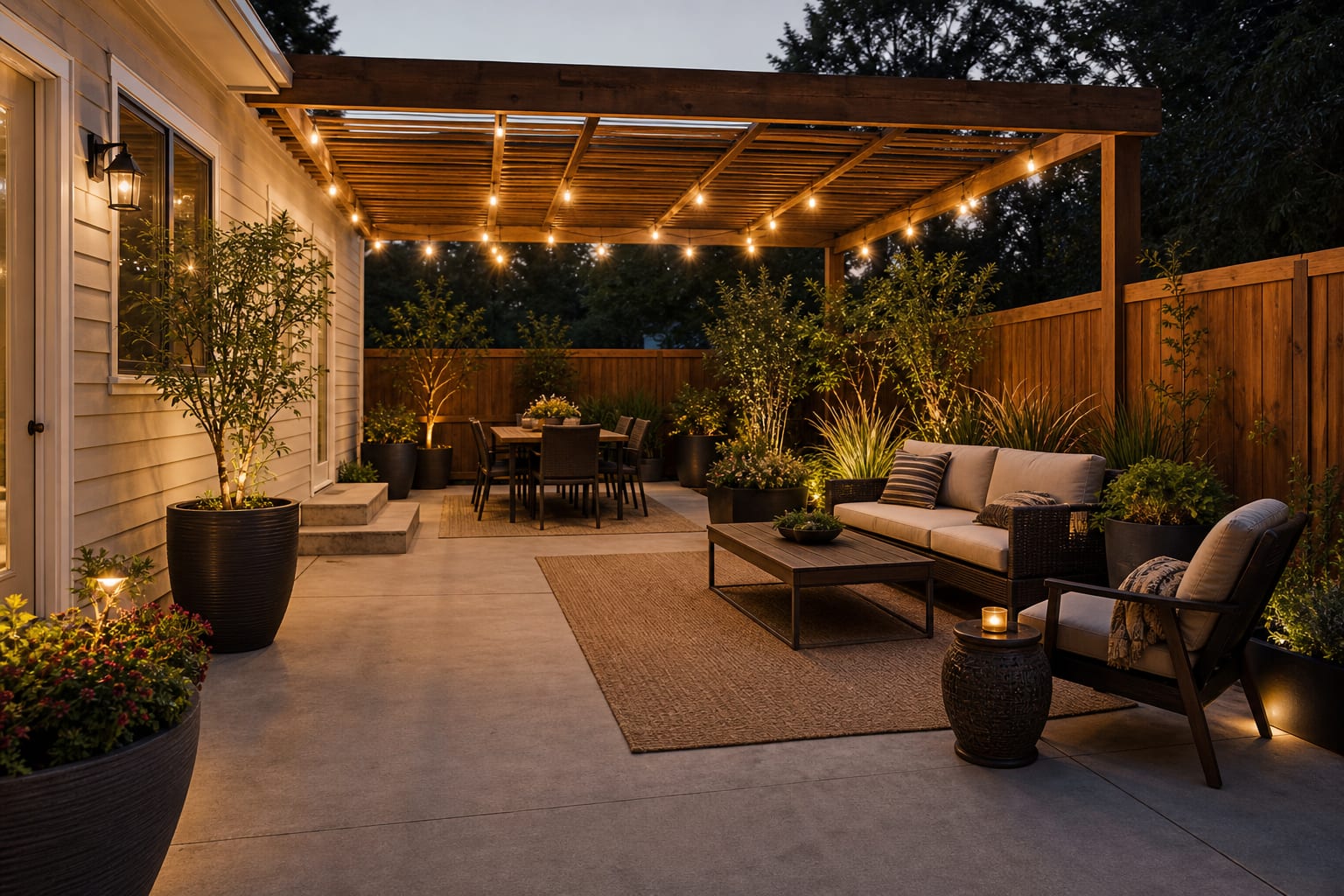
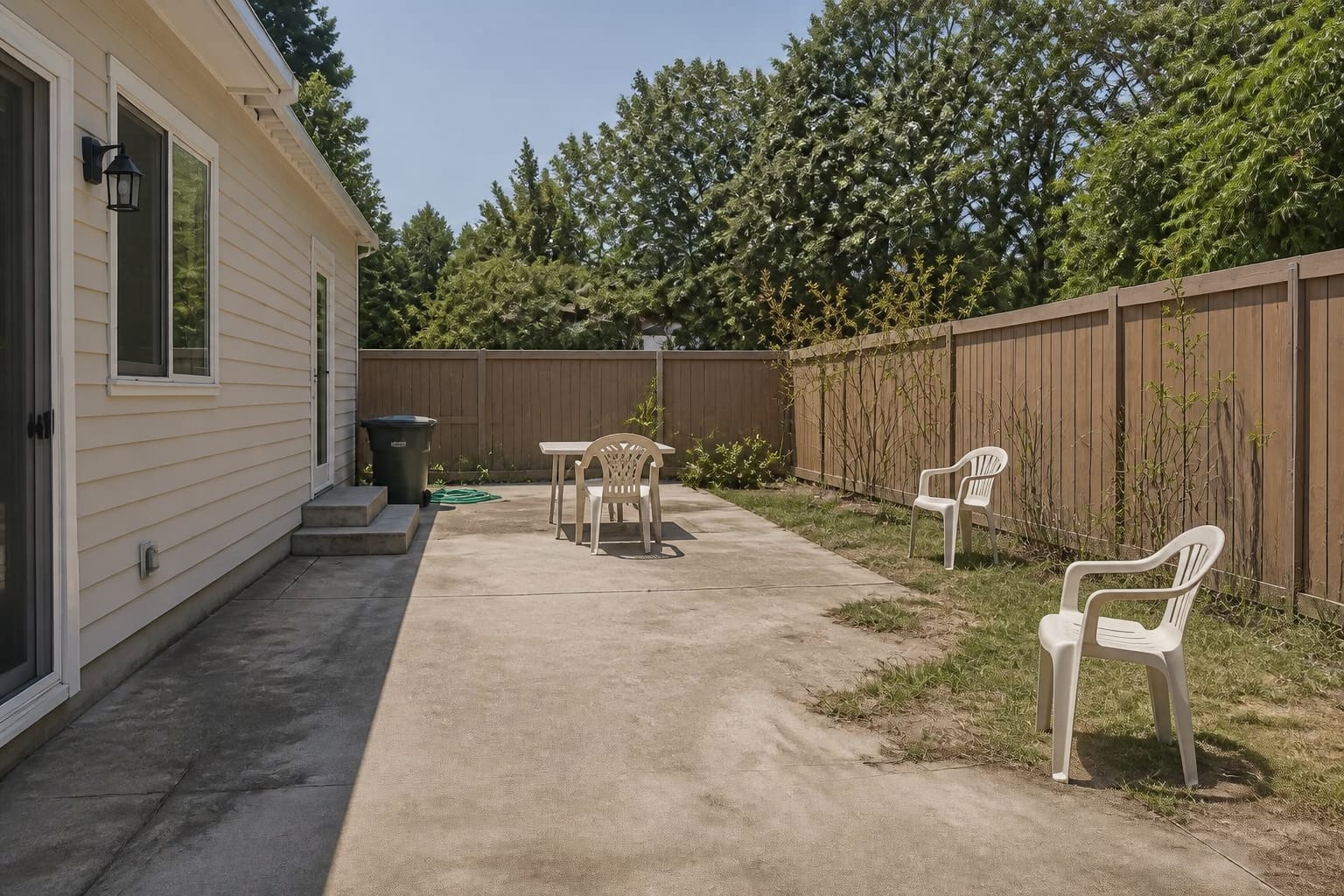
Start a covered patio by tracking the sun, not the catalog photo: a pergola, awning, solid roof, or shade sail should block heat over your actual seating and dining zones, sized 12 to 14ft deep with a 9 to 10ft ceiling that ties into the house roofline instead of reading as a bolt-on accessory.
What makes a covered patio feel cool instead of cave-like?
A covered patio feels cool, not cave-like, when the shade blocks direct heat while still allowing brightness and air. The goal is relief, not darkness. Decide first whether you need overhead shade, side shade, or both: a roof extension handles noon sun but may do nothing against low western glare, while a pergola with 2x6 rafters spaced 8 to 12 inches apart softens high sun while staying visually open. A retractable awning covers a glass door without permanent posts, but it needs a clean mounting band and enough pitch to shed rain.
Scale matters more outdoors than expected. Extend shade 18 to 24 inches beyond the furniture's outer edge whenever the site allows it, and for dining allow about 24 inches behind each chair for pullback before sizing the cover. A permanent structure should also match fascia thickness, post material, and trim rhythm so it reads as an addition with intent; see pergola design ideas for patios before choosing post size, since skinny posts under a wide beam look nervous and oversized posts can box in a modest patio.
Permanent structure or flexible shade: which one fits your patio?
Permanent shade suits patios used often, where the sun problem repeats every season and the house offers a natural attachment point. Flexible shade suits renters or anyone who moves furniture around or only needs coverage for a few brutal weeks.
- Pergola: Adds structure without sealing off the space. Space rafters 6 to 10 inches apart for a strong shadow; south- or west-facing patios may need angled louvers or a shade cloth panel above.
- Solid roof: Most comfortable in rain and intense sun, but least forgiving — it can darken interior rooms and trap grill smoke. Keep the low edge near 96 inches where code and pitch allow.
- Awning: Best over doors, breakfast tables, and narrow patios where posts would block movement. Measure projection from the house to the farthest seated shoulder, not the table center.
- Shade sail: Needs real tension points, a slope for runoff, and height variation to avoid sagging. On windy sites, one triangular sail usually outperforms a flat rectangle.
Test this on your own photo with ReDesign before committing; keep the house edge, horizon line, hardscape, planting beds, and main path visible so the preview solves the space you actually have.
Seven covered patio ideas that solve real sun problems
- Slatted pergola over a lounge area for filtered light that still protects upholstery. Plan a 10 by 12ft covered footprint and keep front posts outside the main conversation path.
- Retractable awning over a dining door on narrow patios. Projection should clear the table plus 24 inches behind the outer chairs, with a pitch steep enough to shed light rain.
- Pergola with climbing plants for softness and extra glare control. Use planters at least 18 inches deep and one main vine to avoid a maintenance mess; see outdoor planter ideas for patios for containers that can anchor the posts.
- Metal louvered cover for adjustable sun and rain control. Align blades with window mullions or door frames and plan the drainage path before installation.
- Roofed outdoor dining bay for patios centered on meals. A 36 by 72 inch table needs a covered area closer to 11 by 13ft once chairs and circulation are included.
- Cantilever umbrella for a small seating group, since the offset base can sit outside the furniture zone. A 9ft canopy is often the minimum that feels intentional over two lounge chairs.
- Shade plus a fire feature, only with safe overhead clearance. Check the manual's clearance specs and borrow layout logic from outdoor fire pit seating ideas so chairs and traffic lanes don't collide with flame.
Common covered patio mistakes to avoid
- Undersizing the shade. An 8 by 8ft pergola over a 10ft seating arrangement leaves two hot chairs. Tape the furniture footprint on the patio, then mark the sun line during your hottest hour.
- Blocking house windows. A deep solid cover outside a kitchen or living room can dim interior rooms all afternoon. Consider slats, skylight panels, or starting the cover a few inches above the window head.
- Misplacing posts. A post at a sliding door narrows the entry; a post at a table corner blocks the best chair. Keep 30 inches of clear movement from door to yard, 36 inches where people carry trays.
- Treating lighting as an afterthought. Covered patios block spill light from the house, so use warm 2700K lamps, mount sconces 60 to 66 inches high, and hang a pendant over dining so the table doesn't disappear after dark.
Use AI design to preview your covered patio before you commit
Shade structures are hard to imagine from a flat plan, so upload a straight photo from the house looking out and test a wood pergola, a retractable awning, a solid roof, and a sail shade against the same furniture footprint. The strongest preview is the one where the cover looks connected to the house and the walking path still reads clearly.
Give the prompt real limits: patio size, sun direction, door location, roof color, and the furniture you're keeping. For example: "10 by 14 foot concrete patio, west-facing, attached cedar pergola, cream outdoor curtains on one side, 2700K string lights, six-person dining table, planters along the fence." Use the result to reject awkward proportions before buying lumber or fabric.
Frequently Asked Questions
How deep should a covered patio be?
Minimum 12ft deep for a dining table or sofa group; go 14 to 16ft if a dining zone and a lounge zone share the slab, so seating clears the drip line and there's still room to walk behind chairs.
What is the ideal ceiling height for a covered patio?
9 to 10ft to the underside of the rafters keeps the space feeling like a room rather than a tunnel. Below 8ft, ceiling fans and pendants crowd the head-height zone.
Solid roof or louvered pergola for a covered patio?
A solid roof wins for full rain shelter and outdoor TV use. A louvered aluminum pergola wins when you want optional sun and rain control. An open pergola only works in dry climates, since no rain protection means furniture spends half the year indoors.
Do covered patios need a permit?
Yes in most jurisdictions. A covered patio with a roof attached to the house typically requires a building permit and inspection, though freestanding pergolas under 200 sq ft are often exempt. Check local code before building.
How do I keep a covered patio bright instead of dark?
Paint the underside of the roof and rafters soft white, add skylights or a clear polycarbonate panel near the house wall, and install 3000K LED downlights instead of a single pendant so the space stays bright even in afternoon sun.
> Try this: Ready to see this on your own space? Open ReDesign and run the preview.
Three transformations to try
1. Gabled covered patio with white-painted rafters 2. Louvered aluminum pergola over existing slab 3. Shed-roof cover with skylight strip