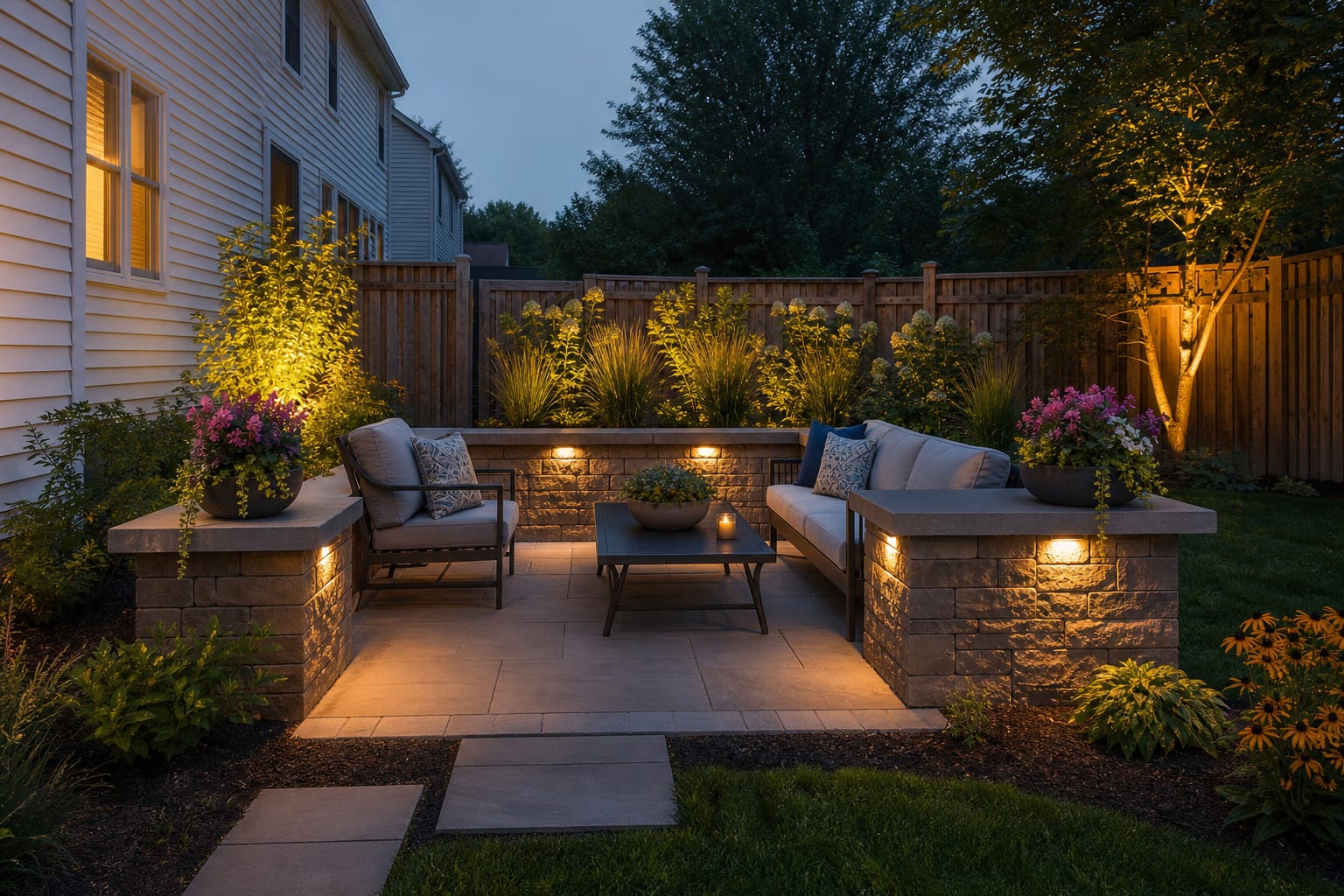
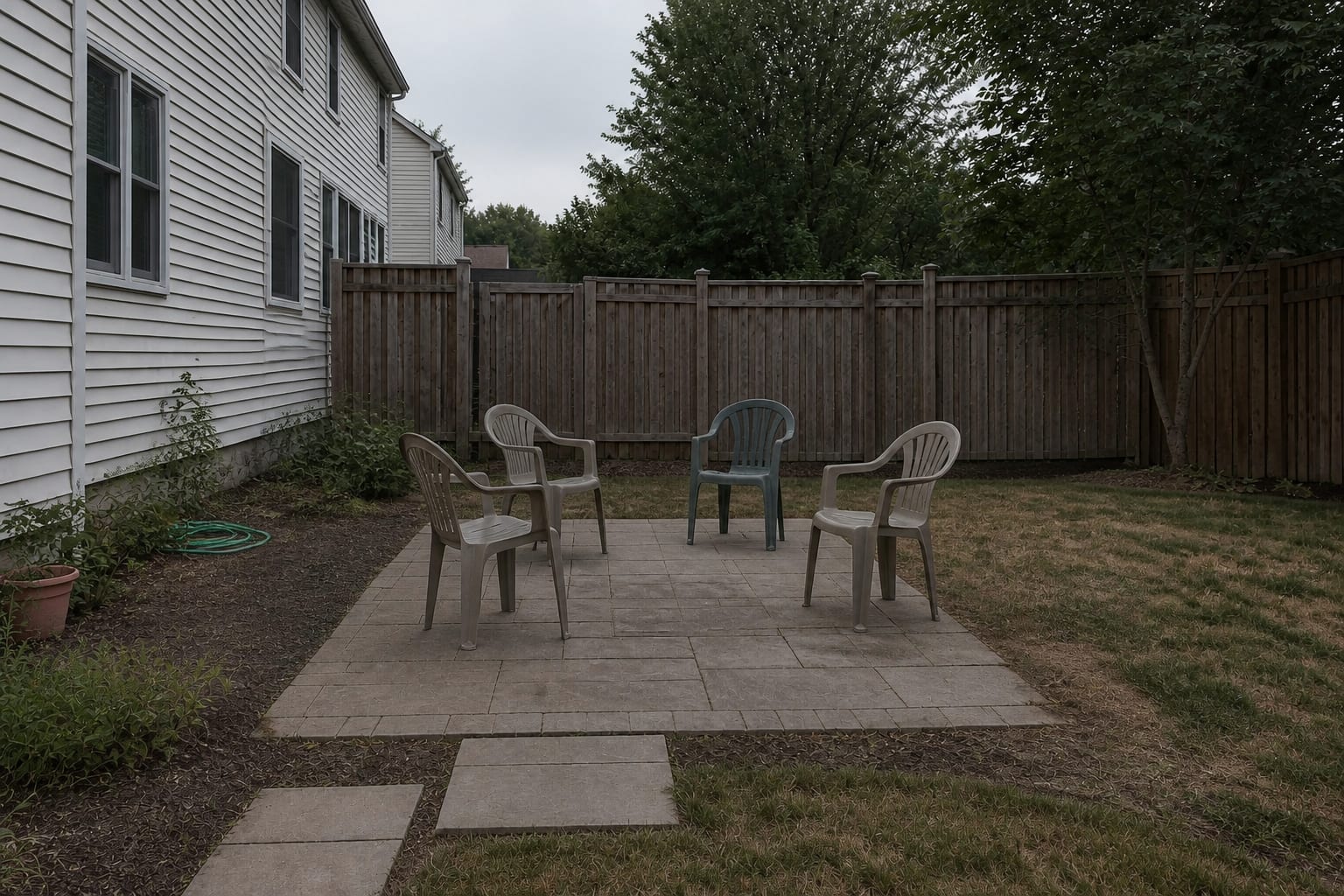
An outdoor seat wall works as real seating when it sits 17-18 inches above the patio grade, runs 18-22 inches deep, wears a 2-inch smooth cap, and lines at least one patio edge instead of floating as an island. The best outdoor seat wall ideas solve overflow seating, patio edges, and planter placement in one move, so you stop dragging chairs out of storage every time guests arrive.
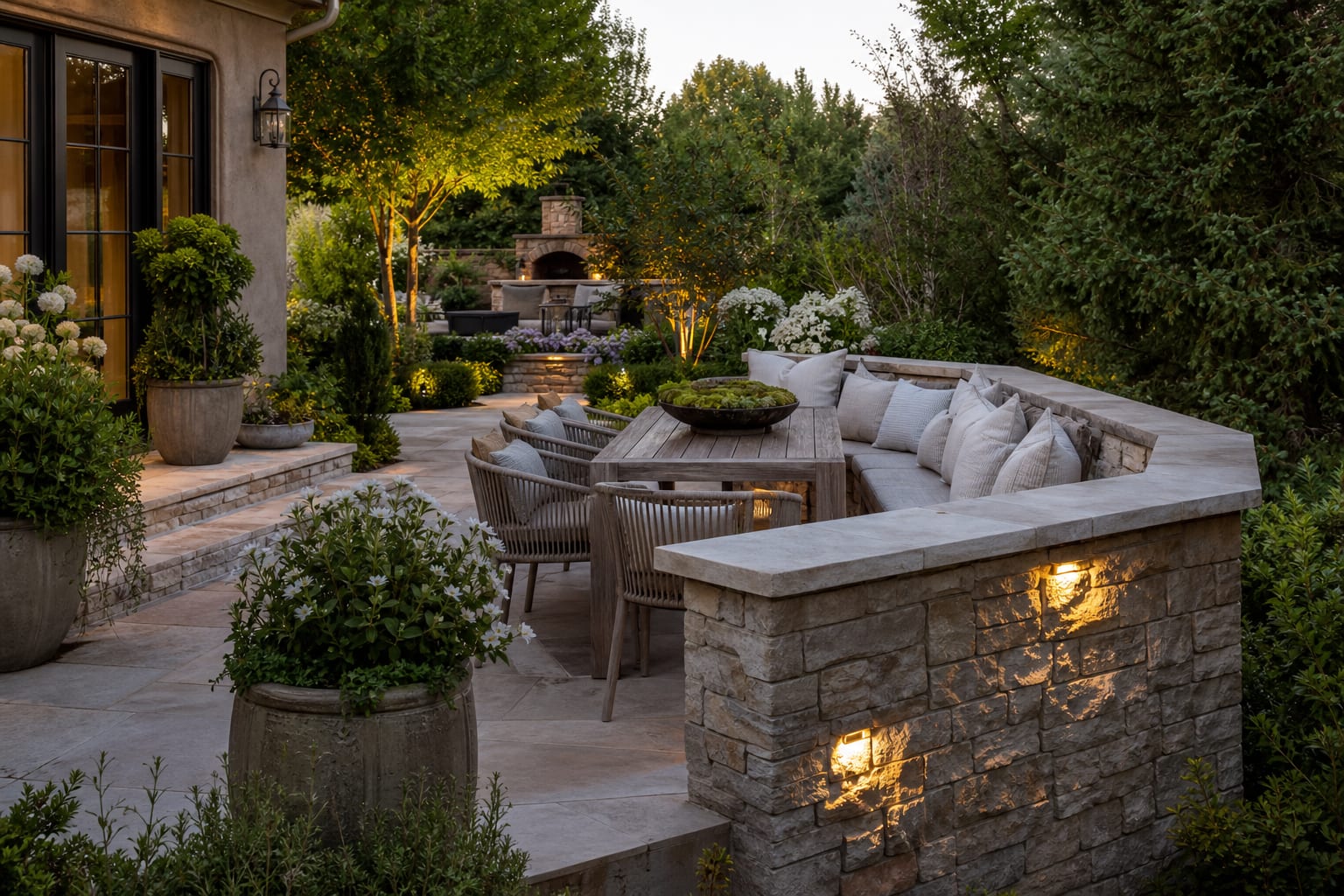
How do you build a seat wall that feels like part of the patio?
Size seating height and depth first, then set base, drainage, structure, and cap around that target. Eighteen inches is the sweet spot for most adults; 20 inches works with thick cushions; past 22 inches the wall starts to feel like a ledge instead of a bench. Keep the main run near 18 inches, with no sharp proud corners, if kids or older guests use the patio often.
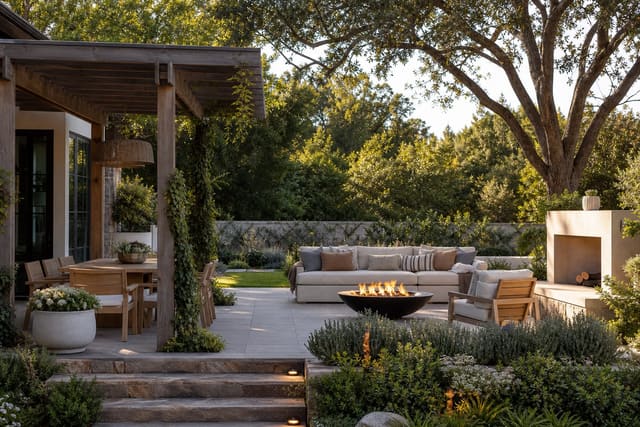
Let the patio layout drive the shape before the masonry catalog does. A straight wall along a dining terrace can replace two freestanding benches; an L-shape can anchor a conversation corner without eating the center of the patio. Near a fire pit, many layouts feel right with 30-36 inches from flame edge to seat face, though manufacturer clearances and local code set the final number — see these fire pit seating layout ideas before the mason sets the first course.
Material changes comfort and upkeep:
| Seat wall material | Best use | Spec that keeps it comfortable |
|---|---|---|
| Concrete wall block | Long edges and curves | Cap at least 12 inches deep, wider on narrow block faces |
| Natural stone | Garden and informal terraces | Choose flat cap stones so no one sits on a ridge or seam |
| Brick masonry | Traditional patios near brick houses | Break up red tones with limestone, bluestone, or cast caps |
| Poured concrete | Modern courtyards, pool-adjacent patios | Soften the edge and confirm control joints before the pour |
Test this on your own photo with ReDesign before choosing a final direction — keep the house edge, horizon, hardscape, planting beds, and main path visible so the preview solves your actual space.
Which seat wall idea fits your yard?
Match the wall to what the patio is missing: a boundary, storage-free seating, planting height, or a reason to gather. Do not copy a curved resort wall into a tight rectangular yard.
- Wrap one side of a dining patio, leaving the serving path open. Keep the wall 18 inches high and at least 36 inches from the table edge so chairs pull out freely.
- Build an L-shaped corner bench where a patio meets a planting bed. The long side seats three at roughly 24 inches per person; the short return adds a social corner.
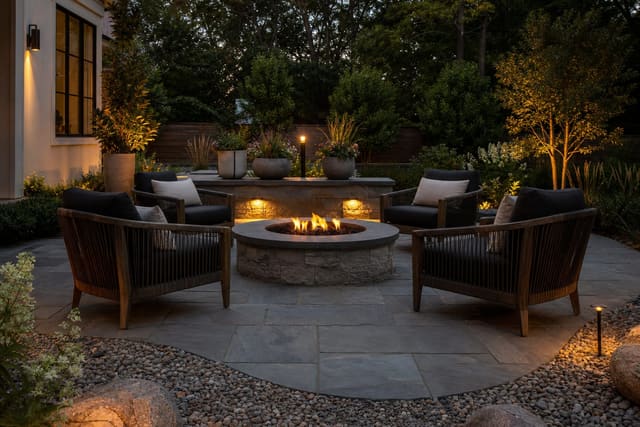
- Curve a seat wall around a circular fire pit only with a generous radius, so people don't sit shoulder-forward, and keep joints smooth enough for cushions to lie flat.
- Pair a low wall with a 12- to 18-inch raised planter behind it so grasses or herbs lean over the cap without stealing seating surface.
- Add a seat wall under a roof or shade frame for all-weather structure; check covered patio structure ideas first, since roof posts can frame the bench or chop it into awkward segments.
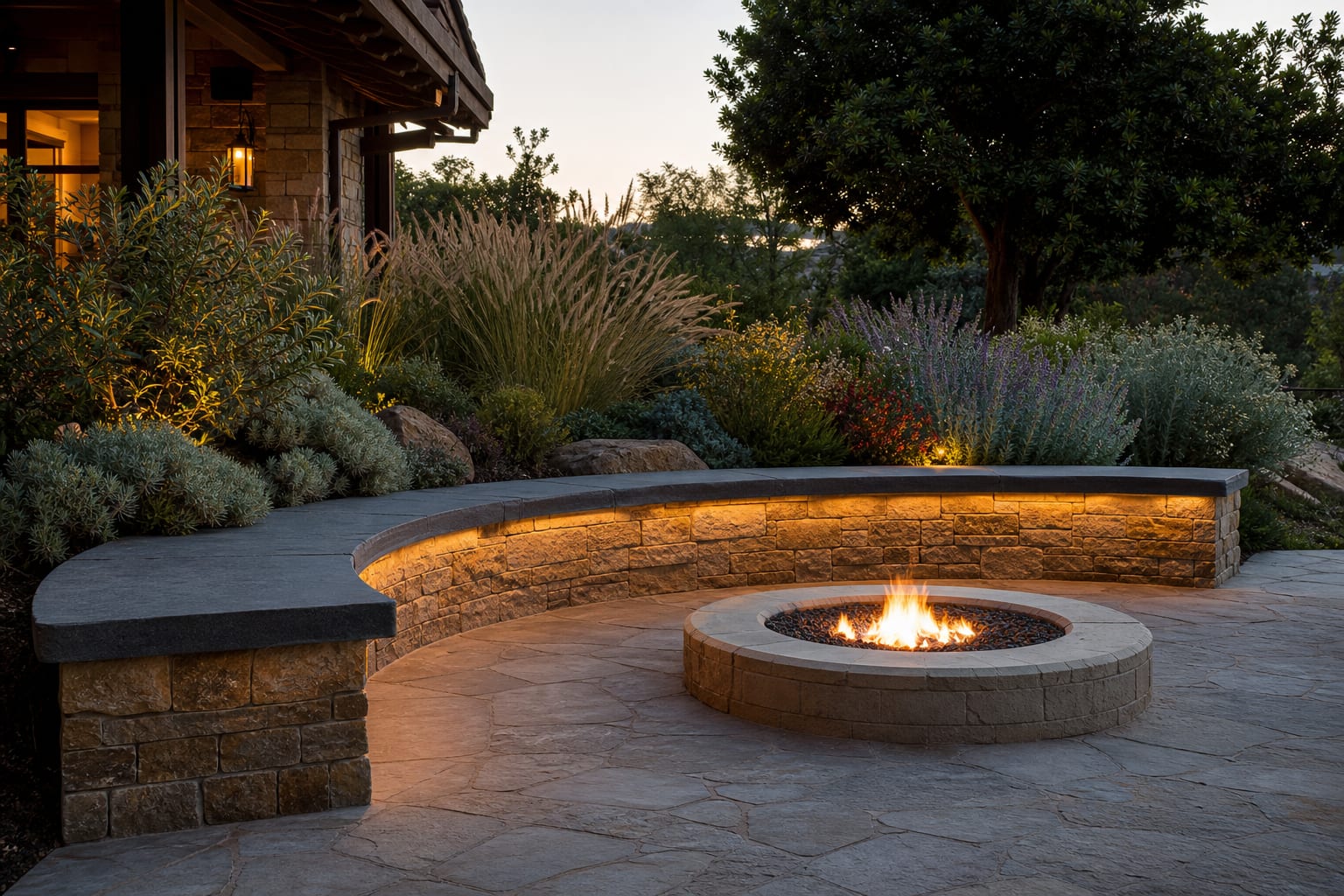
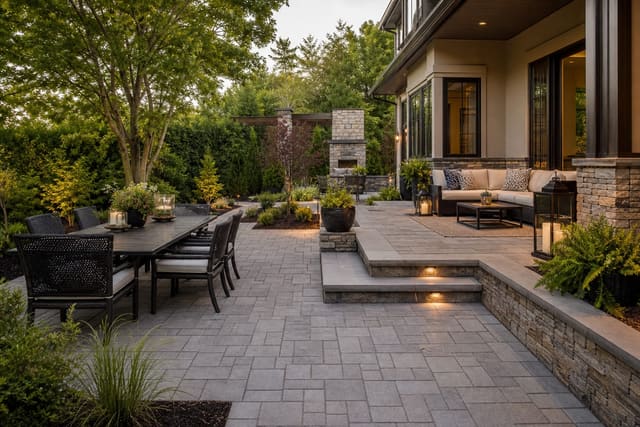
Give wall ends visual weight with a pier, planter, step, or return instead of letting the wall die into lawn. End piers can run 4-8 inches taller than the seat if they hold lanterns or drinks, but avoid stacking too many tall piers. Plan low-voltage lighting from the start: wall lights set into the face wash the paving without glare, step lights help at level changes, and warm 2700K light suits stone, brick, wood, and planting better than cold white.
Common outdoor seat wall mistakes
- Building too high because the block courses land there. A 24-inch cap leaves feet hovering or knees cocked; adjust base, cap thickness, or course count to land in the 18-20 inch range.
- Blocking the path people actually use. Keep a direct 36-inch route from door to grill, wider near steps, sliders, and gate swings.
- Using a cap too thin to sit on comfortably. Aim for an 18-inch seatable cap depth for lingering, or add fitted outdoor cushions if masonry depth is limited.
- Ignoring water. A retaining seat wall needs drainage stone, fabric separation, and a weep or drain strategy — trapped water becomes future movement, staining, or failure.
- Fighting the house palette. Buff stone can wash out against beige stucco, and red brick underfoot can clash with a red brick façade. Check samples outside against siding, paving, mulch, and wet soil before approving.
Use AI design to preview your patio wall before masonry starts
AI design earns its keep here because the hardest choices are spatial: wall length, curve, cap color, and whether the patio starts to feel enclosed. Upload a straight-on patio photo and test a low stone wall, a brick built-in bench, and a cleaner concrete version from the same angle. One preview round can show whether the wall should wrap a corner, stop short of the grill zone, or connect to planting instead of standing alone.
Check shade in the same preview. A wall under a pergola needs shared geometry between posts, rafters, and bench — these pergola ideas for patios help decide whether shade should cover the whole bench or just the lounge end.
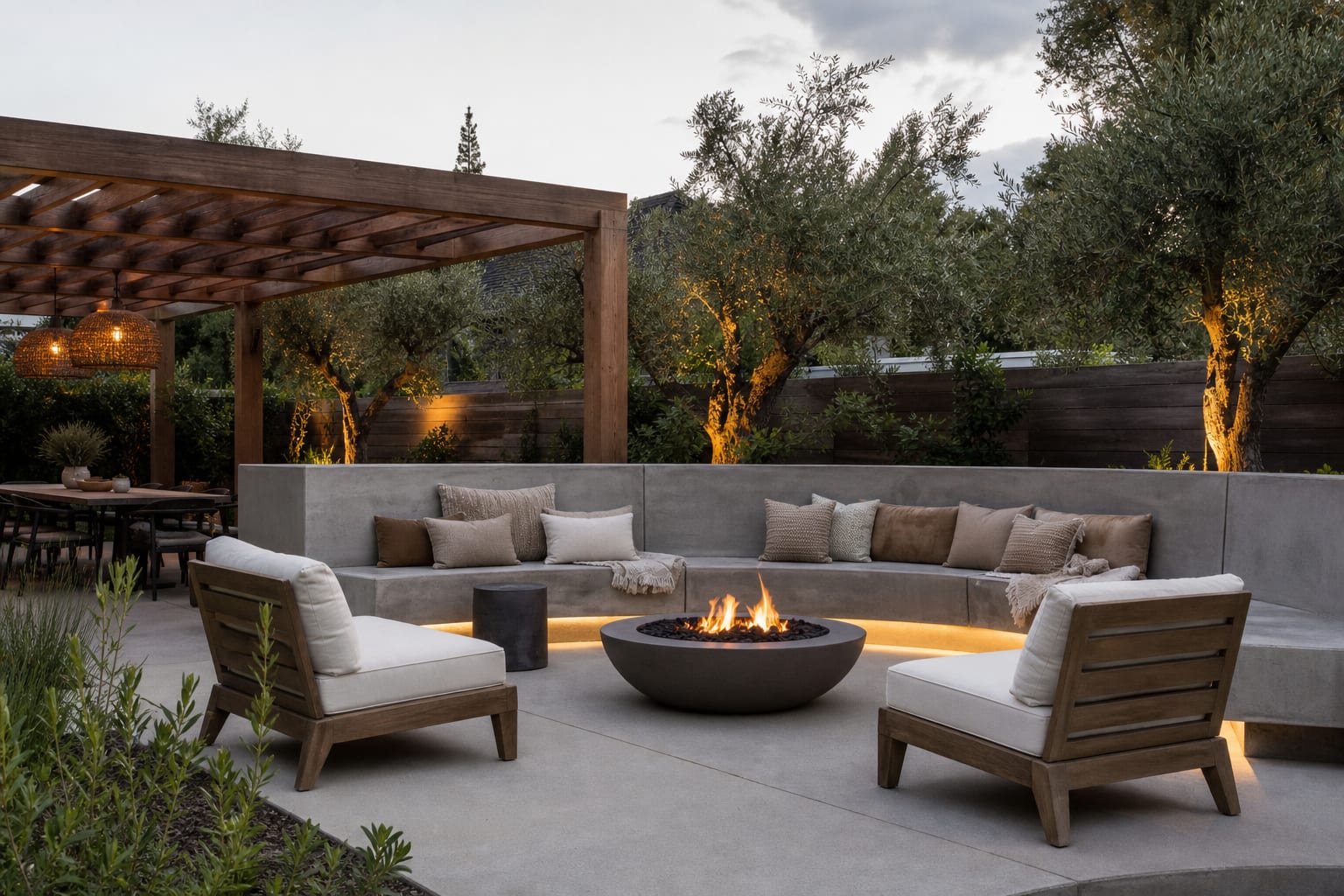
A preview does not replace a contractor's footing, drainage, or structural advice, but it's the fastest way to see whether the wall belongs before you commit to demolition, pallets, and mortar. If the render feels boxed in, shorten the wall by 2 feet, open one end, or swap a solid wall for a planter-backed bench with circulation gaps.
Frequently Asked Questions
What is the correct height for an outdoor seat wall?
17-18 inches above finish grade is standard; cap the wall at exactly 18 inches so it matches dining chair height and guests can move between the cap and side chairs without bumping knees.
What material is best for an outdoor seat wall?
Concrete block core with natural stone veneer (limestone, bluestone, or fieldstone) is the most durable combination. Poured concrete with a smooth or board-form finish builds faster and reads cleaner in modern settings.
How thick should an outdoor seat wall be?
Eighteen inches deep is the minimum for comfortable sitting without feeling perched on a ledge. Go 20-22 inches deep for longer seating sessions, topped with a 2-inch overhanging cap.
Does an outdoor seat wall need a footing?
Yes — a 12x12 inch continuous concrete footing set at frost depth prevents frost heave that can split the wall. In frost-free zones, a 6-inch compacted gravel base under the first course is enough.
How long should a seat wall be for outdoor entertaining?
Allow 24 inches of seat width per person, so a 4-person seat needs at least 96 inches. A U-shaped layout with two 48-inch returns comfortably seats 8-10 around a fire pit.
> Try this: Ready to see this on your own outdoor space? Open ReDesign and run the preview before you buy materials, plant, drill, or move furniture.
Three transformations to try
1. Bluestone-capped seat wall with fire pit 2. Limestone veneer seat wall with planting bed 3. L-shaped seat wall anchoring patio corner