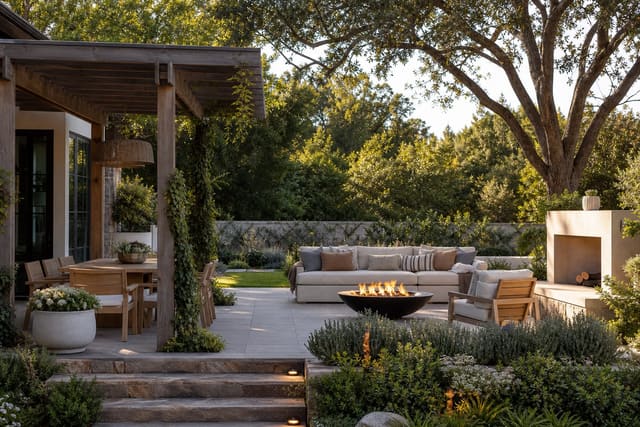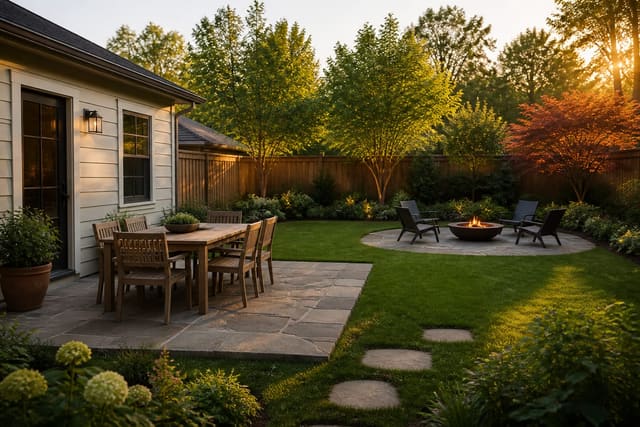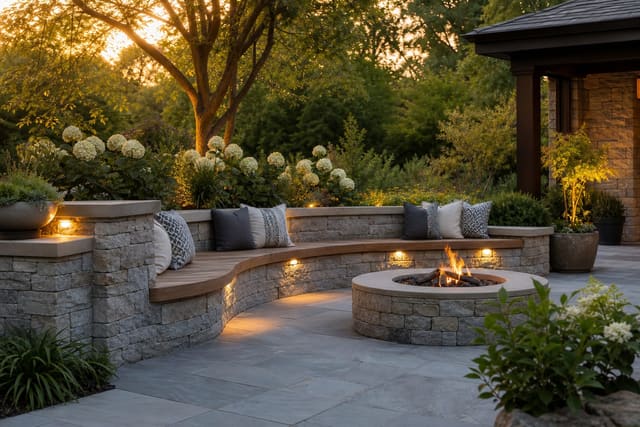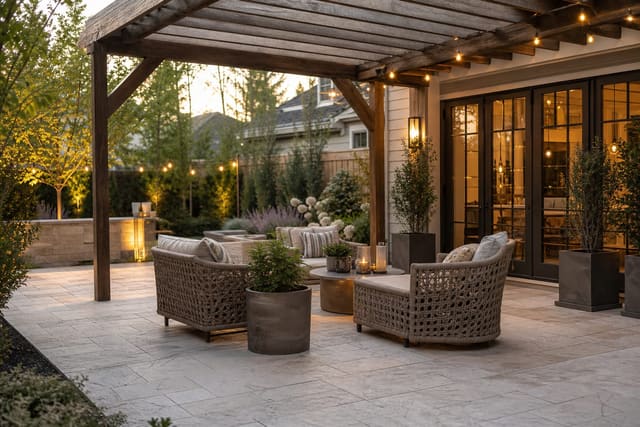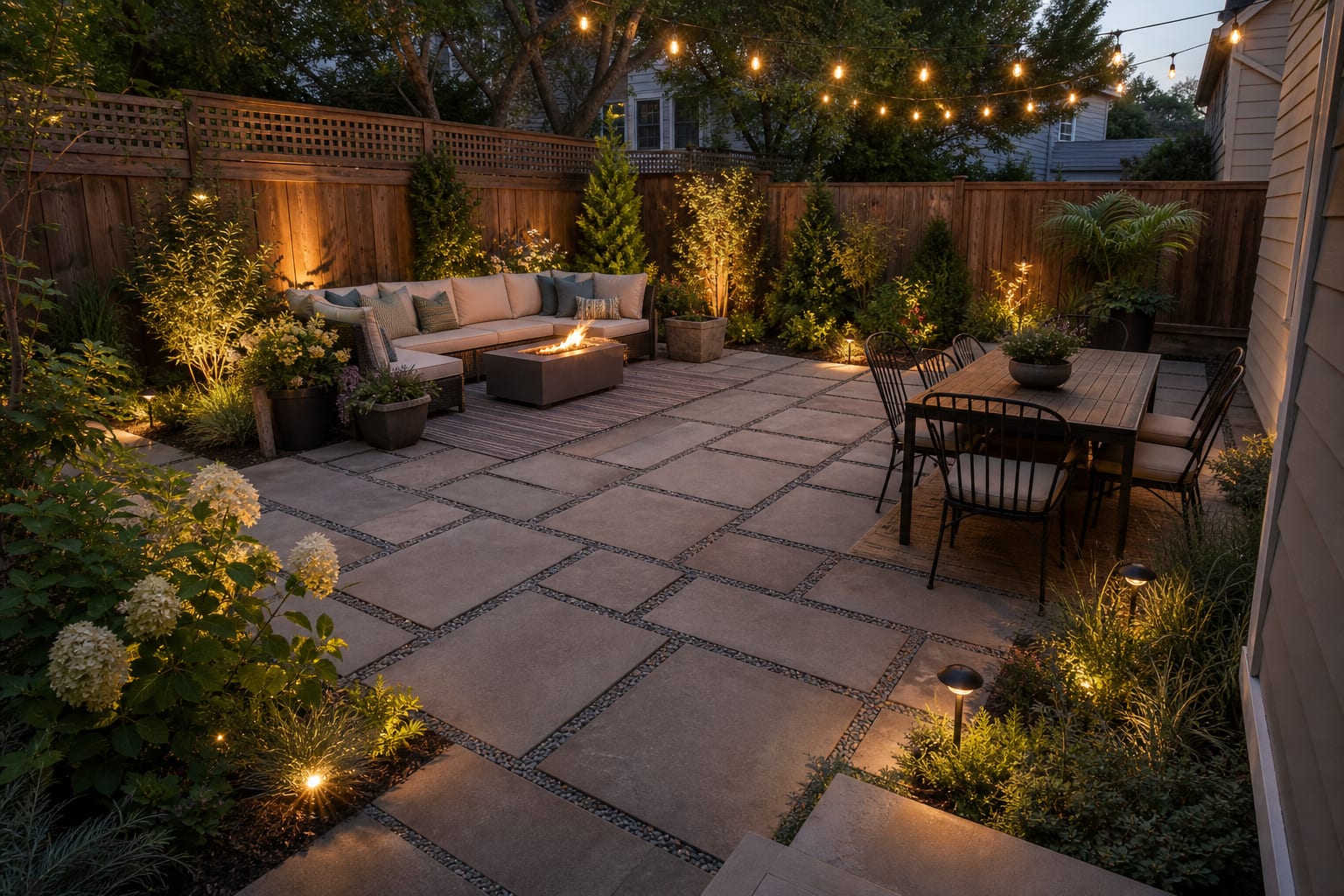
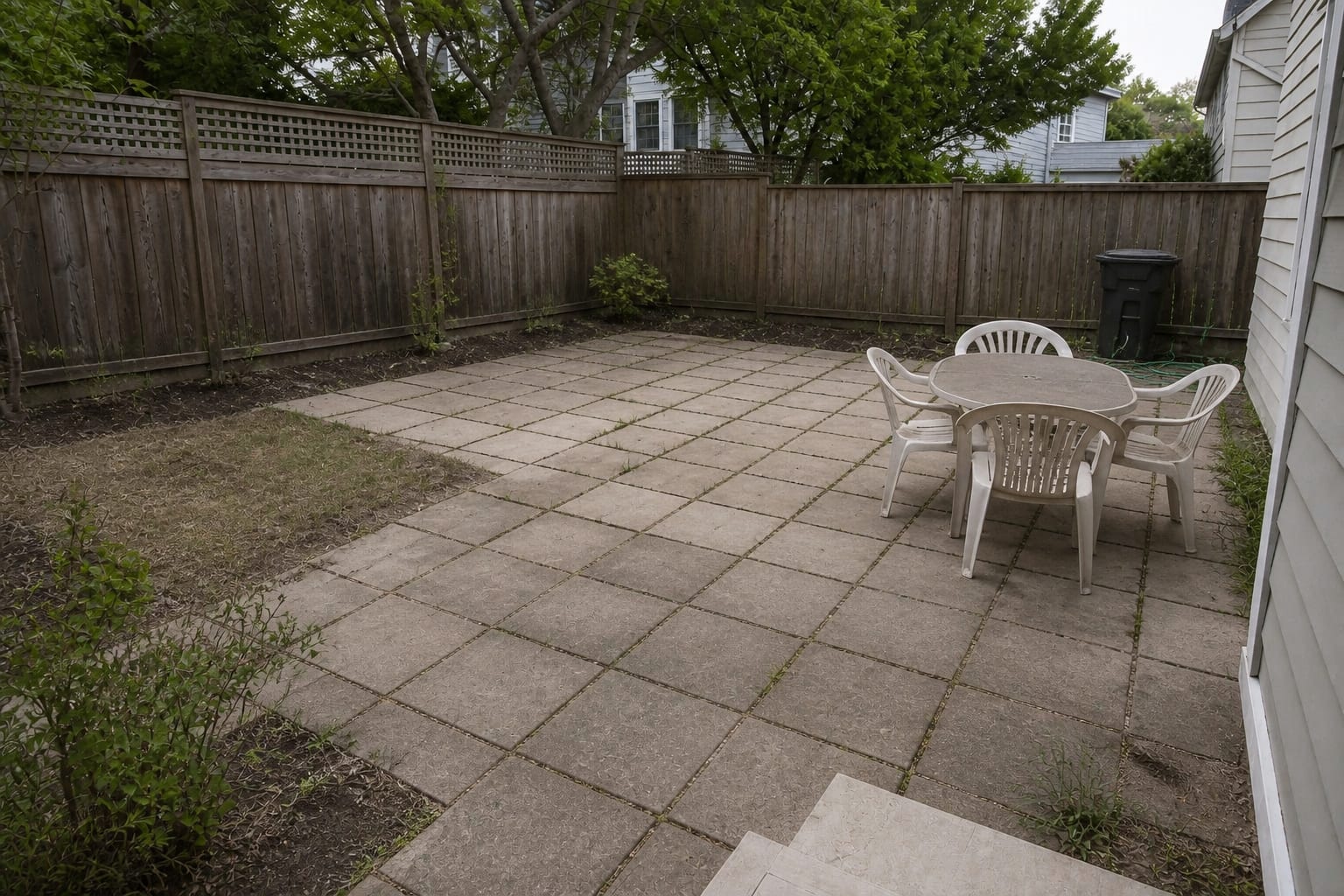
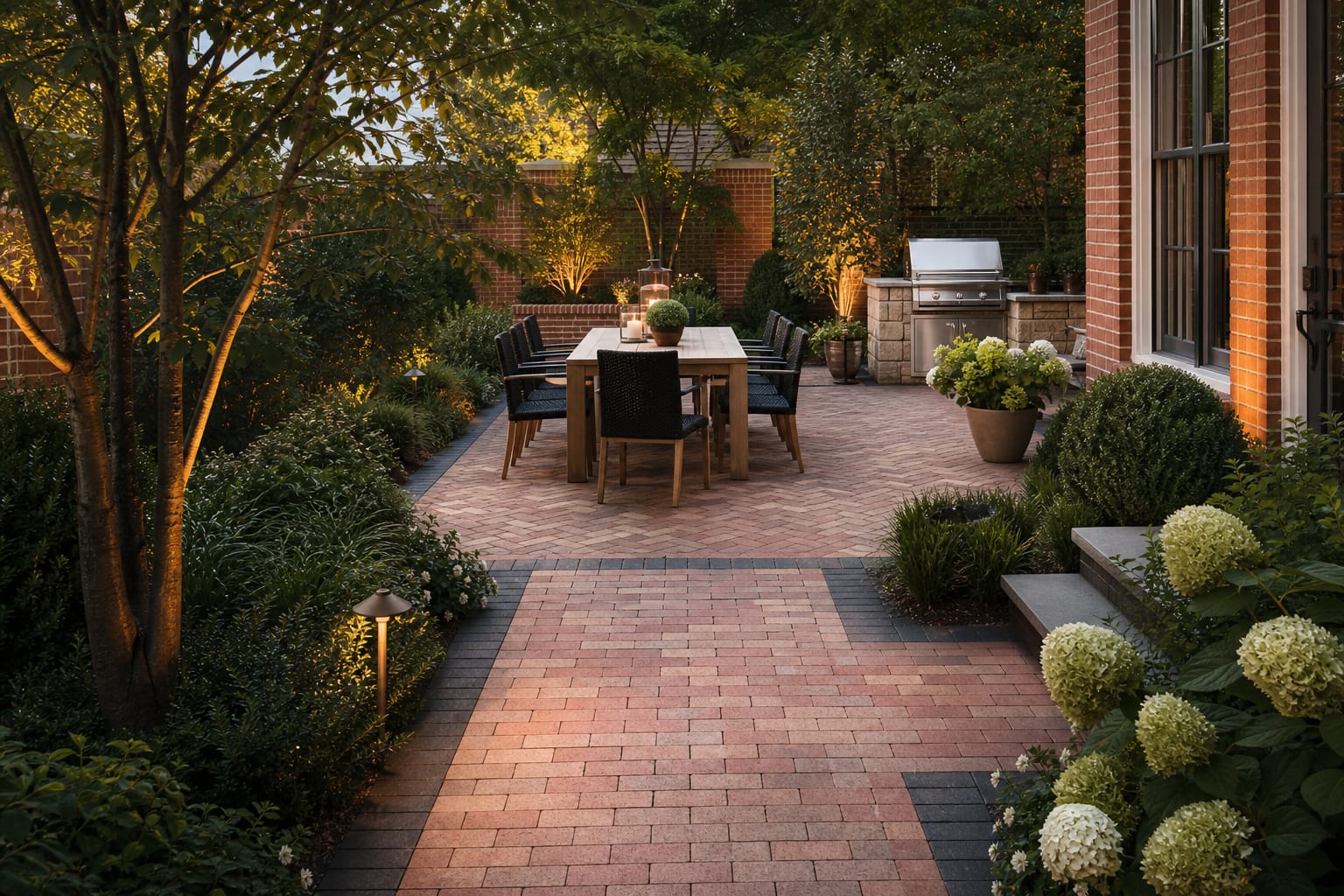
The best paver patio ideas match pattern to load and location: herringbone for high-traffic zones, running bond for calm sightlines, basketweave for brick patios, and large-format grids for modern layouts. Build on a 6-inch compacted gravel base with 1-inch sand, use 60mm pavers, add a soldier-course border, and angle the field 45 degrees to the house for a built-in look.
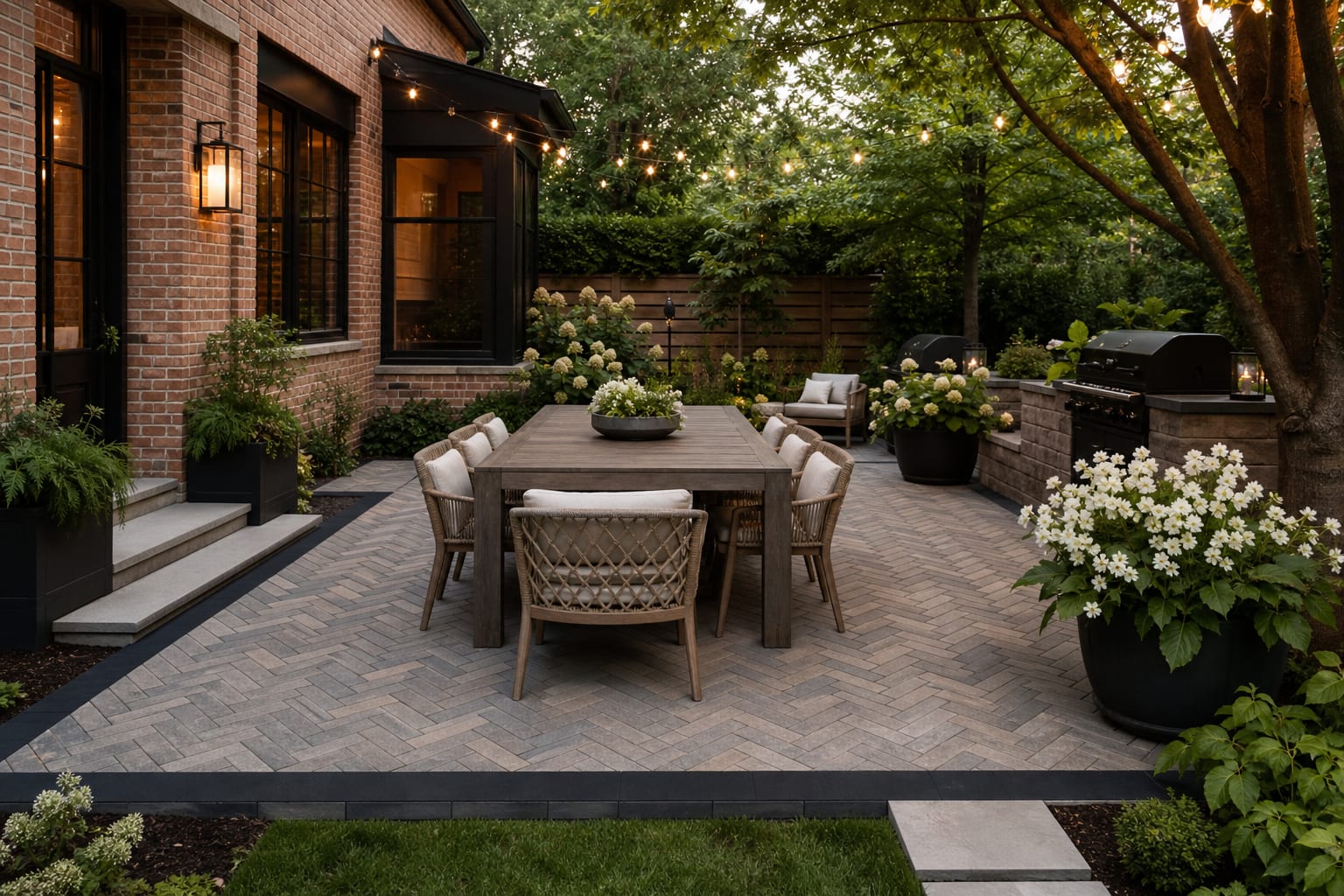
What makes a paver patio feel like an outdoor room?
Start with the furniture footprint, not the paver catalog. A four-chair table needs about 10 by 10 feet once chairs pull out; six chairs want 12 by 14 feet. A lounge pair fits in 8 by 10 feet, but a sectional near a fire feature needs closer to 12 by 16 feet.
The pattern should support that footprint. A herringbone field inside a straight border signals the main zone, while a running-bond path tells the eye how to move across the yard. Planning shade too? Check these covered patio design ideas before locking paver size, since post locations can shift the best border placement.
Edges matter more than most homeowners expect. A 6- to 8-inch border can make inexpensive concrete pavers look intentional, while a no-border patio exposes every awkward cut. Plan a firm below-grade restraint beside lawn, and a 4- to 6-inch gravel strip beside planting beds to keep mulch out of the joints.
Which paver pattern should lead the design?
Match the lead pattern to the job: herringbone for movement and weight, running bond for calm direction, basketweave for old-house charm, and modular grids for architectural concrete designs. Don't pick the most dramatic sample if the patio will hold six chairs, planters, a grill, and a toy bin — busy furniture plus busy paving usually feels restless.
| Pattern | Best patio use | Spec that keeps it honest |
|---|---|---|
| 45-degree herringbone | Dining zones, grill zones, fire pit seating | Add a straight border so angled cuts don't fray the edge. |
| 90-degree herringbone | Rectangular patios near traditional houses | Keep the field aligned to the house wall for a calmer read. |
| Running bond | Narrow or side-yard patios, paths into seating | Run the long joint lines toward the destination. |
| Basketweave | Brick patios near cottages or older homes | Use it on smaller zones, under about 12 by 12 feet. |
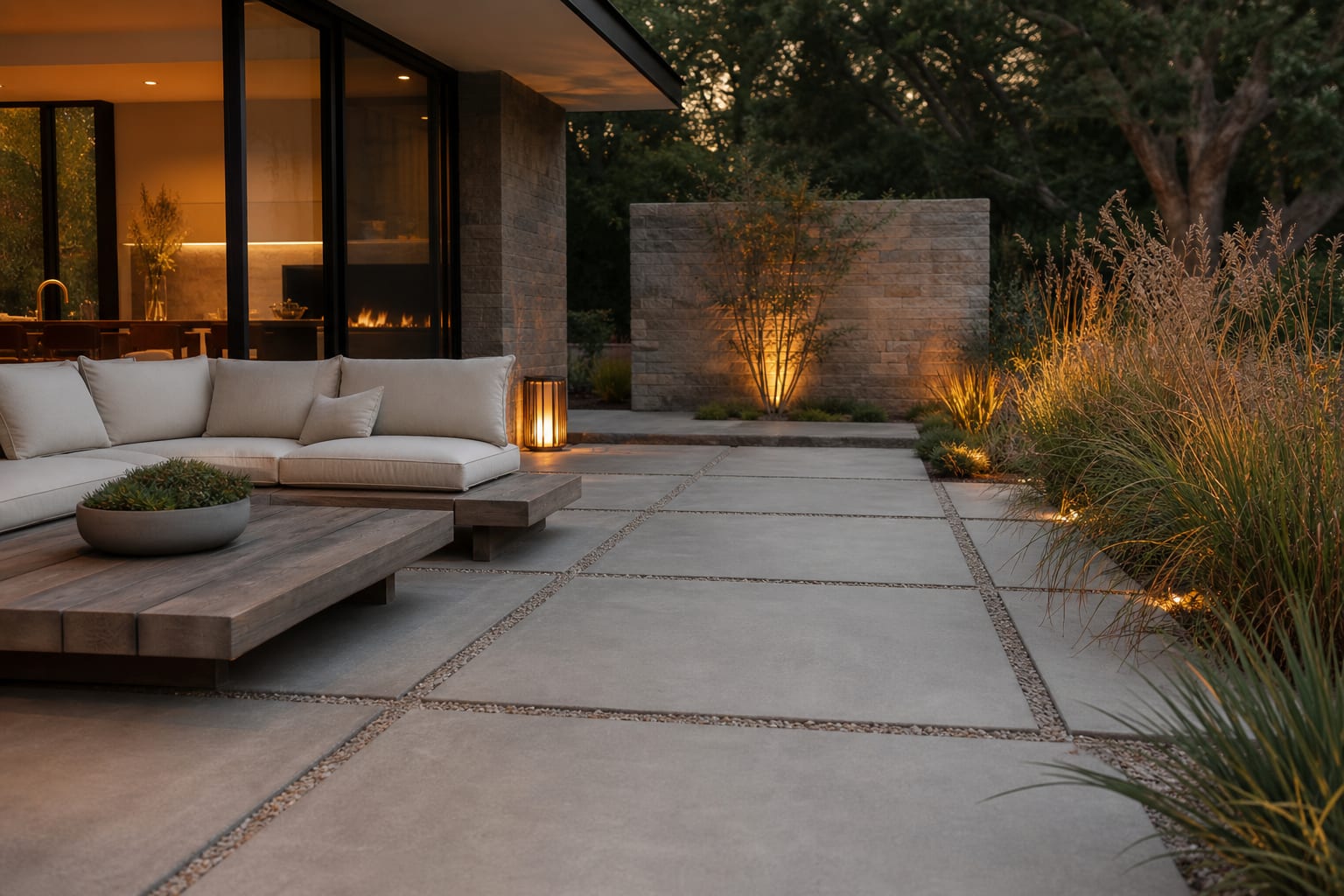
| Large-format grid | Modern patios with simple furniture | Keep slab sizes consistent, often 24x24 or 24x36 inches. |
Color can make or ruin the pattern. Tan pavers with tan joints blur into one beige mat; charcoal pavers with bright white sand can look striped. Keep joint color within one or two shades of the paver body unless the pattern is meant to be the main event.
Test this on your own photo with ReDesign before you commit; keep the house edge, horizon line, hardscape, planting beds, and main path visible so the preview solves the space you actually have.
Five paver patio ideas worth considering
- Herringbone field with a soldier-course border for daily abuse near a grill or dining set; a 6-inch border gives chair legs a visual boundary before they slide into planting beds.
- Large square concrete pavers with gravel joints for a modern patio that still drains visually — a 24x24-inch paver with 3/4-inch crushed stone joints suits simple, low furniture.
- Running bond outside sliding doors, set parallel to traffic, with at least 36 inches of clear space between the door swing and the back of dining chairs.
- Brick patio with one textured field pattern. Basketweave looks charming under a bistro table but needs a quiet border and dark metal furniture to avoid a theme-park mood.
- Two patterns on one large patio, but only for genuinely different functions — herringbone dining plus running-bond lounge, separated by a 12-inch band. Three patterns usually looks like leftover inventory.
Planning a fire feature? Check the clearances in these fire pit seating ideas before setting the paver border — most loose lounge chairs need 30 to 36 inches behind them for circulation.
Common paver patio mistakes to avoid
- Sizing the patio to match the old slab. Builder slabs are landing pads, not rooms; if your 8x10 slab needs to fit a dining table, add square footage or shrink the furniture plan.
- Ignoring slope. A patio should move water away from the house, typically 1/8 to 1/4 inch per foot. Skip this and even the best pattern will pool at the threshold.
- Choosing pavers in isolation from the house. Gray can look blue beside warm brick; red pavers can fight a red brick house with mismatched undertones. View samples in morning, noon, and damp light.
- Under-lighting the finished patio. Space low-voltage path lights 6 to 8 feet apart along circulation edges; use 2700K bulbs to flatter brick, wood, and planting.
- Treating shade structures as an afterthought. If a pergola is coming later, the pattern should already know where posts land. See these pergola ideas for patios to decide whether shade should frame the whole patio or just the seating zone.
Use AI to preview your paver patio before you commit
Paver choices are hard to judge from a sample in your hand. Upload a photo of the area, then test a herringbone brick patio, a large-format concrete grid, and a running-bond layout from the same angle. The goal isn't a construction document — it's seeing whether the pattern makes the yard feel calmer, wider, or more chopped up.
Use the preview to test relationships that are expensive to change later: a darker border against the foundation, a lighter field near shade, planters at the corners. If the preview makes furniture look stranded, add 2 feet on the open side or a border that visually contains the seating.
A good paver idea survives the boring questions: Can chairs slide without catching on wide joints? Is there a 36-inch path from door to grill? Does water move away from the house? Answer these before installation day, not just for the reveal photo.
Frequently Asked Questions
What is the best paver size for a backyard patio?
12x12 or 16x16-inch pavers in a running-bond pattern are the most practical for DIY installs. Large-format 24x24-inch pavers look more contemporary but require a mechanically screeded base to prevent rocking.
How thick should paver base gravel be?
Use 6 inches of compacted Class II road base plus a 1-inch screeded sand setting bed in freeze-thaw zones. In frost-free zones, 4 inches of base plus 1 inch of sand is adequate.
How do I prevent weeds growing through a paver patio?
Polymeric sand swept and activated into the joints seals the gaps and resists weed germination for 8 to 10 years. Plain sand joints allow weed seeds to germinate within a single season.
What pattern should I use for a paver patio?
Herringbone at 90 or 45 degrees is the most stable pattern because each paver locks its neighbors. Running bond is easiest to lay, and random ashlar (mixed sizes) looks the most naturalistic.
Do pavers need to be sealed?
Sealing is optional but recommended. A penetrating wet-look sealer enhances color, repels staining, and slows efflorescence; apply it every 3 to 5 years after the patio has cured for at least 60 days.
> Try this: Ready to see this on your own outdoor space? Open ReDesign and run the preview before you buy materials, plant, drill, or move furniture.
Three transformations to try
1. Herringbone paver patio with soldier-course border 2. Large-format paver with gravel joint 3. Mixed-size ashlar paver with seat wall