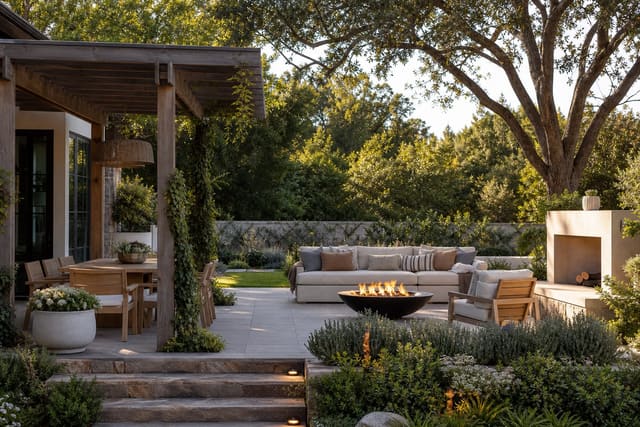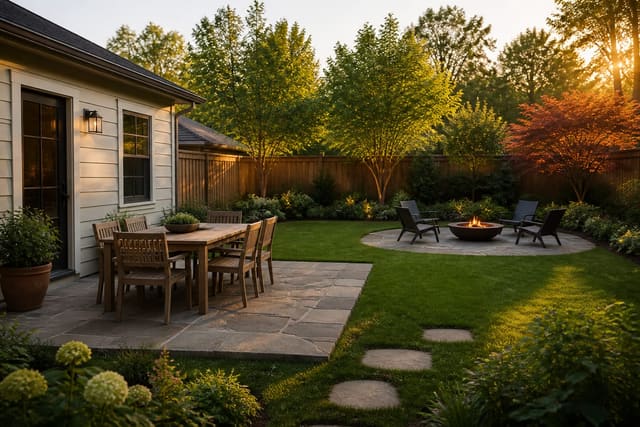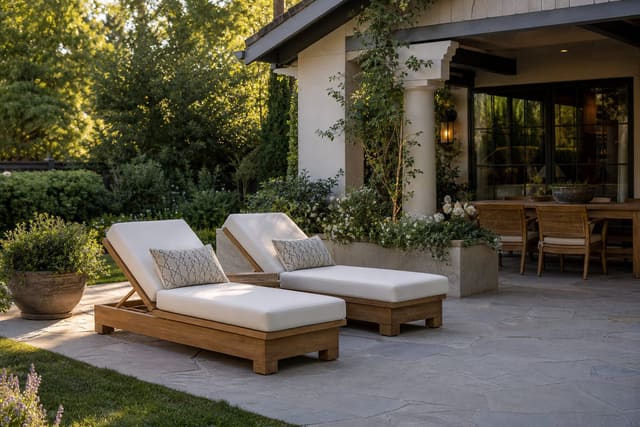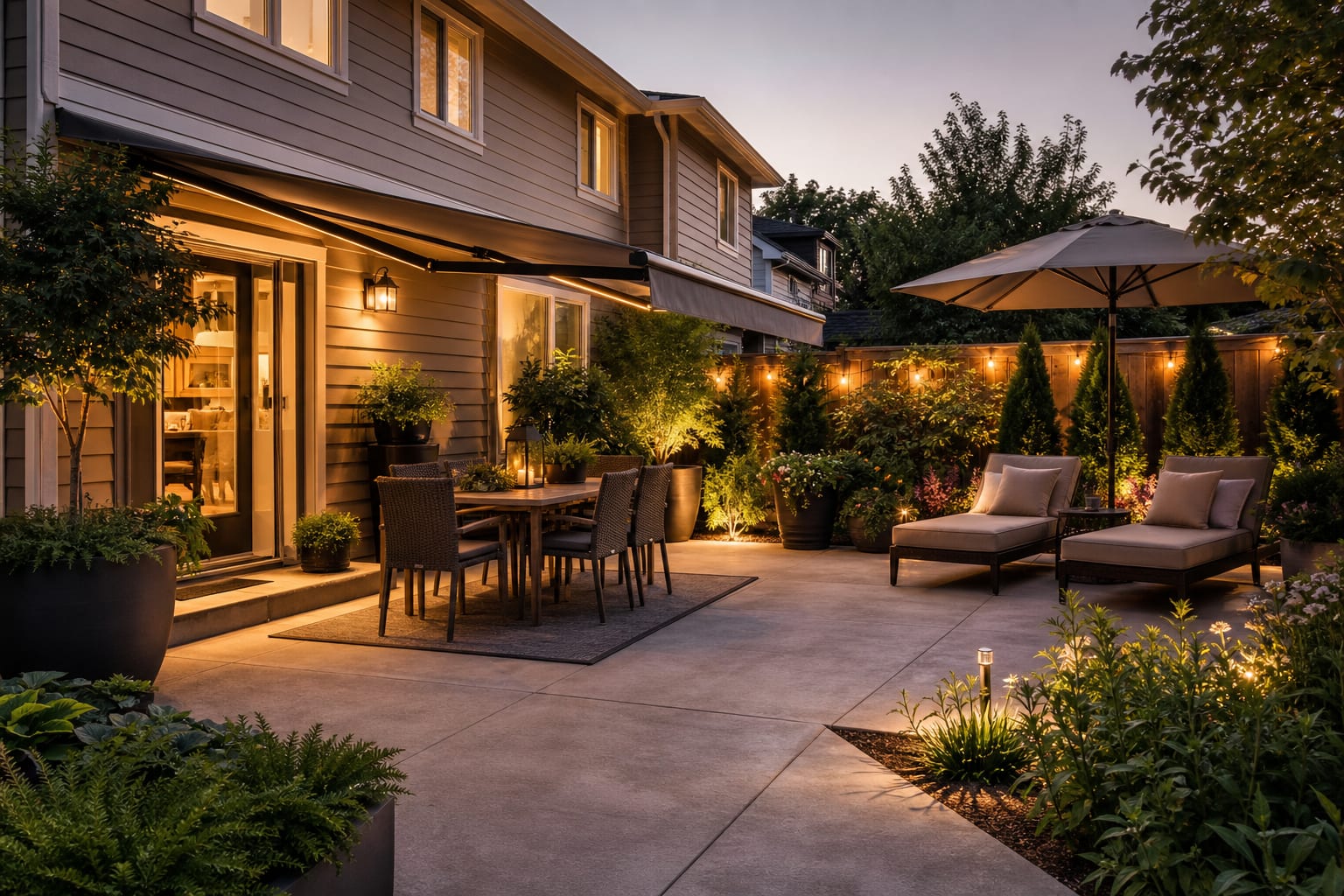
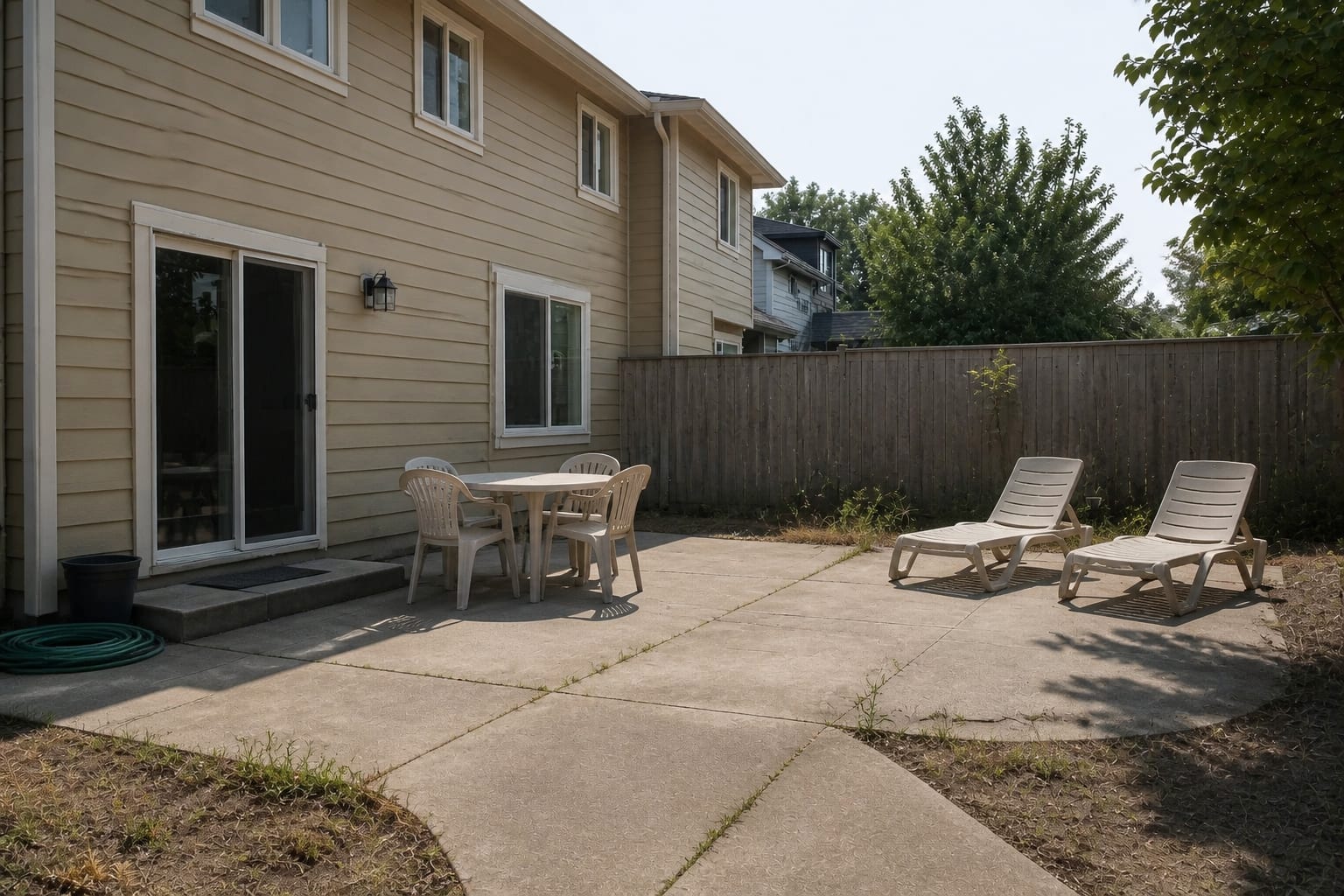
The best outdoor shade option is whichever one blocks the sun during the hours you actually use the patio: umbrellas for flexible furniture, shade sails for irregular open yards, and retractable awnings for doors used daily. Shade only counts as effective if it blocks at least 90% of overhead sun at the day's harshest angle; anything less is decoration.
Which Shade Option Fits Your Patio?
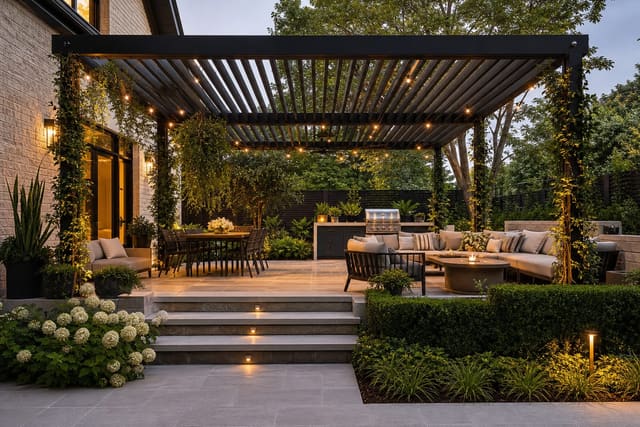
A solid roof, a shade sail rated for 90% block, or a louvered pergola with slats at 45° or tighter will cut real heat. An open-lattice pergola or a 40%-block cloth only cuts glare. Stand on the patio at its worst hour before choosing: side glare needs a different fix than overhead heat.
| Shade option | Best use | Watch point |
|---|---|---|
| Market or cantilever umbrella | Small dining sets, lounge chairs, renters, patios that change layout | Needs a heavy base; many 9-foot umbrellas need 50–75 pounds of base weight, more in wind-prone spots. |
| Shade sail | Odd-shaped patios, play zones, hot paving, modern yards | Needs real anchor points, clean tension, and slope; a floppy sail looks temporary and holds water. |
| Retractable awning | Patio doors, outdoor dining near the house, strong afternoon sun | Needs wall structure and projection depth; size it wider than the door opening. |
If you're also replacing furniture, plan shade and seating together. The measurements in a good patio furniture layout guide matter here because shade must cover the people leaning back, not just the tabletop.
How Much Coverage Does Each Shade Type Need?
Shade should exceed the furniture footprint because chairs slide and sun angles shift. For dining, add 30–36 inches beyond each chair side so guests aren't half in the sun when they push back. For lounge seating, shade the coffee table and the front half of the seats; a shaded rug alone still feels punishing.
Awnings over doors typically look best extending 12–18 inches past the door trim on each side. Projection matters more than width as the sun drops, so a shallow 5-foot projection may protect a threshold but miss a 6-foot-deep dining table. Small patios can work with 7–8 feet of projection; larger dining terraces often want 10–12 feet.
Shade sails need at least 7 feet of clear headroom over walked areas, and no low corner should block an exit path. Coordinate posts, sleeves, and drainage with paving plans before the surface goes down, since shade can change even the smartest patio flooring ideas for heat and runoff.
Test this on your own photo with ReDesign before committing, keeping the house edge, horizon line, hardscape, planting beds, and main path visible.
Five Outdoor Shade Ideas That Earn Their Space
- Layer an awning with a side umbrella on west-facing patios. The awning handles overhead heat near the house while an 8-to-9-foot umbrella catches late side glare near lounge chairs.
- Use a triangular shade sail to fix an odd corner. Three anchor points can make a narrow side patio or play area feel intentional while leaving a 36-inch walking route clear.
- Place a cantilever umbrella behind the seating, not in the center. Keep the base out of the conversation area, but confirm the rotated canopy still reaches over the seat fronts.
- Pair deep umbrellas with heat-tolerant planting. A row of 18-to-24-inch planters with grasses, rosemary, dwarf olive, or lavender cools the edge and reduces bare-paving glare.
- Add a narrow awning over a back door. Even a modest projection over a grill path or breakfast table stops the house wall from radiating heat.
Stone, concrete, and porcelain bounce light differently. Before finalizing fabric color over masonry, check stone patio design ideas, since pale stone under a white canopy can create more glare than expected.
Common Patio Shade Mistakes to Avoid
- Buying for the photo, not the worst hour. A centered umbrella looks tidy, but if glare comes from the west the shadow may land behind the chairs. Move the shade source toward the sun side or add a vertical screen or planted edge.
- Undersizing the base, posts, or mounting. A wobbly umbrella feels unsafe and a loose sail reads as a temporary tarp; match the base to canopy size and wind exposure, and anchor sails and awnings into real structure.
- Choosing fabric color by mood alone. Dark fabric cuts glare but shows heat and dust; pure white near pale paving can wash the whole area out. Mid-tone taupe, sand, charcoal, olive, or warm gray wear better long term.
- Blocking the door path. Keep at least 36 inches of clear travel from the house to the grill, table, or gate so no pole or low corner is in the way.
Preview Your Patio Shade Before You Commit
Outdoor shade is hard to judge from a catalog because the shadow depends on wall height, tree line, paving color, and furniture placement. Upload a patio photo and test a retractable awning, a sail, and an umbrella shifted toward the sun side from the same camera angle. This catches the awkward version before you drill anchors, pour footings, or order custom fabric.
If an awning makes windows feel squat, try a cleaner cassette or narrower fabric. If a sail turns the patio into a tent, raise an anchor point or shrink the canopy. If an umbrella base lands where people walk, change the layout before delivery day.
Frequently Asked Questions
What is the most effective outdoor shade structure?
A fixed solid-roof pergola (polycarbonate, metal, or wood with a roof) blocks 100% of overhead sun. A tensioned 90% HDPE shade sail is the second most effective and costs 60-70% less. An open-lattice pergola blocks only 40% and is primarily aesthetic.
How big should a patio shade sail be?
The sail footprint should be 20-30% larger than the area to be shaded because sun angle changes over the day. A 10ft × 10ft seating area needs a 12ft × 14ft sail minimum.
How do I attach a shade sail without posts?
Fix one corner to the house fascia with a single stainless eye bolt, then use two ground-mounted 4×4 galvanized steel posts at the opposite corners. The house handles one corner while the posts carry the remaining two at the correct height.
Do pergolas provide shade?
Open-lattice pergolas provide only dappled, partial shade. A pergola with a retractable canopy, solid polycarbonate roof, or louvered slats set at 45° provides functional summer shade over a seating area.
What outdoor shade option is best for a deck?
A retractable awning mounted to the house wall is the most versatile choice: it extends for sun protection and retracts fully in wind or rain. Motorized versions with a wind sensor are the upgrade that prevents fabric damage.
> Try this: Ready to see this on your own outdoor space? Open ReDesign and run the preview before you buy materials, plant, drill, or move furniture.
Three transformations to try
1. Tensioned shade sail over seating area 2. Louvered pergola with adjustable roof panels 3. Retractable awning over deck