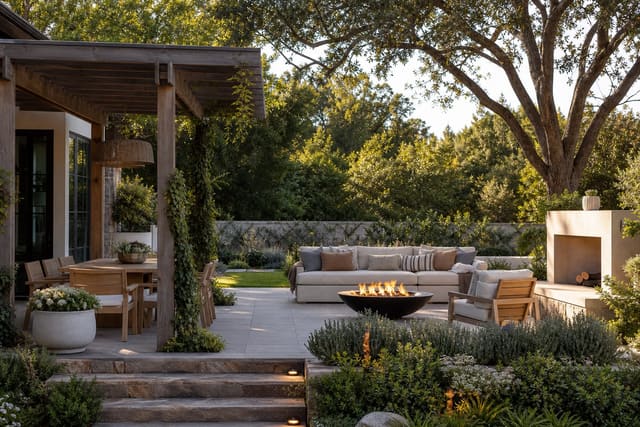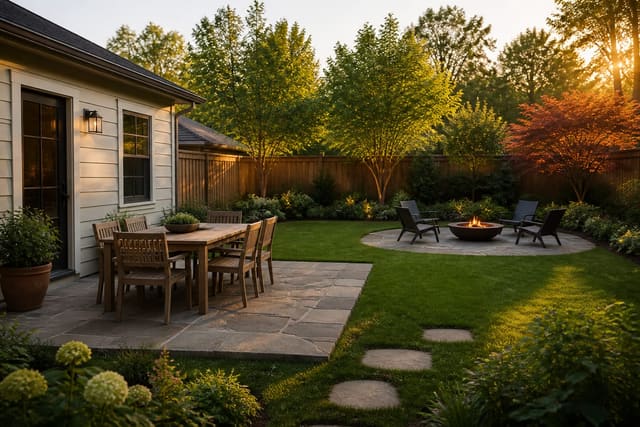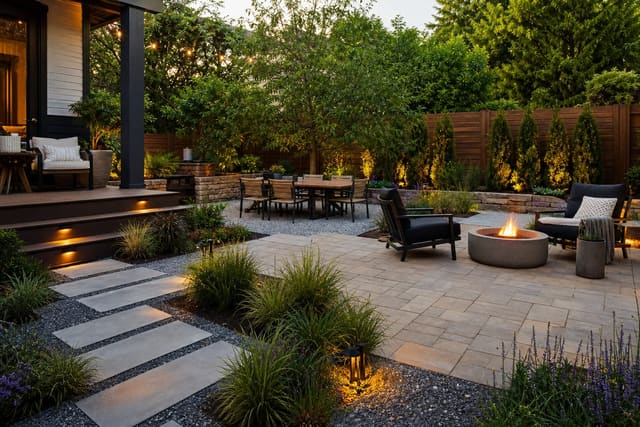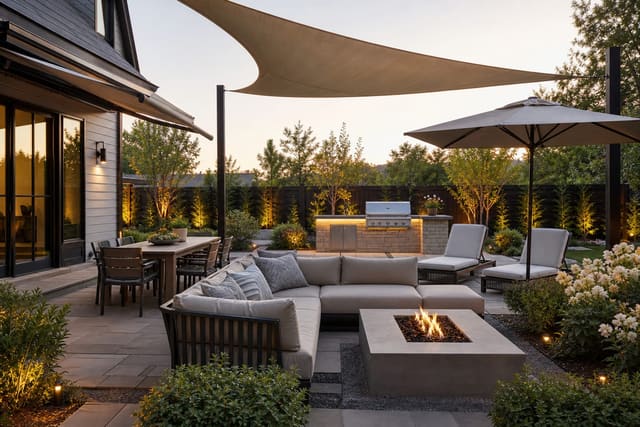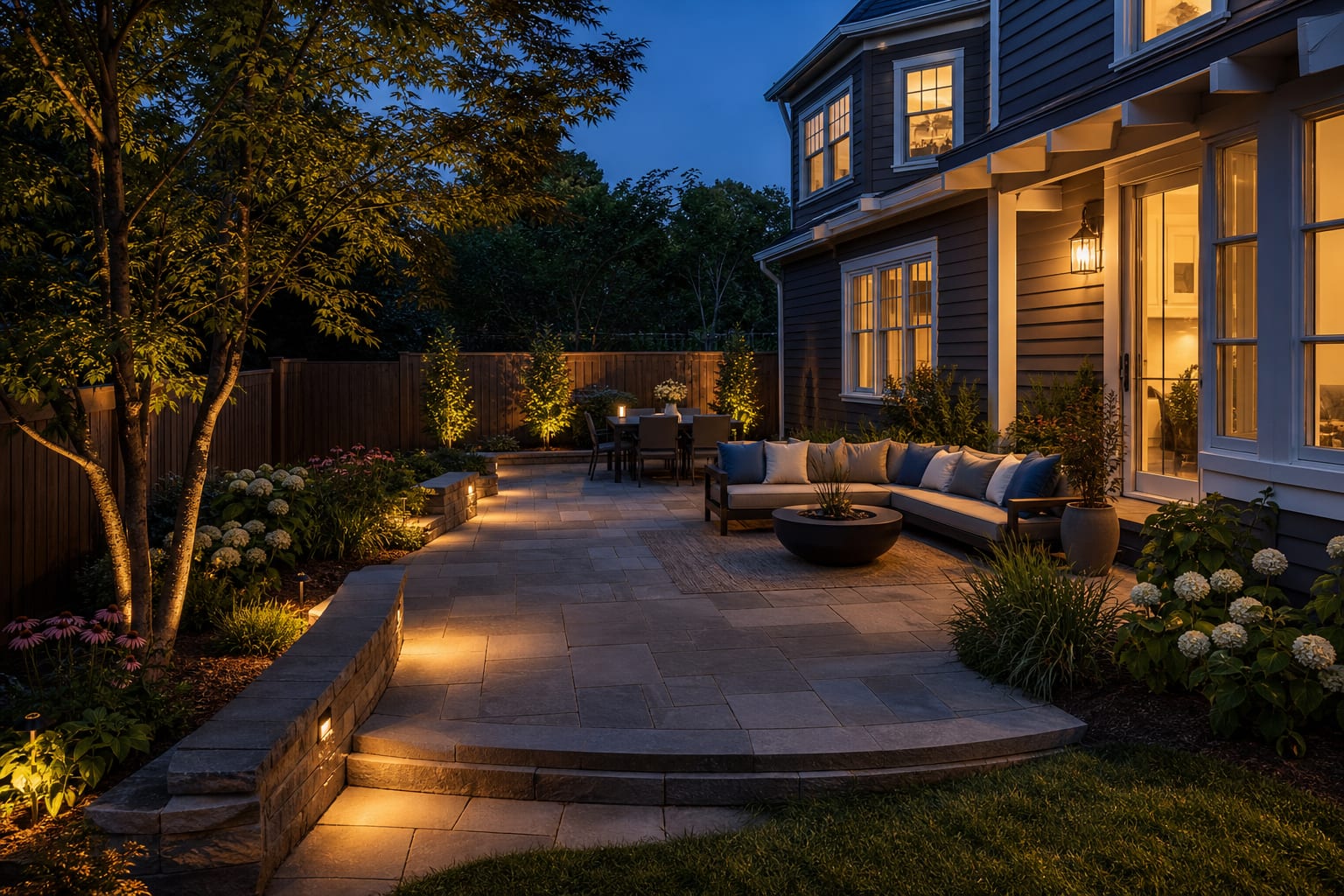
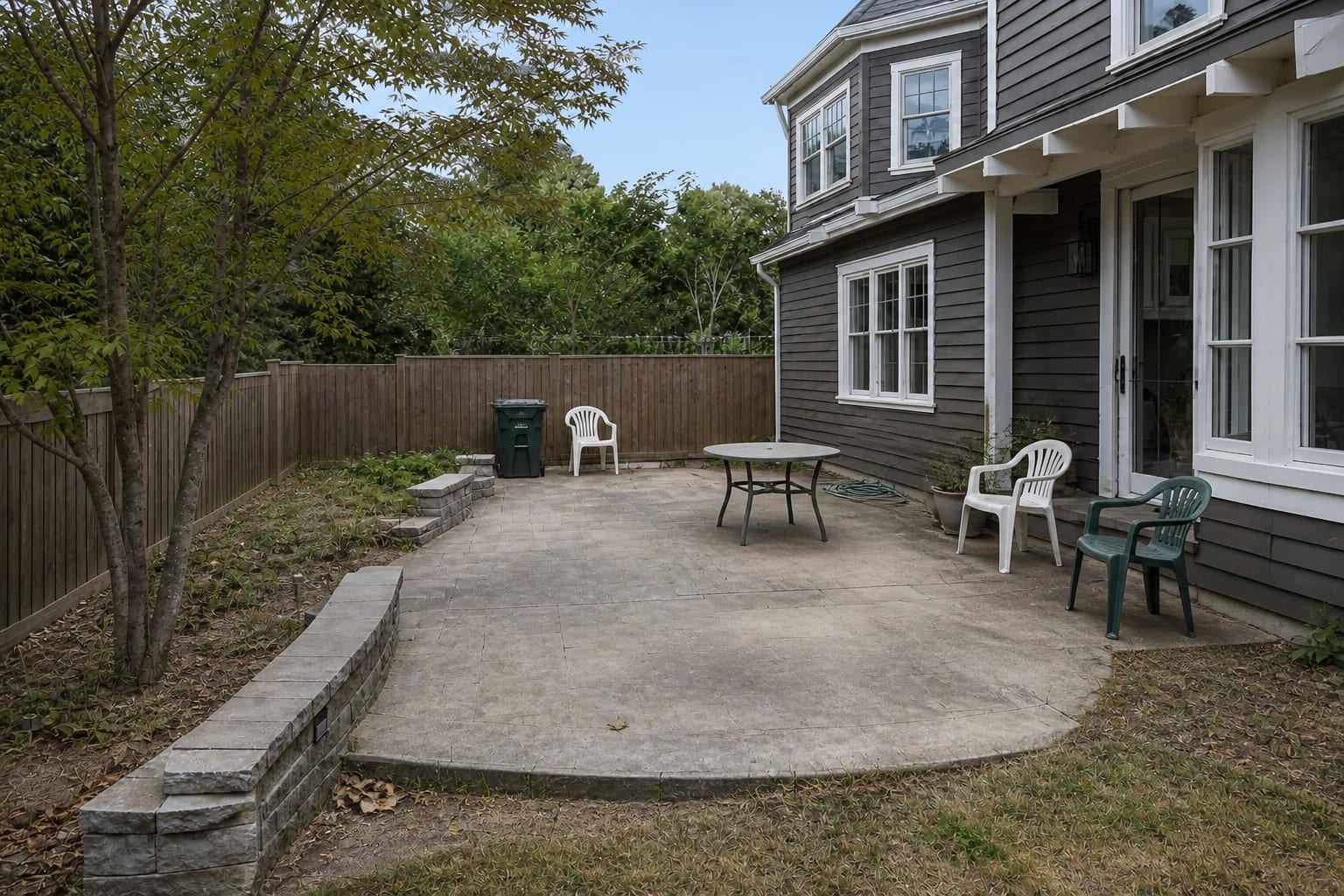
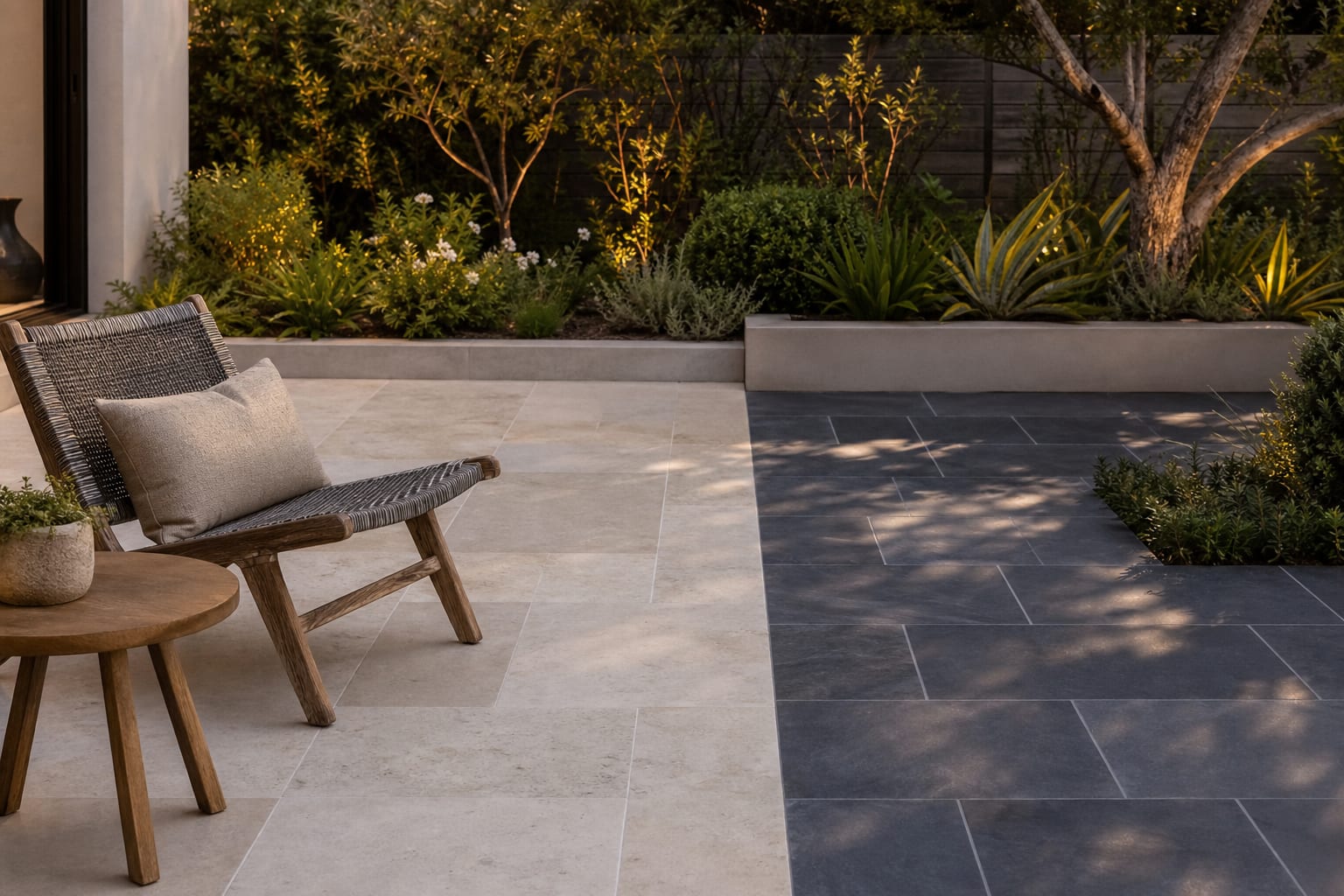
Bluestone is generally the best stone patio choice for durability and clean lines, flagstone delivers the most natural texture, and limestone gives the calmest, palest look but needs freeze-tolerant, exterior-rated pavers. Pick the stone for how you'll use the space, then match color and pattern to your house and climate.
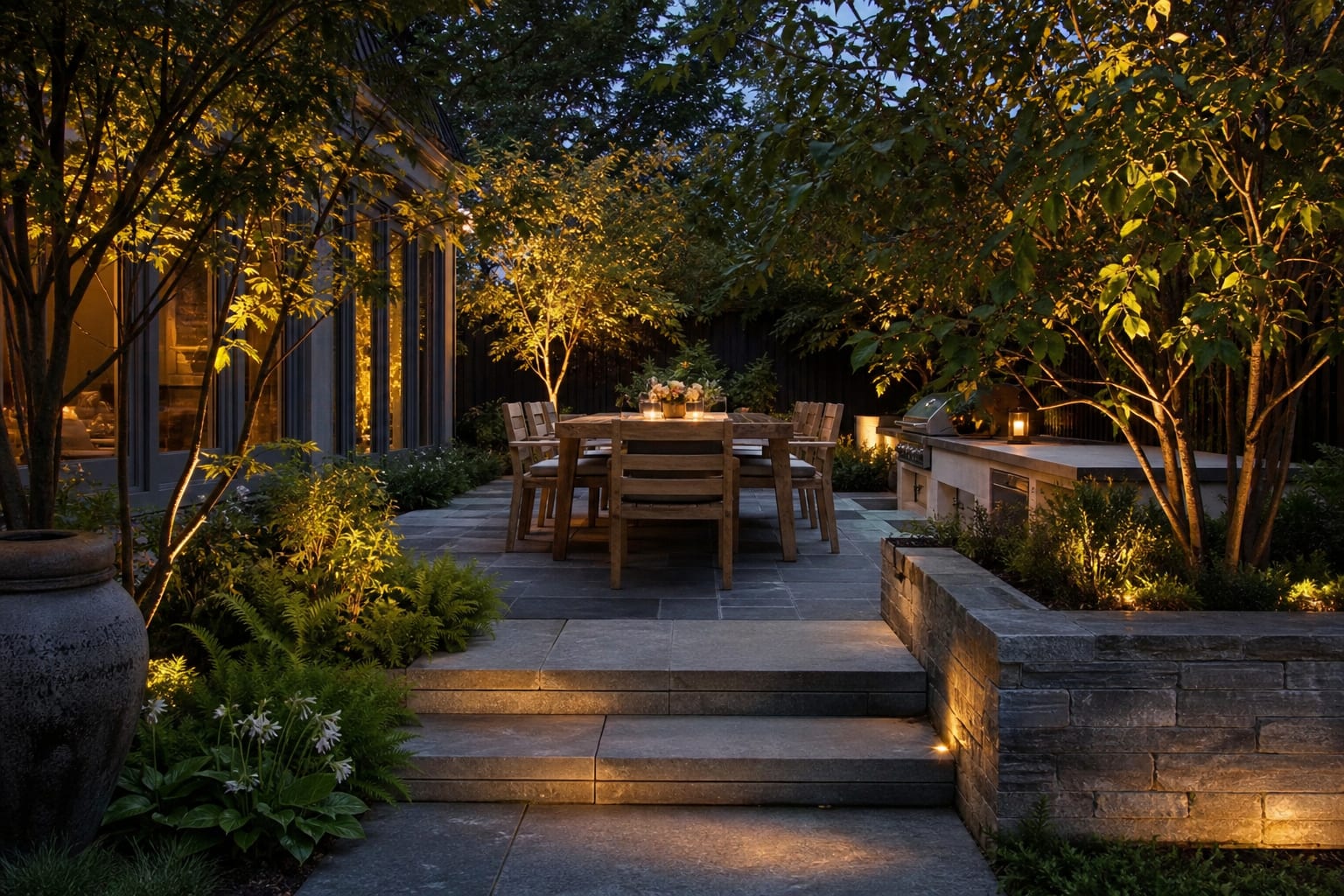
Practical construction checklist
- Confirm patio slope and drainage before choosing stone.
- Confirm 36-inch circulation behind every dining setup.
- Confirm shade timing and edge transitions with furniture mockups.
What is the best stone for a patio?
Bluestone wins most patios on durability, traction, and design flexibility. Thermal bluestone has a flatter face, so chair legs don't catch; natural cleft bluestone has more texture and a looser garden feel but a less stable surface for tables. A running-bond or large rectangular layout reads architectural; mixed sizes read more cottage.
Flagstone works better when the patio should look grown-in, with planting pockets, gravel edges, and curved beds. For dining, use larger pieces (18in+) where the table sits; smaller pieces create too many joints for chair legs, especially with gravel or moss joints.
Limestone is the quiet-luxury option but asks for discipline. It reflects light well beside shaded houses or dark fences, but shows leaf stains, rust marks, and grill drips. Pair it with broad-footed furniture and confirm the paver is freeze-thaw rated in harsh winters.
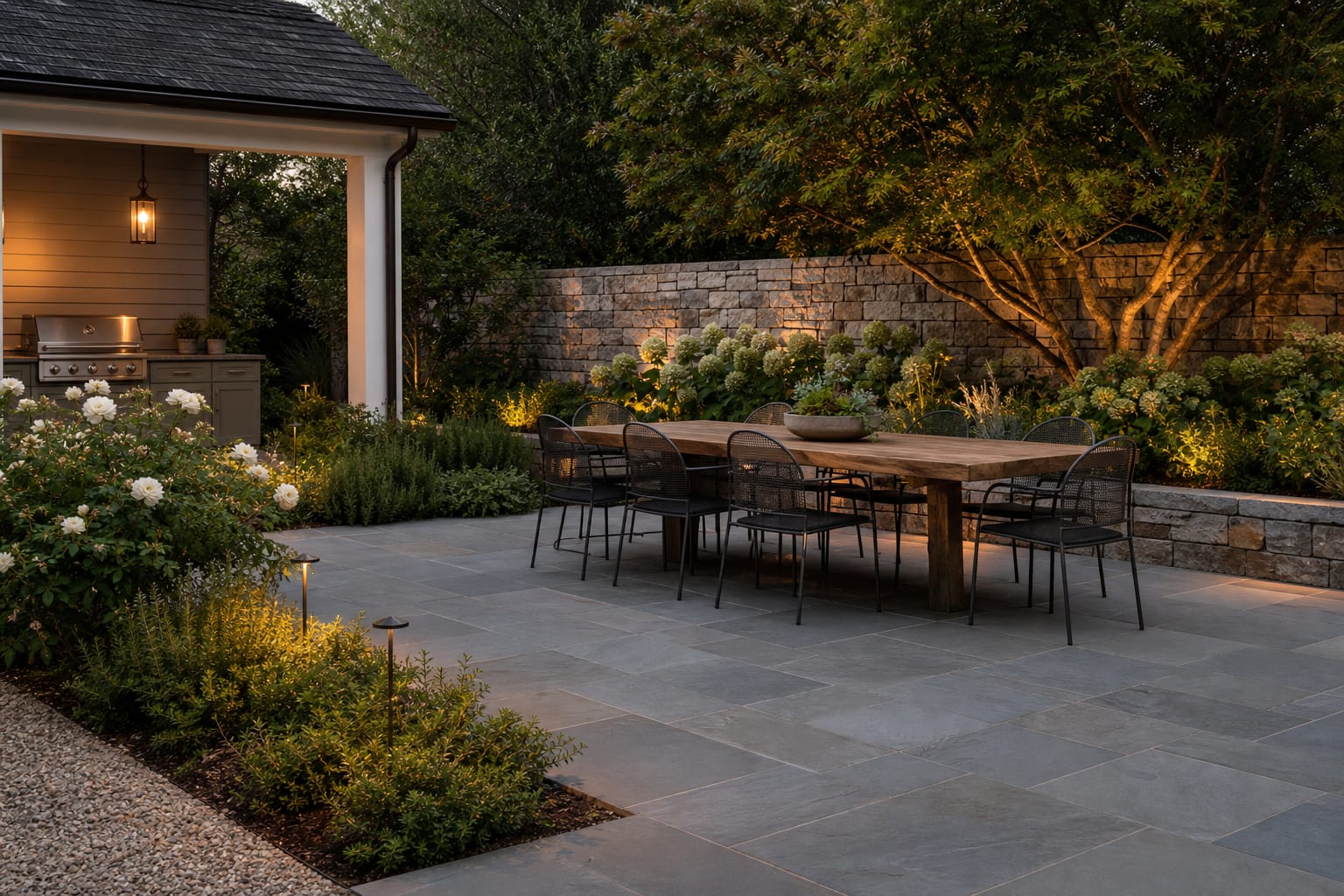
Test this on your own photo with ReDesign before choosing a final direction; keep the house edge, horizon line, hardscape, planting beds, and main path visible so the preview solves the space you actually have.
Flagstone vs. bluestone vs. limestone: which should I choose?
Samples make homeowners focus on color; the finished patio makes them live with joints. Decide how the patio will be used on an ordinary Tuesday night, not just during a party.
| Stone choice | Best use | Watch point | Spec that matters |
|---|---|---|---|
| Irregular flagstone | Garden patios, fire pits, informal seating | Uneven joints, mixed thickness | Larger stones under furniture; walking joints near 1-2in |
| Patterned flagstone | Traditional patios, softer edge | Can look busy in small yards | Limit to 2-3 sizes under 300 sq ft |
| Thermal bluestone | Dining, modern layouts, clean borders | Dark pieces feel hot in full sun | Thermal finish for flatter movement and traction |
| Natural cleft bluestone | Casual terraces, older homes | Surface variation under tables | Reserve for lounge zones, not dining |
| Limestone | Light, calm patios near pools or pale walls | Staining, winter exposure | Exterior-rated pavers; seal only if installer recommends |
Shade changes the decision too. Dark bluestone shines under a pergola or canopy but can feel harsh in unshaded, south-facing yards. Plan shade alongside stone by comparing umbrellas, pergolas, sail shades, and planting in an outdoor shade ideas guide; stone and shade together decide whether the patio works at 3 p.m. in July.
What are the most common stone patio mistakes?
- Judging stone from a dry indoor sample. Stone darkens when wet and shifts in sun, so hose down samples and view them against siding, fence, and soil first.
- Making every joint wide for charm. Keep tighter, consistent joints under dining tables, grills, and sofas; save wide gaps for paths and lounge areas.
- Skipping the furniture footprint. Measure table pullback, sectional depth, and grill clearance before the base goes in; a 7-foot sofa plus side tables can need 11 feet of width.
- Ignoring stone thickness. Dry-laid patios need a compacted base and adequately thick stone; thin stone belongs on a mortared concrete slab instead.
- Letting edges die into lawn. Use steel edging, stone curbing, a planting bed, or a gravel band so mower wheels and mulch stop creeping into the field.
Lighting matters too: texture reads richer when light grazes across it. Use low-voltage path lights 18-24 inches tall along steps and edges, plus a warmer 2700K sconce or pendant near the door. Scale furniture to the hardscape afterward using a patio furniture guide.
Can AI design preview my patio before I order stone?
Yes, and it's most useful before the deposit is paid since stone is expensive to undo. Upload a straight-on photo and test irregular flagstone, rectangular bluestone, and pale limestone from the same angle. This won't replace a contractor's base or drainage spec, but it exposes color clashes, busy patterns, or awkward shapes early.
Photograph the yard from the main seating view, include the house wall and fence line, and clear loose clutter. Compare a warm rustic version, a crisp rectilinear one, and a pale quiet one. If the same furniture looks good in all three, the layout is strong; if only one works, the stone is carrying too much of the design.
Frequently Asked Questions
What is the best natural stone for an outdoor patio?
Bluestone is the most durable and slip-resistant choice for most patios. Limestone and Ipe are beautiful but need sealing every 2 years; travertine pools around edges but looks premium with a wide-joint epoxy fill. Avoid slate, since it delaminates in freeze-thaw cycles.
Should a natural stone patio be dry-set or mortared?
Dry-set (compacted gravel plus sand) lets each stone move independently with frost and is DIY-accessible. Mortar-set on a concrete slab is more stable for irregular or thin stone under 1.5in but can crack in severe frost zones.
How do I prevent efflorescence on a stone patio?
Apply a penetrating silane sealer to dry stone at installation and reapply every 2-3 years. Avoid deicing salt in favor of calcium chloride, and ensure drainage pulls water away from the slab rather than pooling underneath.
How do I cut irregular flagstone for a patio?
Score the cut line with a 4in angle grinder and diamond blade, then split along the score with a cold chisel and hammer. A wet tile saw with a diamond blade gives the cleanest edge for border-course pieces.
How much does a natural stone patio cost?
Irregular bluestone dry-set runs $18-25 per sq ft installed. Square-cut bluestone on a mortar bed runs $28-40 per sq ft. Premium limestone or travertine on a concrete slab runs $35-55 per sq ft, depending on region.
> Try this: Ready to see this on your own outdoor space? Open ReDesign and run the preview before you buy materials, plant, drill, or move furniture.
Three transformations to try
1. Irregular bluestone dry-set with creeping thyme 2. Square-cut limestone with mortar joint 3. Travertine patio with steel-edge planting strip