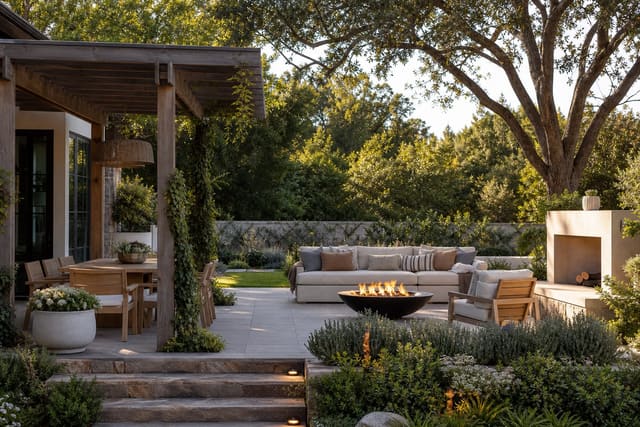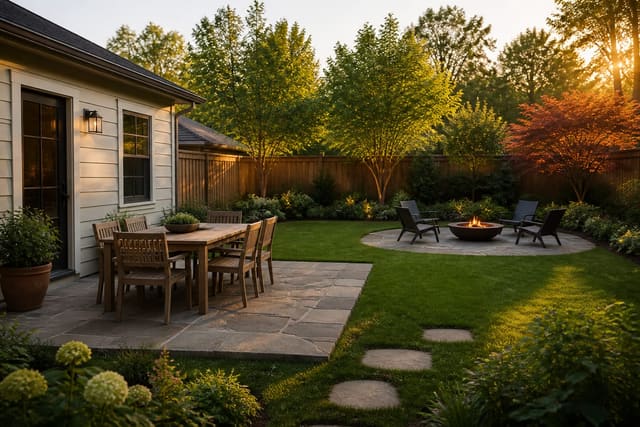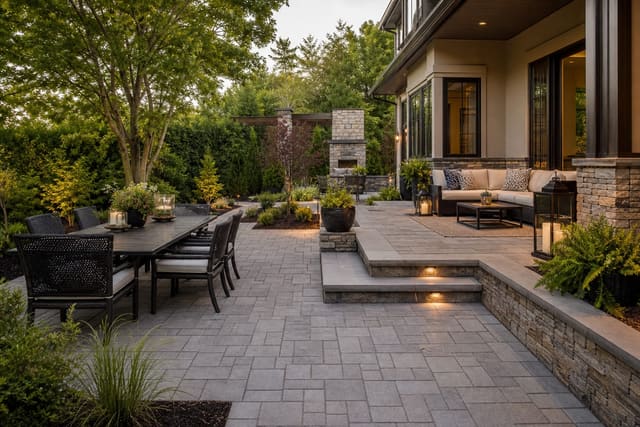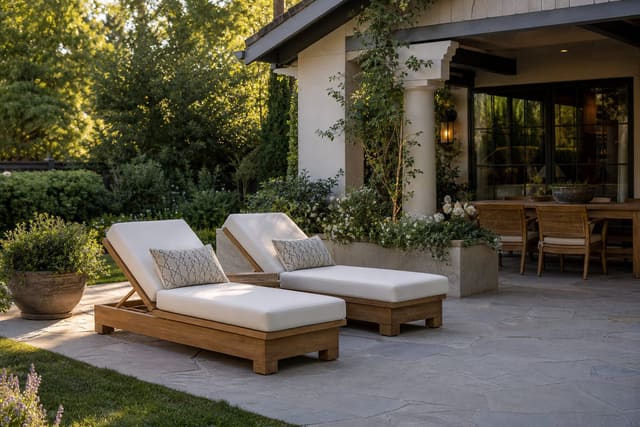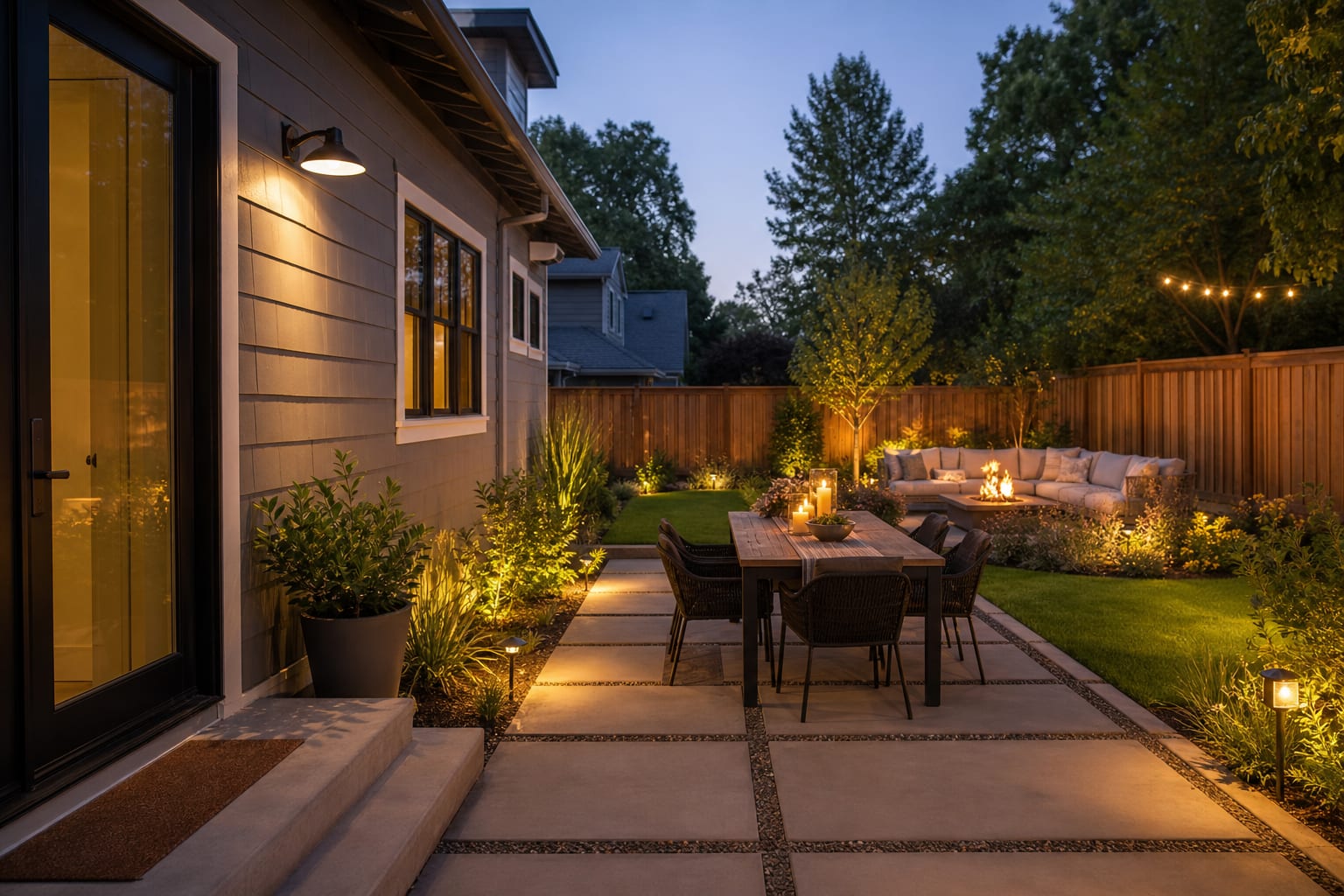
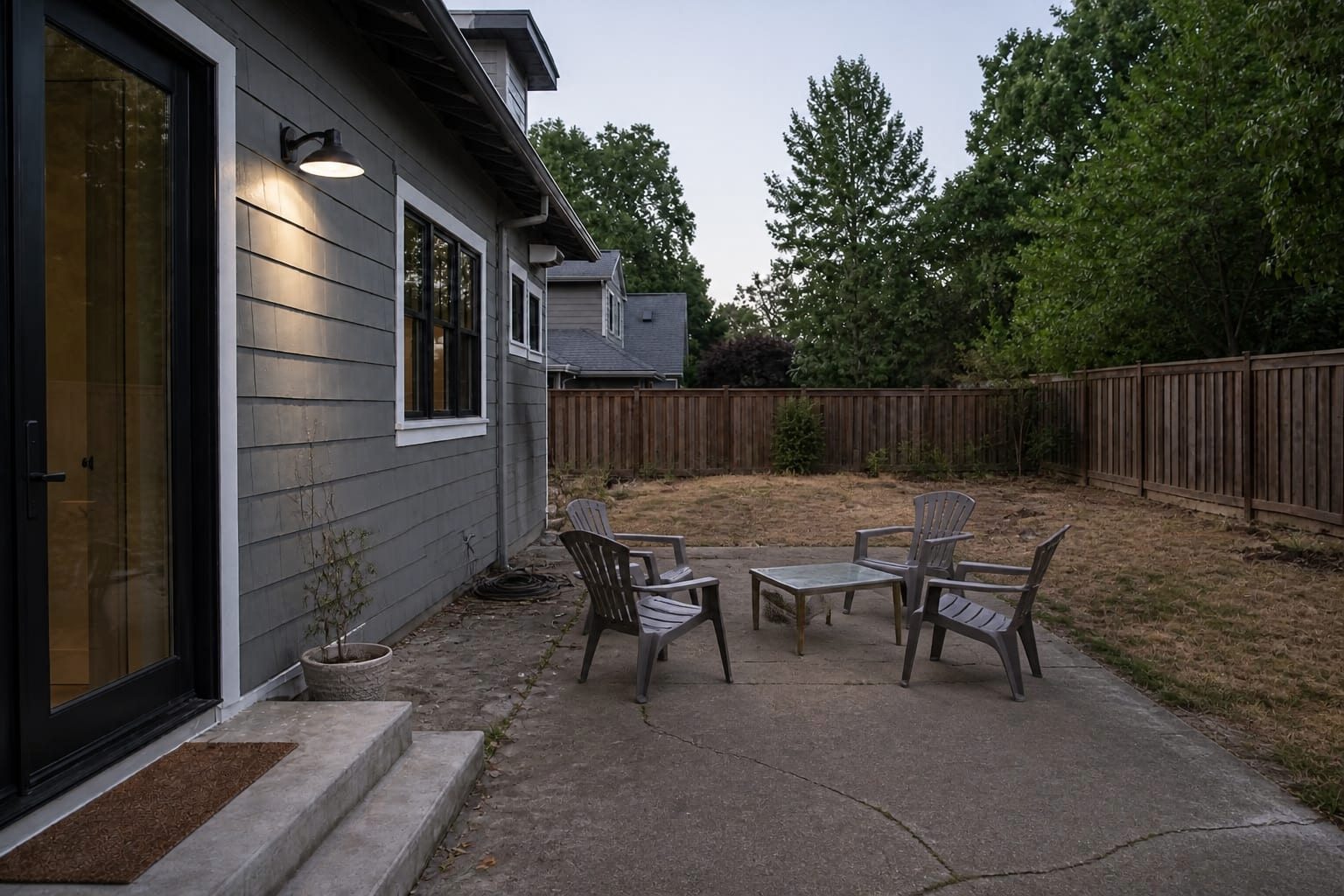
Concrete pavers are the best patio floor material for most homes because they balance drainage, repairability, style, and cost better than poured concrete, loose gravel, or composite decking. Fix the ground before buying furniture: a wobbly or poorly drained surface undermines even expensive pieces. Choose your material based on climate, budget, and how you actually use the space.
Which patio floor material is best for most homes?
Concrete pavers are the top pick because individual units can shift slightly with freeze-thaw cycles, drain through open joints, and get swapped out without demolishing the whole patio. A good outdoor floor stays level, sheds or absorbs water intelligently, and reads as intentional from the back door.
Use a 4-6 inch compacted gravel base, a 1 inch bedding sand layer, and a surface pitch of about 1/8 inch per foot away from the house. Keep the finished surface at least 2 inches below a door sill where code and site conditions allow, since splashback and rot are worse than a small step.
Poured concrete works well on tight budgets with simple geometry. Natural stone is beautiful but punishes a rushed base. Gravel suits secondary seating zones, not every dining chair. Composite decking makes sense when you need a raised structure or a warm, indoor-to-outdoor transition.
How do pavers, concrete, gravel, stone, and composite compare?
The right material matters most after a storm, a dinner party, or a few winters, not in the catalog photo.
| Patio floor material | Best use | Watch-out | Designer spec to copy |
|---|---|---|---|
| Concrete pavers | Main patios, dining areas, modern layouts | Poor base prep causes rocking | 4-6 inch compacted base with polymeric sand or open gravel joints |
| Poured concrete | Simple rectangles, tight budgets | Cracks are hard to repair invisibly | Tooled joints every 8-10 feet |
| Gravel | Fire pits, garden patios, informal seating | Chairs sink if gravel is too deep | 2-3 inches compacted angular gravel over landscape fabric |
| Natural stone | Cottage, rustic, or high-end patios | Uneven thickness raises labor cost | 1.5-2 inch dry-laid flagstone with planted or gravel joints |
| Composite decking | Raised patios, sloped yards, transitions | Dark boards get hot in sun | Leave manufacturer-required gaps, often 1/8-1/4 inch |
For a dining patio, prioritize a stable, predictable plane; plan at least 10 x 12 feet for a four-seat table, or 12 x 14 feet if guests need to pass behind chairs. Lounge areas can carry more texture from gravel joints or stone variation. Once the floor is set, size seating around it using the measurements in a complete patio furniture guide.
Test this on your own photo with ReDesign before committing, keeping the house edge, horizon line, hardscape, and main path visible so the preview reflects your actual space.
Which patio flooring ideas solve real outdoor problems?
Pick the idea that fixes a flaw in your current space, not the one that looks best in a close-up photo.
- Choppy small patio: large concrete pavers (24 x 24 inch) in a simple grid with 3/8 inch gravel joints reduce visual noise and add drainage.
- Slip risk after rain: poured concrete with a broom or light sand finish adds traction that a glossy sealed slab lacks.
- Fire pit pad: gravel works well as a secondary surface; a 12 foot diameter circle fits four chairs, with steel or stone edging to stop migration.
- Garden-heavy yard: irregular flagstone with 2-4 inch planted joints softens a cottage or woodland patio; keep the flattest stones on the main walking line.
- Height transition: composite decking bridges a door sitting 12-30 inches above grade, often better than steps down to a ground-level slab.
- Mixed materials: give each one a job, pavers for dining, gravel for the fire pit, stone pads through planting, rather than combining three in one small area.
Shade affects the choice too. Dark composite, black porcelain, and dense stone hold heat in a west-facing yard, while pale concrete can glare beside a white wall. Compare surface color alongside outdoor shade ideas for hot patios before finalizing the material.
Common patio flooring mistakes
- Choosing material before fixing drainage. A pretty surface only hides a grading problem for a season; pitch the patio away from the house and use permeable joints where water pools.
- Joints too wide for dining areas. Planted joints look great on stepping stones but catch chair legs; keep dining surfaces tight and flat, and move wider gaps to the perimeter.
- No defined edge. A patio without a crisp border bleeds into mulch or lawn; use a soldier course, steel edging, brick, or stone setts to stop the field material.
- Using indoor tile logic outdoors. Smooth porcelain, pale grout, and tiny mosaics get slippery or stained; exterior-rated porcelain needs the correct slip rating and drainage, not just a kitchen tile moved outside.
- Assuming stone is automatically better. Inconsistent thickness raises labor time, and some dark slate flakes or overheats. For the stone look with more predictable installation, see stone patio ideas with modern layouts.
Use AI design to preview your patio floor before you commit
Material changes are expensive and heavy, so preview them first. Upload a clear photo from the back door or main seating view, then test pavers, concrete, gravel, stone, and composite on the same angle. Be specific: request a 12 x 14 foot dining patio, large concrete pavers, 3/8 inch gravel joints, low planting, and the existing fence or wall preserved.
A preview won't replace a contractor's base prep, drainage plan, or code check, but it catches visual mistakes early, a paver size that looks like a checkerboard, a gravel color that fights the brick, or a deck tone that turns too orange beside the siding.
Frequently Asked Questions
What is the most durable patio flooring?
Large-format porcelain pavers (2cm thick) are the most durable outdoor flooring, frost-proof, UV-stable, and stain-resistant, needing only annual cleaning. They outlast natural stone, composite decking, and concrete across most climates.
What patio flooring is best for bare feet?
Honed limestone, brushed travertine, and wood-look porcelain stay cooler in direct sun and grip wet feet without feeling rough. Avoid polished stone and glass-face tile, which become dangerously slippery when wet.
Can I put outdoor flooring over an existing concrete patio?
Yes. Overlay with 2cm porcelain pavers on a self-leveling mortar bed or adjustable pedestals over a sound slab. The new surface raises the floor 3-3.5cm, which must be accounted for at door thresholds.
How do I choose between pavers and poured concrete for a patio?
Pavers allow individual replacement if a unit cracks; concrete is monolithic, cheaper to install, and requires full-slab repair for significant cracks. Pavers are the better long-term value for most residential patios.
What is the cheapest patio flooring that still looks good?
Broom-finish concrete at $6-12 per square foot installed is the cheapest solid option. Crushed gravel with a steel edge, at $4-8 per square foot, is cheaper still and looks intentional with the right planting border.
> Try this: Ready to see this on your own outdoor space? Open ReDesign and run the preview before you buy materials, plant, drill, or move furniture.
Three transformations to try
1. 2cm porcelain paver on pedestal system 2. Brushed limestone on mortar bed 3. Gravel patio with steel edge and paver accent