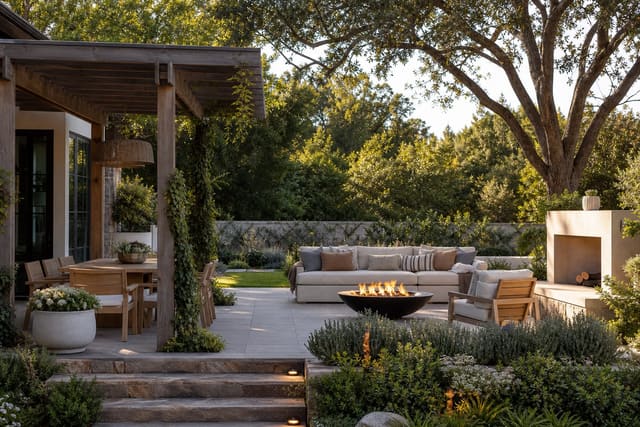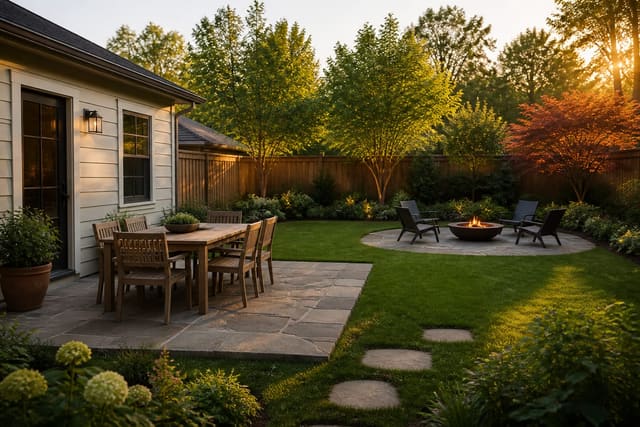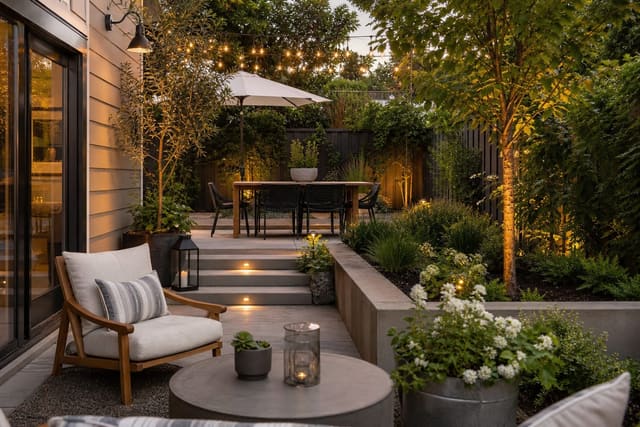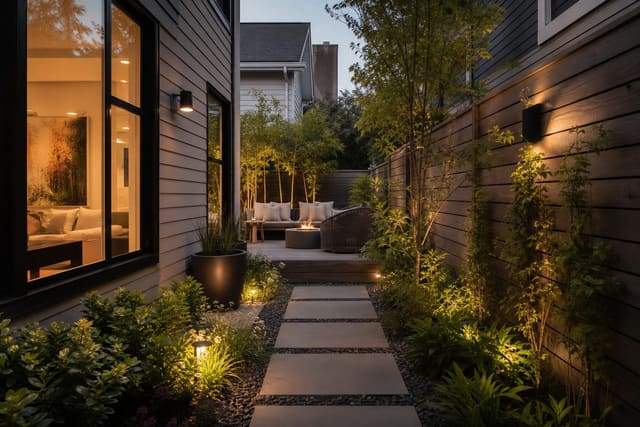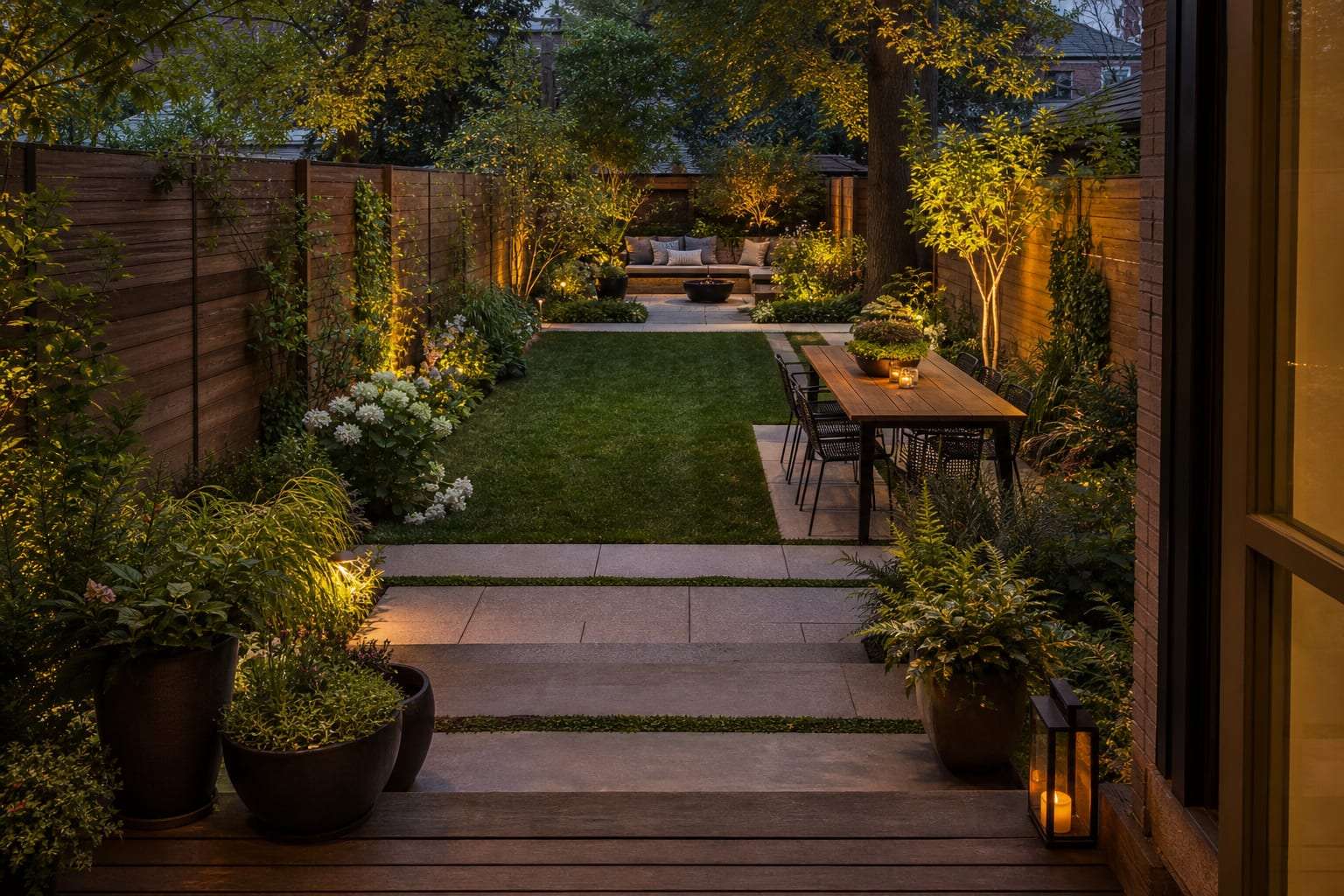
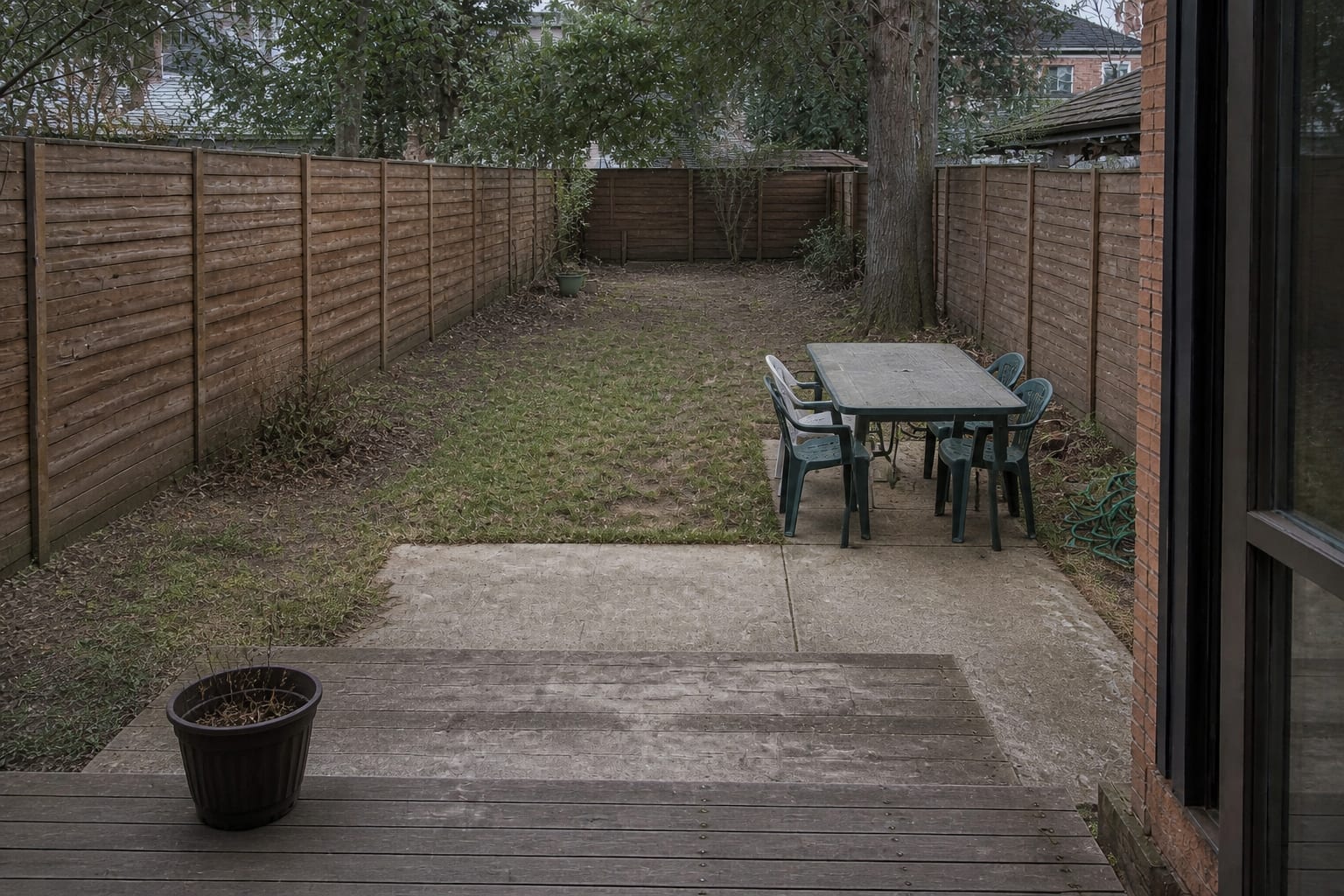
To design a long narrow backyard, stop treating it as one skinny lawn and divide it into a sequence of outdoor rooms using crosswise lines, layered planting, and furniture scaled to the width. Running a path, hedge, or dining set straight down the center makes the yard feel thinner. The goal is rhythm and a clear destination, not hiding the shape.
What makes a narrow backyard feel generous?
A narrow backyard feels generous when the design creates rhythm, side-to-side movement, and at least one destination. It feels like a tunnel when everything reinforces the corridor: parallel fences, a skinny lawn, a straight path, and furniture squeezed against both sides.
Check the sightline from the main door or kitchen window. If you see the whole fence line in one glance, add an interruption within the first third of the yard: a 4-foot-deep planting pocket, a pair of planters, a pergola beam, or a change in paving direction that slows the view without blocking movement.
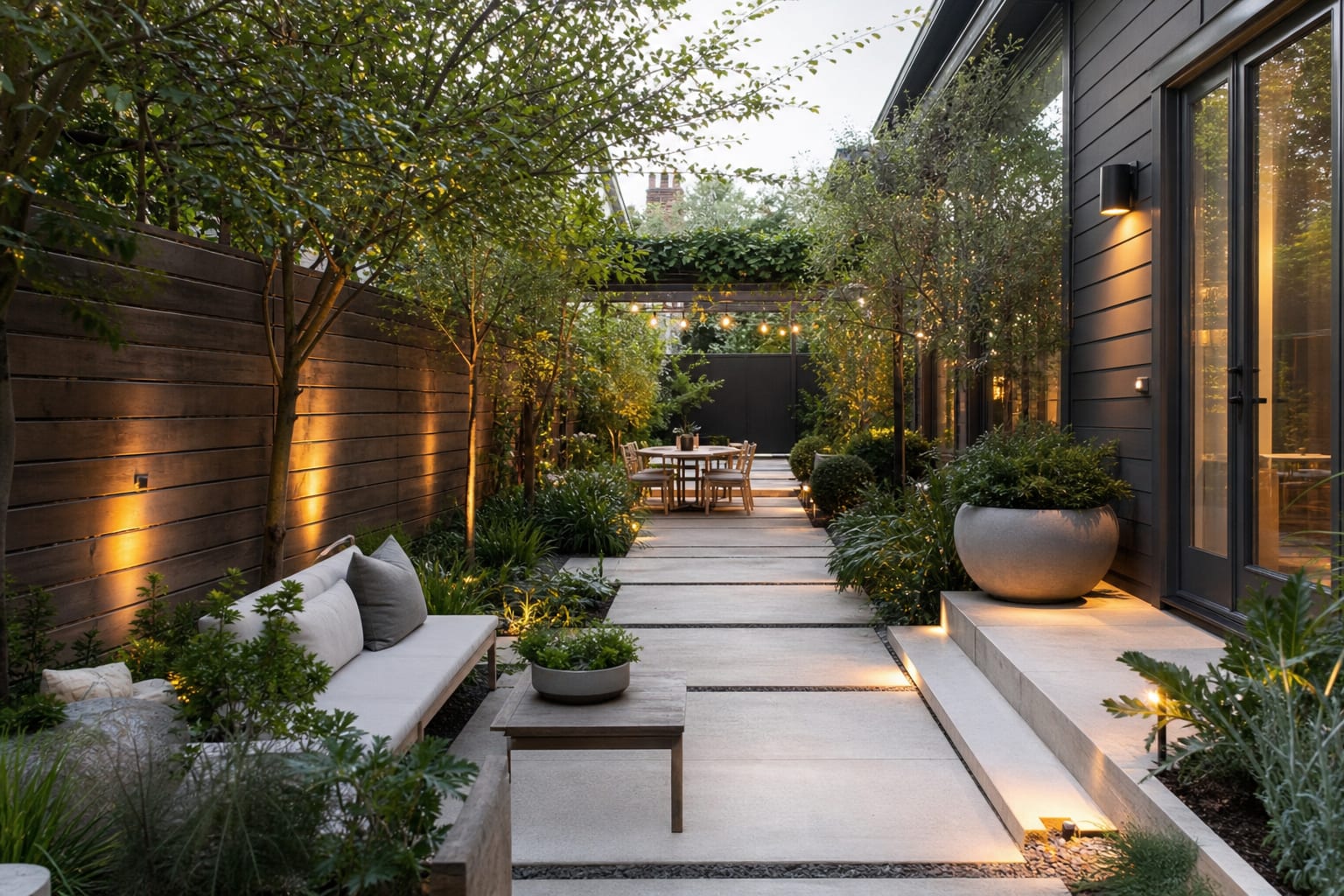
Crosswise elements do the real work. A row of 18-by-24-inch pavers laid across the width, a 7-foot bench running fence to fence, or a 24-inch-deep band of ornamental grasses can make a 12-foot-wide yard read wider. Keep the main path at least 30 inches clear for one person and 42 inches where two people regularly pass with plates or tools.
If the yard also has an awkward side passage, borrow the same logic from side yard ideas that use narrow space well: keep the walking line simple, then let planting, lighting, and surface changes create interest along the edges.
How should I zone a long thin yard?
A reliable long thin backyard design uses 2 or 3 zones that sit like beads on a string, not one oversized patio trying to do every job. Pick uses that match your life — coffee, grilling, dining, lounging, herbs, a small fire area — and give each its own footprint.
Near the house, dining or grilling connects naturally to the kitchen. A table for four needs a pad around 8 by 10 feet with chairs pulled out on all sides; in a 9- or 10-foot-wide yard, use a bench on the fence side and a 30-by-48-inch table instead. Leave at least 36 inches of clearance in front of a grill so the cook isn't standing in the only path.
The middle zone should do less. This is where narrow yards usually fail, because a second full-size room kills circulation. A softer threshold works better: two slender trees, a 3-foot gravel strip with stepping stones, or a pair of matching containers that signal a change without stealing width.
At the far end, build a destination. A bench 18 inches high and 20 to 24 inches deep turns a blank fence into a place to sit. For flame features, a linear fire table or small bowl usually suits a narrow yard better than a round set — see fire pit seating area ideas for compact yards before buying, and follow the product manual's clearance requirements.
Test this on your own photo with ReDesign before committing to a direction; keep the house edge, horizon line, hardscape, planting beds, and main path visible so the preview solves the space you actually have.
Which narrow backyard ideas are worth copying?
- Lay pavers across the width, not down the length. Rectangular slabs around 18 by 24 inches or 24 by 36 inches with gravel joints create crosswise rhythm and avoid a bowling-alley effect.
- Build one fence-side bench instead of a full sofa set. A bench 18 inches high, 20 to 24 inches deep, and 6 to 8 feet long adds seating while leaving the center open for walking or play.
- Plant in layers along the fence. Keep front plants 12 to 18 inches high, mid shrubs or grasses at 24 to 36 inches, and reserve taller screening for the back corners so the fence softens without closing in.
- Use one strong end feature. A small tree in a 24- to 30-inch bed, a dark fence panel, a wall fountain, or a built-in seat gives the long view a focal point; scattering small ornaments everywhere makes it feel busy.
- Add lighting at knee height and eye height. Path lights every 6 to 8 feet keep the route readable, and two or three shielded 2700K sconces add warmth without glare.
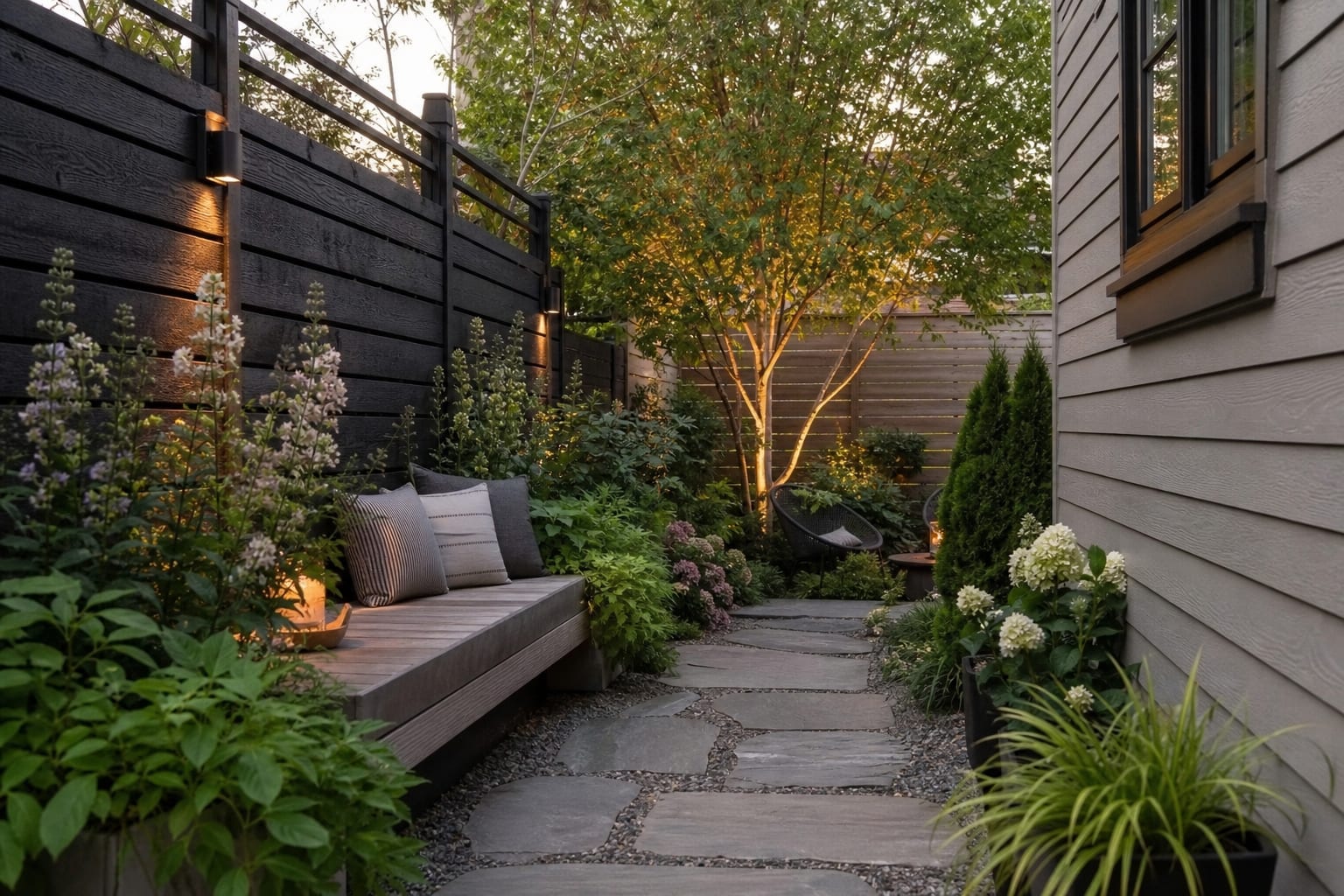
A narrow yard behaves like an outdoor room when walls, floor, and ceiling are considered together. For more ways to furnish patios and backyards, see outdoor room ideas for real backyards and scale the pieces down.
What mistakes make a narrow yard feel worse?
- A thin strip of lawn. A 6-foot-wide lawn between two fences often reads as a service corridor and is harder to maintain than gravel or a compact patio.
- Deep furniture bought before measuring. A 38-inch-deep lounge chair can eat nearly half the width of an 8-foot yard once someone sits in it — tape the footprint on the ground first.
- One tall hedge on both sides. Two solid green walls make the yard feel tighter and darker; mix screening with open branching plants and lower shrubs so light reaches the ground.
- Every feature pushed to the fence. Let one planter, bench, or paving band project slightly into the yard; that controlled interruption creates shape.
- Ignoring drainage. Long lots collect water along fences or at the far end, so slope hardscape away from the house and use gravel or permeable joints where water needs to go.
How can I preview a narrow backyard before buying anything?
Use AI design to test a layout before buying pavers, planters, or furniture that might crowd the width. Upload a straight-on photo from the back door and preview crosswise paving, a far-end bench, layered planting, and a compact dining zone — the point is checking whether the yard still breathes once the big pieces are placed.
Take one photo from the house looking out and one from the far fence looking back, camera at chest height, both side fences visible, clutter removed. Reject any preview that only looks better by hiding the walking path; a good idea still shows where people move and where chairs pull out.
Renters should test removable moves first — gravel over landscape fabric, freestanding planters, plug-in lighting, folding bistro furniture. Owners should test the same composition before committing to built-in benches, trenching for lights, or a new patio slab.
Frequently Asked Questions
How do I make a narrow backyard look wider?
Lay paving and bed lines perpendicular to the long axis so the eye reads horizontal bands instead of a tunnel. Lengthwise paving down the center extends the corridor effect; crosswise pavers, benches, or planting strips break it up and add width.
Should the back fence be hidden or featured?
Soften it with layered planting, a feature wall, or a small tree about two-thirds of the way down the yard. A bare fence at the far end pulls the eye straight to the property line and makes the yard read shorter than it is.
Where should seating sit in a narrow yard?
Place the main seating zone two-thirds of the way down the yard instead of right at the back fence. Walking through planting to reach a midway focal point gives the yard a sense of arrival that a seat pressed against the fence never does.
What planting works best in a narrow yard?
Use slim upright shrubs, ornamental grasses for movement, and one anchor tree placed off-center to break the symmetry of parallel fences. Layer heights from 12 inches at the front to taller screening in the back corners only.
Do narrow yards need a path?
Yes, but keep it off-center. Stepping stones or a slim paver path set to one side reads as a discovered route, while a path centered down the middle reinforces the tunnel effect.
> Try this: Ready to see this on your own outdoor space? Open ReDesign and run the preview before you buy materials, plant, drill, or move furniture.
Three transformations to try
1. Crosswise paving with midway seating