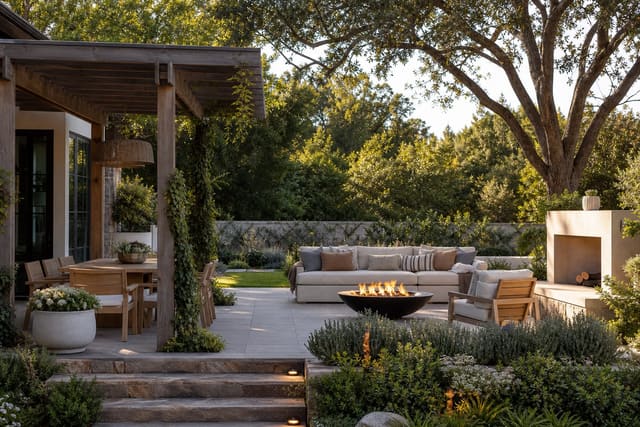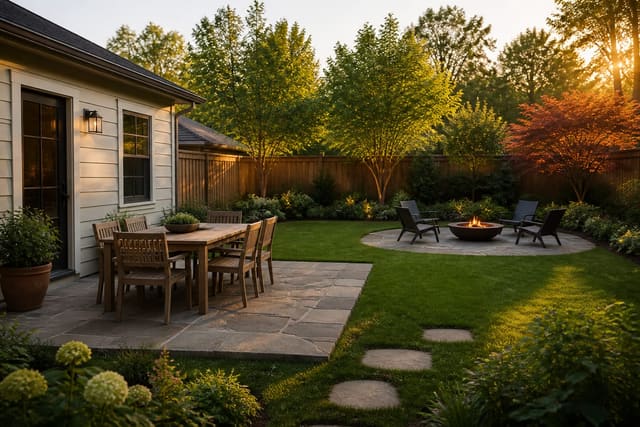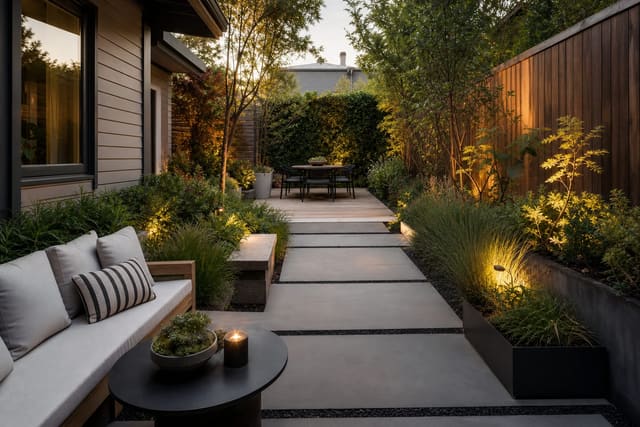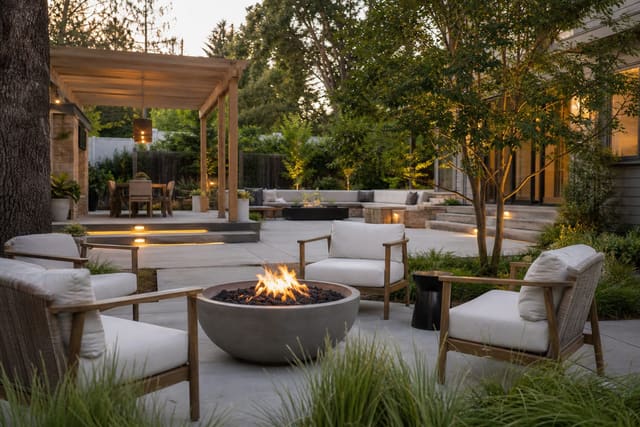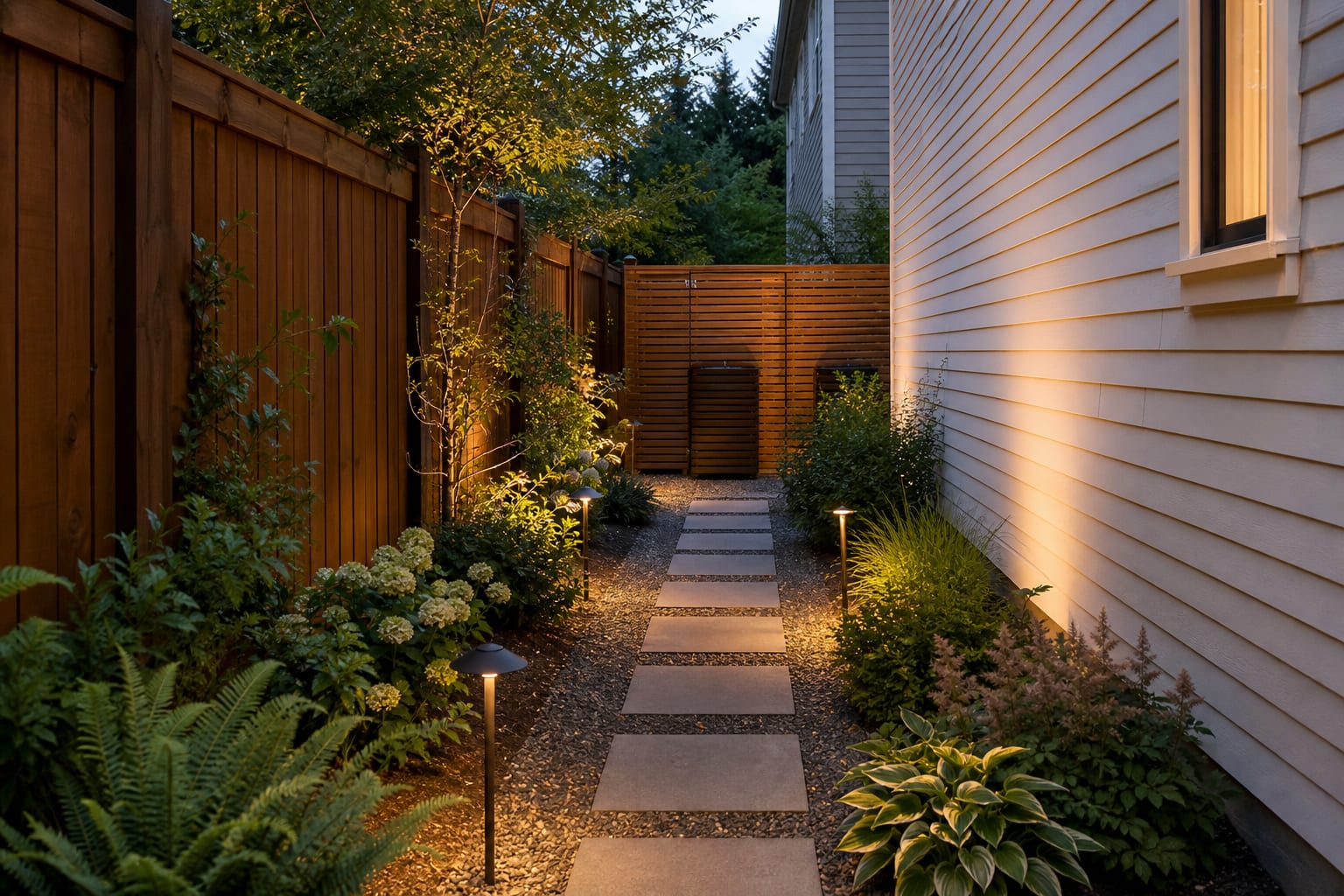
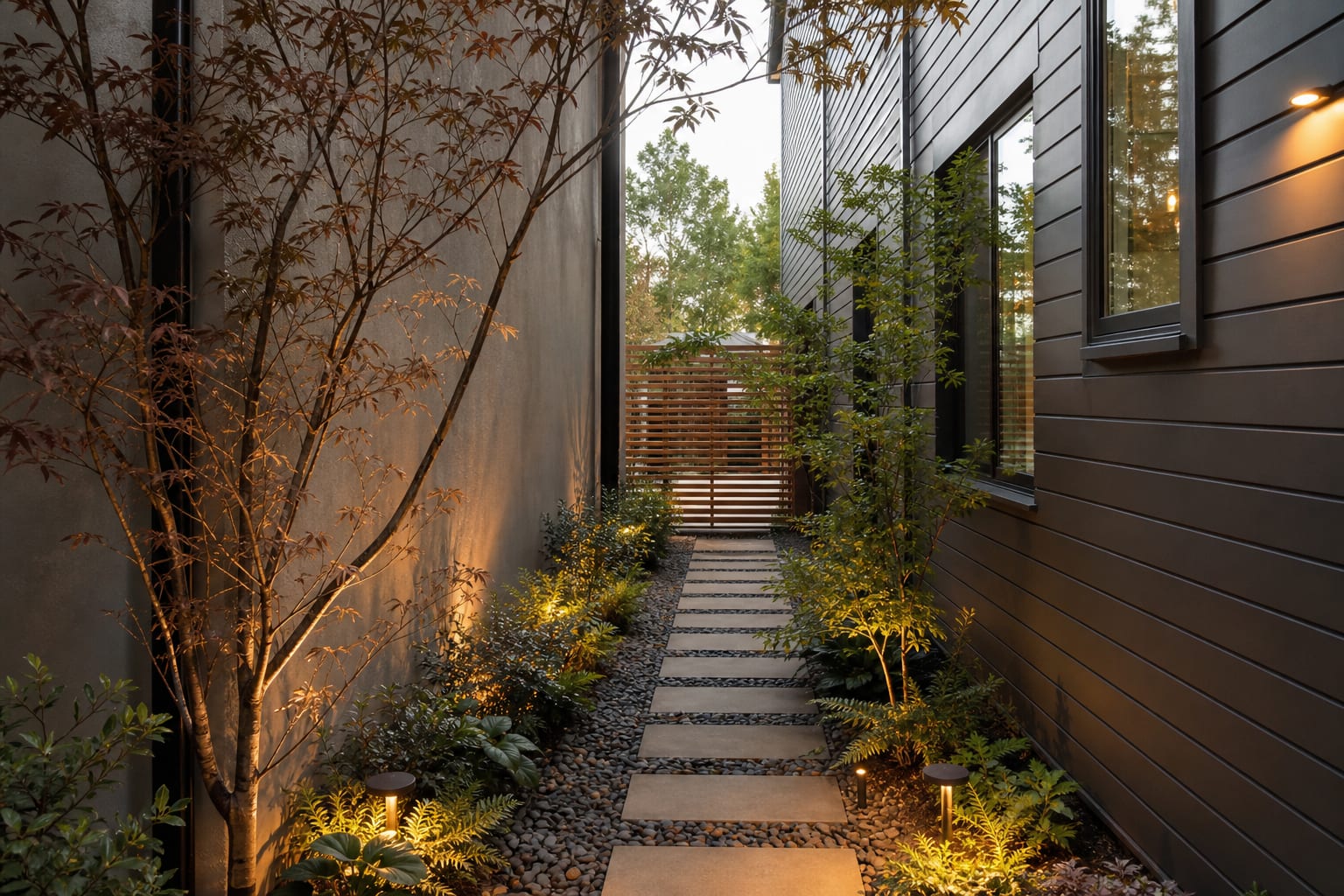
The best side yard ideas for narrow strips start with one job: a gravel or paver path, a screened bin zone, a shade garden, or a slim sitting nook. Protect a 30in to 36in walking lane, give the ground a real surface, and screen storage with slatted panels instead of solid walls.
What Can You Do With a Narrow Side Yard?
A narrow side yard works as a path, slim garden, screened storage run, dog-wash zone, or compact sitting nook once access is protected. Keep a 30in clear lane for one person, or 36in if the strip carries bins, hoses, or groceries. If it's the route to the backyard, don't sacrifice that lane for furniture.
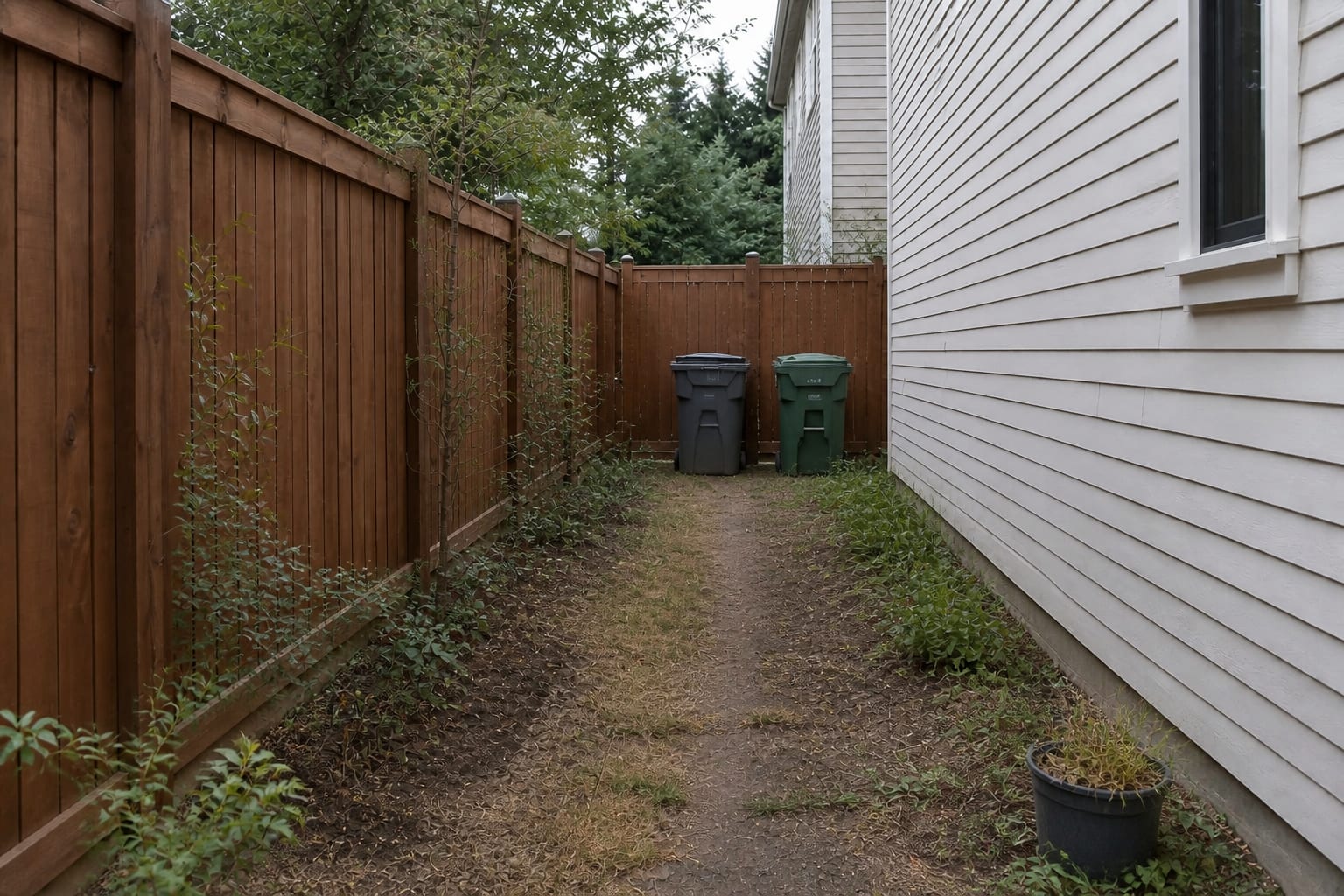
The ground matters most. Wet dirt always reads unfinished, no matter how good the planting looks. Use stepping stones with gravel joints, brick on sand, decomposed granite, or pavers set with a slight fall away from the house, and keep soil and beds below the weep screed or siding clearance to avoid repair bills.
| Side yard width | Best use | Spec that keeps it believable |
|---|---|---|
| 3′ to 4′ | Service path with planting pockets | Keep the clear route near 30″ and plant in narrow bands or wall-mounted containers. |
| 5′ to 6′ | Garden walk or screened bins | Use a 36″ path and reserve 18″ to 24″ for planting, gravel, or storage. |
| 7′ to 9′ | Small sitting or potting zone | Fit one bench or two slim chairs, but preserve a 36″ exit route. |
| 10′ or more | Linear outdoor room | Treat it like a skinny patio with zones, shade, lighting, and a clear destination. |
- Protect a 30in walking lane for one person, or 36in when bins, bikes, or groceries use the route.
- Keep planting bands 18in to 24in deep unless the strip is wide enough for a real garden walk.
- Place low path lights 12in to 18in off the walking edge so the route reads without glaring into windows.
Which Side Yard Job Should Own the Strip?
A side yard feels designed when every foot answers one problem.
- Passage: repeat pavers every 24in to 30in on center with gravel or groundcover between, and one repeated plant form, per narrow backyard layout ideas.
- Service zone: build a 48in to 60in slatted screen with room to roll the largest bin straight out, and a latch wide enough for the wheel path.
- Garden: use 18in to 24in raised beds for herbs or cut flowers in sun; in shade, plant ferns, carex, hellebores, or contained clumping bamboo instead of a vegetable bed.
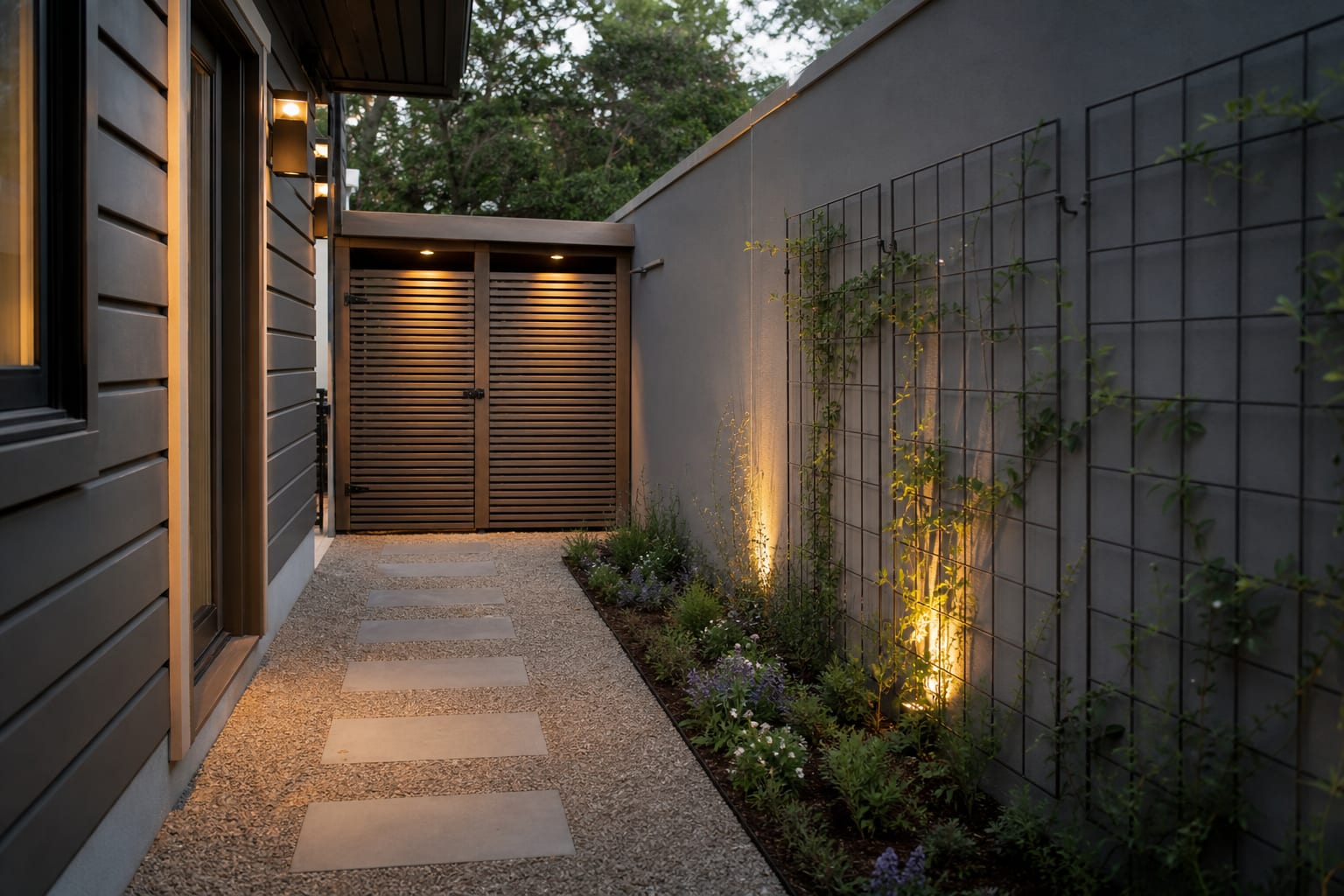
Test this on your own photo with ReDesign before you choose a direction. Keep the house edge, horizon line, hardscape, planting beds, and main path visible so the preview solves the space you actually have.
Five Side Yard Ideas That Earn Their Footprint
- Gravel path with stepping stones. Use stones at least 18in x 24in for clean footing, edged with metal, brick, or stone to contain the gravel.
- Vertical garden on the fence. A trellis, cable rail, or wall planter supports jasmine or clematis without eating into the 36in walking lane.
- Slatted bin screen. Match the house trim, leave 1in to 2in gaps for airflow, and skip solid lids that trap damp smells.
- Tiny coffee perch. A single 42in bench with a 12in drink ledge can work in a 7ft side yard; two bulky chairs will block it.
- Lit approach to a bigger destination. If the strip leads to seating or a fire feature, plan the landing zone first with fire pit seating area ideas, and add warm 2700K path lights 12in to 18in off the edge.
What Are the Most Common Side Yard Mistakes?
- Squeezing the gate path with planters. Two 16in pots on a 36in path create a frustrating pinch point; use one long planter or wall-mounted greenery instead.
- Ignoring drainage. Downspouts and AC condensate often dump into this strip; pitch paving away from the foundation and use permeable joints where it stays damp.
- Planting hedges too tall for the width. Dense evergreen walls can turn a 5ft strip into a green hallway; keep planting under 36in and screen only where windows actually face each other.
- Treating the side yard as separate from the backyard. Match the path, lighting, and plant palette to the larger space, following the same outdoor room design principles: define the floor, clarify the edge, make the arrival intentional.
How Can AI Design Help Preview a Side Yard?
Upload a straight photo from the gate or back door showing both walls, the ground plane, meters, windows, downspouts, and existing bins. Test three versions: a service path with screened storage, a planted garden walk, and a slim sitting nook. Judge each by whether the path still feels passable and the screen blocks the ugly view without creating a tunnel; if every version feels crowded, simplify instead of adding more styling.
Frequently Asked Questions
What's the cheapest side yard fix?
A gravel path with steel edging over a compacted base costs under $200 in materials for a typical 4ft by 25ft run, and it solves mud, weeds, and traction in one weekend.
How wide should a side yard path be?
Use 36in to 42in clear width if a wheelbarrow or trash bin needs to pass through; 24in to 30in works for a foot-only path between planting beds.
What plants survive in narrow side yards?
Shade-tolerant species do best: hostas, ferns, hellebores, hakonechloa grass, and climbing hydrangea on the fence. Full-sun perennials struggle with the 4 to 6 hours of direct light most side yards receive.
How do I screen trash and AC units in a side yard?
A 5ft to 6ft slatted timber screen with a 4in gap from the wall for airflow hides bins and condensers without trapping heat. Lattice and chain-link slats tend to look worse than the bins they cover.
Should a side yard be lit?
Yes. Use low warm 2700K path lights every 6ft to 8ft on alternating sides, plus a shielded wall sconce at the gate. An unlit side yard becomes both a security risk and a tripping hazard after dark.
> Try this: Ready to see this on your own outdoor space? Open ReDesign and run the preview before you buy materials, plant, drill, or move furniture.
Three transformations to try
1. Side yard with gravel path and bin screen